

S&P Breaks Key Level, VIX Spikes but Treasuries Stay Flat: What Is the Market Afraid Of?

Original Author: Capital Flows, Macro Hedge Fund Researcher
Original Compilation: TechFlow
Introduction: The highly anticipated AI unicorn Anthropic has officially landed on US equities, yet its first-day broken IPO and further after-hours plunge unexpectedly became the trigger that ignited a global sell-off in risk assets. The S&P 500 Index broke below the critical inflection point of 7,400, and AI-related stocks across the board suffered from institutional deleveraging and stampede selling.
Capital Flows, a well-known macro hedge research institution, issued a warning noting that the current sell-off is primarily driven by pressure on tech stocks, and cross-asset risk aversion has not yet fully unfolded. If long-end US Treasury yields spiral out of control and force the Fed to restart a rate-hiking cycle, surging bond volatility will push US equities into a new and deeper abyss of crash.
Anthropic Breaks Issue Price on Day One, S&P Breaches Critical 7,400 Turning Point
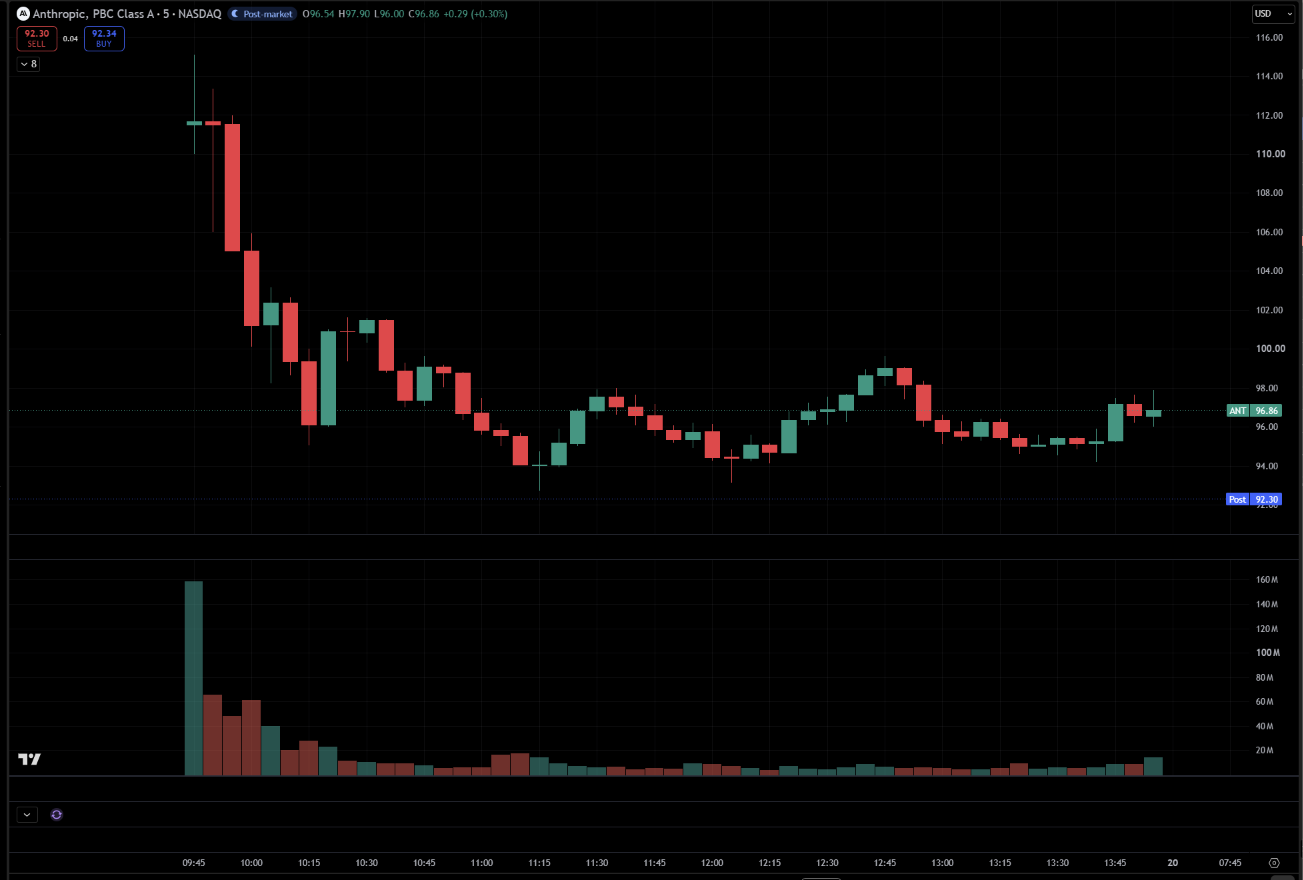
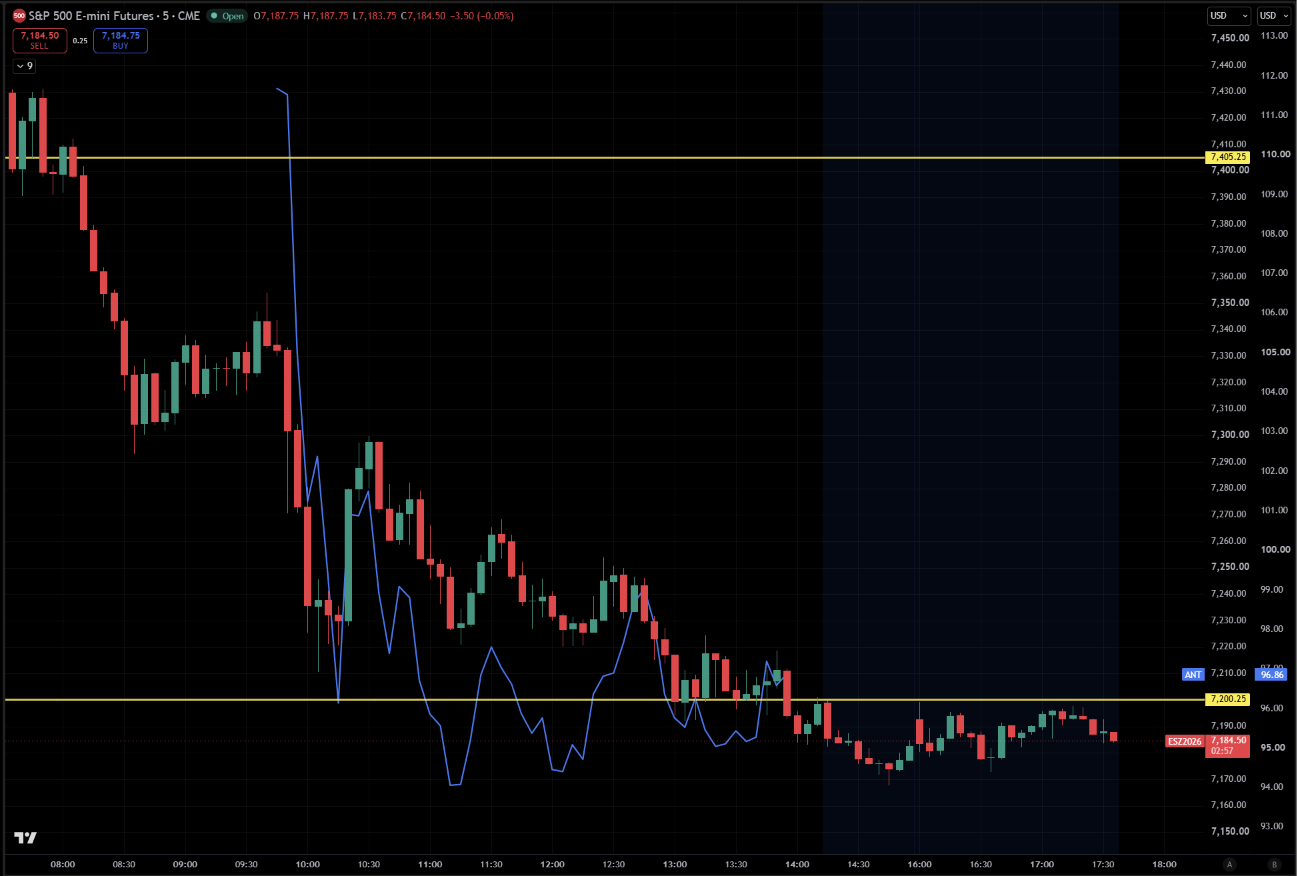
The much-anticipated Anthropic initial public offering (IPO) officially debuted today, yet not only did it fail to inject a shot in the arm for the bulls, but against the backdrop of accumulating systemic deep-seated risks, it injected even more acute uncertainty into global financial markets. The stock, trading under the ticker ANT, quickly encountered massive selling after the open and fell below its offering price, then plunged further in after-hours trading:
Dragged down by this, the S&P 500 Index (ES) has now effectively broken below the critical 7,400 watershed I specifically highlighted earlier this week. This blockbuster IPO has evolved into the fuse that triggered cascading stampede selling, directly hammering global stock markets downward and beginning to comprehensively shatter the deep-seated key technical support levels of the broader equity asset market:
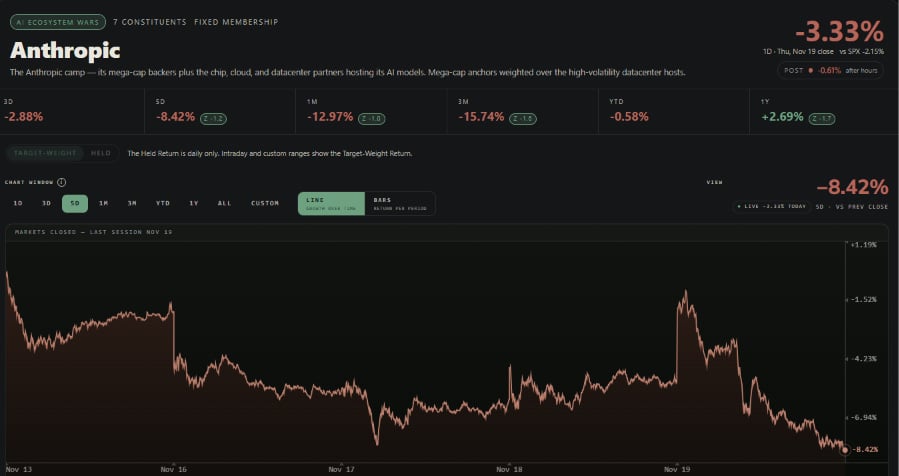
More alarmingly, all Anthropic-related supply chain concept stocks (Anthropic Factors) also suffered a full-scale rout during today's IPO process. This market language clearly confirms a system-wide de-risking operation surrounding AI industry fundamentals: this much-heralded IPO has effectively served as a brutal liquidity liquidation event, forcing numerous hedge fund managers to further forcibly unwind long positions.
Capital Flight to Safety Extremely Weak, Cross-Asset Contagion Storm Lurking
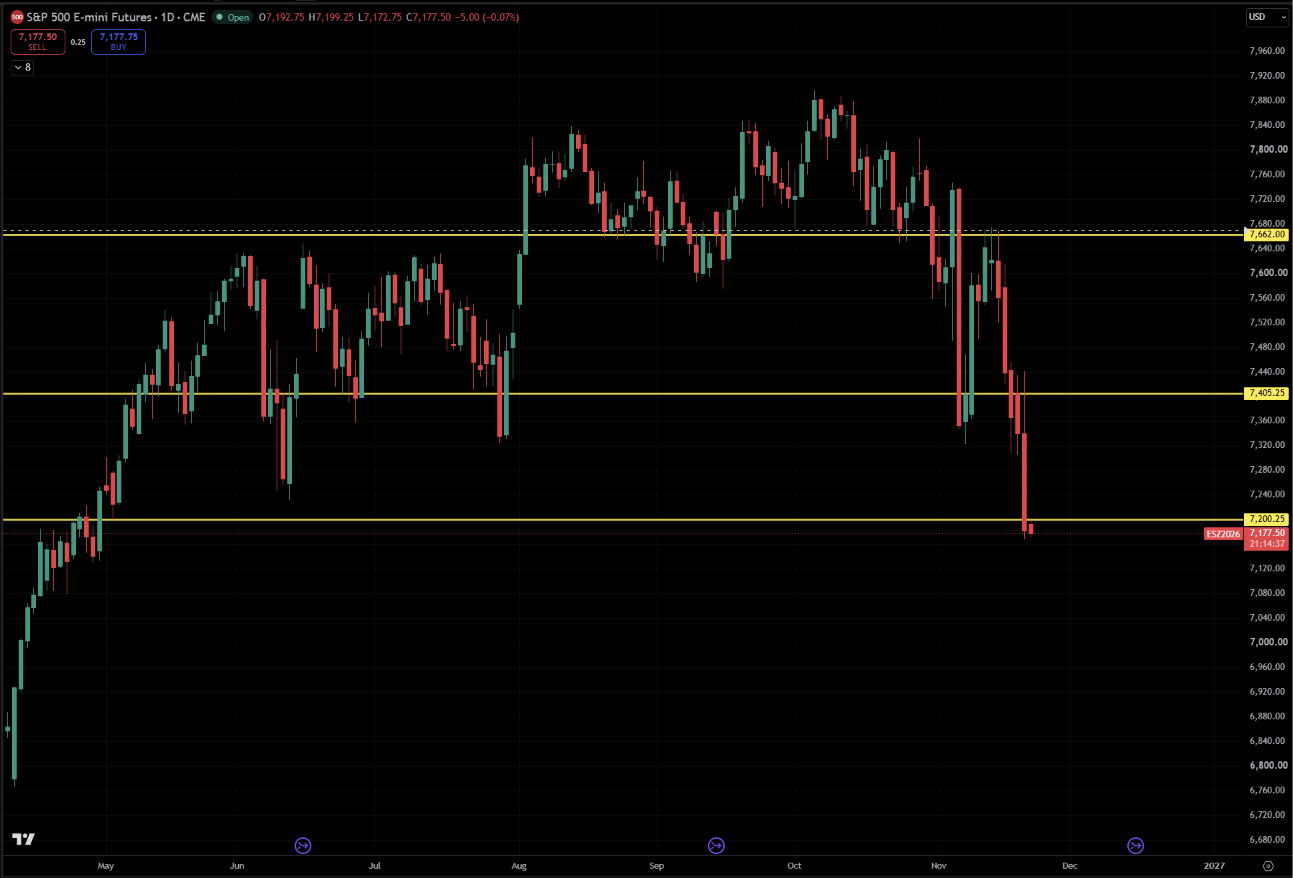
Now is precisely the critical moment for us to zoom out and examine the deeper macro landscape. I have already clearly laid out in my previous in-depth report: on a tactical level, once the S&P breaches 7,400, the short-term logic immediately shifts entirely to bearish dominance. The market has now moved significantly away from the 7,400 threshold, and the probability of fully recovering all losses before Friday's close is extremely low:
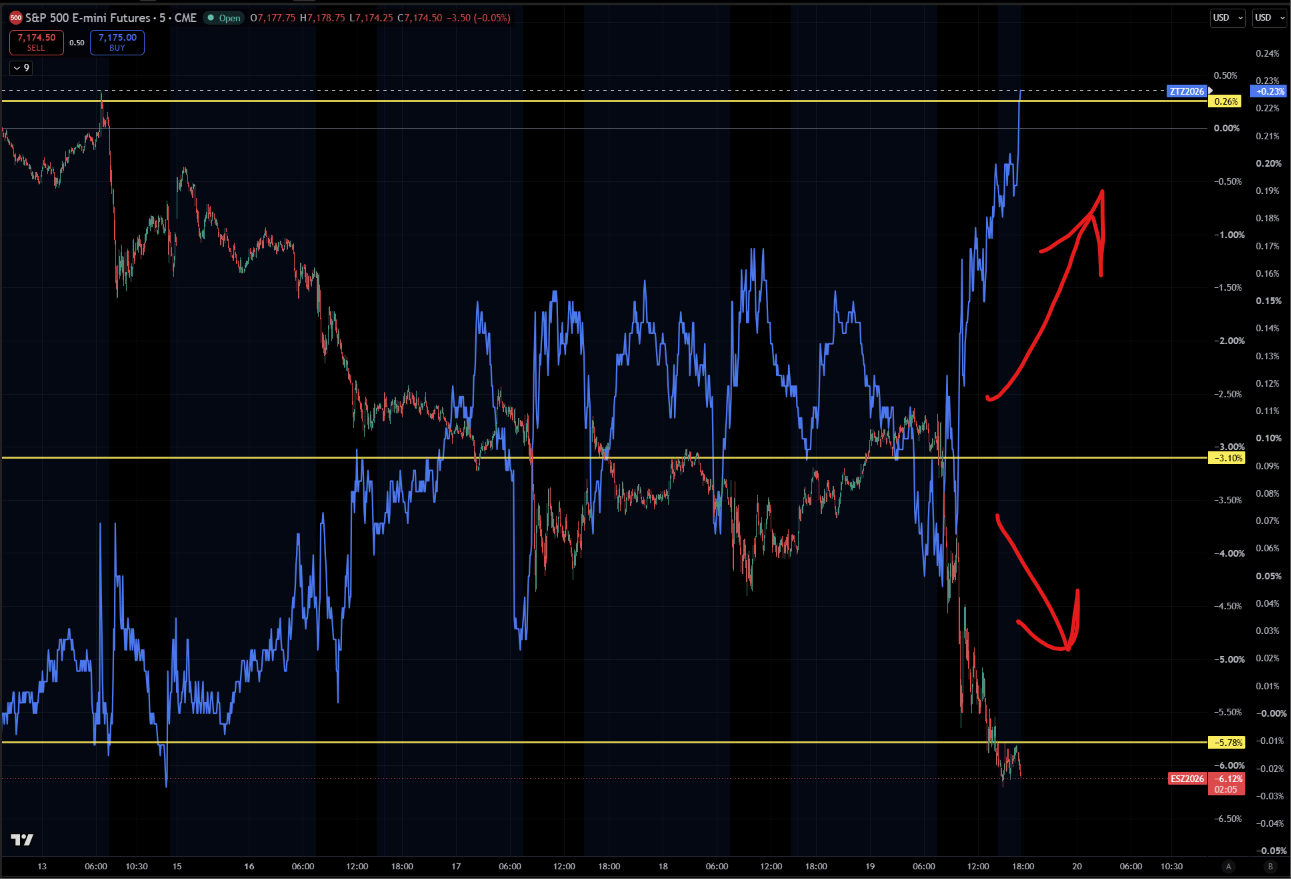
However, for macro capital flows, the more severe core issue is: while S&P 500 futures (ES) suffer fierce selling, two-year US Treasury futures (ZT) have only rebounded modestly, with gains extremely marginal. This unremarkable reaction reflects a dangerous signal: the rotation of capital toward traditional safe-haven assets and safe-haven buying are very weak, which is progressively bringing the deeper macro crisis of the entire financial system to the table ahead of schedule:
Core Thesis: The Forced Restart of a Rate-Hiking Cycle and the Fiscal Noose
The core macro theme I have consistently threaded through my recent videos is very clear: we are entering a harsh new cycle of forced rate hikes. The Federal Reserve will in the future be forced to raise benchmark interest rates once again, or else watch helplessly as long-end US Treasury yields spiral completely out of control, and out-of-control long-end rates will deliver an unbearable fatal blow to dollar credibility and the sovereign fiscal system.
The fatal deadlock at present is: today's US equity sell-off is almost entirely dominated by pressure on large-cap tech stocks alone; in the bond market or foreign exchange (FX) market, cross-asset contagion risk has not yet truly erupted across the board. This means that if we do indeed hard-land into a new rate-hiking cycle with global equities at current elevated valuation levels, the downside for equity assets in the future will be extremely massive.
Cross-Asset Volatility Divergence: The Calm Before the Storm
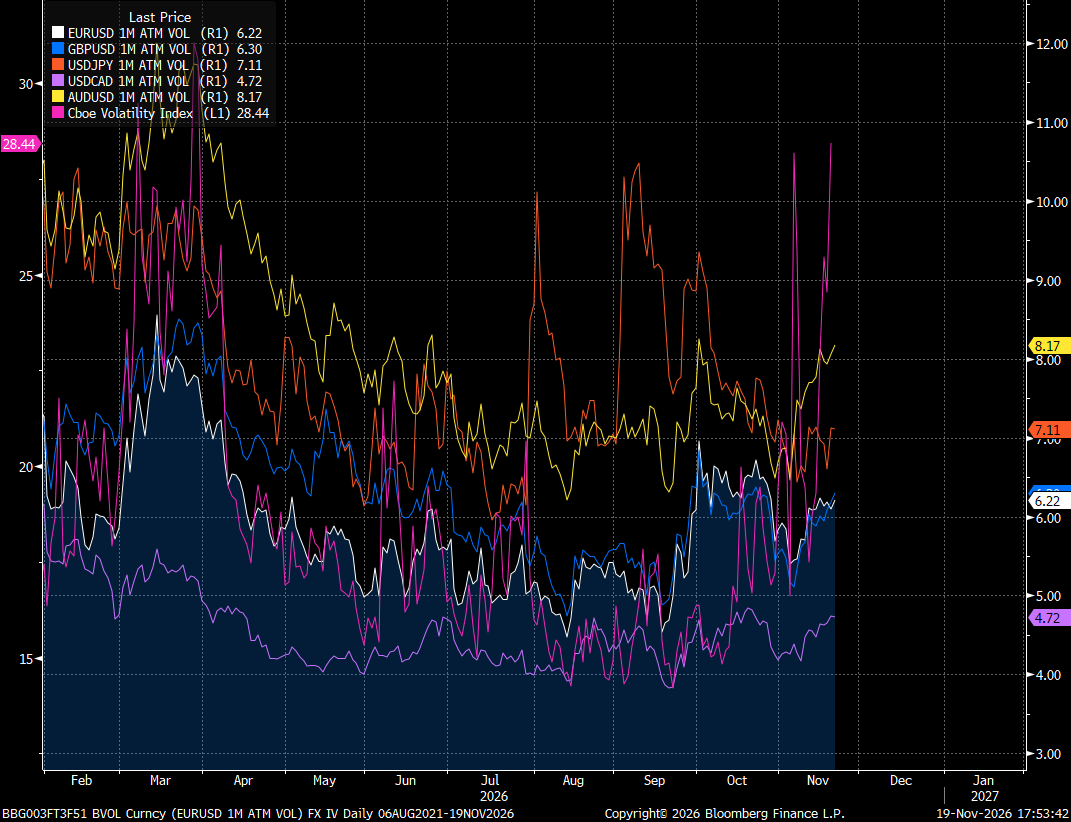
Please pay close attention to the anomaly revealed in the chart below: volatility in the FX market has shown almost no movement, yet the equity market's fear index VIX has already erupted first:
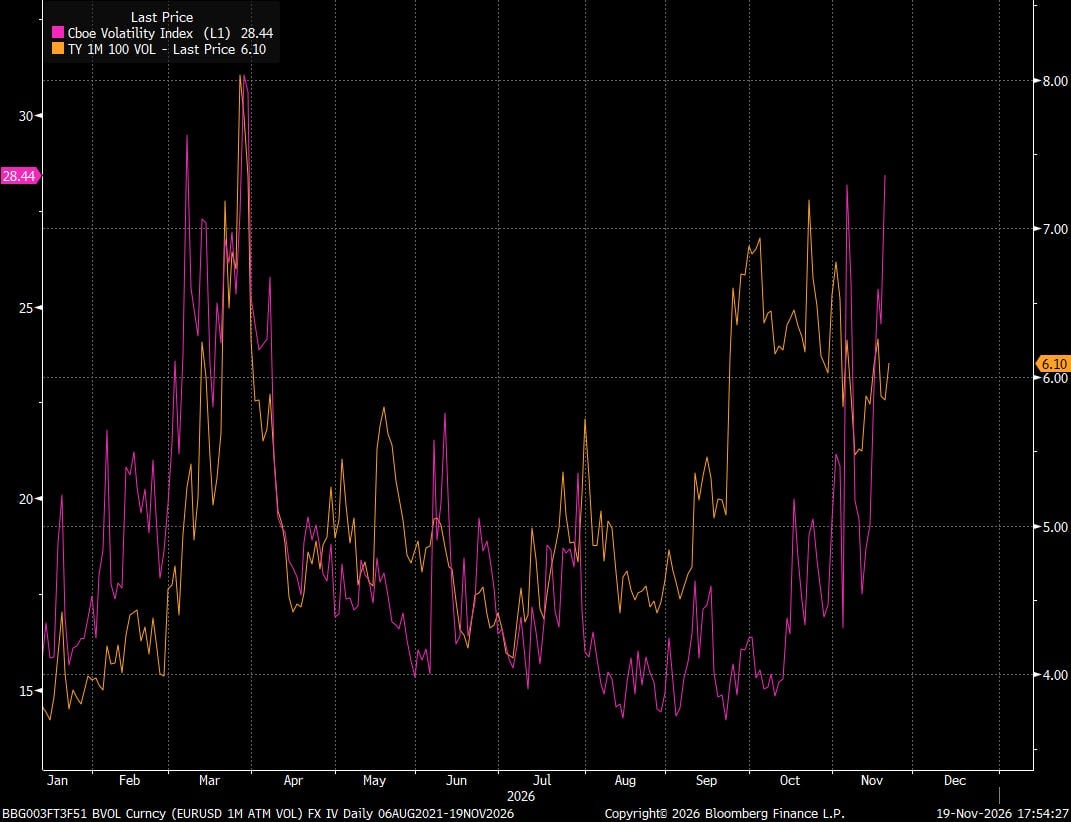
Meanwhile, bond market volatility is currently only showing a moderate elevation, which is likely because rates traders have clearly recognized that the future range of interest rate oscillation could be far wider than what the Fed's short-term policy fine-tuning suggests. The deeper logical inference here is: once the Fed is cornered by inflation and fiscal deficits into being forced to launch substantive rate hikes, bond market volatility will spiral completely out of control and erupt, and at that point it will inevitably drag equity assets into a new round of even deeper breakdown and crash:
Macro Response: Hold Ample Cash, Wait for Valuation Extremes
Given the escalating deep-seated imbalances in the entire macro system, on a longer-cycle dimension, I have maintained a neutral defensive equity posture for quite some time. As early as this summer, I fully shifted to defense, no longer betting that the credit cycle would drive asset bubbles to irrational new highs.
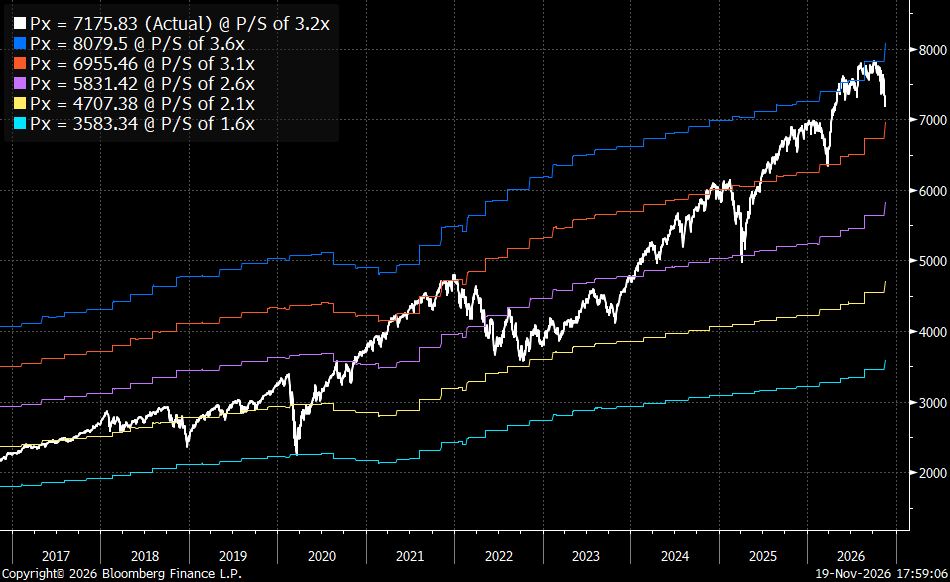
At present, I personally hold an extremely massive cash reserve, maintaining absolute restraint, quietly waiting for long-end rates to truly form a long-term iron ceiling, or for market sentiment to be extremely pessimistically and tragically stretched to the downside, prompting truly long-term-oriented industrial capital to step in and scoop up cheap chips. The core of the problem is: our current market position is still far from a truly safe absolute valuation bottom. Unless the Fed suddenly pivots to extreme dovishness, or the macroeconomy incredibly enters a flawless Goldilocks economic state (and the probability of both scenarios is extremely low), otherwise as long as the S&P is suppressed below 7,400, the market's core skew will remain firmly locked in a bearish configuration:
Core Conclusion: This is clearly a high-risk environment of violent volatility swings, where a tiny catalyst can instantly and completely rewrite the market's technical landscape. We must clearly recognize that on the deep dimension of the macro cycle, equity assets as a whole lack offensive win-rate and are facing heavy headwind erosion. Once volatility in the rates market begins to comprehensively catch up and erupt, it will push the risk skew of the equity market into an even more extreme bearish abyss; and the only remaining question is: before the rates storm fully closes in, can the AI supply chain's own fundamentals achieve a miraculous improvement within this fragile time window.