搜索
全部
文章
快讯
专题
活动
专栏作者
文章

查看更多
快讯
SoFi Integrates SoFiUSD into Polygon Payment Network
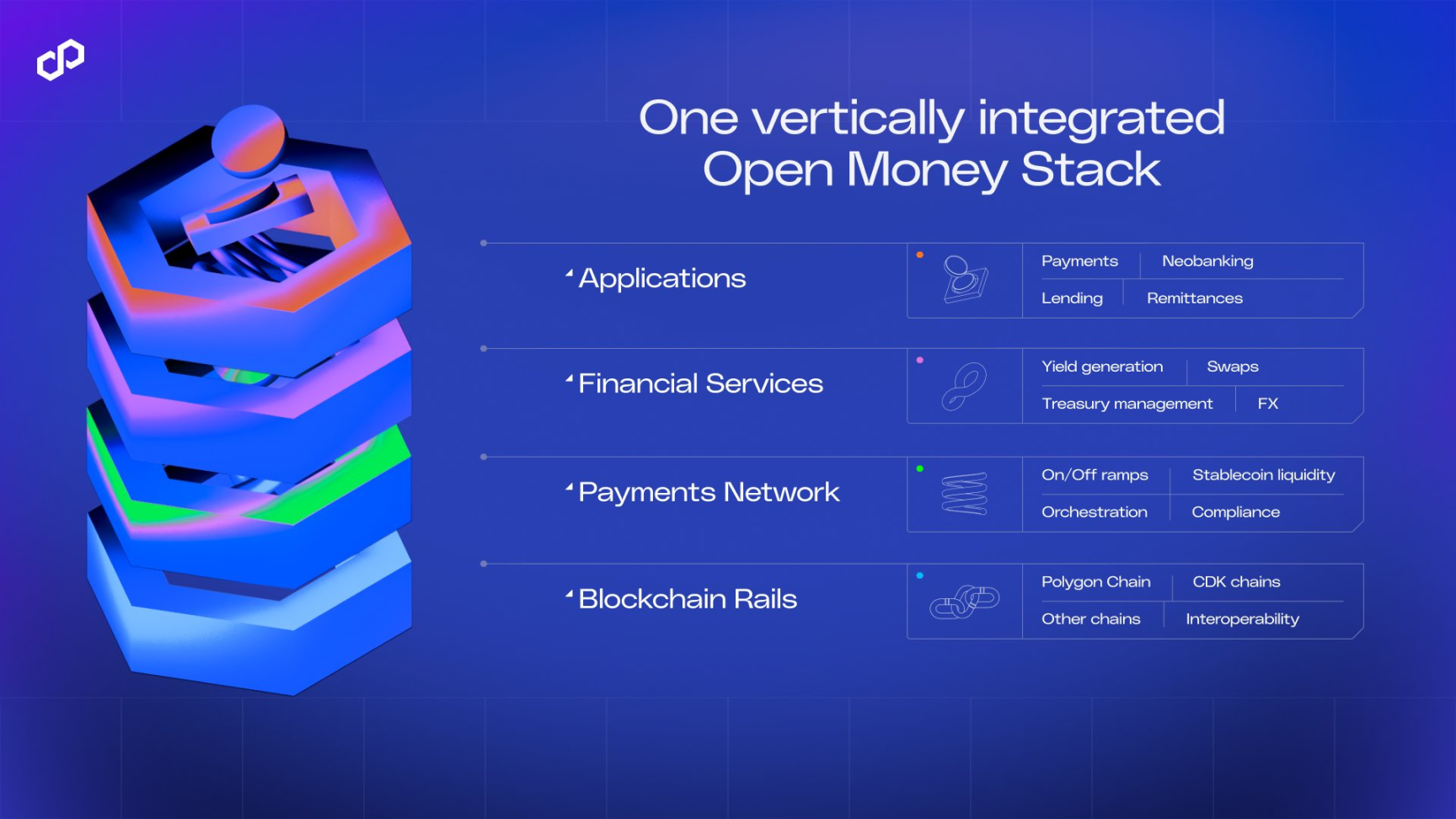
Odaily reports: Fintech company SoFi has integrated its issued stablecoin SoFiUSD into the Polygon Open Money Stack. The stablecoin is the first to be issued by a nationally chartered US bank and was previously live on Ethereum and Solana; SoFi's more than 17 million users can buy, hold, and swap SoFiUSD through the SoFi app without needing to open a separate crypto wallet or manually bridge across chains.SoFiUSD is redeemable 1:1 with the US dollar, issued by SoFi Bank, which is regulated by the US Office of the Comptroller of the Currency, and is already used to settle all of SoFi's Mastercard card business. The stablecoin is not a bank deposit, is not insured by the FDIC or SIPC, and is not guaranteed by the bank or classified as legal tender. (Decrypt)
BitGo Go Accounts Adds Support for USDC Minting and Redemption
Odaily reports: Digital asset infrastructure company BitGo has added USDC minting and redemption functionality to Go Accounts, available to eligible customers of its OCC-regulated subsidiary BitGo Bank & Trust. Customers can initiate and monitor USDC orders through the BitGo platform or API, with orders processed via BitGo's Circle Mint account, and a flat fee will be disclosed prior to confirmation. The service supports Ethereum, Solana, Base, Arbitrum, Polygon, Avalanche, HyperEVM, Monad, and Aptos.

A whale spent $2.68 million to buy nearly 30 million POL, then staked all of it
Odaily Report: According to Arkham monitoring, a whale bought 29.87 million Polygon native tokens POL through the cryptocurrency trading platform FalconX via an over-the-counter (OTC) transaction, with the transaction amount approximately $2.68 million, and then staked all of these POL.
Stablecoin Settlement Network Adds Monad as Visa Expands Blockchain Support
Odaily reports that Visa has added the Monad blockchain to its stablecoin settlement program, allowing card issuers and acquirers participating in the program to settle through Monad. The program also currently supports networks including Avalanche, Ethereum, Solana, Stellar, Circle's Arc, Base, Canton, Polygon, and Tempo. As of September 2026, Visa's stablecoin settlement annualized volume reached $20 billion, up more than 15x year-over-year; more than 225 stablecoin-related card programs have launched globally.
More asset withdrawals will resume in batches starting at 12:00 on November 6; Binance announces security incident progress
Odaily reports: Binance has released security incident recovery progress update #9, stating that it will begin restoring withdrawal services for a batch of assets in phases starting at 12:00 Beijing time on November 6. The relevant services will be gradually opened after security checks are completed, and not all assets will be opened at the same time; deposit services remain normal. The assets planned for withdrawal reopening involve networks such as BSC, Base, Ethereum, Optimism, Polygon, and Arbitrum, including USDE, PENDLE, ZRO, XRP, CAKE, and others. Binance said it will prioritize restoration based on user demand over the past week, and other assets will be added successively once conditions permit; during the recovery period, some users may encounter temporary delays or longer processing times, and if a withdrawal is unsuccessful, they can try again later.
Polygon Proposes PIP-93, Plans to Establish Unified Security Council with 8/11 Multisig and 7-Day Timelock
Odaily reports that the Polygon community has proposed draft proposal PIP-93, which aims to consolidate the Protocol Council, Polygon PoS, and AggLayer multisigs into a unified Polygon Security Council. The council will consist of 11 signers delegated by 10 institutions, adopting an 8/11 multisig strategy covering Ethereum and Polygon; Polygon Labs holds 2 seats, with the remaining institutions each holding 1 seat. Participating institutions include Sherlock, Hexens, Sigma Prime, Curve, QuickSwap, EthCC, L2Beat, and Coinbase, among others. Routine upgrades and parameter changes can be proposed by the Polygon Labs Operations multisig through a 7-day timelock, during which the Security Council may veto, or it can bypass the timelock to execute immediately or lift contract pauses. The proposal intends to replace the governance structure established by PIP-29, disclosing only the list of institutions holding seats rather than individual signer identities; it is currently in Draft status.
Polygon Proposes Hard Fork to Recover $6.8M in Stolen POL, Plan Requires Governance Approval
Odaily: Binance and Polymarket have proposed implementing a hard fork on the Polygon network to recover approximately 70.49 million stolen POL tokens, valued at about $6.8 million. Of these, Polymarket-related addresses account for 23.86 million tokens, while Binance-related addresses account for 46.63 million tokens. The tokens are planned to be transferred from 5 attacker-controlled addresses to verified recovery wallets designated by the two platforms, without changing the total POL supply.Polygon block producers have already blocked transactions from the affected addresses, but this restriction is only a temporary measure and cannot return the funds to their owners. The plan requires governance approval and must first be tested on the Polygon Amoy testnet, with discussion expected on November 5. The mainnet hard fork date has not yet been determined. (Cointelegraph)
Polygon Proposal Plans Hard Fork to Zero Out and Transfer Approximately 70.49 Million Stolen POL
Odaily reports that according to monitoring of a Polygon community proposal, members have proposed conducting a hard fork of the Polygon PoS mainnet to zero out approximately 70.49 million native POL held in attack addresses placed on a blocklist, and transfer them to a designated recovery address. Based on the price on October 29, these POL are worth approximately $6.5 million. Among them, Polymarket-related addresses involve approximately 23.86 million tokens, and Binance-related addresses involve approximately 46.63 million tokens; the proposal states that the total supply remains unchanged. The proposal is scheduled to be introduced at the protocol governance call at 22:30 Beijing time on November 5, with the activation block and client version yet to be determined.
Binance Adds Withdrawals for Certain Assets on Polygon and Avalanche C-Chain
According to an official announcement, Odaily has learned that the Binance platform has resumed withdrawals of POL, USDT, and USDC on the Polygon network, as well as AVAX, USDT, and USDC on the Avalanche C-Chain.Binance stated that it will restore withdrawals for more assets and networks in phases after completing security checks. Previously, the Binance platform had resumed withdrawals of SOL, USDT, and USDC on the Solana network.
Non-USDC ERC-20 tokens can now achieve cross-chain transfers via CCTP, Circle releases developer guide
Odaily reports: Circle has released a developer guide explaining how token issuers can enable cross-chain transfers for ERC-20 tokens other than USDC through CCTP. Issuers can deploy new native cross-chain tokens or configure already-issued ERC-20 tokens as custom CCTP connections; both approaches reuse Circle's messaging and attestation infrastructure and adopt a burn-and-mint model. Issuers can set their own owner, operator, pause permissions, rate limits, and per-transaction transfer caps, and Circle cannot take over control. According to Circle's developer documentation, CCTP for non-USDC went live in September 2026, supporting EVM chains such as Ethereum, Avalanche, OP Mainnet, Arbitrum, Base, Polygon PoS, and Arc, but not non-EVM chains such as Solana.
查看更多
活动
进行中
EthCC Aggregation Rave
 RaveDAO x Polygon
 SPIRITO BRUSSELS
2024
07/07

进行中
Linea product lead Declan Fox confirmed to attend the RaaS Day event co-hosted by Lumoz and Polygon
LineaGrand Hyatt Istanbul2023
11/16
已结束
Polygons first Try Your Best Learn Win event in the Chinese area
Polygonon-line2022
06/25
已结束
Countdown to Polygon Consensus Conference 2022 Aishwary Gupta Airborne on BitKeep Live Room on April 29
BitKeep & Polygonon-line2022
04/29
已结束
Polygon Consensus2022: Building the future of polygons for Web3
BitKeep & Polygonon-line2022
04/30