搜索
全部
文章
快讯
专题
活动
专栏作者
文章





查看更多
快讯
Former Ethereum Foundation employee sues the Foundation and Vitalik Buterin, alleging wrongful termination
Odaily reports: Kayleen Fulton (online handle "Nixo") filed a lawsuit on November 4 in Colorado against the Ethereum Foundation, its Singapore affiliate, management member Bastian Aue, and Ethereum co-founder Vitalik Buterin, alleging she was wrongfully terminated for questioning employee commitment requirements.The complaint states that Fulton was fired on April 6. She also alleges the Foundation engaged in disability discrimination and interfered with her medical leave rights, circumstances that coincided with the timing of her disclosure of a cancer diagnosis to the Foundation. The dispute involves the "EF Mandate" published by the Foundation on March 13, one clause of which requires employees who fail to fulfill their commitments to "fall on their sword."The complaint states that employees could choose to endorse the direction of the mandate or leave; Aue said the self-killing language was not meant literally. Fulton and colleague Trent Van Epps organized an open letter supporting the Foundation's direction but opposing some of the mandate's conditions; the letter gathered 53 signatures, and the two were subsequently fired.The complaint also cites a conversation between Fulton and Buterin on May 1 in Norway. Fulton claims she was offered a severance agreement of one year's salary, but after signing under pressure she did not receive payment and later withdrew the agreement; she is seeking damages in an undisclosed amount as well as unpaid wages. (The Block)

Tom Lee: Crypto Market Outlook Bullish Over Next 24 to 36 Months, ETH Price Slump Reflects Industry's Lack of Patience
Odaily reports: Tom Lee, Chairman of Ethereum treasury company Bitmine, stated in a post that while ETH's persistently lackluster price is disappointing, it more reflects the industry's lack of patience. In 2026, the tokenization wave is steadily advancing and achieving significant progress, with the vast majority of tokenized assets built on Ethereum, and Ethereum founder Vitalik Buterin has once again reaffirmed ETH's positioning as a store of value.Additionally, Tom Lee believes the crypto bull market has only just begun, the AI narrative has not absorbed all new capital, and overall the crypto market outlook remains bullish over the next 24 to 36 months, calling on investors to prepare accordingly.
Bitmine holds ETH worth approximately $13.6 billion, reaching 99% of its 5% target
Odaily reports: Digital asset treasury company Bitmine added 9,587 ETH, bringing its holdings to 6,070,092 ETH, valued at approximately $13.6 billion, accounting for 4.97% of ETH's total supply. The company stated that this ratio has reached 99% of its goal to hold 5% of ETH's total supply.Ethereum co-founder Vitalik Buterin posted on X explaining his rationale for viewing ETH as a store of value, including his view that the role of fee burning is no longer as significant as before, and that optimizing around fee burning may conflict with decentralization.As of November 8, Bitmine's total holdings were valued at $14.3 billion, including 216 bitcoin, $475 million in cash and marketable securities, $180 million in Beast Industries equity, and $75 million in Eightco Holdings positions. (Decrypt)
Tom Lee: Vitalik's Positioning of ETH as a Store of Value Is an "Earthquake-Level Shift"
Odaily reports that Bitmine Chairman Tom Lee stated that Ethereum co-founder Vitalik Buterin's declaration at Devcon 8 in Mumbai that "ETH is a store of value, ETH is money" represents an "earthquake-level shift," clarifying how ETH will capture value in the future tokenization and AI super-cycle.Tom Lee believes that ETH is not a cash-flow-centric token like HYPE or LIT, but rather a pure and trustworthy collateral asset. As more and more financial institutions migrate their assets onto the blockchain, Ethereum is poised to become their preferred Layer 1 network.He further pointed out that positioning ETH as a store-of-value asset is most aligned with Ethereum's future roadmap and the role it will play in the upcoming tokenization super-cycle.
Vitalik's "ETH Store of Value Thesis" Questioned: Don't Sacrifice L1 Fee Revenue
Odaily reports: In response to Vitalik's proposal that Ethereum should prioritize strengthening its store of value (SoV) positioning, DeFi researcher Ignas published a rebuttal stating that ETH may be more suitable as a store of value (SoV) asset than BTC and ZEC. Its advantages include native staking yields, privacy features in the roadmap, and potential deflation through transaction fee burning. Using BTC or ZEC as collateral to obtain loans typically requires relying on wrapped assets or trusting banks and centralized exchanges, whereas ETH can achieve native collateralization and asset swaps on the same chain.However, while Ethereum is re-emphasizing the store of value direction, the hope for Vitalik to pivot to this positioning is not because Ethereum L1 is believed to be permanently unable to generate sufficient fee revenue to drive ETH deflation. Scaling will also reduce transaction costs, but the key remains whether market demand can grow in tandem and whether the Ethereum community can drive demand growth.
Odaily Morning Brief
1. Nvidia's board of directors has launched an independent investigation; Jensen Huang acknowledged an extramarital affair and sent a letter of apology to employees;2. "Brother Maji" had 540 ETH long positions liquidated, with his Hyperliquid account wiped out;3. U.S. Senator Richard Blumenthal has requested that Binance, Tether, and others submit investigation records by January 4, 2027;4. $140 million in long positions were liquidated; a certain whale lost $61.41 million but still holds $113 million in long positions;5. Trump expressed support for Jensen Huang continuing as Nvidia CEO;6. Vitalik: ETH's store-of-value property deserves more attention than fee burning;7. CZ: Has downloaded the Genius App but has not yet traded, and will only accumulate and hold major coins.
Vitalik: The primary metric for ETH as a store of value asset is survivability
Odaily: Vitalik posted on X platform stating that if the main reason for holding ETH is to treat it as a store of value (SoV) asset, the primary metric is survivability. He said Ethereum should adopt conservative security tradeoffs, including hash-centric security mechanisms, formal proofs, and a number of rounds exceeding known security requirements by three times, while pursuing partial immutability; high thresholds should be set for precompiles that would expand protocol scope and for in-protocol rewards that could be captured. Vitalik also mentioned that multisig, Kohaku, 8288, and private-AA workflows can improve secure holding, private holding, and holding methods that balance privacy and security for ETH, while FOCIL aims to ensure that coin holders can send transactions; reducing infrastructure dependencies is also part of the decentralization roadmap, and he said that syncing a node running on his laptop took less than six hours and occupied one-eighth of the hard drive space. Vitalik stated that issuing more RWA and native decentralized assets natively on L1, as well as conveniently, securely, and trustlessly converting between ETH and other assets or using other assets with ETH as collateral, both help improve the utility of holding ETH; at the same time, the impact of fast block times on centralization needs to be carefully evaluated. He called decentralization and CROPS (censorship and capture resistance, open source, privacy, and security) the social reasons for caring about Ethereum, and said this is the direct source of the SoV property of holding ETH.
Vitalik: Pursuing fee burning may require highly interventionist governance and drive up Gas prices
Odaily reports: Vitalik posted on X that if ETH's market cap of approximately $270 billion were to be supported through fee burning, Ethereum would be equivalent in scale to a large enterprise ranked around 55th by market cap, such as L'Oréal. He estimates that L'Oréal's annual R&D spending accounts for about 0.58% of its market cap; if Ethereum invested at that same ratio, it would need to allocate approximately 700,000 ETH per year through protocol funding, and validator revenue would decrease by about two-thirds. Vitalik stated that large enterprises require sustained investment and governance, and for Ethereum to remain competitive over the long term, it would need highly interventionist governance, which is difficult to reconcile with decentralization and capture resistance.He also pointed out that optimizing fee burning may mean to some extent pursuing higher Gas prices, making the network unusable for some users. Pricing that maximizes the product of price and usage would result in less usage than pricing that maximizes usage within the resource limits of a secure blockchain.
Vitalik: ETH Burn-Based Valuation Support Is Not a True Floor; RWA Economy Provides Better External Support
Odaily reports: Vitalik posted on X that the valuation support derived from ETH burning is not a true floor, because burn revenue mainly comes from uses within the crypto ecosystem; if the ETH price falls sharply, the willingness to pay for these uses will decline accordingly. Vitalik stated that Ethereum now has better external revenue support due to the growth of the RWA economy, but such mature business is unlikely to see a repeat of the scenario where digital monkeys burned $180 million worth of ETH in a single day.
Vitalik: ETH's Store-of-Value Property Deserves More Attention Than Fee Burning
Odaily reports: Vitalik posted on X that, compared to positioning ETH as a fee-burning token, he believes ETH's store-of-value property is more worthy of attention. He stated that the fee-burning token positioning was never as strong as it appeared on the surface; optimizing around this positioning would require Ethereum and ETH to operate in ways that are difficult to reconcile with decentralization and capture resistance, whereas optimizing around the store-of-value property aligns with Ethereum's unique advantages such as decentralization and CROPS.Vitalik stated that EIP-1559 and its burning mechanism are reasonable and should be retained; but even if fee burning remains below 10% of the break-even level over the long term, there is no need to feel regret, as ETH's value comes from other aspects. He believes that the main practical advantage brought by Ethereum's decentralization and CROPS is stability; for those holding the asset, stability is the practical advantage of a store of value, rather than an additional property pursued purely for ideological reasons. In an era of AI-driven transformation, stability will be highly valued.
查看更多
活动
进行中
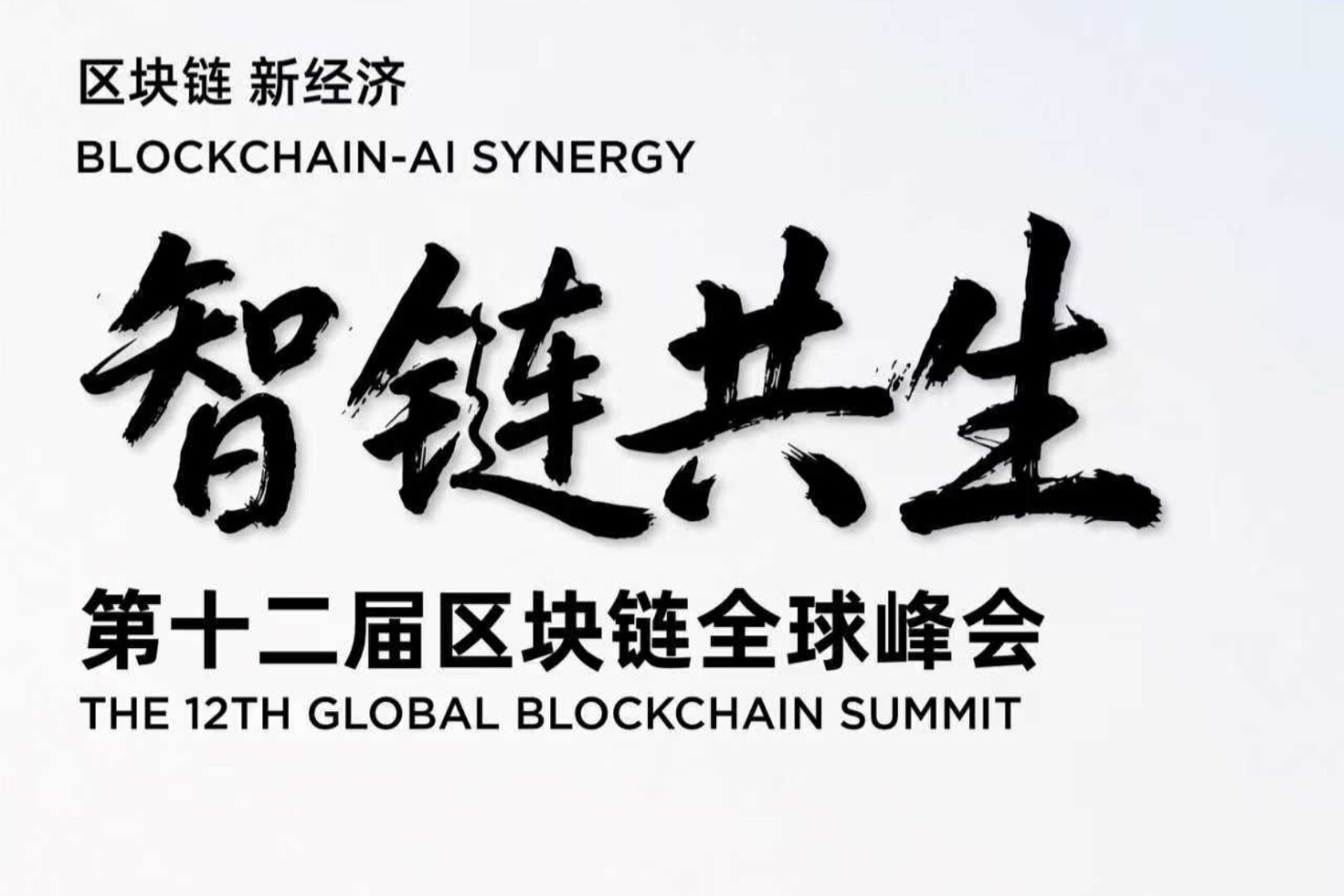
Xiao Feng and Vitalik Buterin to Headline as Agenda for the 12th Global Blockchain Summit Unveiled
 Wanxiang Blockchain Labs
 Hyatt on the Bund, Shanghai
2026
09/22

进行中
The first Ethereum Hong Kong event is coming soon, and important guests such as Vitalik Buterin will appear at ETH Hong Kong
PANews、ABCDE Capital、852Web3Hong Kong2023
10/22