

2027, the Token economy begins to enter the era of value capture

From Hyperliquid to Polymarket, prediction markets may become an important opportunity for the next round of Tokenomics transformation.
Over the past decade, one of the things the Crypto market has done best is create narratives.
From public chains and DeFi to GameFi and AI, every market cycle has been accompanied by new concepts, new assets, and new growth expectations.
But as the industry gradually matures, the market is undergoing a change worth paying attention to.
More and more investors are beginning to re-examine a project's fundamentals:
How many real users does it actually have? How much sustained revenue can it generate? And can that revenue be converted into the long-term economic value of its Token?
In the past, a project could gain market attention through an excellent narrative, a large community, and exchange listings.
But in the future, these factors may no longer be enough.
From Narrative-driven to Revenue-driven, from market narrative to Value Capture, this may be becoming an important shift in the next phase of Crypto investment logic.
And Hyperliquid and Polymarket happen to demonstrate this change from two different directions.
01|Hyperliquid: Real revenue is beginning to become the core of Tokenomics
If you were to look for the most worthwhile Crypto business models to study in recent years, Hyperliquid is undoubtedly one of them.
Its value lies not only in building a competitive trading platform, but also in proving that a Crypto protocol can generate substantial fee revenue through real user trading.
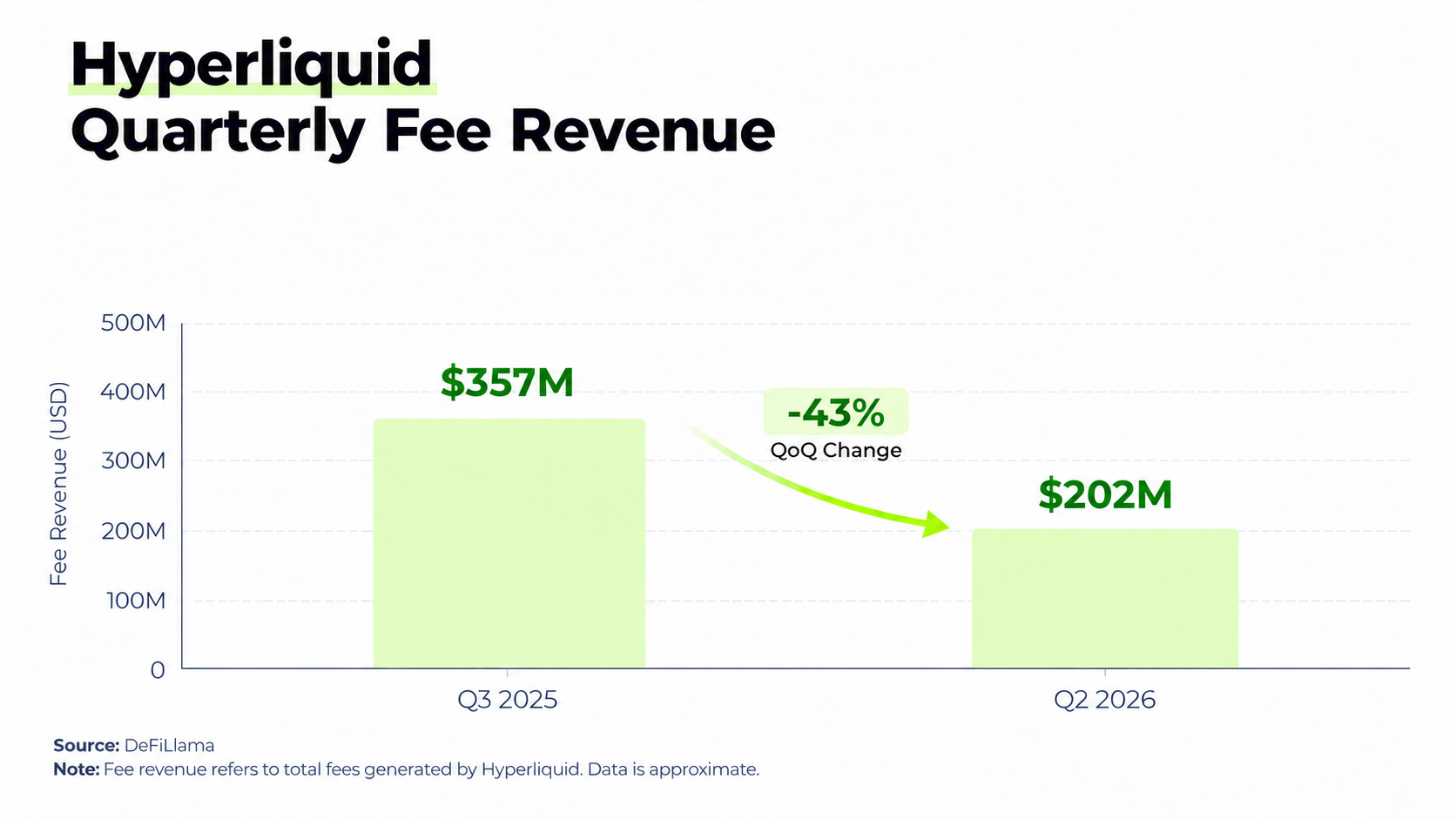
According to historical data from DeFiLlama, Hyperliquid generated approximately $357 million in fee revenue in Q3 2025, and still reached approximately $202 million in Q2 2026.
This means that trading protocols are already capable of forming fairly large-scale, ongoing commercial activity.
But what is more noteworthy is how Hyperliquid connects protocol operations with the HYPE economic mechanism.
Hyperliquid allocates the vast majority of qualifying trading fees to the Assistance Fund, which is used to buy HYPE on the market, and there is also a Token burn mechanism under specific circumstances.
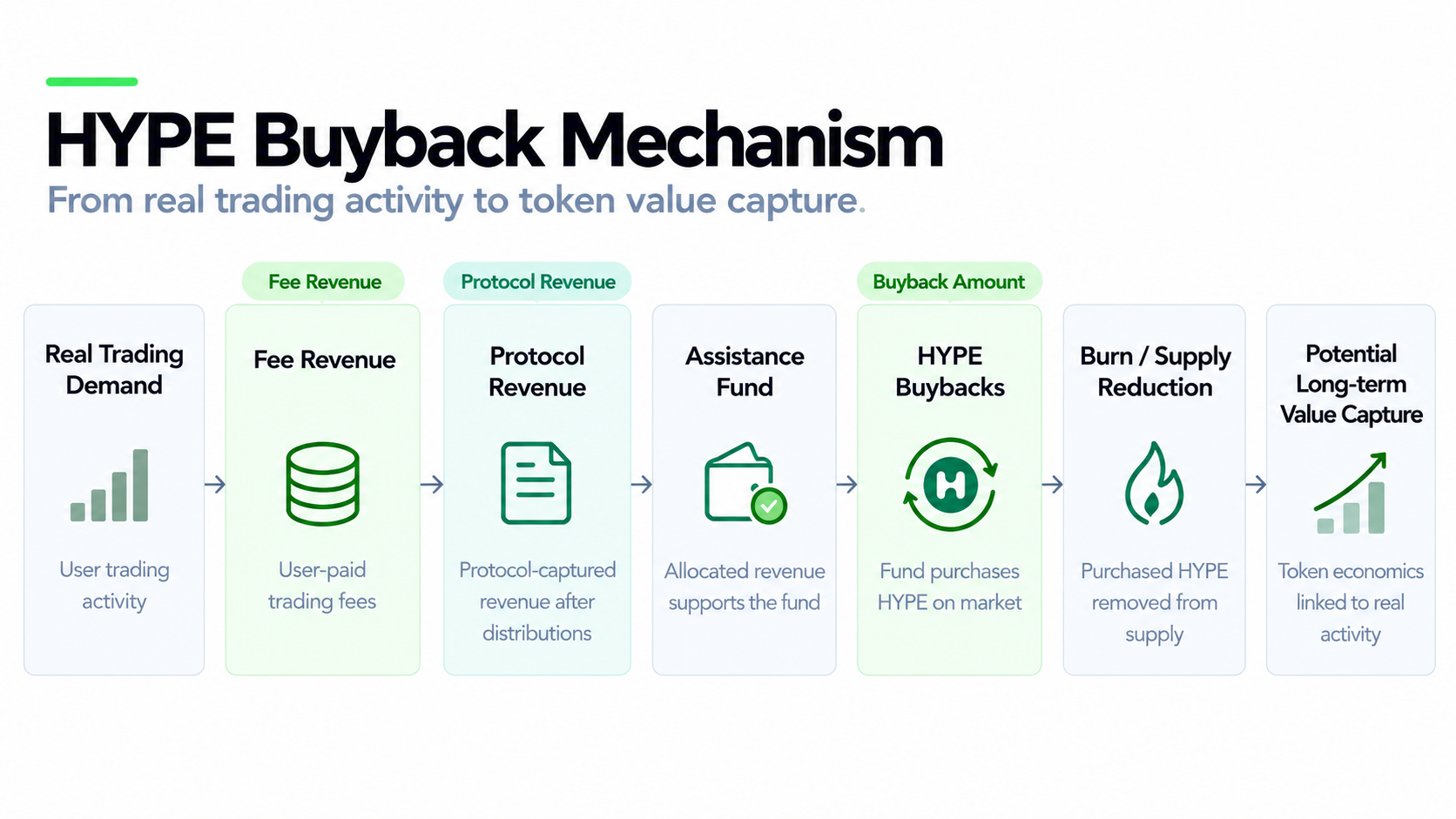
This forms a value capture path worth studying:
Real trading demand → Fee revenue → Token buyback → Long-term value capture
This is clearly different from the Tokenomics of the past, which relied heavily on inflationary incentives, staking yields, and market narratives.
The Token's economic mechanism is beginning to connect with the protocol's real business.
Of course, revenue growth does not mean the Token price will necessarily rise, and buybacks cannot eliminate market volatility.
But Hyperliquid provides an important industry sample:
A Token's long-term value logic can no longer be built entirely on future expectations, but can gradually establish a connection with verifiable business activity.
02|Polymarket: Prediction markets are forming a new revenue growth curve
If Hyperliquid proves that trading protocols can build powerful value capture mechanisms, then Polymarket is proving another thing: the prediction market itself is becoming a large-scale trading market with commercialization potential.
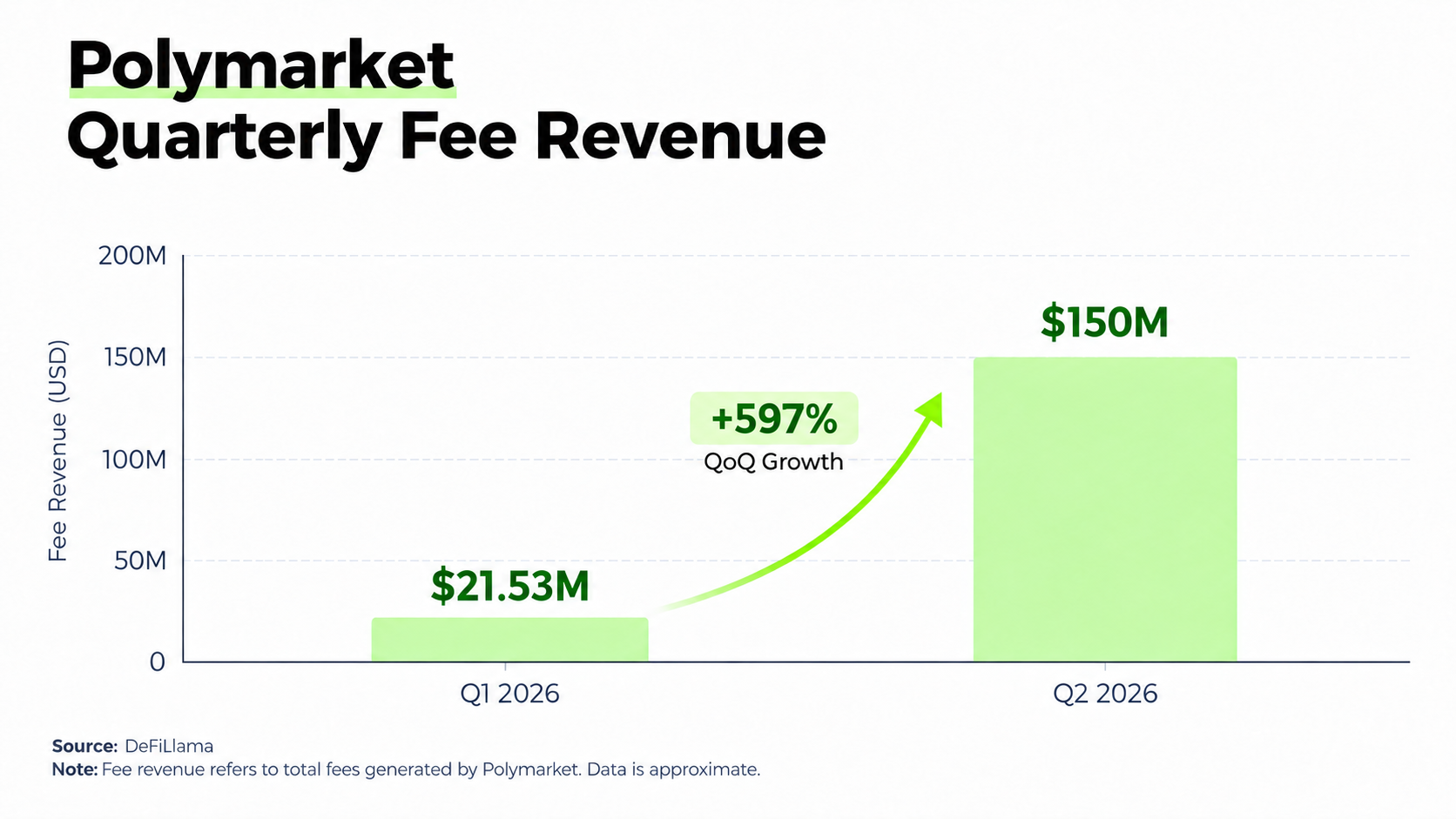
According to historical statistics from DeFiLlama, Polymarket generated approximately $21.53 million in fee revenue in Q1 2026, growing to approximately $150 million in Q2.
Behind this growth is the continuous expansion of the prediction market's application scope.
In the past, when people talked about prediction markets, they often first thought of U.S. elections, presidential elections, or Crypto price predictions.
But today, prediction markets are gradually moving toward a broader range of real-world events.
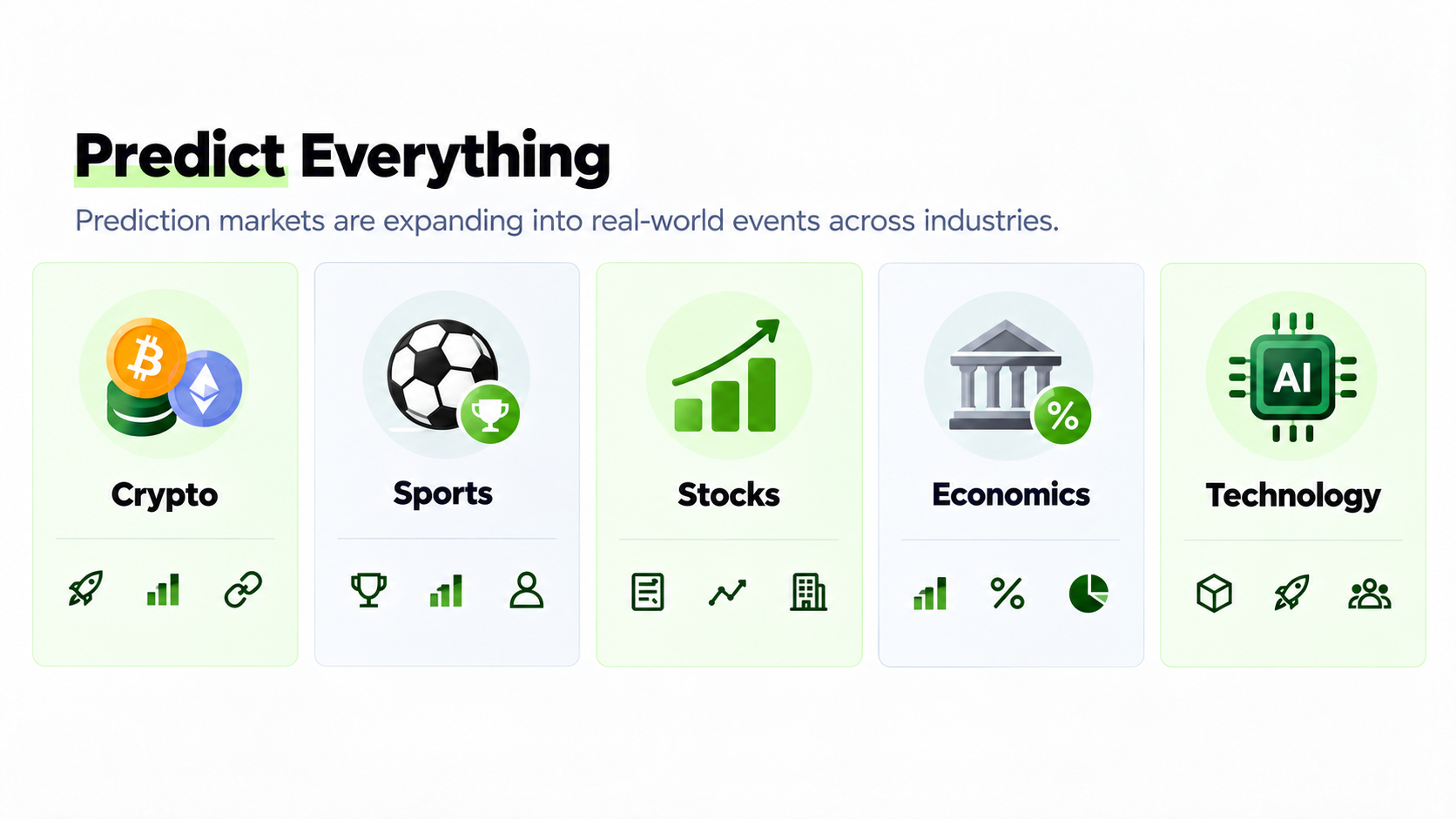
From Crypto to Sports, from Economics to Technology, and to events related to stocks, public companies, and capital markets, more and more real-world issues can express market expectations through prediction markets.
This has also allowed Predict Everything to gradually move from a concept toward a product direction with commercial imagination.
What makes prediction markets unique is that they do not rely on a single industry to continuously generate hotspots.
The global economy, sports events, technological development, and financial markets are changing every day.
Every important event may create new attention, user participation, and trading demand.
It should be distinguished that Polymarket's revenue growth does not mean it has already established the same Token buyback mechanism as Hyperliquid.
The two validate different capabilities.
Hyperliquid demonstrates how real trading revenue can establish a connection with Tokenomics.
Polymarket demonstrates how prediction markets can form user demand and commercial scale through continuous real-world events.
When the commercial capability of prediction markets is combined with the Token's value capture mechanism, a new direction worth paying attention to emerges.
03|From Buffett to Crypto: Long-term investment logic is changing
In traditional capital markets, long-term value investing is not a new concept.
Buffett's long-term investments in Coca-Cola and Apple were not just because they had well-known brands or exciting business stories.
More importantly, these companies can establish sustained customer demand, operating revenue, and cash flow through real products and services, and create long-term value for shareholders through capital allocation.
Behind this is a relatively clear logic:
Real demand → Sustained operations → Profitability → Long-term value creation
By contrast, the Crypto market has long had a problem:
Many projects have Tokens but lack a sufficiently clear value capture mechanism.
Even if a project has a large number of users, trading activity, and ecosystem partnerships, Token holders may not necessarily be able to obtain a corresponding economic connection from the protocol's operations.
Token prices often depend more on market sentiment, liquidity, and future expectations.
But projects such as Hyperliquid are promoting another approach.
When a protocol can generate real revenue and, through a transparent mechanism, use part of that revenue for Token buybacks, burns, or other economic arrangements, Tokenomics begins to have a clearer basis for fundamental analysis.
A Token is not equal to a stock, nor does it naturally represent ownership or profit distribution rights in a company.
But when investors evaluate Tokens, they may increasingly focus on questions similar to those in traditional value investing:
Does the project have long-term demand?
Can revenue be sustained?
Can the economic mechanism truly capture value?
This change may be one of the most important structural trends in the next round of the Crypto market.
In the future, the most competitive Tokens may not simply be those with the strongest narratives, but those that can continuously prove their own economic value.
04|What happens when Tokens are combined with prediction markets?
In the past, the main functions of Tokens were usually centered on trading, governance, staking, payments, and ecosystem incentives.
These functions formed the foundation of early Web3 Tokenomics.
But for a large number of Tokens that have already been issued and have communities and liquidity, a practical question has always existed:
Beyond trading and holding, how many reasons do users still have to keep using it?
Prediction markets may provide a new answer.
When a Token is integrated into a prediction market, it has the opportunity to transform from a purely trading asset into an application asset that can participate in global event forecasting.
Users can use the corresponding Token to participate in different types of prediction events, such as Crypto, Sports, Economics, and Technology.
Prediction results determine trade settlement, while users' participation activities continuously create actual usage demand for the Token.
More importantly, prediction markets are not a one-time use case.
Global events continue to occur, and new prediction topics continue to emerge.
This means Tokens have the opportunity to gain continuous usage activity, rather than relying only on periodic market hotspots.
At the same time, prediction trading can also generate fee revenue.
When this revenue is combined with Token buybacks, burns, ecosystem incentives, or other value capture arrangements through clear economic mechanisms, Tokenomics has the opportunity to form a new loop:
Token Utility → Trading Activity → Protocol Revenue → Buyback & Burn → Value Capture
Among these, buybacks and burns need to be supported by mechanisms that are actually implemented; they do not happen automatically after integrating a prediction market.
But the significance of this direction is very clear:
Prediction markets may not only add a use case for Tokens, but also offer an opportunity for Tokens' economic models to establish a connection with real business revenue.
This is also an important reason why it differs from many traditional Token Utility schemes.
05|From community hype to real Token usage activity
Web3 projects usually place great importance on community.
Community size, social media attention, interaction volume, and KOL communication capability have long been important indicators for measuring a project's influence.
But community operations also face a common challenge:
How can users remain willing to continue participating after marketing activities end?
Traditional airdrops, tasks, trading competitions, and social activities can often create attention in the short term.
But when the activities end, user participation may also decline accordingly.
Prediction markets provide another way of community operation.
They can transform continuously occurring global events into topics of shared community attention and participation.
For example, an important football match, a technology product launch, an economic policy decision, or an important announcement by a public company could all become content for community members to participate in predictions and discussions.
This forms a natural participation loop:
Hold Token → Participate in predictions → Follow results → Community discussion → Continued participation
Unlike one-time marketing activities, global events continue to occur, and prediction markets can continuously generate new participation topics.
This means community operations have the opportunity to shift from periodic marketing pushes to more continuous product-driven engagement.
More importantly, community activity no longer remains limited to chats, reposts, and interaction data.
It can also establish a connection with actual Token usage.
From creating community hype to creating real Token usage activity.
And when these activities further generate protocol revenue, there is an opportunity to establish a more direct connection between community growth and the Token economy.
06|From community traffic to a new user growth entry point
User growth for traditional Web3 projects usually relies on exchange exposure, KOL promotion, ecosystem partnerships, and community propagation.
These methods require projects to continuously invest resources and actively seek new users.
But when a Token is integrated into a prediction market, it has the opportunity to enter an application scenario that originally did not belong to its own ecosystem.
Suppose a user originally only wanted to participate in the prediction of a certain sports event.
When he enters a prediction market that supports multi-currency trading, in addition to stablecoins, he may also discover that ABC can also be used to participate in predictions.
If ABC has attractive community rights, activities, or other utility value, he may further learn about the project behind this Token.
The traditional model is usually:
Learn about the project first → Then buy the Token → Finally look for use cases
The new model may be:
Discover the application scenario first → Then learn about the Token → Further understand the project ecosystem
This means that Tokens can no longer only be discovered by users through trading markets or marketing activities.
They can also enter new user groups through actual applications.
For Tokens that already have a mature community and liquidity foundation, this growth path has value worth exploring.
Especially against the backdrop of the continued growth of the prediction market user base, Tokens that establish application scenarios earlier have the opportunity to gain user awareness, community participation, and ecosystem partnership experience earlier.
A new application entry point may become a new starting point for Token growth.
07|In 2027, Token Listing may take on a new meaning
In the past, Token Listing usually meant listing on a centralized exchange or a decentralized exchange.
CEX Listing solves the problems of trading channels and market accessibility.
DEX Listing solves the problems of on-chain liquidity and asset exchange.
But when Tokens can be used directly in prediction markets, Listing may begin to take on a new meaning.
Prediction Market Listing.
It is no longer just adding another trading venue for a Token.
Instead, it allows the Token to enter an application market with real user participation, continuous event content, and potential protocol revenue.
This means that the value of Token Listing may expand from pure trading liquidity to actual applications and economic activity.
For Tokens that have already completed exchange listings and have a community and liquidity foundation, this may become an ecosystem布局 worth paying attention to in the next phase.
Especially against the backdrop of the market placing increasing emphasis on Value Capture, new application scenarios are no longer just a supplement to product features.
They also have the opportunity to become an important part of Tokenomics.
Of course, not all Tokens are suitable for integration into prediction markets. Liquidity, technical security, market demand, and applicable legal requirements remain basic conditions that need to be evaluated.
But for Tokens that meet these conditions, prediction markets provide a new possibility:
Beyond existing trading markets, further establish real usage demand and economic activity.
And as more and more Tokens begin to explore this direction, prediction markets may also gradually develop from an emerging application into important infrastructure for the Token ecosystem.
08|The real opportunity may belong to the Tokens that are the first to complete the value capture transformation
Crypto will not stop creating new narratives.
But having a narrative alone may make it increasingly difficult to support a project's long-term development.
In the future, the market may pay more attention to real users, real revenue, and verifiable economic value.
Whether a Token has long-term competitiveness may no longer depend only on the number of exchanges, community size, and market attention.
It also depends on:
How many users actually use it?
Can these usage behaviors be sustained?
How much revenue can actual applications generate?
And how much of that revenue can be captured by the Token economy?
Prediction markets may provide new answers to these questions.
They can enable already existing Tokens to enter an application market that continuously generates new events, new content, and trading demand.
They also have the opportunity to connect user participation, protocol revenue, and Tokenomics.
For Tokens that already have a mature community and market foundation, this is not just adding a feature.
It may be an important opportunity to move from Narrative-driven to Revenue-driven, and from Token Utility to Value Capture.
And in the early stage of the formation of new application infrastructure, Tokens that complete their布局 first have the opportunity to establish user awareness earlier, accumulate actual usage data, and explore sustainable economic models.
This first-mover advantage does not guarantee success, but it may affect their position in future ecosystem competition.
In the past, Web3 has been solving the problems of how Tokens are issued, how they are traded, and how they gain liquidity.
In the future, a more important question may be:
How can Tokens continuously create and capture economic value through real usage?
In 2027, this question may become one of the most important propositions of Tokenomics.
And prediction markets may be one of the answers that is currently taking shape.
PolyWin
Open Finance for Prediction Markets.
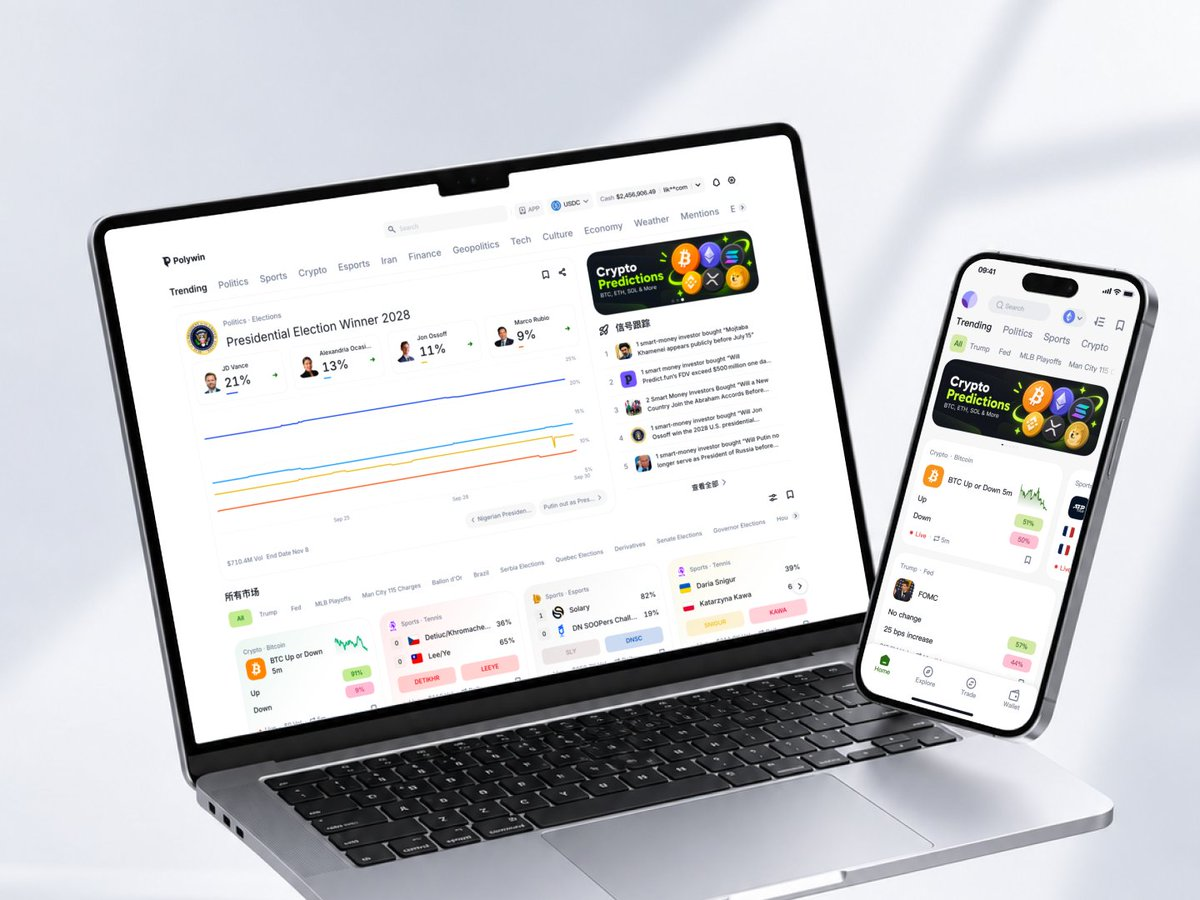
PolyWin is building decentralized multi-currency prediction market infrastructure, supporting eligible Tokens to directly participate in prediction trading and settlement.
PolyWin's long-term goal is not only to expand the range of assets supported by prediction markets, but also to explore connecting real Token usage, continuous trading activity, and protocol revenue with value capture mechanisms.
From platform ecosystem to partner projects, PolyWin hopes to promote prediction markets as new application infrastructure for Tokenomics and provide more room for implementation of economic mechanisms such as revenue sharing, Token buybacks, and burns.
Predict Everything. Capture Real Value.
Token Listing · Multi-Asset Prediction Markets · Revenue Sharing · Tokenomics Integration
Risk Disclaimer: Prediction market trading involves