搜索
全部
文章
快讯
专题
活动
专栏作者
文章
查看更多
快讯
LitVM mainnet is about to launch, testnet infrastructure has migrated to Zeeve
Odaily reports: The Litecoin Foundation states that the LitVM mainnet is coming soon. LitVM has migrated its LiteForge testnet infrastructure to Zeeve to strengthen the underlying infrastructure, support the planned mainnet launch, and continue advancing Litecoin's smart contract capabilities.It is reported that the migration was officially announced on November 11. The network Chain ID remains 4441, and the Gas token remains zkLTC. Users who have already connected to the testnet need to update the RPC and block explorer configurations in their wallets; there is no need to re-add the network.LitVM documentation shows that its Rollup-as-a-Service infrastructure has migrated from Caldera to Zeeve, and mainnet connection details will be announced once confirmed.
Suspend decision on Glamsterdam upgrade, Ethlabs recommends waiting for external audit results to be published
Odaily reports: Ethlabs recommends not making a decision on the Ethereum Glamsterdam upgrade until the situation is clarified. The team has been monitoring and analyzing the potential impact of EIP-8037 and EIP-8038 on deployed smart contracts for more than two weeks; the results of external audits commissioned by the Ethereum Foundation and conducted by Chain Security and Dedaub are expected to be published on November 16. Ethlabs recommends not proceeding with specification changes or scheduling the Hoodi testnet fork until the audit findings are published and a clear position is formed, and calls on application developers to run the self-check tool provided by the Foundation and disclose potential issues via glamsterdam@ethereum.org.
Mercado Bitcoin Restores Read-Only Account Access in Phases, Withdrawal Timeline Undetermined
Odaily: Brazilian crypto exchange Mercado Bitcoin on Monday began restoring read-only access to user accounts in phases, allowing users to view balances and holdings as of November 2. The exchange has not yet announced when withdrawals will resume, after attackers moved approximately $49 million in assets off the platform.Fabricio Tota stated that nearly all assets were unaffected by the incident; some of the stolen funds were frozen within hours after the exchange announced the attack. Security analysts said the attackers moved funds through ordinary transfers rather than exploiting smart contract vulnerabilities. Mercado Bitcoin has not yet explained how the attackers gained wallet access.In the next phase, users will need to confirm their platform registration information before they can move funds. Mercado Bitcoin plans to first restore Pix withdrawals and will only allow users to withdraw funds to accounts under their own names; the specific timeline has not yet been announced. (Cointelegraph)
BlockUnion and EthSystems Announce Ecosystem Partnership to Advance Institutional-Grade Privacy Infrastructure on Ethereum
Odaily reports that Asian Web3 ecosystem platform BlockUnion has announced an ecosystem partnership with EthSystems, an institutional-grade privacy infrastructure company on Ethereum, to jointly advance the development and application of institutional-grade on-chain financial solutions.EthSystems was founded by Mo Jalil, former Head of Institutional Privacy at the Ethereum Foundation, and focuses on leveraging technologies such as zero-knowledge proofs (ZK), fully homomorphic encryption (FHE), multi-party computation (MPC), and trusted execution environments (TEE) to address data confidentiality and compliance challenges in the process of bringing financial operations on-chain.Under part of the partnership plan, EthSystems will support ETH HK Hub in conducting institutional education, thematic seminars, and technical exchanges, and will leverage BlockUnion's ecosystem network in Asia to connect financial institutions and enterprises with the EthSystems technical team, driving the development of privacy-preserving applications and institutional-grade on-chain financial solutions.The partnership aims to further connect institutional needs with Ethereum-native technology and promote the practical application of Ethereum smart contracts in enterprise-level financial scenarios.
DIFC Courts Propose Dispute Resolution Oracle Framework, Aiming to Execute Rulings Directly On-Chain
Odaily reports that the Dubai International Financial Centre (DIFC) Courts have published a whitepaper proposing a "Dispute Resolution Oracle" (DRO) framework designed to connect courts with blockchain networks, enabling rulings involving digital assets to be executed directly on-chain. Parties must agree in advance on the governing authority; during disputes, assets such as tokenized real estate and funds within smart contracts may be temporarily frozen, and after a judgment is rendered, the system will send authorization instructions to the chain. The framework was developed by the DIFC Courts in collaboration with DECA4 Advisory, and features freeze periods, appeal rights, and multi-approval mechanisms. It is positioned as a voluntary international standard and will undergo public consultation and controlled testing before launch.
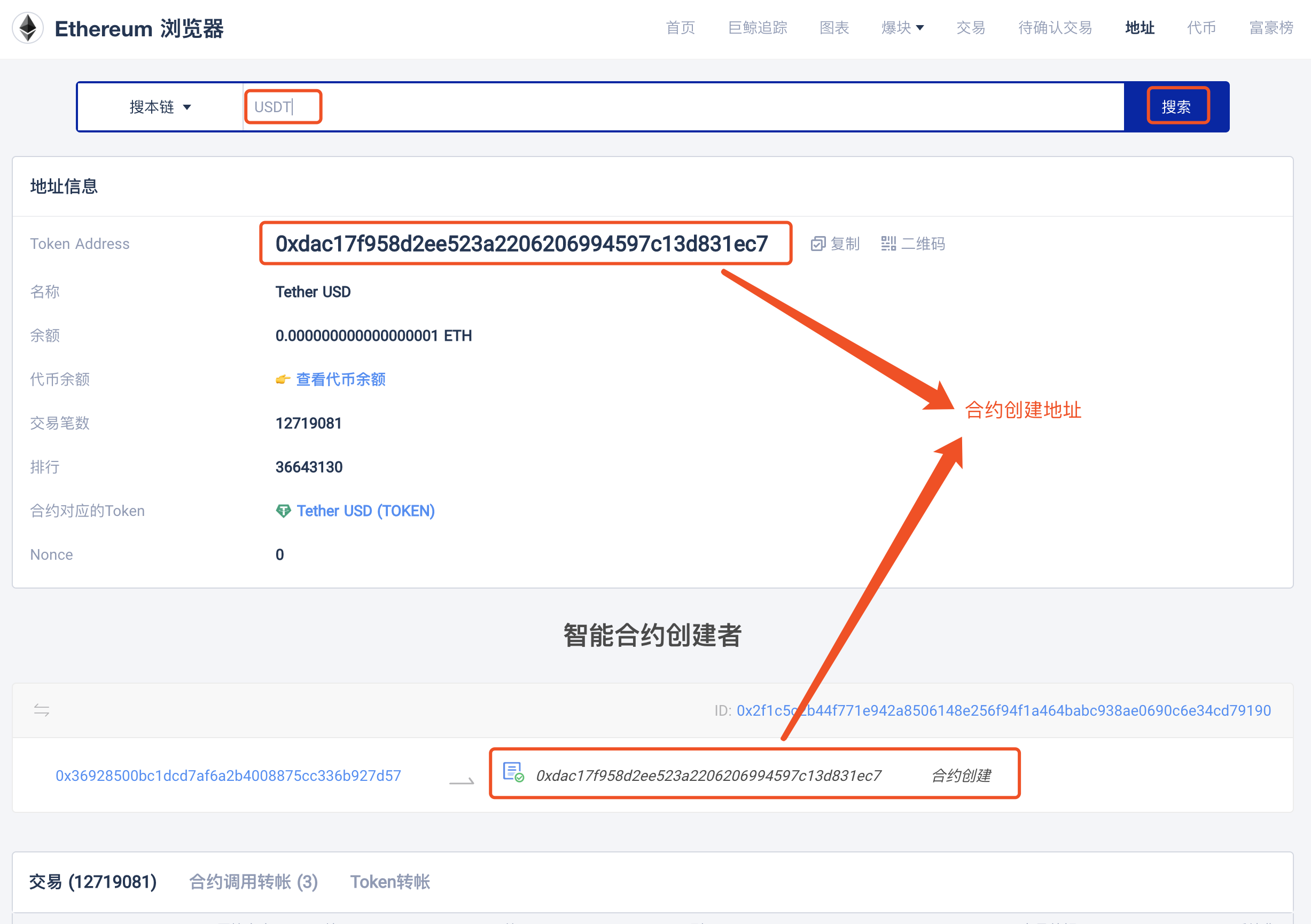
Tether CEO: USDT Contract Is Only About 300 Lines of Code, Serving Over 730 Million Users
Odaily reports that Paolo Ardoino stated in a speech at the 2026 Plan ₿ Forum in Lugano that USDT is essentially a smart contract of only about 300 lines of code, changing the lives of hundreds of millions of people. Tether currently has over 730 million users, adding 30 million wallets per quarter, a growth rate surpassing the vast majority of fintech companies; for ordinary people living in economies with annual inflation rates as high as 100%, USDT provides a channel to hold US dollars.
Glamsterdam launched on Sepolia on October 6, with the Hoodi fork pending resolution of smart contract risks
Odaily reports: Ethereum core developers have postponed the Glamsterdam upgrade fork on the Hoodi testnet until security issues involving 8 smart contract invariants are resolved. The Ethereum Foundation stated that EIP-8037 and EIP-8038 adjust the gas accounting method for certain operations, which may affect projects that rely on fixed gas cost assumptions.Smart contract auditing firm ChainSecurity released a report on October 13, pointing out that these two proposals may break smart contracts that rely on fixed gas assumptions when external calls fail. The Glamsterdam upgrade was launched on the Sepolia testnet on October 6. (Cointelegraph)
Bitget Ecosystem RWA Protocol Reality Partners Strategically with Merkl to Enable Dividend Distribution for rToken in DeFi Scenarios
Odaily – According to official Bitget news, Reality, Bitget's ecosystem tokenized US stock protocol, has entered into a strategic partnership with DeFi rewards infrastructure Merkl. Through Merkl's reward forwarding feature, the two parties will identify the actual holders of rTokens deployed in supported DeFi protocols. Users can still receive dividends in stablecoin form according to the rules even when they use rTokens in DeFi scenarios such as lending, liquidity pools, or staking.Pablo Veyrat, CEO and co-founder of Merkl, stated that a major challenge facing DeFi assets is how to identify the actual holder behind each position. Merkl's reward forwarding technology can penetrate multiple layers of nested smart contracts to identify the underlying asset holding relationships, thereby ensuring that dividends are accurately distributed to eligible holders.Bitget CEO Gracy Chen stated that the value of tokenized stocks should not be limited to trading. Even when users deploy rTokens into DeFi applications, they should be able to continue receiving eligible dividends. This partnership with Merkl will jointly solve this challenge and enable tokenized stocks to deliver greater value in everyday financial applications.According to a DeFiLlama report, rToken's cumulative trading volume reached $1.16 billion from June to July 2026; in July 2026, the number of users trading both crypto assets and rTokens increased by 23.54% month-over-month. This partnership will further drive rToken's expansion from trading scenarios into the DeFi ecosystem, enriching the on-chain application scenarios for tokenized stocks.
Backpack CEO: Once Wall Street Fully Adopts APIs, a Five-Person Team Could Build the Next Robinhood
Odaily reports that Backpack CEO Armani Ferrante stated that if the entire financial infrastructure of Wall Street becomes APIs that developers can directly call, programmable finance will spawn a large number of innovative experiments. He gave an example, saying that at that point, a dorm-room startup team of just five people could potentially build the next Robinhood, something that would be almost impossible to achieve under the traditional financial system.Ferrante also pointed out that traditional financial products can be reimplemented through smart contracts, thereby significantly reducing operating costs and product fees. For example, developers could create on-chain products that track the S&P 500 index (SPY), driving fees down to near zero. He believes that as the openness of financial infrastructure increases, a large number of such innovative attempts will emerge in the future.
Stellar Bell Upgrade Goes Live on Testnet, Mainnet Vote to Follow
Odaily: Stellar's Bell upgrade has gone live on testnet, with a mainnet vote to follow. This upgrade requires wallets and indexers to update their software to adapt to the network changes, and introduces optional post-quantum signature verification for smart contracts, which developers can enable as needed.
查看更多
活动
进行中
Numen Cyber Smart Contract Security Capture the Flag Competition
 Numen Cyber

2023
03/28

已结束
Chaohua Community Issue 134 | To achieve privacy protection at the protocol and smart contract levels, will Partisia be one of the necessary components of Web 3?
Partisia Blockchainon-line2021
12/02
已结束
TechShare #1|How to get started with ink quickly! smart contract
2021
04/08