

Behind Hyperliquid's massive C-end expansion, 400,000 retail users lost $280 million

This article is from: Hanson Birringer, Co-founder of Hyperdash
Compiled by Odaily (@OdailyChina); Translator: Azuma (@azuma_eth)
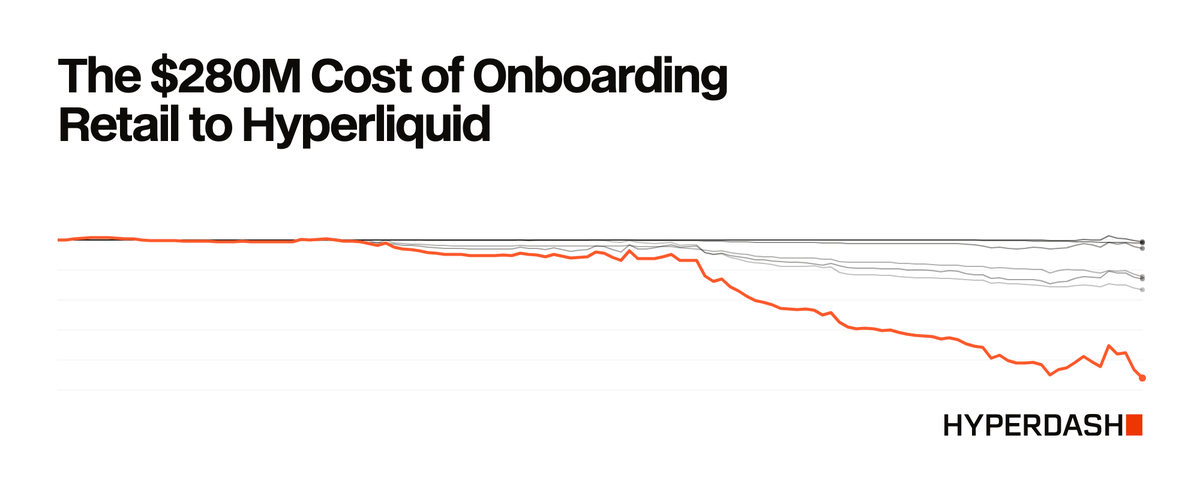
Editor's Note: MetaMask, Phantom, Rabby, OneKey, PumpFun... a growing number of consumer-facing applications have integrated with Hyperliquid through the Builder Code mechanism, offering perpetual contract trading services directly to their users on the frontend. By charging an additional Builder Fee at the top layer, these consumer apps have gained a new revenue stream, and some have even earned tens of millions of dollars through this route.
However, while the consumer apps are raking in profits, the retail traders placing orders through these apps don't seem to be doing so well — Hanson Birringer, co-founder of Hyperdash, found in his research that on the six major mainstream apps integrated with Hyperliquid, retail traders have collectively lost $280 million.
The following is the full text of Hanson Birringer's research, compiled by Odaily.
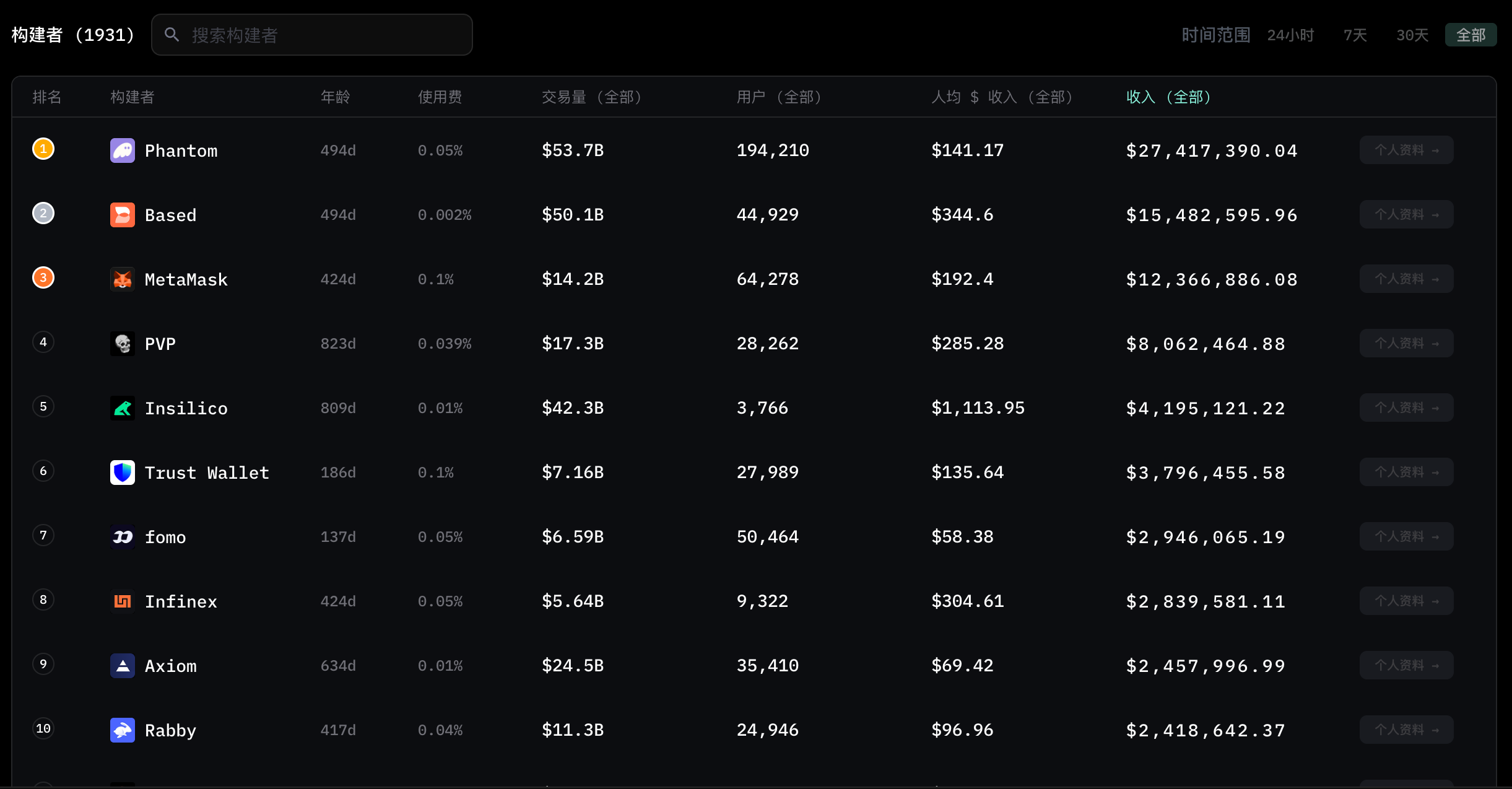
We tracked nearly 400,000 wallets that traded perpetual contracts on Hyperliquid through six consumer-facing apps: Phantom, MetaMask, Rabby, Trust Wallet, Invo, and fomo. These apps onboard users to Hyperliquid via Builder Code and earn fees on every trade.
Today, these consumer apps have become an important user acquisition channel for Hyperliquid, bringing more traders, trading volume, and fee revenue to Hyperliquid every month. However, users of these apps have accumulated losses of $280 million on Hyperliquid, and very few of them actually stick around.
This article will analyze the composition of these traders, the assets they trade, and their trading performance across different periods.
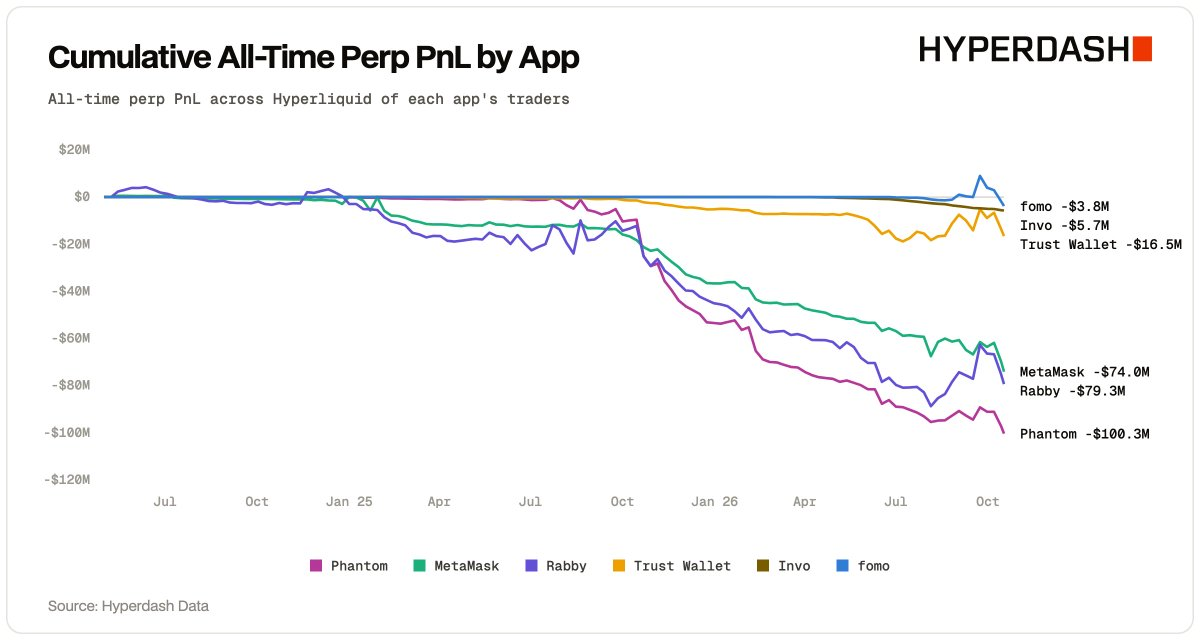
Most of the losses occurred over the past year, coinciding with the rapid expansion of these apps. Of the $280 million in losses, approximately $126 million was generated from trades through these apps since November 10, 2025; the remaining losses occurred before November 2025, or from trades on Hyperliquid that were not conducted through these apps.
Trader Profile
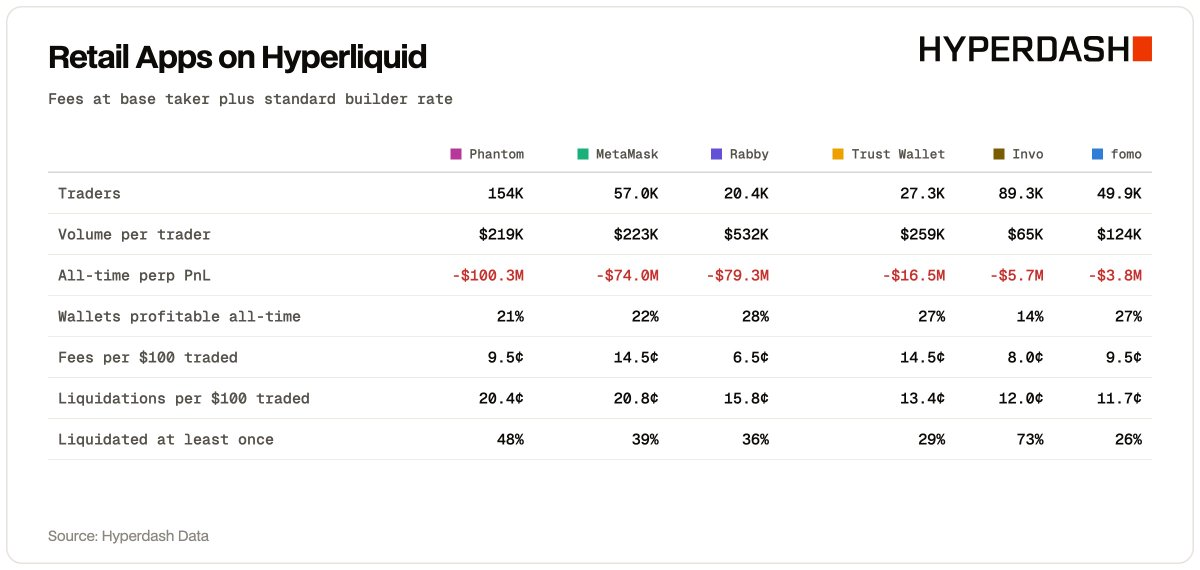
The vast majority of these accounts are small retail traders. Across five of the six apps, the typical deposit amount per wallet is only $30 to $60. Rabby is the exception — it has fewer user accounts, but the individual account sizes are noticeably larger, and its users are also the group most likely to be profitable.
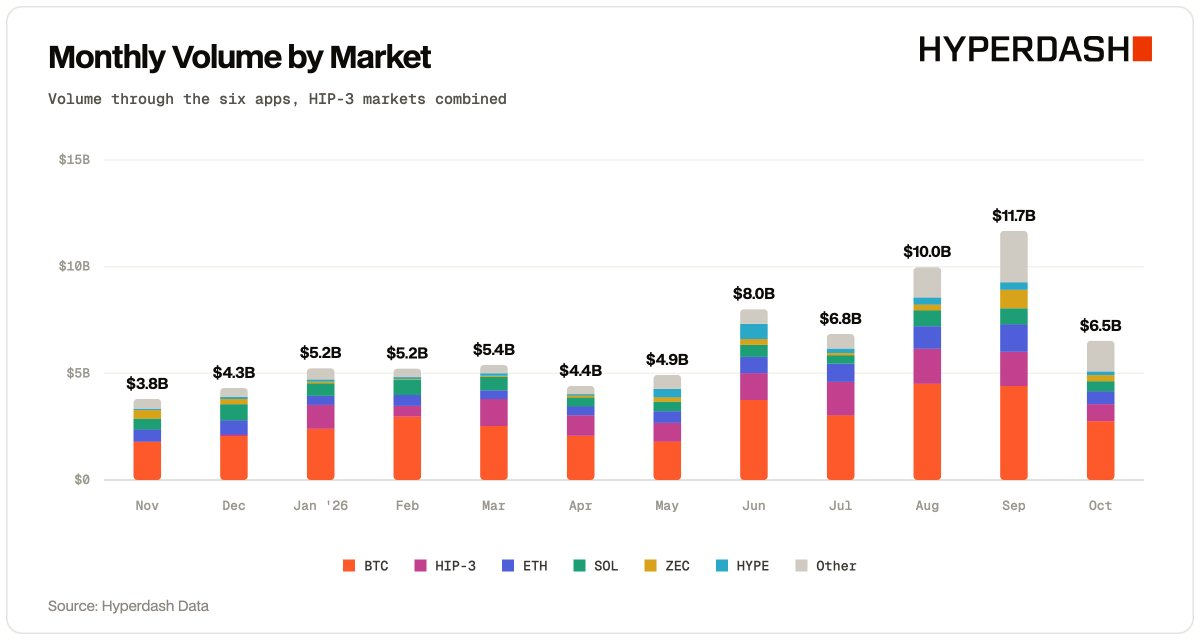
Trading activity is concentrated in markets familiar to retail traders. BTC accounts for nearly half of the total trading volume across these apps. Close behind is the HIP-3 market, including assets such as crude oil, silver, and gold. This category of market saw virtually no trading through these apps before January of this year, yet it has now become the second-largest trading category.
Where the Money Went
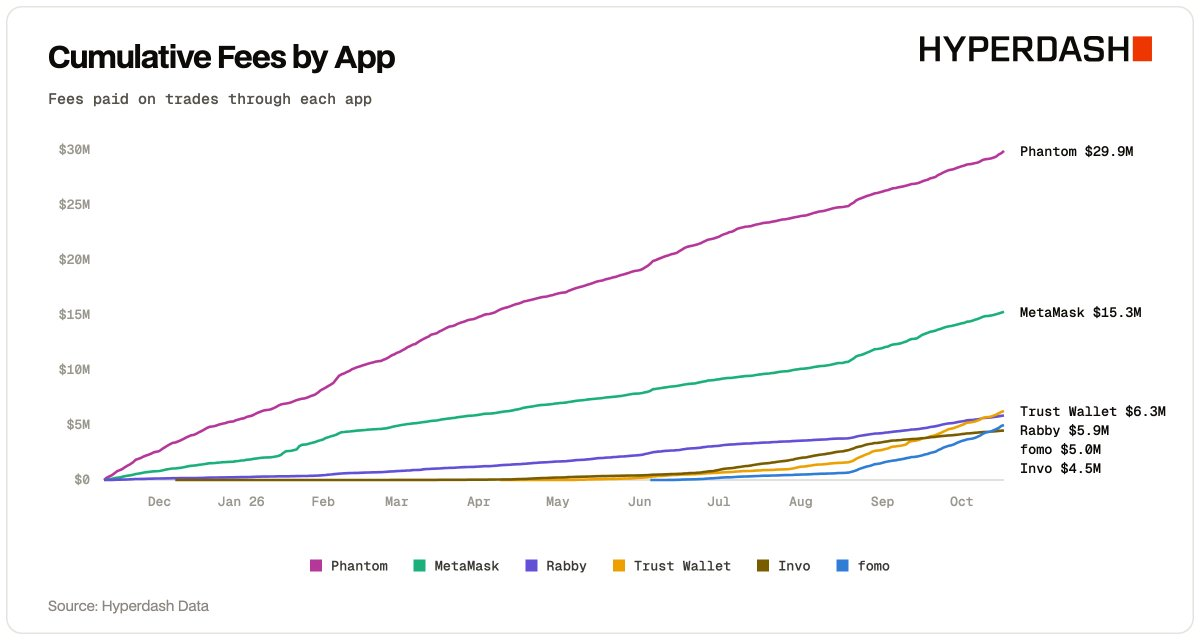
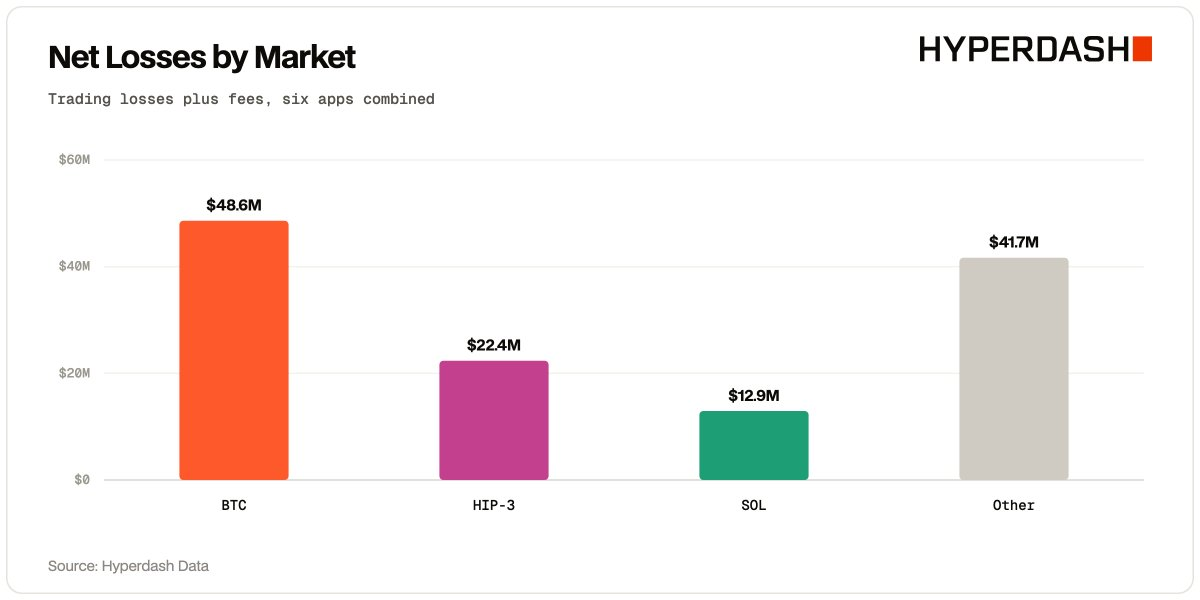
The losses come from two sources — trading P&L and fees. Among these apps, fees account for the bulk, at slightly more than half of the $126 million in losses.
This is partly driven by the mechanics of these apps. Each app layers its own "Builder Fee" on top of Hyperliquid's base trading fee, so a $100 order costs between 6.5 and 14.5 cents in fees depending on the app. For small accounts that churn their balances frequently, these costs compound rapidly. For example, Invo users deposited a total of $12.4 million but generated $5.8 billion in trading volume.
BTC is the market where users trade the most and suffer the heaviest losses. In BTC trading, fees alone exceeded the gains users earned from closing positions. When trading losses and fees are combined, the drain per dollar traded in HIP-3 and small-cap markets is even higher than in BTC and ETH.
User Acquisition and Retention
From November to September of the following year, the number of monthly active traders across these six apps more than tripled, led primarily by Invo and fomo — both of which grew from "virtually no traders" to tens of thousands within just a few months.
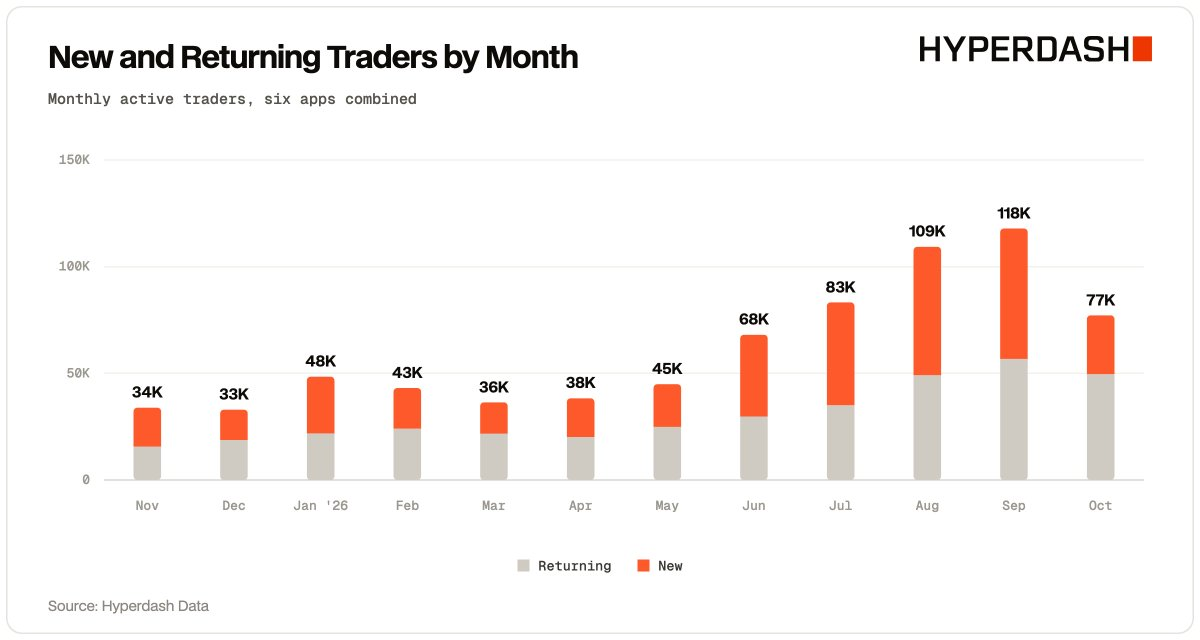
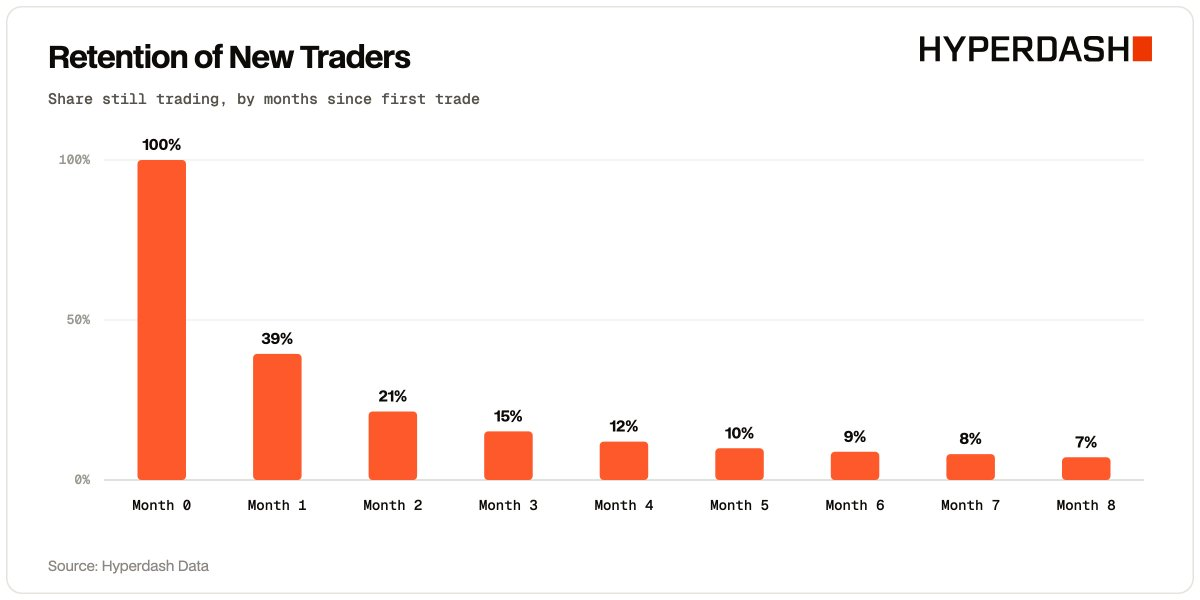
But user retention has not kept pace. About half of each month's active traders are newcomers trading through these apps for the first time, and only about one in seven new traders continues trading after three months. This growth relies on a constant influx of new users rather than retaining existing ones.
Conclusion
These apps have indeed achieved what Builder Code was designed to do — bring new traders, trading volume, and fee revenue to Hyperliquid. Unfortunately, the users being onboarded are losing most of their principal due to overtrading, high fee drag, and liquidations. Most of them stop trading after the third month.
This makes growth highly dependent on a continuous supply of new wallets. We expect more consumer apps to onboard their users to Hyperliquid through Builder Code in the future, but we believe the ones that will truly endure are those that can not only acquire new users but also retain traders.