

BIT Research: Buying and Holding Bitcoin Actually Underperformed? A 10-Year Backtest Reveals the Winning Strategies in Two Major Markets

Although Bitcoin and US stocks are influenced by similar macroeconomic, monetary policy, and political factors, their investment strategies differ markedly. Stocks are driven by both corporate earnings and real cash flows, while Bitcoin has its own distinct drivers. Quantitative backtesting shows that buy-and-hold is better suited to the S&P 500, while trend-following strategies perform more notably in the Bitcoin market.
Meanwhile, the market is facing multiple uncertainties. The latest round of US corporate earnings season produced a batch of companies that beat expectations, but oil prices returning to $100 per barrel, the approaching US midterm elections on November 3, and financing pressures on AI infrastructure are offsetting some of the positive factors. Prediction markets currently put the probability of a full Democratic sweep at around 65%, and the party's policy inclination to potentially slow AI data center construction is also weighing on the revenue and financing prospects of related companies.
On monetary policy, several Fed voting members have ruled out a rate hike on October 28, and the market has shifted to betting on another hike in December. As oil prices' push on inflation gradually weakens, December may see the final rate hike, followed by a longer pause. The 10-year US Treasury yield may also have peaked for the time being and could be expected to fall back below 5.0%.
S&P 500 Ten-Year Return of 392%
Historical data shows that over the past 40 years, the S&P 500 index posted an average return of 2.9% during the period from April 30 to November 1, while reaching 7.2% during the period from November 1 to April 30 of the following year, with positive returns recorded in 76% of those years. This means that November is typically an important time window when US stocks enter a seasonally strong phase.
Midterm elections may also become a market turning point. Historically, US stocks have often performed weakly in the months before midterm elections, but as elections conclude and political uncertainty declines, the market typically sees stronger risk-adjusted returns. Although geopolitical risks such as inflation, AI financing, and the possibility that the US and Israel may continue striking Iran still exist, and short-term pullbacks may occur, seasonal factors continue to support US stocks.
More noteworthy are the quantitative backtesting results. Over the past 10 years, the S&P 500 buy-and-hold strategy achieved a cumulative return of 392%, significantly higher than the 166% of the trend-following strategy. Calculated on an annualized basis, buy-and-hold reached 16.1%, while the strategy of holding positions only during bullish trends stood at 9.6%.
This difference reflects the long-term structural advantages of the US stock market. The S&P 500 regularly removes underperforming constituent stocks and includes outstanding companies that meet the criteria, enabling the index to continuously benefit from corporate earnings growth. Compared with frequently judging market turning points, buy-and-hold performs better in historical backtests.
Why Does Long-Term Holding of Bitcoin Underperform?
Unlike the S&P 500, although Bitcoin has generated considerable returns over the past decade, the returns of the buy-and-hold strategy have been shrinking over the past five years. Compared with simply holding long-term, the trend-following strategy—holding positions during bullish trends and switching to cash during bearish trends—has performed more notably in historical backtests.
Quantitative backtesting over the past 10 years shows that the Bitcoin buy-and-hold strategy posted an annualized return of 62.8%, while the trend-following strategy of holding positions only during bullish trends reached 68.4%, outperforming long-term holding. By comparison, a strategy adopting trend-following with simultaneous long and short trading achieved an annualized return of 40.8%, indicating that more complex trading methods do not necessarily bring higher returns.
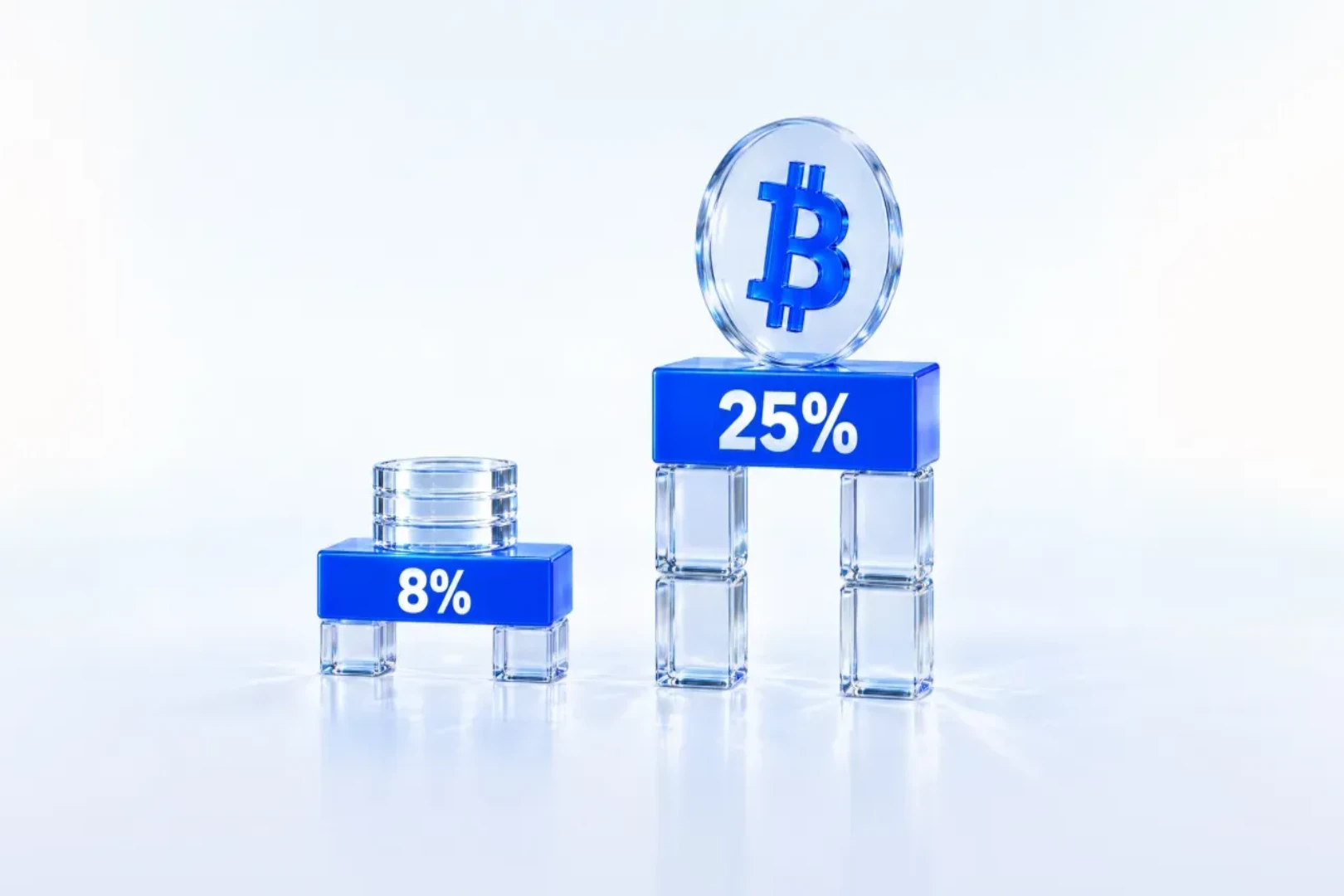
Looking at performance over the most recent five years, the difference is even more pronounced. The trend model achieved an annualized return of 25%, while buy-and-hold was only 8%. This means that the key to Bitcoin investment lies not only in being long-term bullish, but also in identifying changes in market trends and adjusting positions in a timely manner when bearish trends emerge.
Specifically, when Bitcoin enters a bearish trend, the strategy switches to holding cash; after a bullish trend is reconfirmed, long positions are restored. Bitcoin is currently still in an uptrend, but risks such as AI financing pressures, the possibility that cyberattacks could spill over into the crypto market, and macroeconomic uncertainty remain potential risk factors to watch.
Overall, although Bitcoin and the S&P 500 are influenced by similar macro factors, historical backtesting reveals two different winning strategies. The S&P 500 is better suited to buy-and-hold, especially during the seasonally strong phase from November to April of the following year; Bitcoin relies more on trend-following, maintaining long positions during bullish trends and locking in gains when the trend turns bearish, waiting for the next bullish signal.
As US midterm elections approach and expectations of a December rate hike gradually solidify, short-term volatility may still occur in the market. However, against the backdrop of governments still spending beyond their means and debt growing faster than the economy, holding risk assets remains important. For US stocks, the focus is on avoiding interference from short-term macro noise; for Bitcoin, continuous attention to trend signals is needed. With the current uptrend not yet broken, maintain a position-holding strategy under the bullish trend while staying alert to risks that could trigger a trend reversal.
Some of the above views come from BIT on Target. Contact us to obtain the full BIT on Target report.
Disclaimer: Markets carry risk, and investment requires caution. This article does not constitute investment advice. Digital asset trading may involve extreme risk and instability. Investment decisions should be made after carefully considering individual circumstances and consulting financial professionals. BIT is not responsible for any investment decisions based on the information provided in this content.