


Crypto Stablecoin Weekly Report: USDT Suspension of Additional Issuance, USDT Usage Scenario in Tron is Single

quick preview
quick preview
The total market value of stablecoins remained stable last week, with a slight decrease of more than $3 million
USDT adds more addresses than other stablecoins, likely due to its wider adoption
With the additional issuance of TRC20 USDT, the usage of USDT on the Tron network has not increased significantly
The distribution of USDT in the Tron network is more concentrated than in the Ethereum network, 99.20% is held by the top 50 addresses
1. Overview of Stablecoin Data
1. Overview of Stablecoin Data
In the last issue of the Stablecoin Report, we conducted a data-based review of the development of stablecoins; Interpret trends as they emerge.
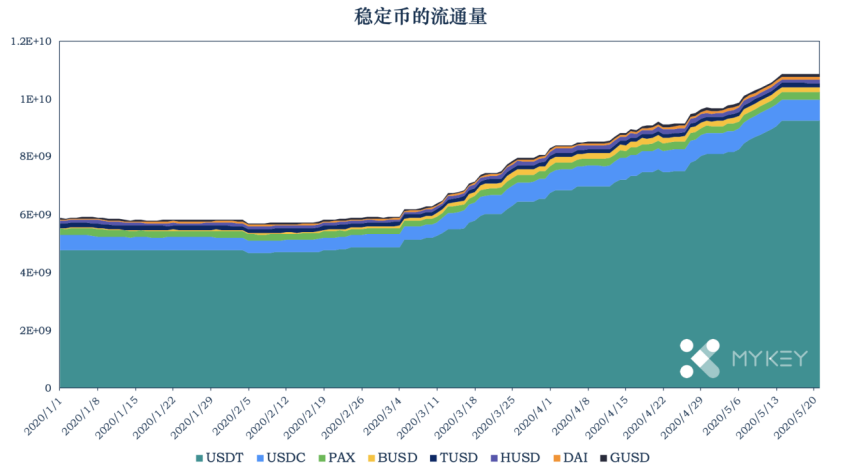
After the issuance of stablecoins has continued to rise since March, the total market value of major stablecoins remained stable last week (May 14-May 21, 2020, the same below), with a slight decrease of more than 3 million US dollars .
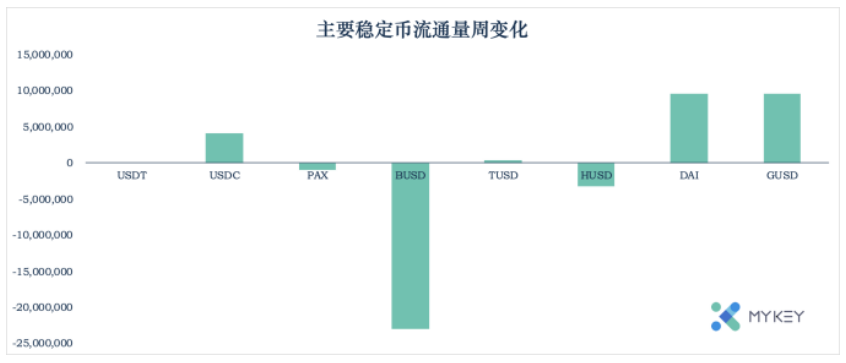
According to the data, the decrease in the market capitalization of stablecoins mainly came from PAX, BUSD and HUSD, which decreased by USD 1,016,358, USD 22,982,388 and USD 3,206,759 respectively—these three stablecoins are all reserved by the Paxos Trust Trust USD; USDT, the largest stablecoin by market capitalization, maintained its market value last week. Unchanged, no additional issuance or reduction; USDC, DAI, and GUSD all had relatively large increases, respectively 4,180,931, 9,659,813, and 9,659,813 U.S. dollars—the increase in Dai supply was mainly due to the increase in WBTC collateral in the system.
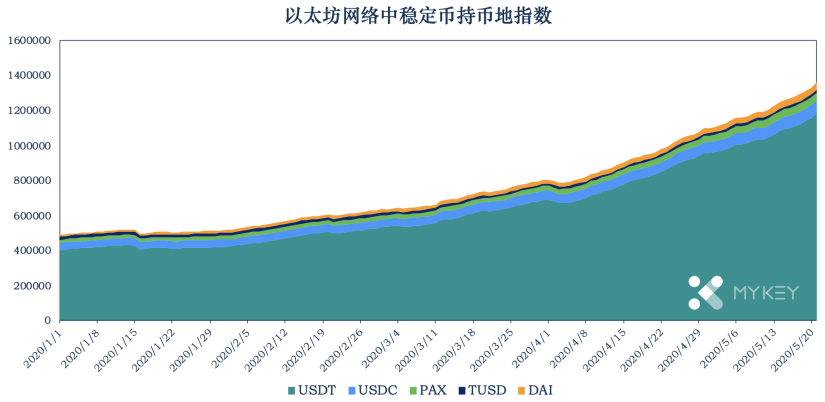
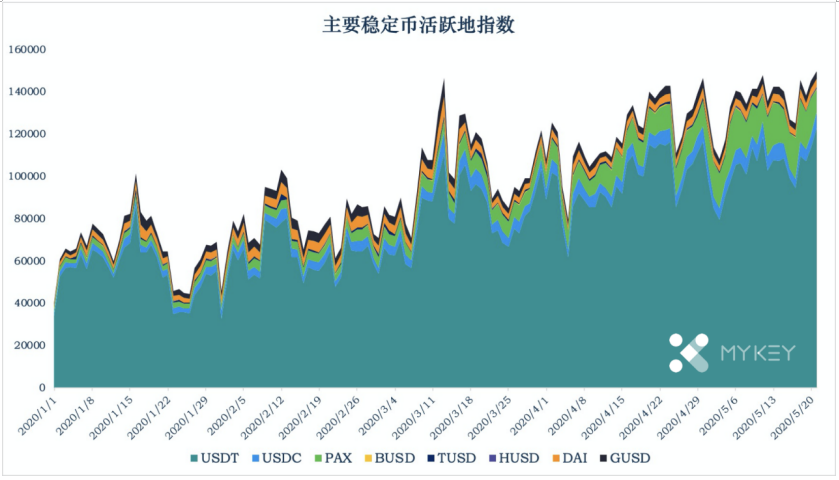
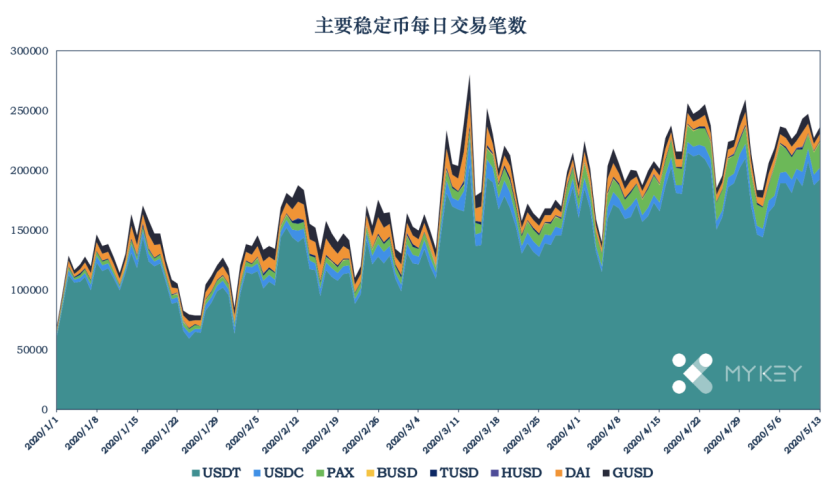
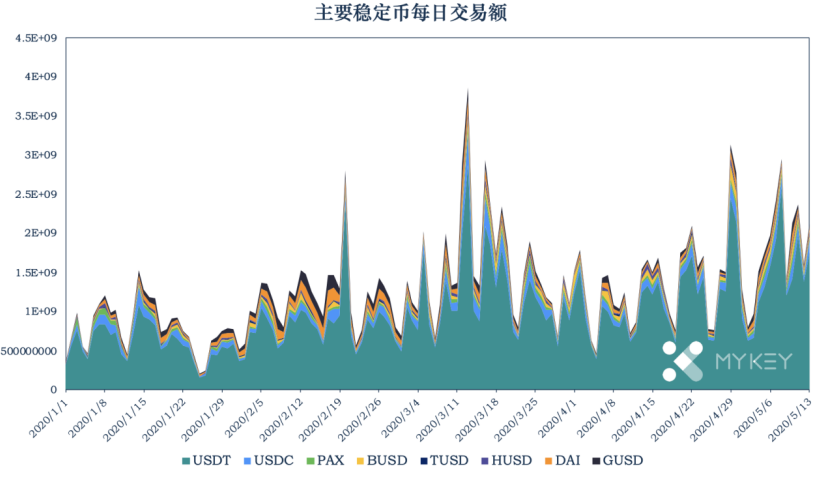
Although the market value of stablecoins has declined, the number of addresses holding stablecoins in the Ethereum network has continued to rise. Last week, the number of stablecoin holding addresses in the Ethereum network in the above picture increased by 115,598, mainly from USDT, an increase of 103,338; the rest of USDC, PAX and DAI increased more, with an increase of 3,515, 5,059 and 3,329 respectively . We judge that the new addresses of USDT far exceed those of other stablecoins, which is likely to benefit from its adoption in a wider range of fields outside the currency circle.
secondary title
2. USDT overflowing to Tron network
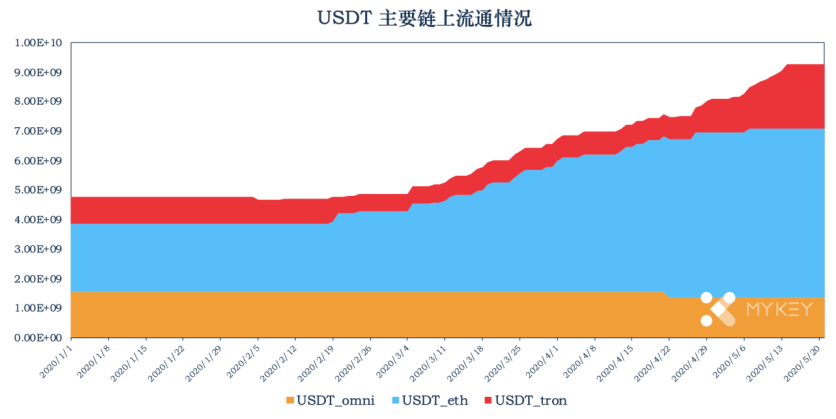
Since the end of April 2020, USDT has been further issued on the Tron network. While USDT was issued on the Tron network, it did not continue to be issued on the Ethereum network.
We judge that the choice of USDT to be issued in the Tron network is not unrelated to the performance limitations of the Ethereum chain - the continuous issuance of USDT in the Ethereum network has brought a certain pressure on the Ethereum network, and the number of daily transactions on the chain is in In the past month, it has accounted for more than 20% of the total number of daily transactions on the Ethereum chain. Like the USDT spillover from Bitcoin Omini, USDT will spillover from the Ethereum network to other cryptonetworks under performance constraints.
The USDT in the Tron network currently exceeds 1.8 billion, surpassing the Bitcoin network to become the second largest USDT issuance chain. What we care about is whether the additional issuance of USDT in the Tron network has increased its usage, what is the usage of USDT in the Tron network, and how is it different from the usage in the Ethereum network.
More specifically, the additional issuance of USDT in the Tron network began on April 28 and ended on May 14, so we use its relevant data for the past month (April 22 to May 21, during which USDT in There is no change in the circulation in the Ethereum network) to explore the above-mentioned questions of interest.
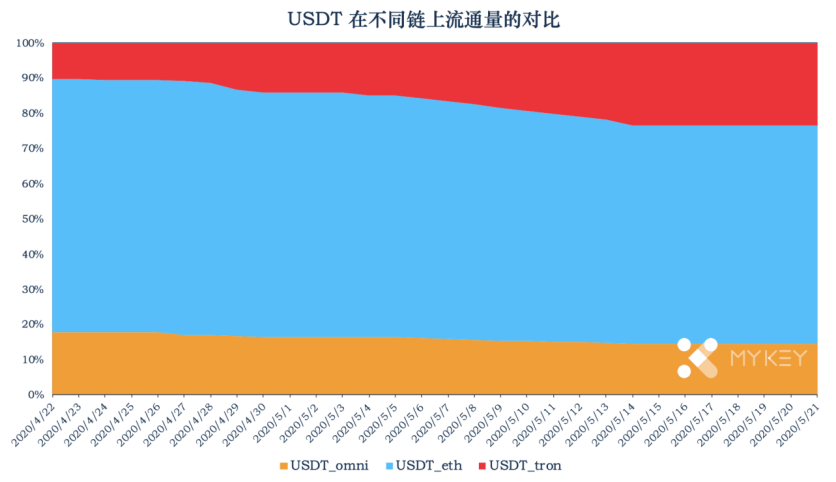
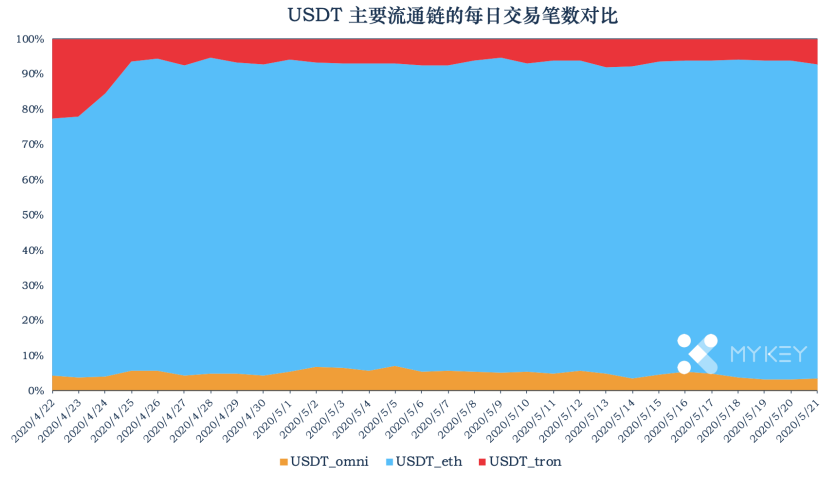
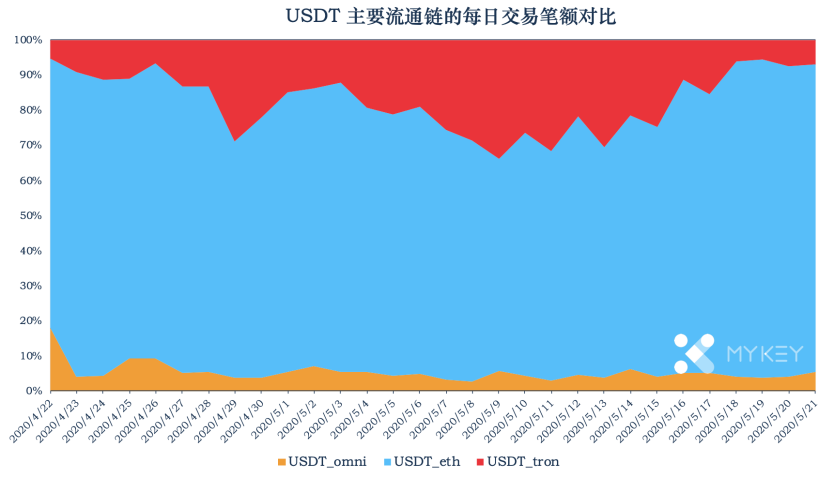
We can see that compared with the use in the Ethereum network, with the additional issuance of TRC20 USDT, the number of daily on-chain transactions of USDT in the Tron network has not increased significantly, and the increase in transaction volume has also followed the additional issuance behavior. disappeared and returned to the level before the additional issuance.
This shows that the additional issuance of USDT in the Tron network is more of a top-down behavior, not driven by the demand in the Tron network, which is different from our previous judgment that the additional issuance of USDT in the Tron is an "overflow" Coincidentally.
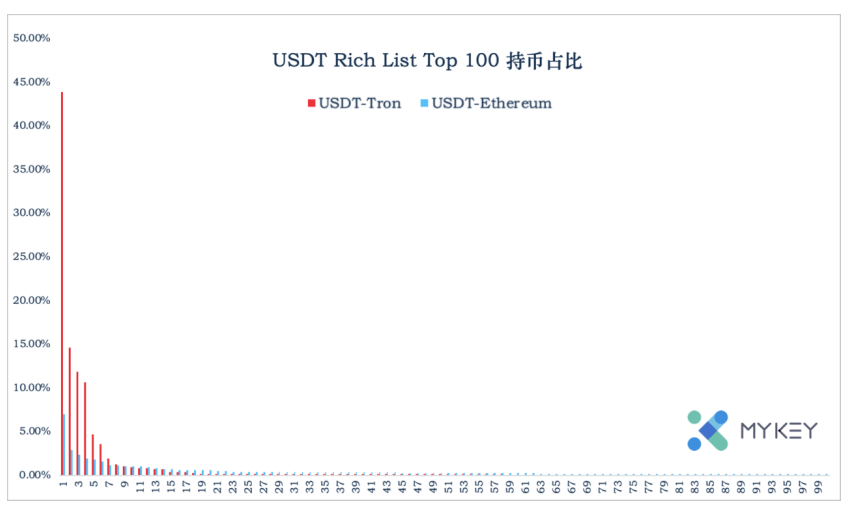
We also see that the distribution of USDT in the Tron network is more concentrated than in the Ethereum network. In the Tron network, the TRC20 USDT held by the top 10 addresses of currency holding addresses accounted for 93.85% of the total, and the top 50 addresses accounted for 99.20%. addresses are held. In the Ethereum network, the top 10 addresses holding the most ERC20 USDT accounted for 21.78% of the total, the top 50 addresses accounted for 38.62%, the top 100 addresses accounted for 46.46%, and the top 500 addresses accounted for 65.25%. Much more spread out.
According to the marking of the addresses of major exchanges in the Ethereum and Tron networks, we found that at least 88% of TRC20 USDT is in the addresses of marked mainstream exchanges, which indicates that USDT in the Tron network is mainly used for transactions. In contrast, only about 15% of the ERC20 USDT is in the addresses of the marked mainstream exchanges, and the USDT in the Ethereum network is more used for other purposes.
We believe that for users in the "coin circle" who are more exposed to the scene on the blockchain chain, USDT on different chains will have certain non-homogeneity, that is, some people will be more willing to accept USDT on chain A, It is not inclined to accept USDT on the B chain; and with the "out of the circle" of USDT, for non-chain scenarios, unless there is an obvious performance difference, users outside the "currency circle" will not care that USDT is issued in On which chain, that is, for "outside" users, USDT on different chains are homogeneous assets.
We judge: In terms of on-chain scenarios, the Ethereum ecosystem has great advantages over other public chains. The use of USDT in Tron’s on-chain scenarios is relatively limited, and it is difficult to expand greatly. Therefore, in a natural state, the use of USDT in the Tron network will first expand to the existing off-chain scenarios of ERC20/Omni USDT, such as the use of centralized exchanges (current status), centralized lending, certain payment scenarios, etc.
This may also be the opportunity that USDT brings to Tron. After USDT overflows to other networks with growth, we hope that relevant operators can play this "asset card" well and promote the use of encrypted stablecoins in more scenarios.
This issue of the MYKEY Stablecoin Weekly Report has shared so much, please pay attention to the follow-up weekly reports. In the follow-up reports, we will provide you with more interpretations of the development status of stablecoins and analysis of their development trends, so as to help you continuously update your understanding of the development of stablecoins.
Note: MYKEY Lab has the final right to interpret the content of the article, please indicate the source of the quotation. Welcome to follow the MYKEY Lab public account: MYKEY Digital Life.