

Compound: The game of giant whales, retail investors take the bait?

Editor's Note: This article comes fromBabbitt Information (ID: bitcoin8btc)Editor's Note: This article comes from
Babbitt Information (ID: bitcoin8btc)"Babbitt Information (ID: bitcoin8btc)", Author: Joel John, translation: screen, published with permission.
Yield (yield)
Caught everyone's attention and psychology. The data shows that most of the borrowers are institutional investors, and COMP's bargaining chips are very concentrated. Is Compound just a game for giant whales? How big is the gap with the ideal of openness and inclusiveness? This article starts with the concept of rate of return, and discusses how the concept of rate of return works on DeFi and various trend areas that attract attention. Can DeFi open the way to decentralized and open finance through the rate of return?
The first part of this article is a popular science for readers with non-financial background. If you are very familiar with financial terms, you can skip the following part.
first level title
Understanding Yield
In financial investment, the rate of return refers to the income or income of a fund. It is the return on earnings as a percentage of the initial investment over a one-year period, including compounding interest that returns returns over a one-year period. What examples can reflect the concept of rate of return?
Suppose you invest 100,000 yuan to buy a house and rent it out. Over the course of a year, the property rent you receive is about 12,000 yuan. Subtract the $2,000 for repairs and other expenses, and your net gain will be $10,000, so the rate of return is 10%.
Another form of income is dividends on stocks. The price-to-earnings ratio (P/E ratio) is a key factor in determining a stock's valuation. Before stock trading was widely known, it was common for investors to rely on dividends from their holdings to meet day-to-day expenses. As long as the dividend is higher than the yield on bank deposits, investors can accept it.
Simply put, the rate of return tends to depend on the risks involved in the asset and other factors such as the fees paid to the money manager, the tax and legal environment, etc. Yields are also related to inflation. In India, bank deposits yield about 6% annually, while in Singapore interest rates are lower than about 1%, a difference due to India's higher inflation rate, which depreciates its currency every year. This is why capital flight from emerging economies is so common.
To learn more about capital and the role of networks, these books are highly recommended:
Lords of Finance: The Banker Who Ruined the World Lords of Finance
The Cash Nexus
With these basics in mind, let's understand the rate of return in the DeFi field.
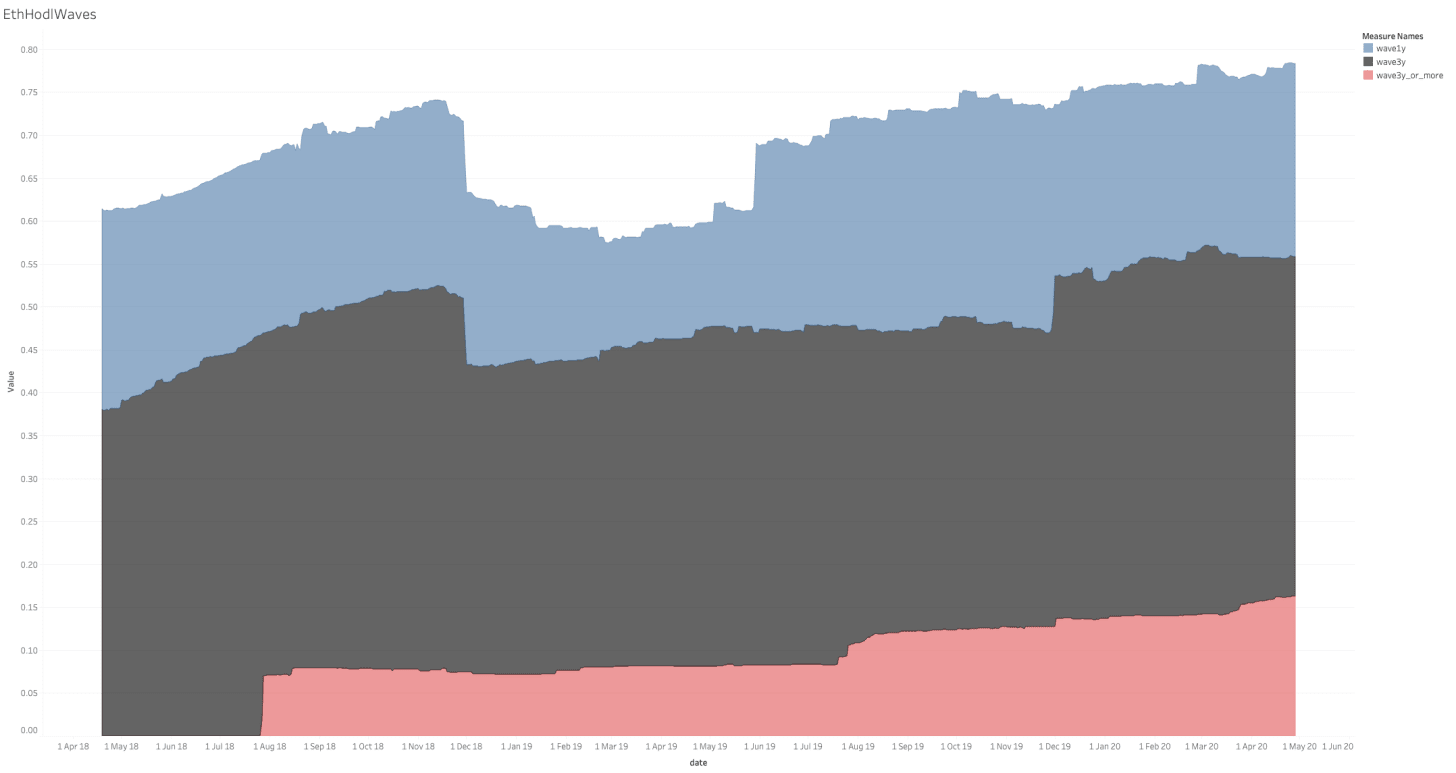
Those who got into the cryptocurrency space early and held a lot of cryptocurrency, they now face 2 major challenges: (2) cryptocurrency may depreciate, and they need to find a way to deal with this situation; (2) use their cryptocurrency holdings to earn income. The income mechanism of DeFi solves these two problems with one stone. About 75% of ETH has not been moved within a year. It is normal for giant whales to acquire and sit on the bank at this time, because the underlying assets themselves will have their own growth expectations.
what does that mean?
Currency holders need to monetize this idle asset, and smart contracts can play a role here. Smart contracts have a significant impact on lending and on-chain transaction related activities as it can: (1) track prices via oracles; (2) settle/clear without human intervention.
secondary title
what does that mean?
When a loan on MakerDAO does not have enough collateral, no one calls the borrower to ask them for more collateral. The system will automatically pay attention to the price and allow users on the network to liquidate it through incentives.
No bank staff cared how orders were processed on Curve.fi, Kyber and 0x. The system is able to automatically detect the order book and complete this step automatically.
You may not care about the realization of automatic processing. In fact, the ability to verify currency flows and settle prices is the strength of DeFi. With this ability, we can keep up with all kinds of new changes. What does this have to do with the rate of return we are discussing? We need to consider 3 factors that are at work:
In today's crypto ecosystem, there are a lot of idle crypto assets;
The infrastructure layer for transaction settlement is already in place, as teams like Maker and 0x have adequately tested and scaled their systems over the past two to three years;
The application layer has been developed for a long time and is quite active (such as stablecoins)
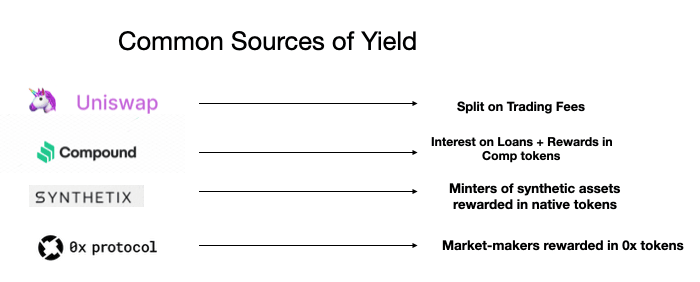
The income of DeFi mainly comes from trading activities. Among them there is always the need to: (1) increase liquidity in decentralized exchanges (2) get margin for trading.
As long as DeFi can offer competitive spreads (the difference between buying and selling prices) and better interest rates than centralized exchanges, there will be users who want to trade on DeFi apps. Compared with centralized margin trading platforms such as Binance, DeFi may charge additional fees due to its low (or even unnecessary) "AML/KYC" threshold and the long time it takes to hold a large position. Once the interest rate or spread is higher than that of centralized exchanges, considering the risks of smart contracts, giant whales will have no reason to continue using DeFi.
Why would anyone use tokens for lending? What you can probably imagine right away is that he's going to short the asset he's borrowing against. When the giant whale assumes that the price of an asset (such as BAT) will drop in the next few weeks, he will use USD as collateral to lend BAT tokens, and then realize them on the decentralized exchange. Once the BAT price drops, they will do a buyback. Taking the loan interest rate into account, the price difference between when they get the loan and when they pay it back is their profit. If it is a governance-related token like Maker, activist investors may obtain votes by borrowing the underlying assets. In other words, current crypto lending can power governance and price predictions.
first level title
Actions triggered by COMP
Now that we understand yield, its function in DeFi, and common sources of yield, we can explore why there was so much discussion around yield farming last week. Compound is a well-known lending project. Since 2018, its token economy has undergone many iterations and listed their token COMP last week. They have been the main contenders of MakerDAO.
The characteristic of Compound is to incentivize borrowers and lenders to obtain COMP distributed by the fund pool. In contrast to other lending projects, where Maker's tokens are used for voting (rather than as rewards), Aave's tokens can be used as incentives for interest payments. The USD figure for COMP distributed per day is approximately $4.5 million (assuming 1500 tokens at $300 each). Individuals can easily redeem COMP tokens and sell them, so people move a lot of money into the Compound lending market for yield and token rewards. The role of the incentive mechanism has two main aspects:
Giant whales can put idle USDT/USDC in Compound for a few days and get COMP, which can then be cashed in for profit.
Due to the substantial increase in the amount of funds borrowed, small users can also receive a rate of return of up to 1% within a few days. Comparing some countries with an annualized rate of return of only 0.1%, you can understand why COMP mining is so popular.
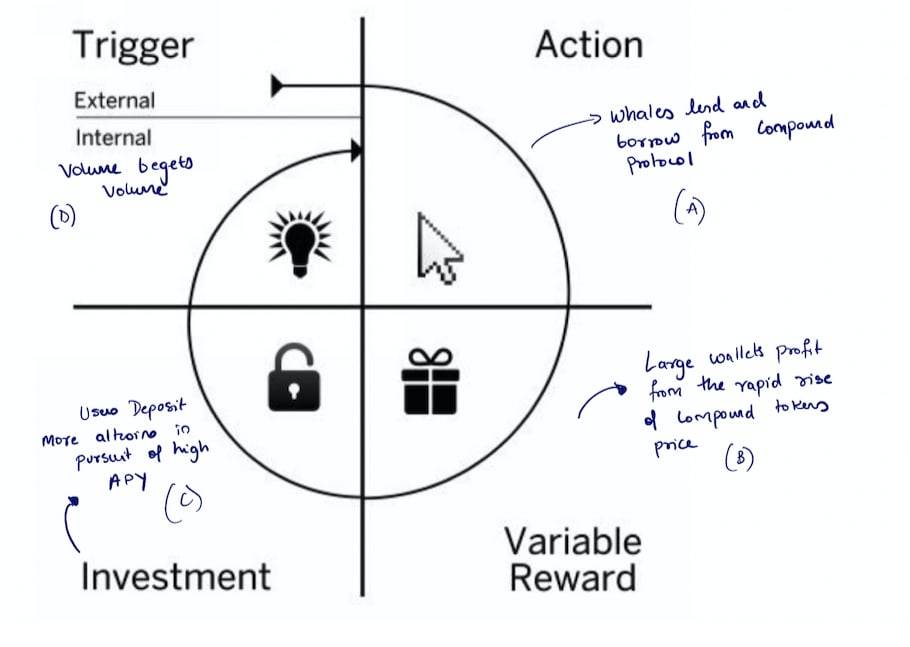
User behavior in Compound can be more or less explained by the following diagram (from Nir Eya's "Addiction"):
A. Whales borrow heavily from Compound
B. Huge wallets will get a lot of COMP in return, and then as the price rises, they sell COMP on the market
C. The rise in the price of COMP and a large number of lending activities lead to higher APY, attracting more users to provide liquidity of other tokens (such as: BAT tokens)
D. Deposits are quickly absorbed by borrowers who want to trade on margin
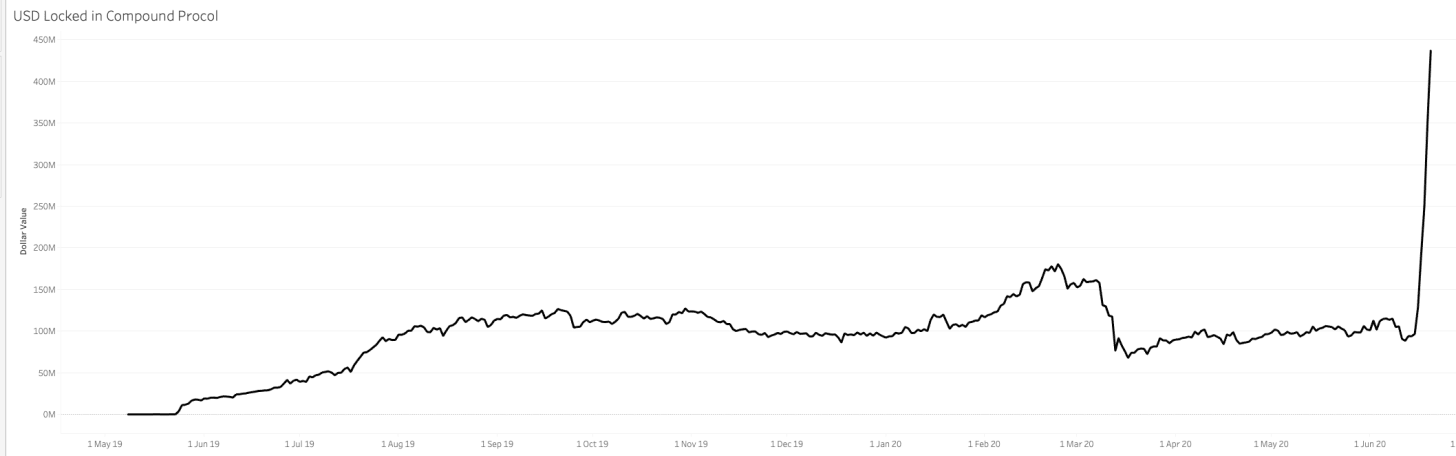
You can guess when COMP was launched just by looking at this picture:
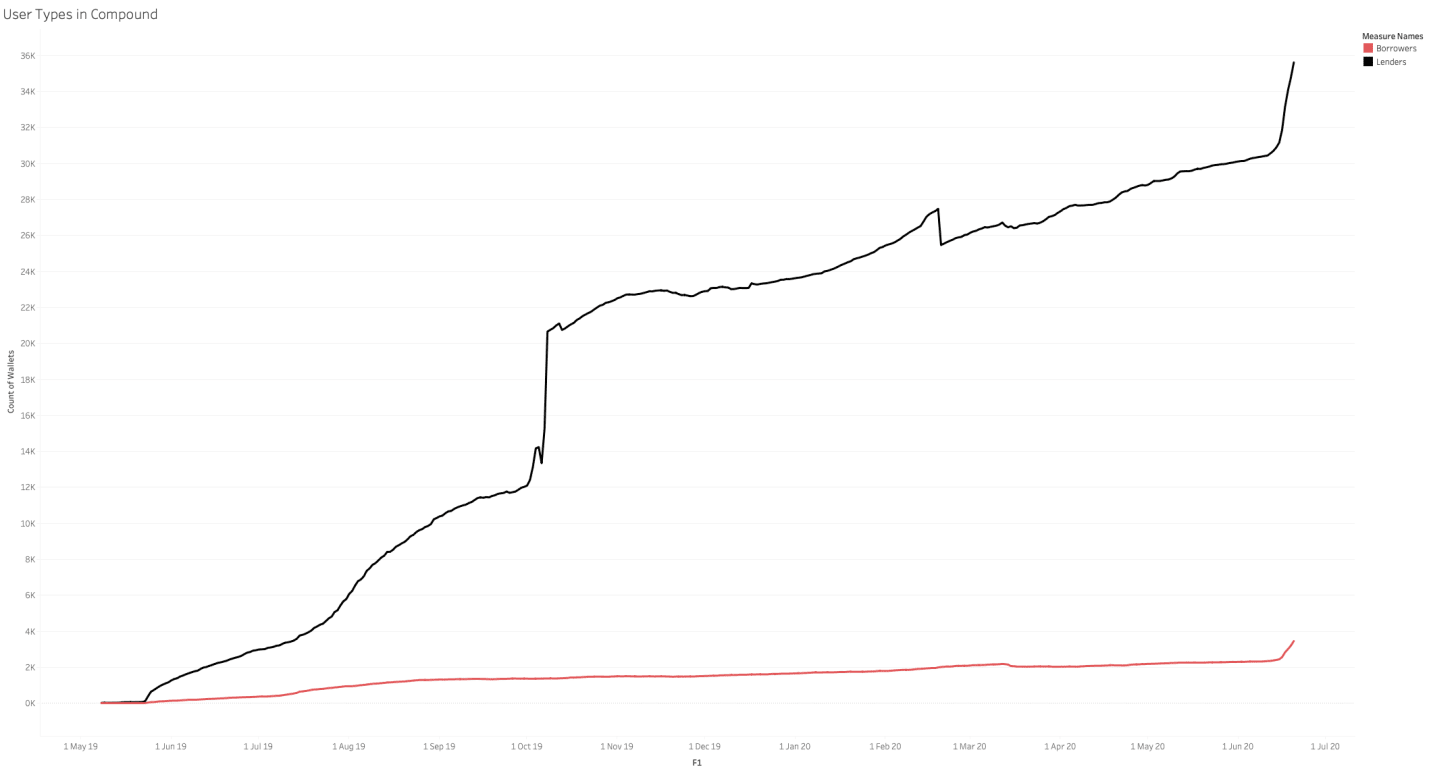
Over a period of about two weeks, about $340 million was moved in and out of the pool. Interestingly, most of the demand side (borrowers) appear to be institutional players. Look at the distribution of this user type across the platform. The launch of COMP only attracted about 800 borrowers (attracting $330 million for the ecosystem) and more than 5,000 new depositors.
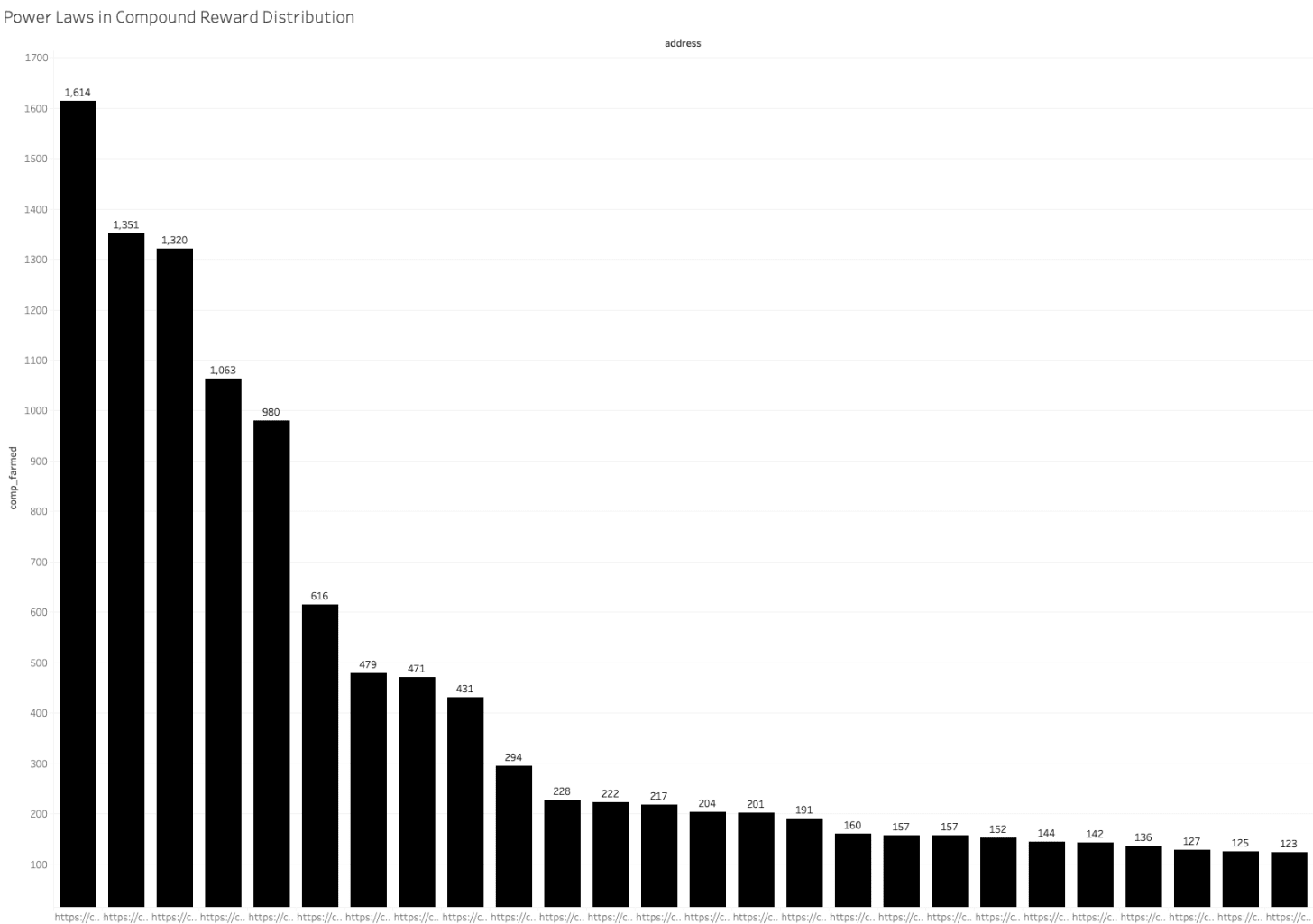
COMP is also concentrated in the hands of giant whales to a certain extent. The graph below shows that about 20 addresses received half of the COMP mining rewards. The median number of tokens deposited into wallets is 0.07COMP, which is worth about $20.
Key info here:
Institutional investors have huge and likely sustained demand for DeFi loans, and Compound is in the best position to capture it.
Today, the incentive for people to borrow and lend on Compound is COMP. As the token supply increases, its price may collapse, which reduces the amount borrowed and borrowed on the platform.
As of today, only about 0.16% of total COMP is on exchanges. Therefore, the valuation of COMP may be much higher than the reasonable level.
Incentives for incredible growth. The challenge for Compound now is to diversify into other areas (e.g. retail, fiat-based) while maintaining the central role tokens play in the governance process.
Whales in control