

Reviving Findora for Financial Democracy, Testnet Experience

Editor's Note: This article is contributed by the Findora community, and Odaily is authorized and edited for release.
When it comes to blockchain finance, many people think of Defi. Although the wind of Uniswap modeled on the AMM model has gradually receded, we have also verified the once-temporary madness of "distributed finance" Defi. In addition to several star projects such as COMP and Balancer in the oracle sector, the Defi currency is still strong, and many Defi tokens have almost returned to zero.
After this round of madness, we found that what we need is not a changed method of speculation, but a real and easy-to-use decentralized financial infrastructure. At present, the financial network represented by Ethereum carries the current main Defi ecology. The disadvantages of the Ethereum network are poor carrying capacity, insufficient transparency, and extremely high transaction costs. A gas fee of at least RMB 50 is required.
The vision of Ethereum 2.0 is very beautiful, but 1024 shards seem very far away from us. For commercial use, protecting privacy is a very important thing, and the current mainstream public chains are mainly open and transparent. And anonymous chains such as Monroe Dashi, etc. do not support extensions. Why do you need privacy? In short, privacy is required for business secrets, personal property security, and operation and maintenance security.
So in summary, the Findora network can better solve the above problems, and is expected to build a distributed financial infrastructure that is democratized and non-isolated.
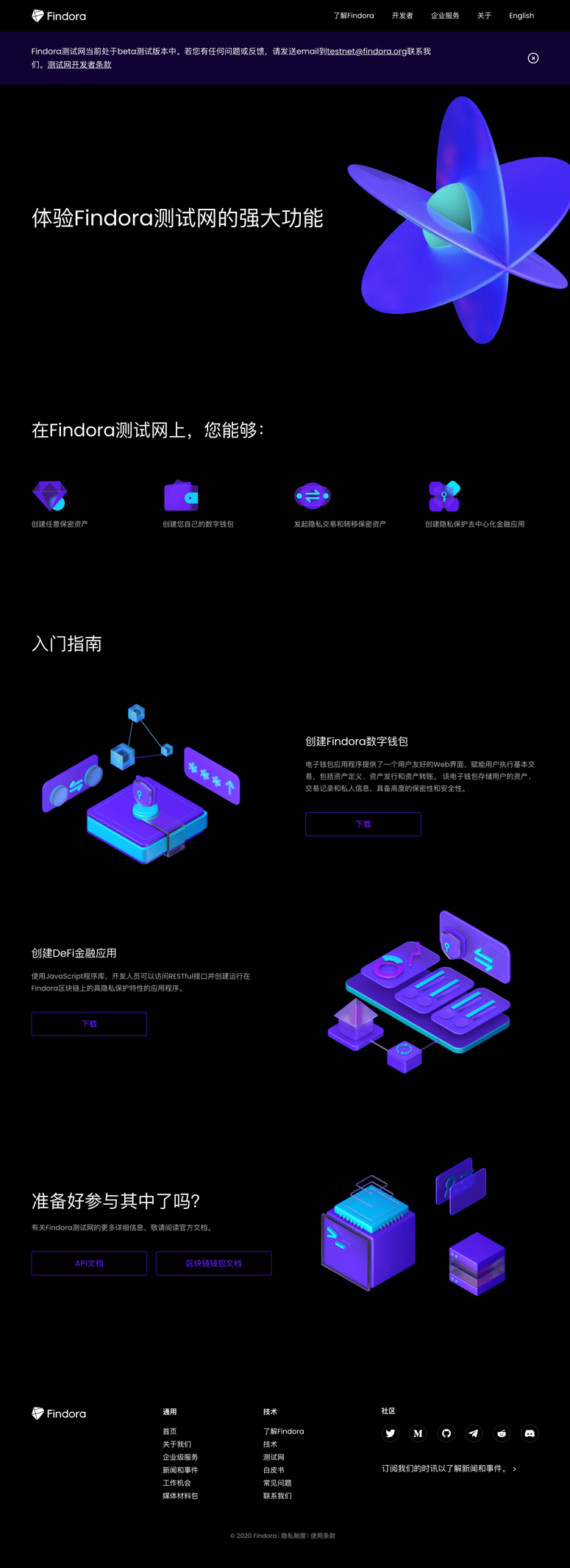
Recently, the Findora network opened the testnet, and Mario, as a community user of Findora, is also honored to apply for a testnet account and take the lead in experiencing the wallet and blockchain browser of the Findora blockchain network.
After installing the Findora wallet plug-in on the Google browser, Mario can directly create a wallet account on the WEB side. For the Findora wallet, its wallet account system is different from the traditional blockchain wallet account.
The traditional blockchain account creation is directly in the form of mnemonic backup for wallet management, but for users who want to log in to the account again, they can only import it through the mnemonic and private key that you will never remember. .
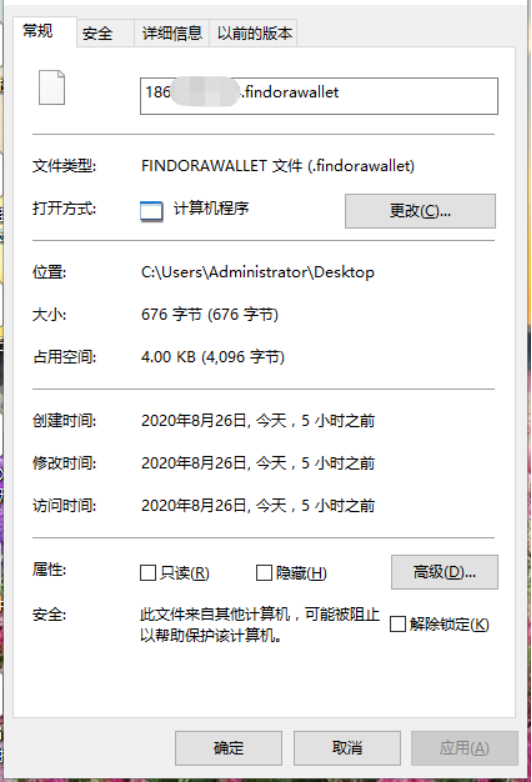
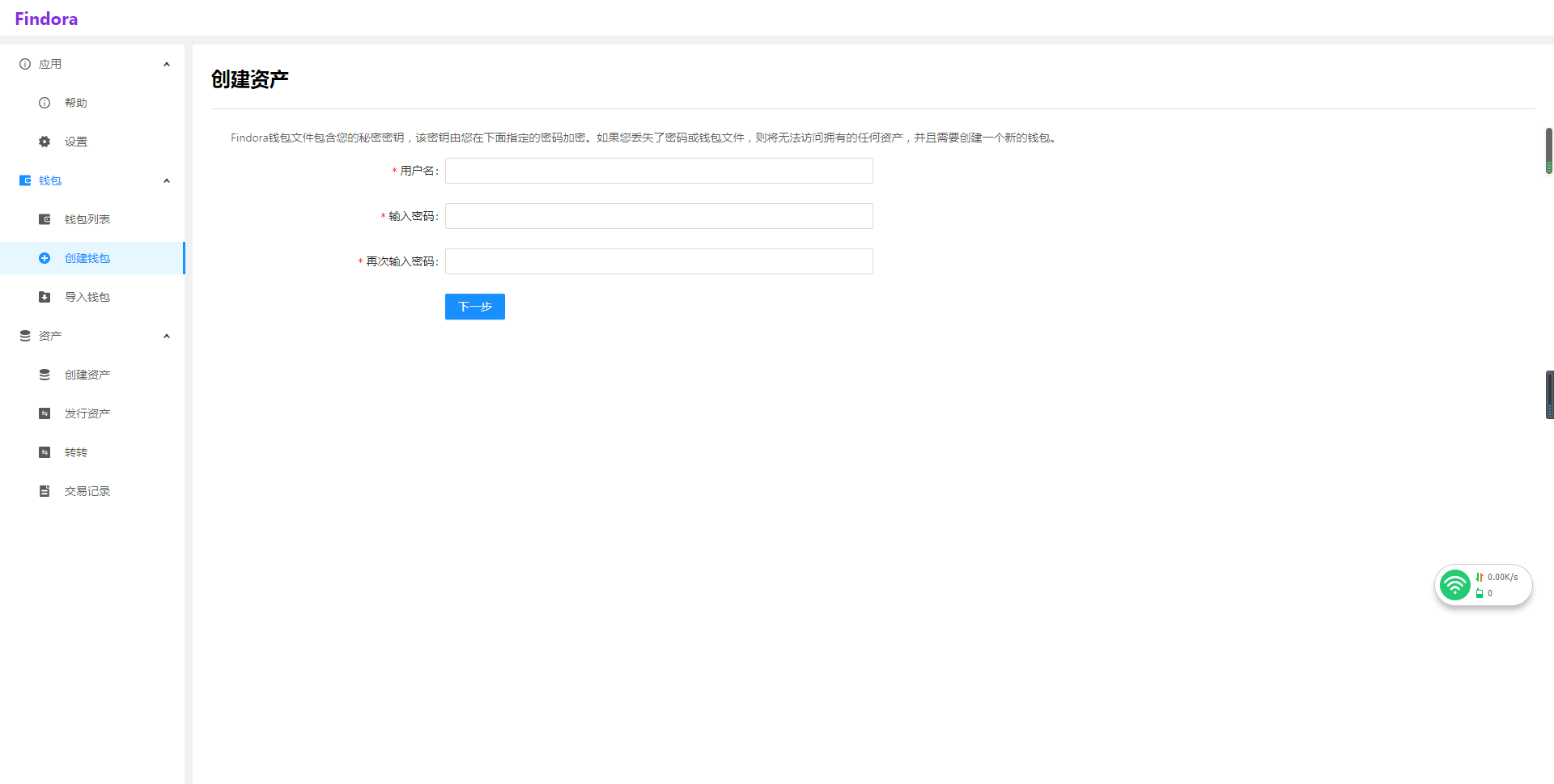 The account created in the Findora wallet is created in the form of username and password, and the private key corresponds to the username and password pair. After the user creates a wallet, a corresponding file will be generated.
When we import again, import this file and enter the password to import the account.
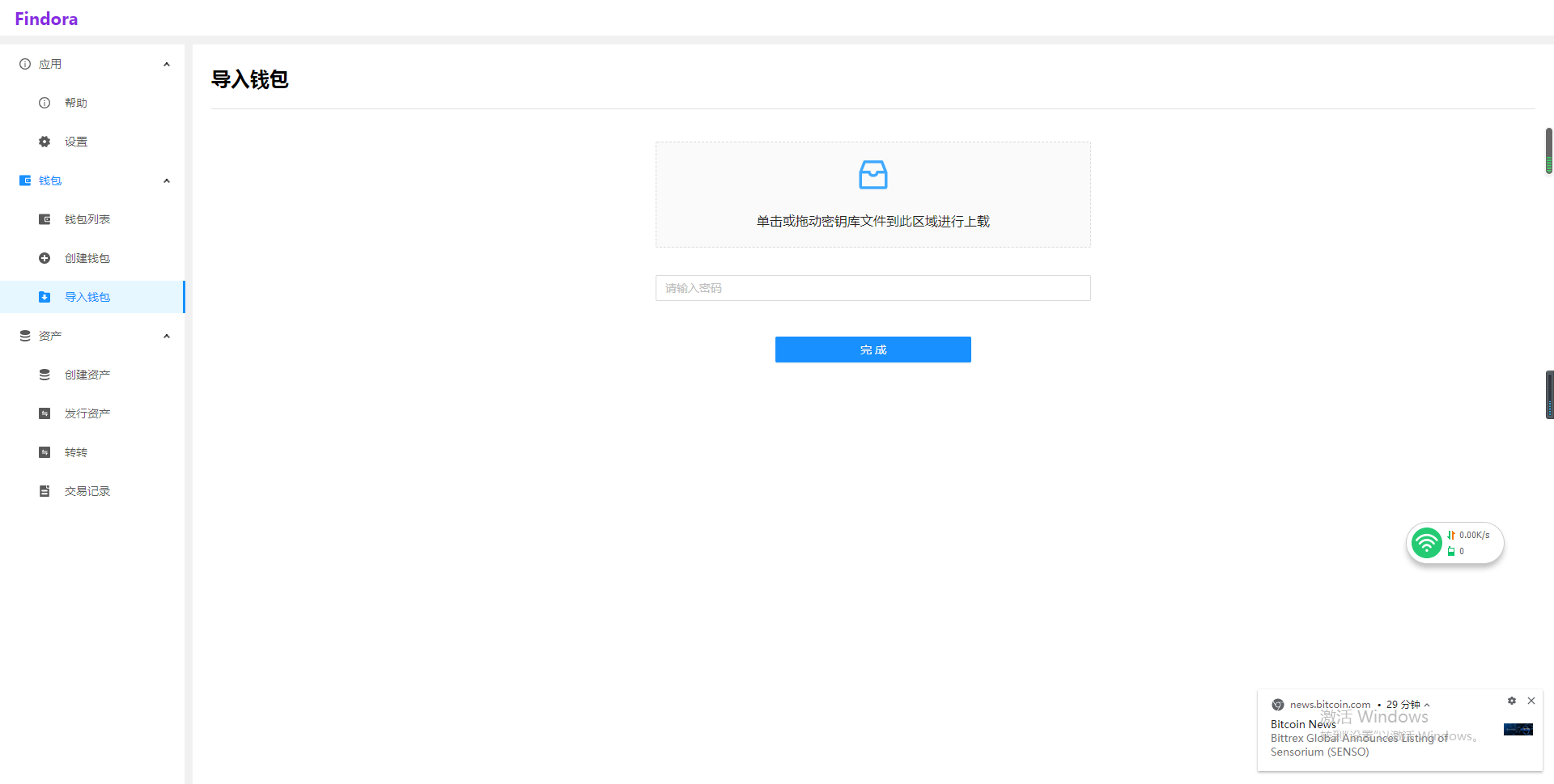
For traditional blockchain wallets, obtaining the private key or mnemonic basically means that the account has been successfully "controlled". For the Findora account, if you want to "control" the account, you must first obtain the account file, and at the same time know The password of the account is a double protection mode.
One of the highlights of the Findora wallet is that it supports users to issue Findora standard tokens without threshold. Users only need to click a few buttons to successfully issue their own tokens. Mario "played" on the test network.
First of all, you need to create tokens, that is, enter the corresponding token information, such as the quantity, and there are also two optional buttons for the maximum additional issuance amount and transferability. The name of the token can be changed on the main network, but it cannot be changed on the test network. .
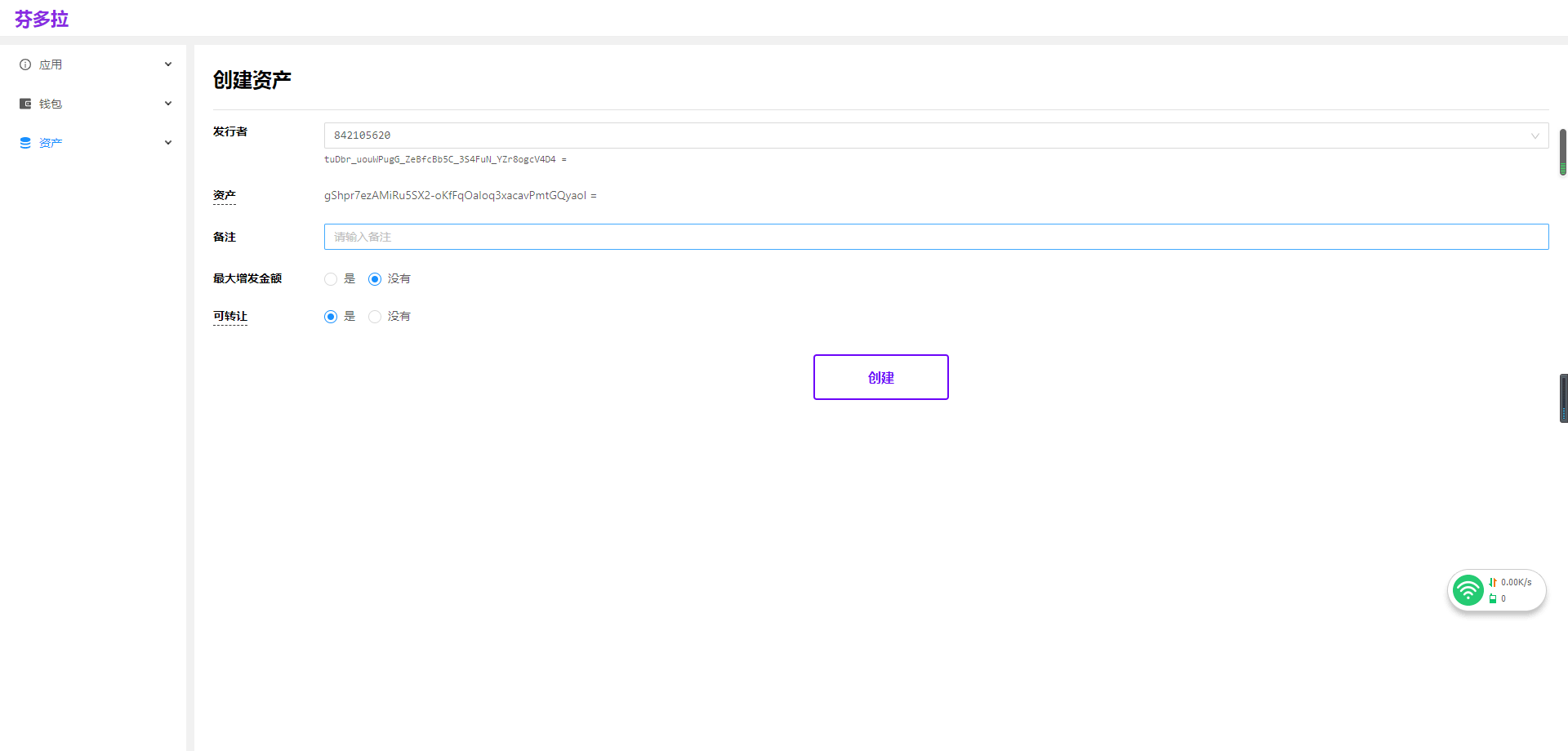
Check the relevant information, create the token, and the token is successfully created.
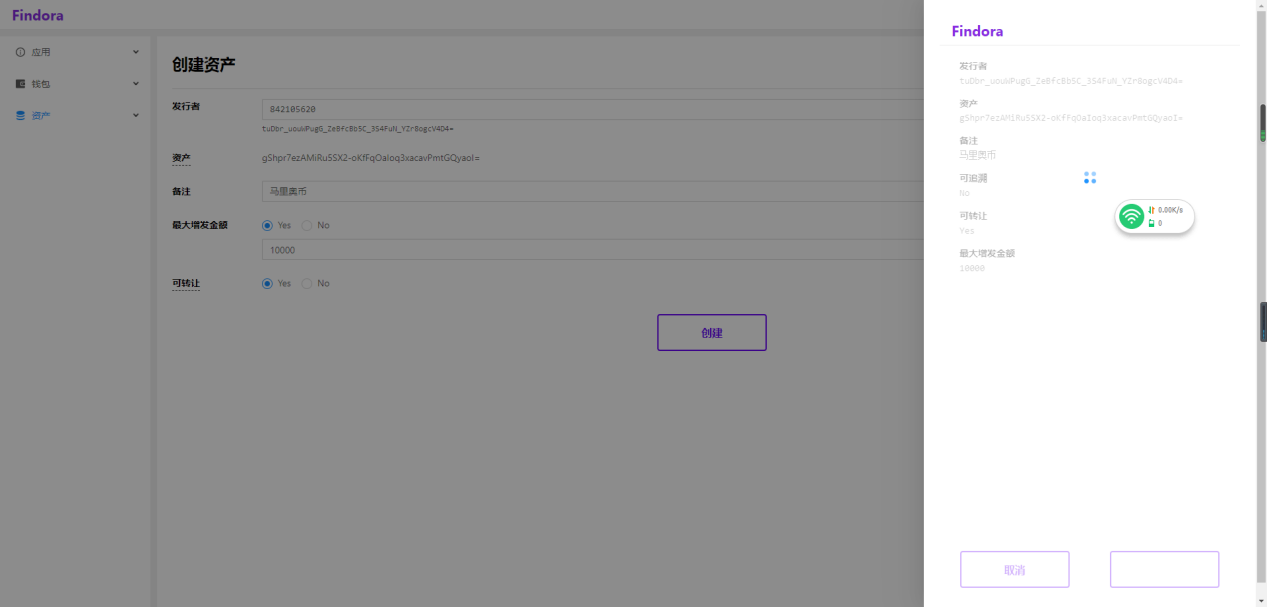 After the successful creation, Mario went to his account and found that there was no such asset, so he still needed to issue the created asset.
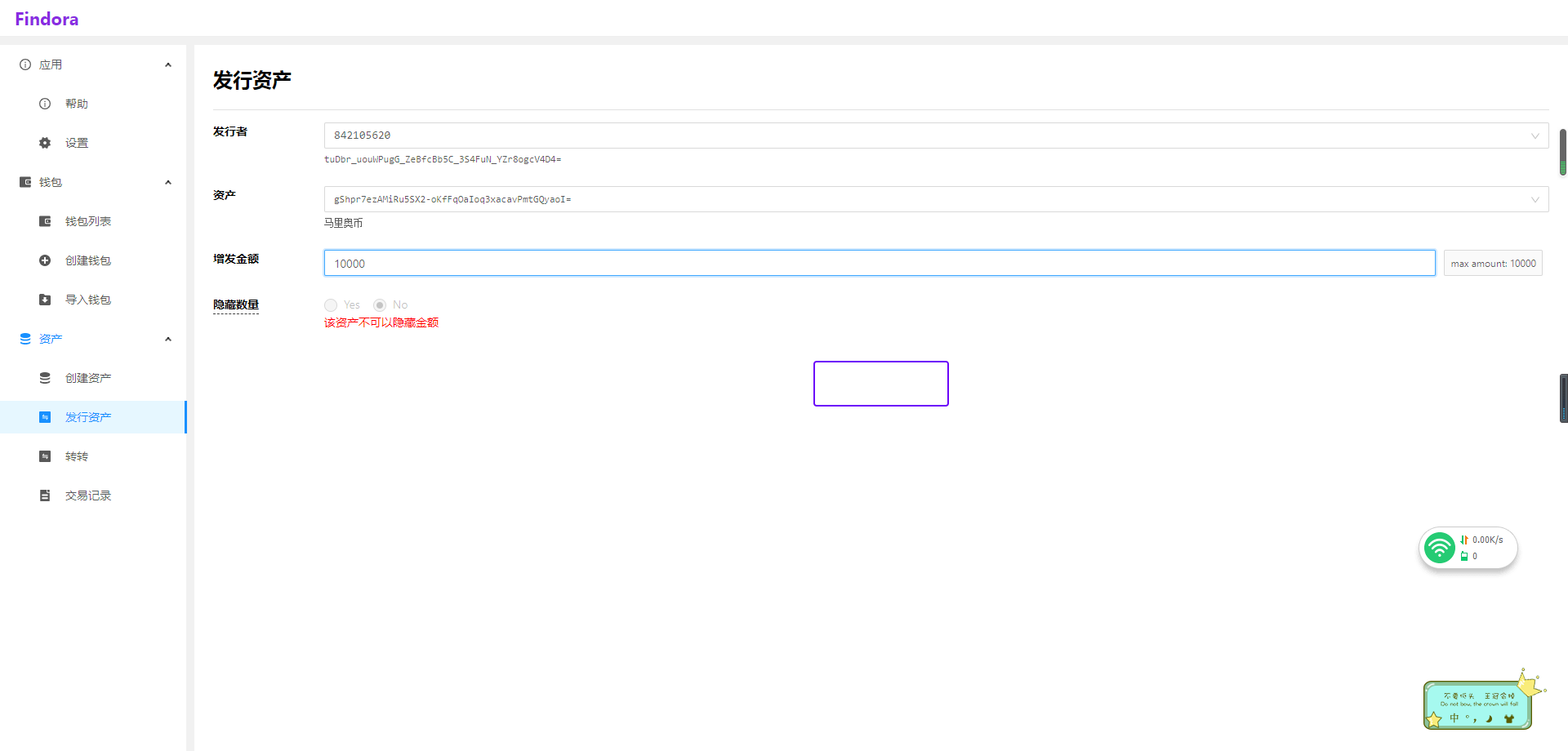
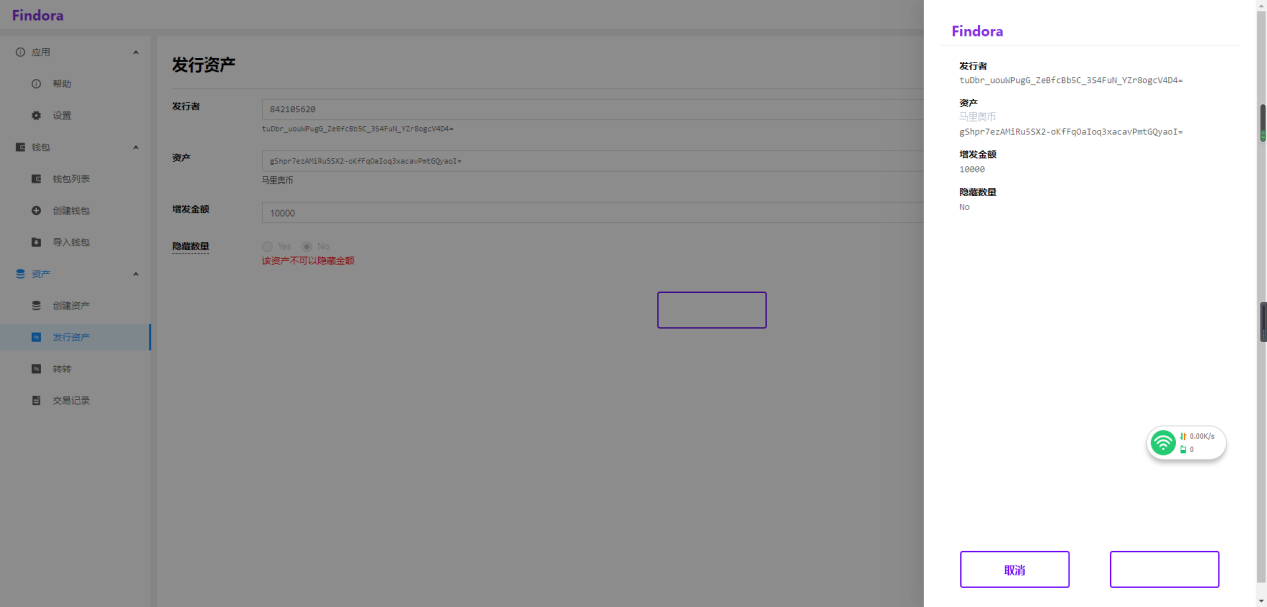
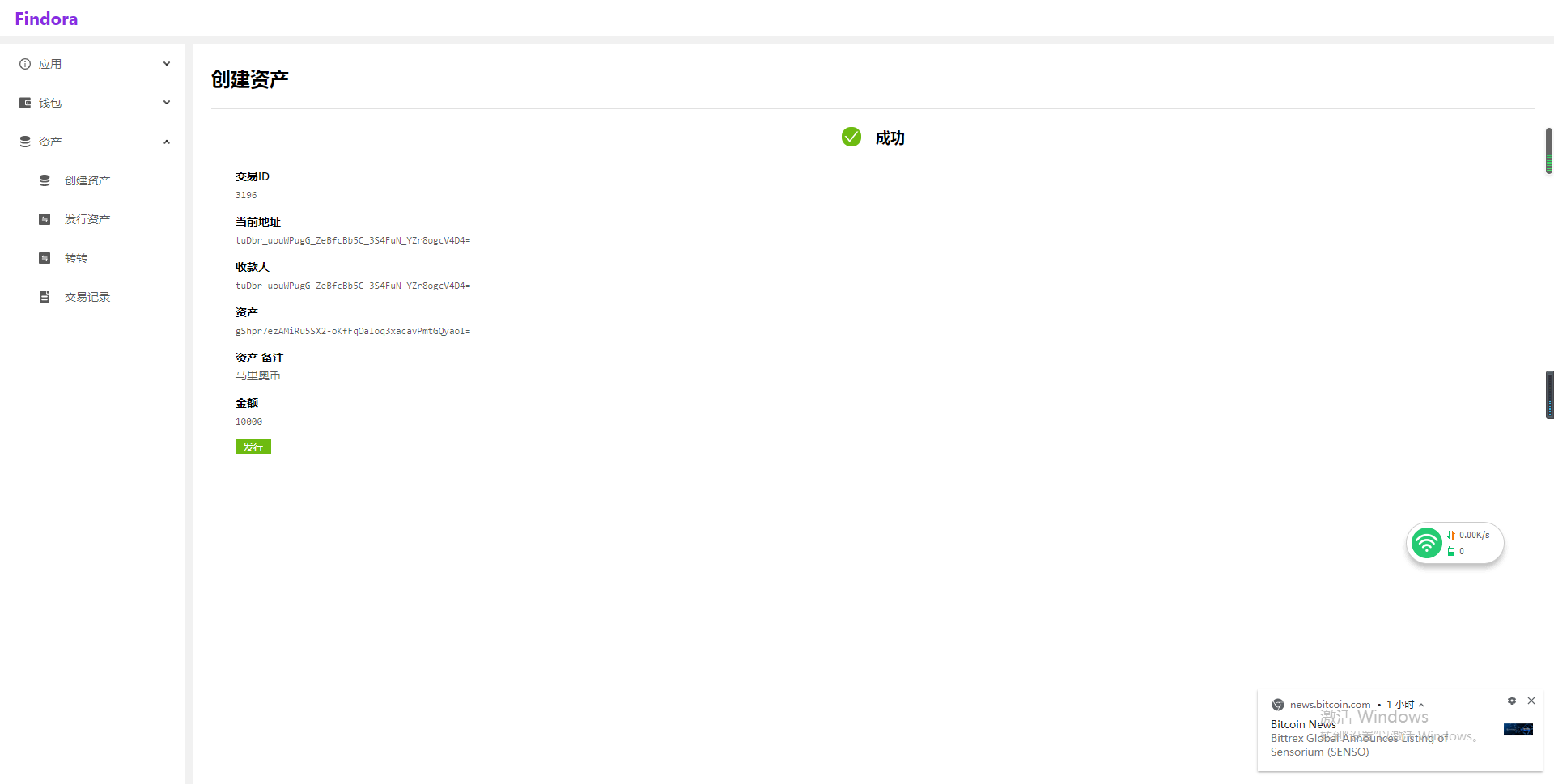
We can see the assets we created in the account.
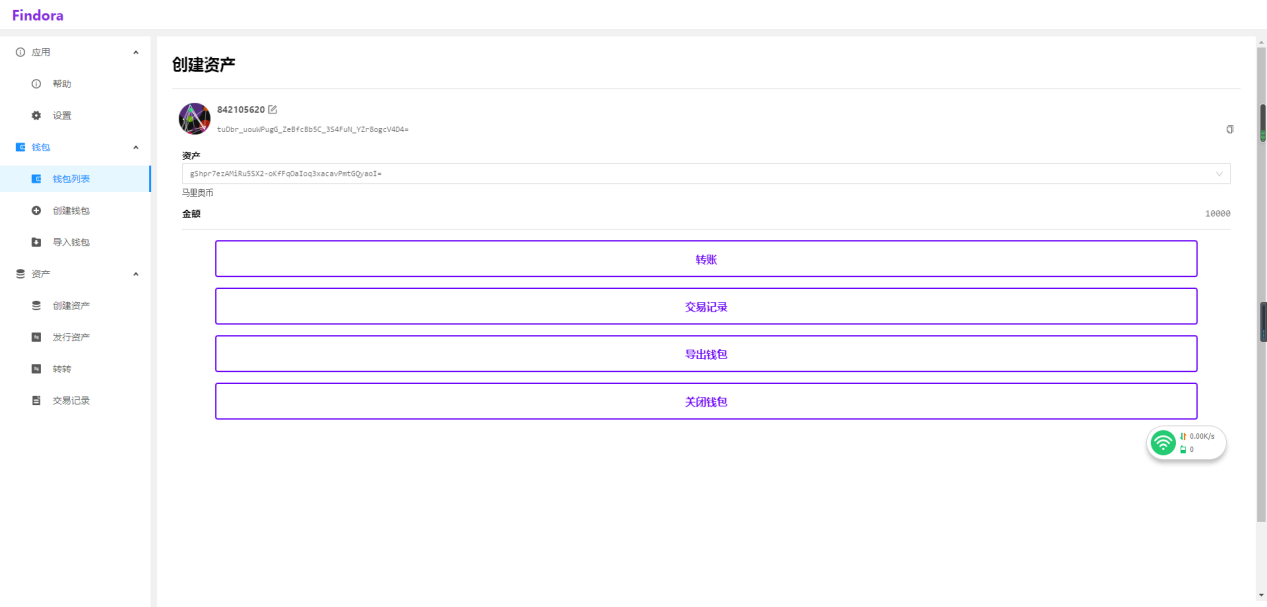
In fact, issuing tokens is an operation with a very high threshold in the current blockchain system. This threshold includes technical thresholds and economic thresholds. Therefore, it is relatively difficult for ordinary users to issue tokens based on traditional mainstream chains. On Findora, Mario successfully issued tokens by clicking a few buttons on his own.
The Findora ecosystem will carry various financial users in the future and have various financial needs. Findora's smart asset framework was built from the ground up to provide an inclusive guarantee for comprehensively supporting assets of all natures, including fiat currencies, cryptocurrencies, stocks, bonds, and derivatives.
For Findora's transfer, some relevant information will be hidden when querying on the browser. For this, Mario made a transfer attempt and created a new account for mutual transfer.
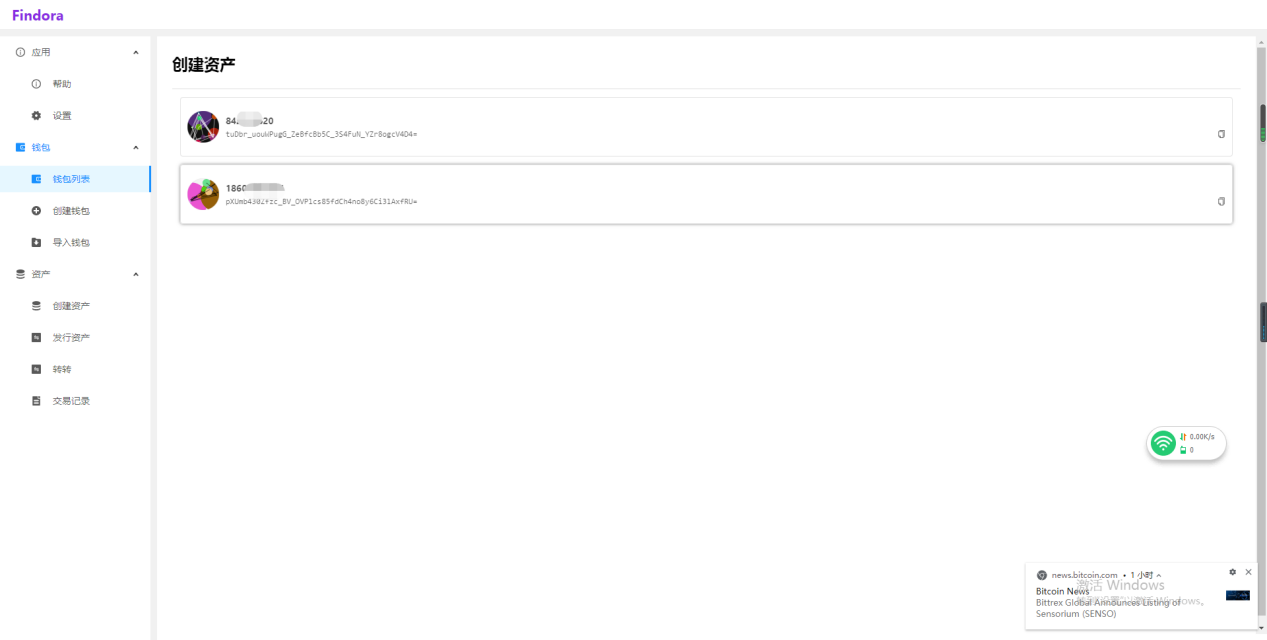
After creating it, let's try to transfer 100 tokens we just issued.
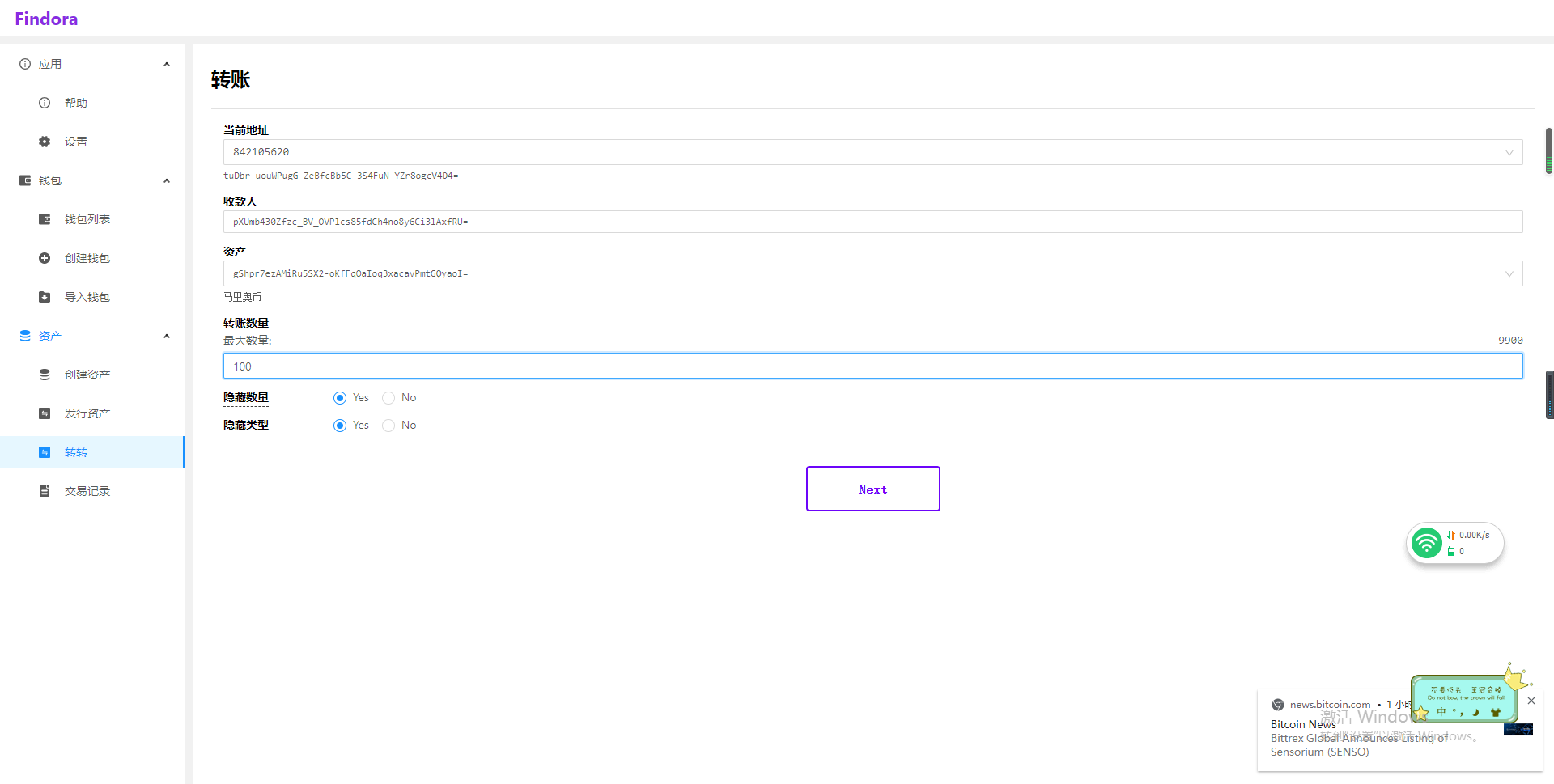
We can see that the amount and type of the transfer is optional and can be hidden, that is, the identity, transaction amount, and transaction metadata are all strongly encrypted. Even validator nodes and storage provider nodes cannot read the data.
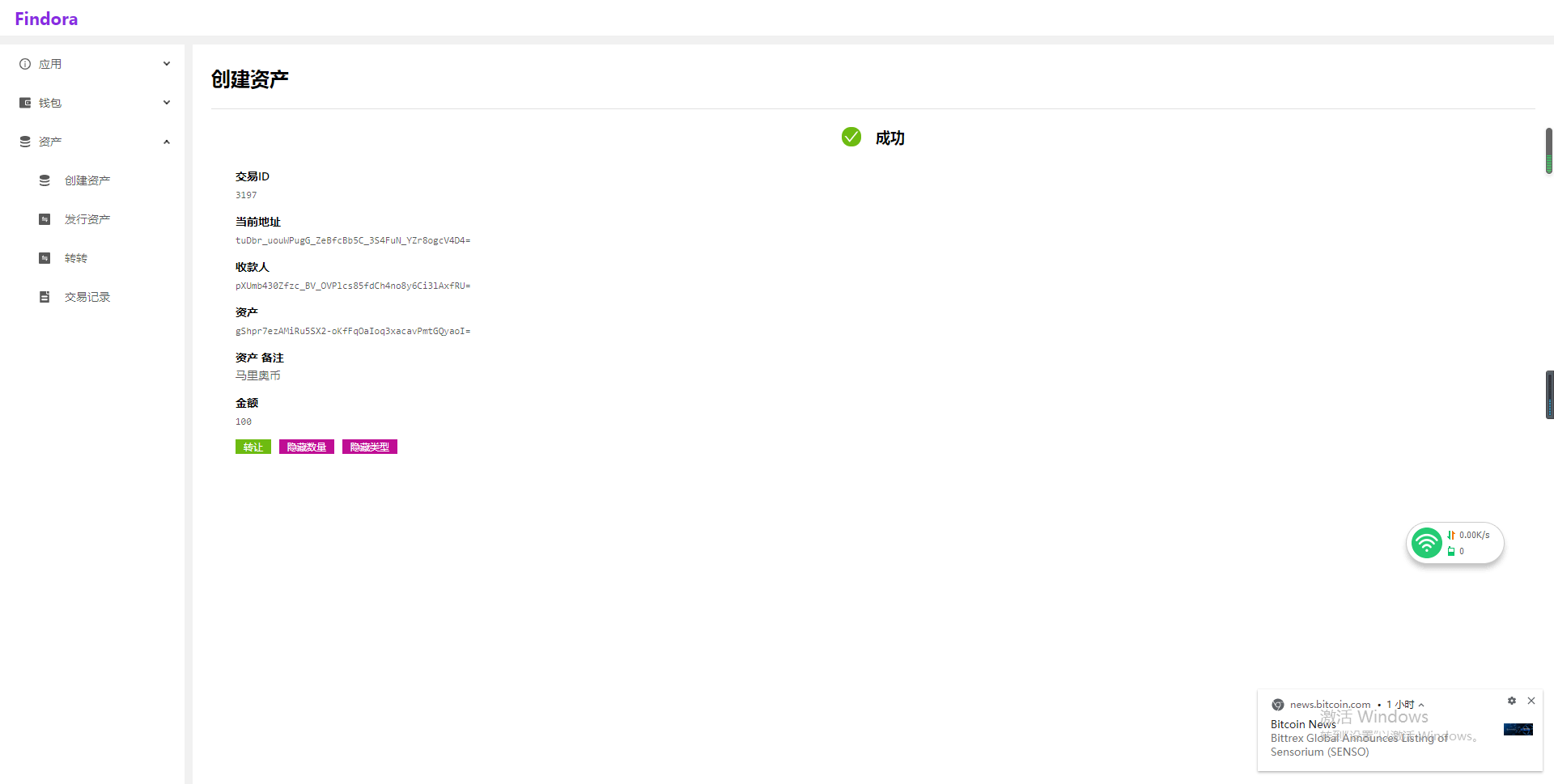
The current blockchain system basically focuses on open and transparent transactions. For the commercial use of blockchain technology, selective anonymity of transactions and other behaviors is very necessary, which is also a basis for building commercial finance. The Findora system consumes very little during the transfer process and the transfer speed is relatively fast.
The anonymity of the Findora blockchain system is based on zero-knowledge proof. Currently, blockchain systems using zero-knowledge proof include Zcash and XZC. On the one hand, the scalability is almost zero, and on the other hand, selective anonymity cannot be achieved.Findora uses zero-knowledge proof Bulletproofs and Supersonic technology to achieve selective disclosure. Users can prove that financial transactions are correct and compliant without revealing sensitive information, in other words, high auditability. And its highly optimized zero-knowledge proof technology has fast, high-throughput confidential asset transfer function, which can be extended to at least thousands of transactions per second (TPS).
Identity and transaction information is encrypted and highly secure by default. Even validator nodes and storage providers cannot read the data. At present, Findora can realize private payment, private asset transfer, proof of repayment, whitelist asset proof, proof of account balance within a certain range, private key viewing with special authority, private multi-source payment, private asset tracking, etc.
Findora permissions are more open. On the one hand, the threshold for users to use on-chain resources is low, such as transfer and issuance of TOKEN. Another face-to-face user has a relatively low threshold for becoming a node.secondary title
Consensus mechanism ensures security
Findora is based on finance, so the transaction security in the corresponding network needs to be guaranteed. Findora's two-tier consensus mechanism is called Finsense as a whole, which is a hybrid consensus mechanism using POS and FBA. Compared with the Byzantine BFT consensus mechanism, FBA has a higher fault tolerance rate, and does not require every node to trust 2/3 nodes of the entire network. When the system is operating normally, Finsense operates the POS consensus mechanism normally, and the high economic cost and the high difficulty of penetrating the trust structure of network institutions hinder attempts to attack the consensus. And when a node does evil, it will switch to FBA for "error correction".
The first field of blockchain technology to land must be the financial field, and a safe and efficient blockchain infrastructure is very necessary. For Findora, it can be deployed on Findora for individuals, small and medium-sized enterprises or industry giants Financial scenarios and use cases, changing the island pattern of traditional finance.