

Digital Identity on the Blockchain: Keeping User Data Safe with Chainlink

digital identitydigital identity"(D-ID) refers to the user's online behavior data collected by various platforms. For example, users' search records, social media records, transaction records, user names and passwords, telephone communication records, social security card numbers, birthdays, credit records, and medical records. Important data will be stored online, and the data in these databases can be pooled together to outline a unique user profile, which is the so-called "digital identity".
Users can use a series of authentication and security tools to protect their data, but even the most secure online platforms may be hacked, so the more private data in the user's digital identity will be leaked, which will make users and platforms are at risk of identity theft and fraud. In fact, multiple studies have shown that stolen personal information is one of the most frequently traded products on the dark web.
blockchainblockchainIt is a decentralized ledger (or database) that cannot be tampered with. Individuals can conduct peer-to-peer transactions, and at the same time reach a consensus on the ledger or data, and finally create a shared source of shared truth. The openness of the blockchain is such that any participant, or even off-chain parties, can audit every transaction and every address. The privacy of the blockchain lies in the fact that there is no need to carry out KYC under normal circumstances, users can participate in the blockchain anonymously, and the user's blockchain address is almost completely unrelated to their real identity.
A very potential application scenario of blockchain technology is to transform the traditional digital identity system and improve its user experience. Although there are differences in technical details, the goal of all blockchain digital identity solutions is to allow users to decide when and with whom to share information, no longer store user data in databases that are vulnerable to hackers, and allow users to more easily Protect data privacy well and realize data. This application scenario may not be very eye-catching at first glance, but it can not only improve convenience and data security, some people even predict that digital identity and related industries will account for 3% of GDP in 2030.
This article will explore the risks and challenges of existing digital identity solutions, and elaborate on how blockchain digital identity technology will overcome these challenges. It will specifically analyze four implementation schemes that use Chainlink oracles to transmit personal data to the chain.
Challenges of Traditional Digital Identity
While the problems of traditional digital identity systems tend to go unnoticed by users, they run deep. Digital identity is a key element of many Internet platforms that provide indispensable services for people's daily life and work. However, digital identities are fraught with security, privacy and even ethical issues at every stage of collection, storage and sale. These issues can be broadly grouped into three categories: data monetization, data access, and data storage.
Data monetization
One problem that digital identities cannot ignore is that large platforms secretly collect user behavior, habits, and biometric data. For example, a search engine website will collect user interest data to accurately target advertisements; or a social media platform will sell the data generated by users on the platform to third parties (such as political campaign teams). Since these terms of conduct are often buried in a dizzying array of user terms and conditions, users spend their time on the platform and earn a lot of money at the same time.
Users leak their information to the platform without knowing it, and then the platform turns the data into cash. This situation is often referred to as "voluntary labour". Supporters said that this data monetization model is normal, and the platform provides users with free services, so it is understandable to monetize user data and use the proceeds to further improve user experience.
However, this voluntary labor also raises a host of ethical and privacy issues, since users often do not know what data is being collected, who it is being sold to, or where it is stored. While some countries have tried to introduce laws to regulate platforms’ collection of user data, voluntary labor remains a serious problem, and many online users are still unsure what data platforms collect about them and what they do with it.
data access
Some Internet platforms and services will require users to provide more identity data. Social media sites only require users to submit email addresses (although they collect more user data later), while lending platforms or government agencies may require users to submit full financial or personal records. Therefore, users often need to submit the same personal information repeatedly on various platforms. While having separate databases for each website prevents a wider user data breach, storing important user data separately in each database will ultimately increase the attack surface.
Therefore, users will inevitably fall into a dilemma: should they spend time submitting identity information separately each time or store the information in a unified database for repeated use (note: but this may be attacked)? In addition, this system will cause problems for the platform, because the government department will store information repeatedly in multiple servers, which will reduce cost efficiency, and if user data is leaked, it will also increase the risk of fraud or theft on other platforms. Often, platforms are ultimately responsible for the entire financial damage caused by digital identity theft.
Data Security
As mentioned above, users often submit personal information online, such as submitting financial information to shop or enjoy services online. Connectivity and security are hard to come by, and the same is true for digital identities. One more website to store user information means that the attack surface has expanded a little bit, and user data is more likely to be stolen.
Given the magnitude of the threat, you'd be tempted to think that platforms should invest more in enhancing the security and privacy of their infrastructure. In fact, however, statistics show that the data privacy problem is getting worse, not better. Up to 10% of people experience identity theft each year, and that number is rising during the pandemic.
Blockchain Digital Identity Solution
Due to the above-mentioned challenges of digital identity, this field will have the potential to use blockchain technology to achieve disruptive innovation. Using blockchain technology to build an advanced digital identity system can solve the most essential problems and unlock new application scenarios.
The key functions of the blockchain digital identity system include: 1) Users can realize their own data and track data usage; 2) Digital identity information can be easily shared at any time; 3) Data security can be guaranteed. There are many unique solutions to achieve these goals, such as completely eliminating off-chain identity. And each of these schemes will utilize blockchain technology in different ways.
DECO
One such solution is to use Chainlink’s privacy-focused oracle technologyDECO, this technology was jointly developed by Chainlink Labs Chief Scientist Ari Juels and Fan Zhang and others. While new digital identity solutions have the potential to change how data is stored, the reality is that much data will still be stored in trusted databases. Many users and institutions prefer to entrust a higher security trustee to protect data, especially the government and large enterprises.
image description
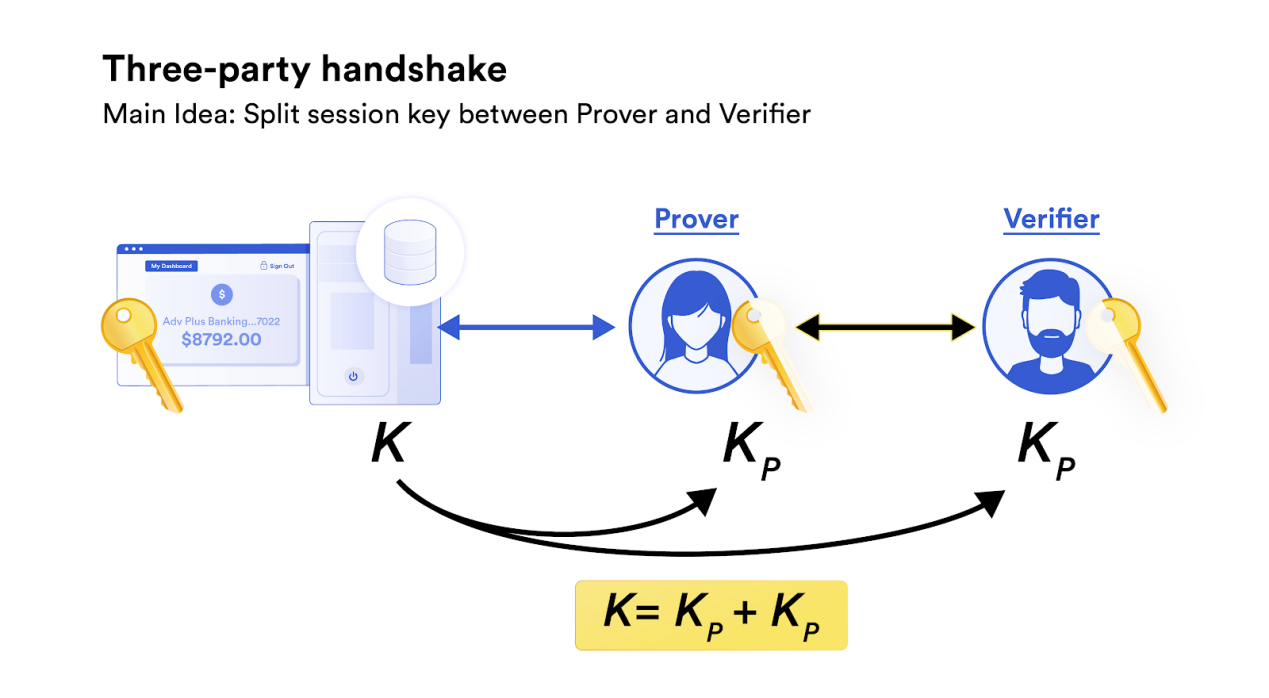
The main technology included in DECO is the three-way handshake, in which the prover (user) and the verifier (oracle machine) combine their TLS public keys to jointly initiate a data request, and the verifier cannot receive this data.
DECO's privacy protection technology can realize unprecedented application scenarios, such as medical research based on big data. For years, researchers have dreamed of applying machine learning and computational analysis techniques to large medical datasets, hoping to use these tools to achieve breakthroughs that human analysis cannot. However, patient data privacy and security issues have always been a major obstacle to the adoption of technology. The emergence of DECO can enable researchers to selectively develop data permissions, and at the same time comply with HIPA regulations, and carry out medical research in an innovative way while protecting data privacy.
Bloom
Another project using blockchain technology to improve digital identity systems is Bloom. This is a decentralized identity authentication protocol that allows users to claim, control and selectively share their financial data, and fully retains ownership of the data through a decentralized infrastructure.
blog postblog postimage description
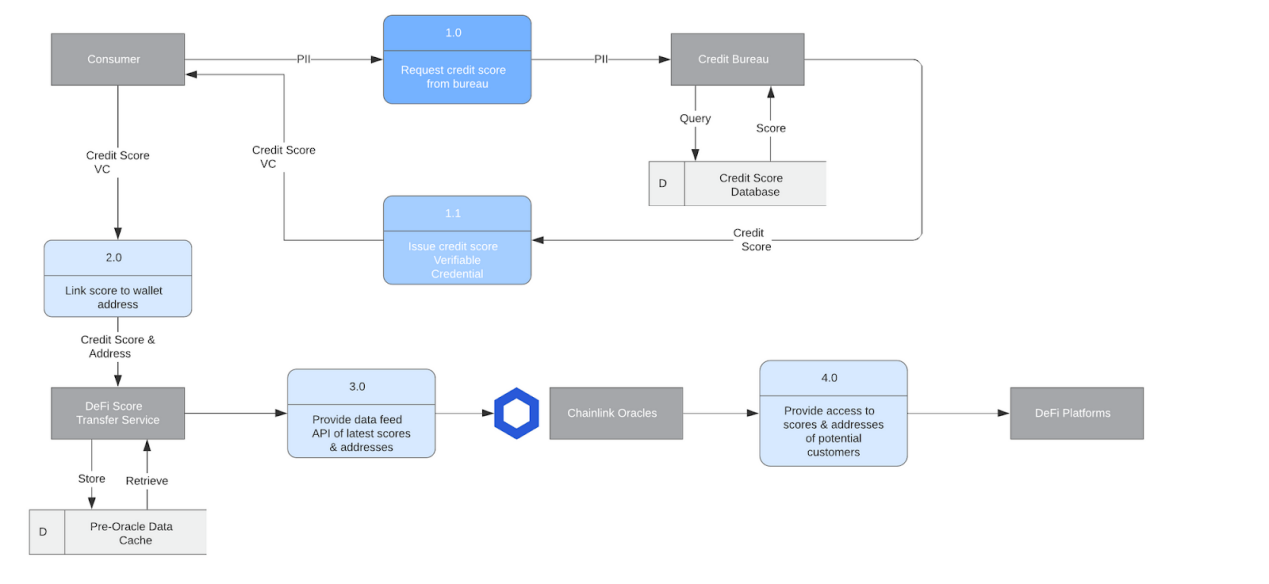
How Chainlink decentralized oracles connect credit scores to DeFi protocols.
Isaac Patka, Bloom's CTO, said: "Bloom's initial vision was to use smart contracts and Ethereum addresses to identify individuals and allow them to claim, store and share verified identity data. The goal is to decentralize the credit bureau model. As technology continues to evolve, we join the larger decentralized/self-sovereign identity community to develop interoperable open standards for identifying users, issuing credentials, and exchanging data. These standards have now reached a certain level of maturity At this point, we can bring this technology to market and have a global impact. We are excited to realize our original vision of building financial inclusion, using platforms like Chainlink to bridge the traditional off-chain world with the decentralized world. The world on the chain is connected."
Unstoppable Domains
Unstoppable Domains is a decentralized blockchain protocol that registers and stores Internet domain names as ERC721 tokens on Ethereum. Unstoppable Domains recently released a new feature that integrates Chainlink oracles to associate Twitter users with specific domain names, so that users can easily identify and confirm their public key addresses based on their social media accounts. In addition, users can also pay directly to the domain name without using complicated Ethereum addresses, which can greatly improve user experience.
The most unique aspect of this scheme is its ability to completely bypass off-chain data. Twitter users can remain anonymous and have an internet domain associated with themselves that can receive and send blockchain tokens. Users can transfer funds safely and easily in a completely anonymous state, and the data will not be stored in any centralized database.
Decentr
blog postblog postimage description
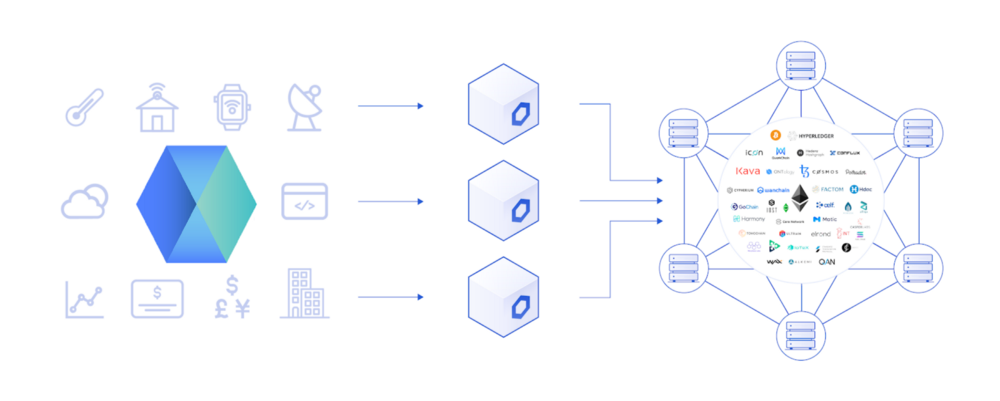
Decentr integrates Chainlink to provide user-centric social reputation scores to DeFi applications.
Summarize
Summarize
The systemic problems existing in the current traditional digital identity system will inevitably threaten the privacy and security of users. However, these problems are seen as a price that must be paid to obtain the services needed in daily life. With the help of blockchain technology and Chainlink oracles, we can selectively open access to off-chain data to the platform, or simply bypass off-chain data and directly create on-chain data that is verified by the Chainlink oracle network.
More details
More details
If you want to know more about blockchain, please pay attentionChainlink BlogThe oracle problemDynamic NFT、The oracle problem、andandModular DeFi applicationAnd so on.
click hereclick hereContact us, or viewOur developer documentation。