

ETH2.0 ecological development status

first level title
As the biggest event in the ETH community, ETH 2.0 continues to attract widespread attention. Since its official launch on December 1, 2020, it has been running for nearly 2 weeks. So how is the performance of ETH Staking? This article will summarize the current situation of ETH2.0 staking, including staking-related data, and the development of various tracks in the staking ecosystem, including exchange mining pools, lending platforms, decentralized staking mining pools, and node service providers.
2. Core progress
secondary title
2.1 Locked funds
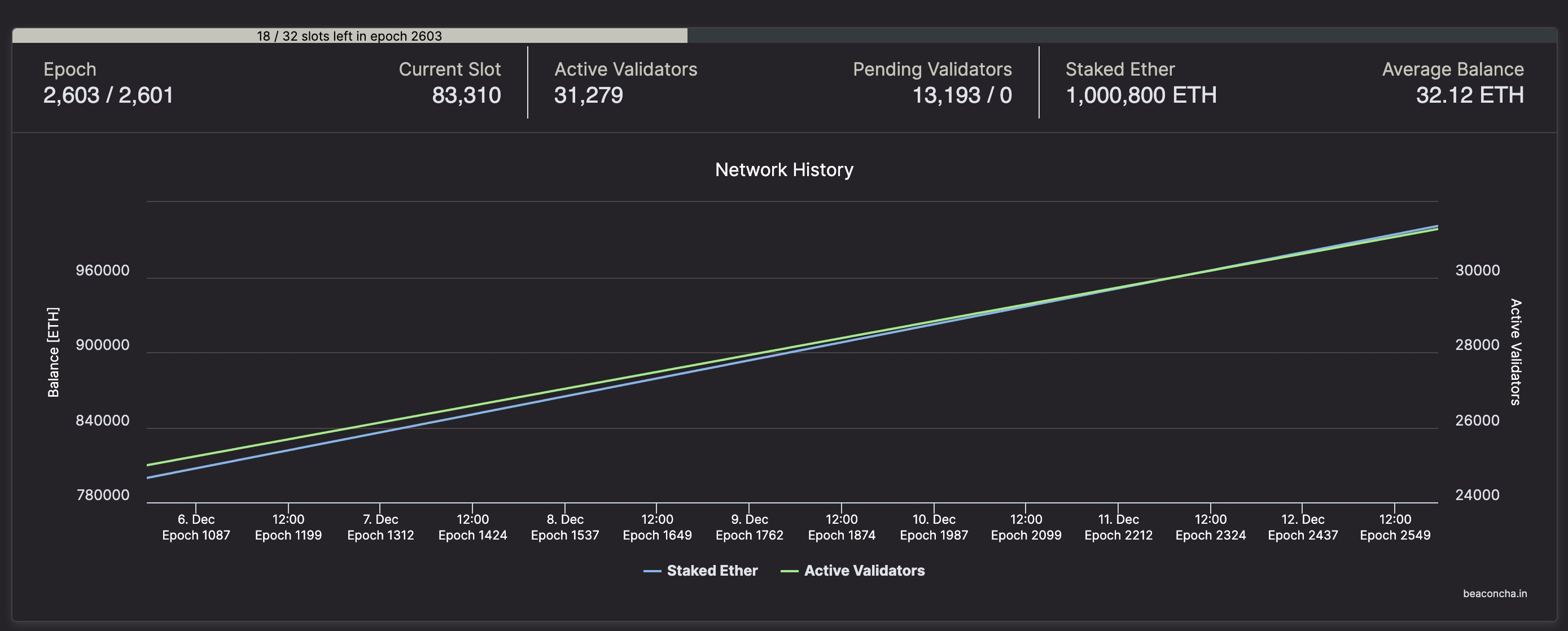 The current total amount of ETH in the Ethereum network is 113,823,621.47, which means that the amount of pledged ETH accounts for 0.91%, and it is expected to reach 1% soon.
secondary title
Up to now, a total of 45,040 validators have been registered on the ETH2.0 beacon chain, of which 32,255 validators have been activated and are running, accounting for 71.61%; 12,769 validators are waiting, accounting for 28.35% ; The number of validators who exited was 16, accounting for 0.04%. The details are shown in the table below:
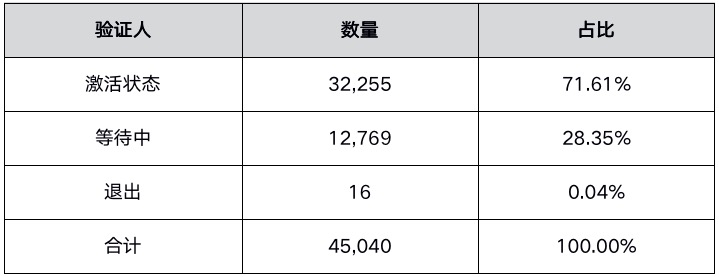
image description
Source: Etherscan, Bizai Research Institute
Among them, the validators who quit were mainly forced to quit due to double-signing and other behaviors, and the proportion was not high, only 0.04%.
secondary title
2.3 Yield
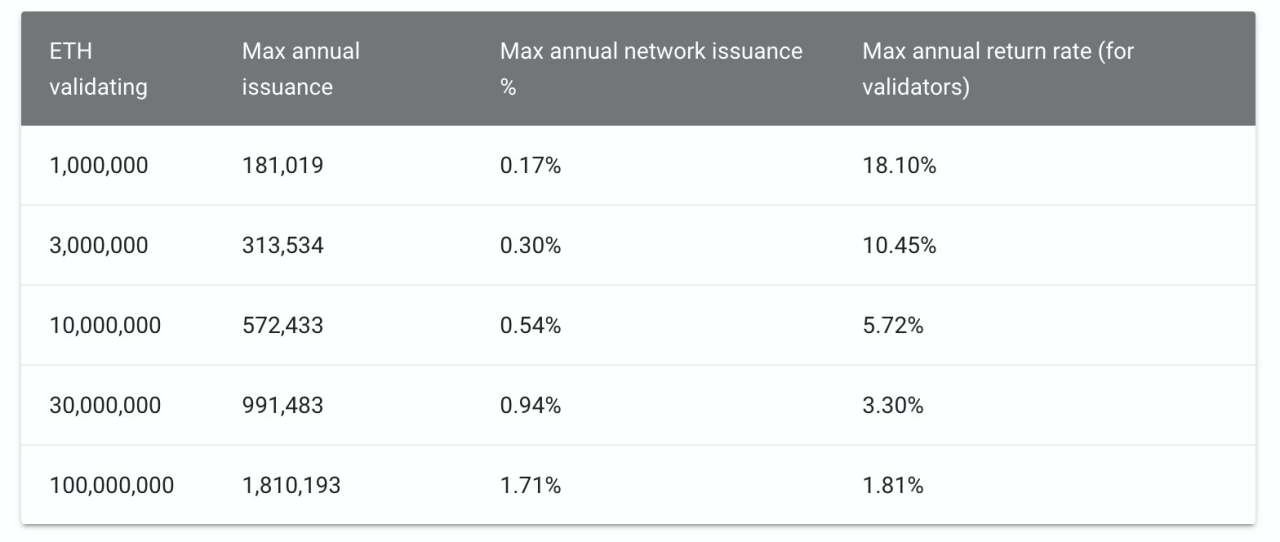
For a single validator, assuming that the pledge amount is 32ETH, the expected online time is 99%, the price of ETH is maintained at 584.6USDT without increasing, and the cost of running a node is 500USDT/year, then the estimated income of the node is as follows:
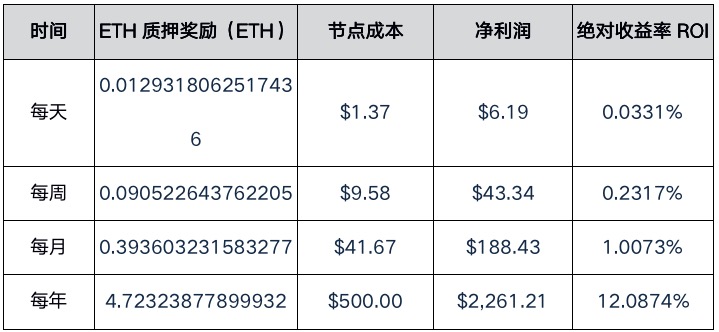
image description
That is to say, without considering the future price growth of ETH, the annualized rate of return of the fiat currency standard at the current node is 12.0874%.
first level title
Source: Bizai Research Institute
Source: Bizai Research Institute
secondary title
Source: Bizai Research Institute
Source: Bizai Research Institute
Binance
Binance
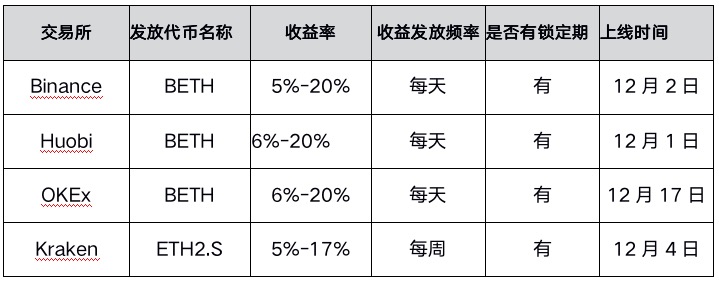
On December 2, 2020, Binance announced that it will support users to participate in ETH2.0 Staking, allowing its users to deposit any amount above 0.0001 ETH, and promises to earn a return of 5% to 20% per year. The core features are as follows:
1) The ETH deposited by the user will not support redemption before the beacon chain supports transfer;
2) The exchange rate of issued assets BETH/ETH is 1:1;
4) At the same time, BNB airdrops will be used to double the ETH Staking rewards;
Huobi
Huobi
On December 1, 2020, Huobi Global announced that it will support ETH 2.0 Staking. Users can deposit more than 0.1 ETH to participate and get a return rate of 6% to 20%. The core features are as follows:
1) The ETH deposited by the user will not support redemption before the beacon chain supports transfer;
2) The exchange rate of issued assets BETH/ETH is 1:1;
3) According to yesterday's ETH Staking rewards, BETH rewards are issued to users every day, and the reward rule is T+1;
OKEx
4) At the same time, HPT airdrops will be used to achieve ETH Staking rewards at 6% to 20%;
On December 4, 2020, OKEx announced that it will support ETH 2.0 Staking. Users can deposit more than 0.1 ETH to participate and get an expected staking return between 6% and 20%. The core features are as follows:
1) The ETH deposited by the user will not support redemption before the beacon chain supports transfer;
2) The exchange rate of issued assets BETH/ETH is 1:1;
3) According to yesterday's ETH Staking rewards, BETH rewards are issued to users every day, and the reward rule is T+1;
Kraken
4) No platform currency airdrop activities;
On December 3, 2020, Kraken announced that it will support ETH2.0 Staking. Users can deposit less than 32ETH to participate, and get 5% to 17% of the expected pledge income. The core features are as follows:
1) The ETH deposited by the user will not support redemption before the beacon chain supports transfer;
2) The issued asset ETH2.S/ETH exchange rate is 1:1;
3) ETH Staking rewards are distributed once a week;
5) User participation in the United States and Canada is not supported;
secondary title
image description
Source: Bizai Research Institute
Source: Bizai Research Institute
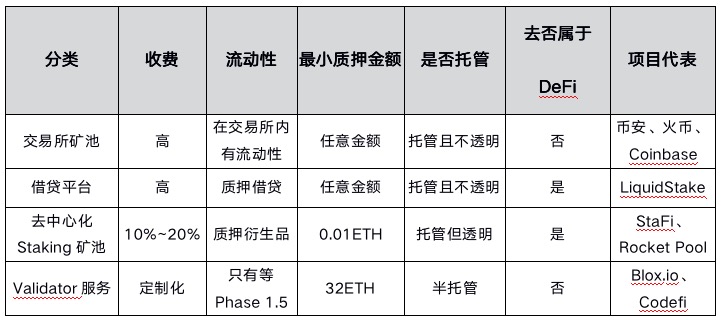
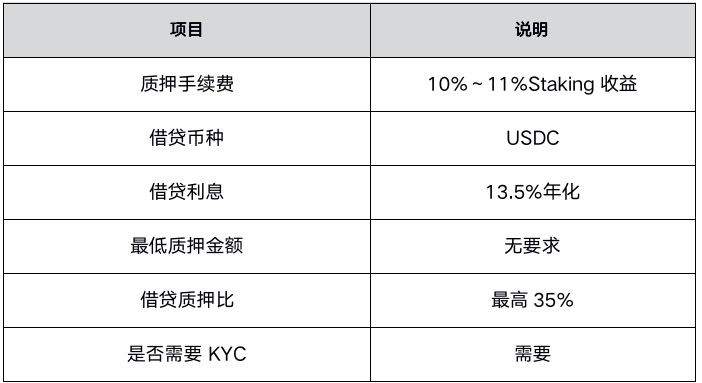
The goal of LiquidStake is to motivate ordinary users to participate in ETH Staking by providing liquidity solutions. However, unlike other DeFi projects, LiquidStake's business model is more centralized, which is reflected in the following aspects:
1) Users are required to perform KYC to ensure the compliance and security of the platform;
2) LiquidStake will entrust the ETH funds deposited by users to well-known cooperative node service providers, such as Bison Trails and ConsenSys;
LiquidStake has no limit on the participating ETH pledge threshold. The user's pledge amount can be less than 32 ETH or higher than 32 ETH. By distributing the ETH deposited by the user to the verifiers of multiple partners who have been audited, it can be reduced. Risk of any single validator slash. LiquidStake simplifies the participation threshold of ETH2.0 Staking, and provides a user-side Dashboard to view reward status and node behavior on the Eth2 network.
secondary title
image description
Source: Bizai Research Institute
Source: Bizai Research Institute
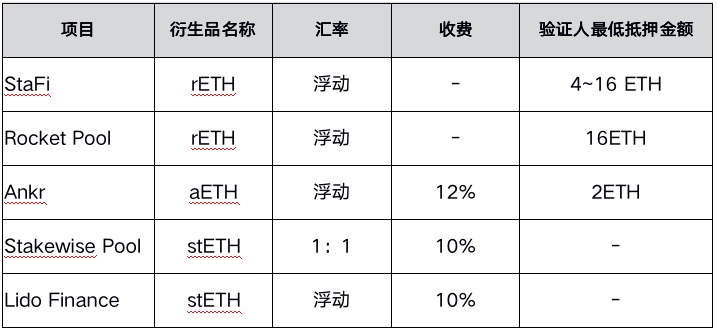
StaFi protocol
StaFi officially released a solution to ETH2.0 Staking liquidity on November 13, 2020. Users can deposit more than 0.01 ETH in exchange for rETH Token, the pledge certificate. Users can obtain liquidity by trading rETH on Uniswap at any time.
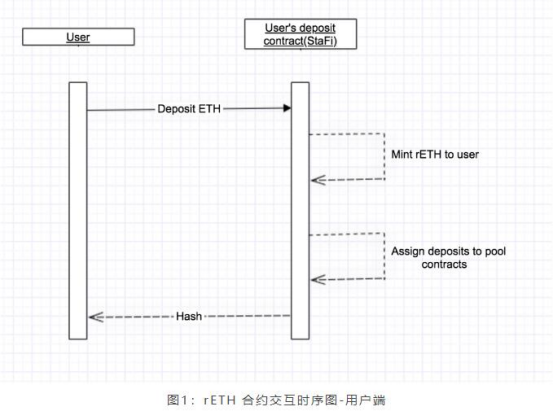
image description
Rocket Pool
Source: Introduction to StaFi rETH
According to Rocket Pool's latest plan, users can participate in any amount of ETH Staking without being pledged by 32ETH, and do not need to care about how to run node services, etc. The system will automatically assign the ETH deposited by the user to validators in Rocket Pool. If the user chooses Rocket Pool to pledge, after successfully staking ETH, he will immediately get the rETH Token issued by Rocket Pool as a certificate for participating in ETH 2.0 Staking. rETH can be circulated and traded on the official website or DEX, and exchanged for ETH.
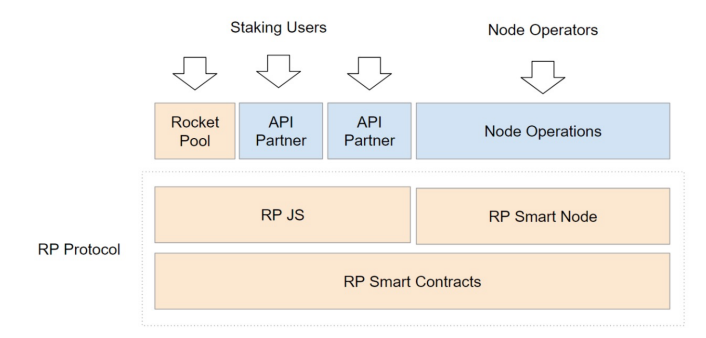
image description
Ankr
Source: Rocket Pool white paper
Stkr is a platform released by node service provider Ankr to solve ETH2.0 Staking. As a decentralized network based on Ethereum, it is responsible for matching nodes and users. Its main features are:
1) Users can mortgage any amount from 0.5 ETH to 1000 ETH with one click, and get the pledged derivative token aETH in proportion;
3) Platform service fee: 12% of staking rewards
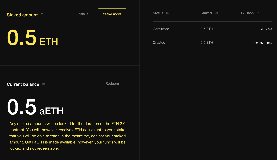
image description
Stakewise
Source: Stkr official website
Stakewise is different from other Staking Pools. It mints different Tokens for the user's deposit and staking rewards respectively. The token for the deposit is stETH, and the token for the reward is rwETH. The main features are as follows:
1) When making a deposit to Stakewise Pool, the user will receive an equal amount of stETH, representing their deposit at a ratio of 1:1;
2) As long as they hold stETH in their own address, rwETH will be accumulated to the same address in proportion to the user's share in the Pool;
3) If stETH is transferred to another address, the accumulated rwETH balance will remain unchanged. rwETH will start accumulating to the new address;
5) After the 1.5 stage, both tokens will be swapped to ETH in the pool at a ratio of 1:1.
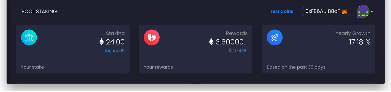
image description
Lido Finance
Source: Stakewise official website
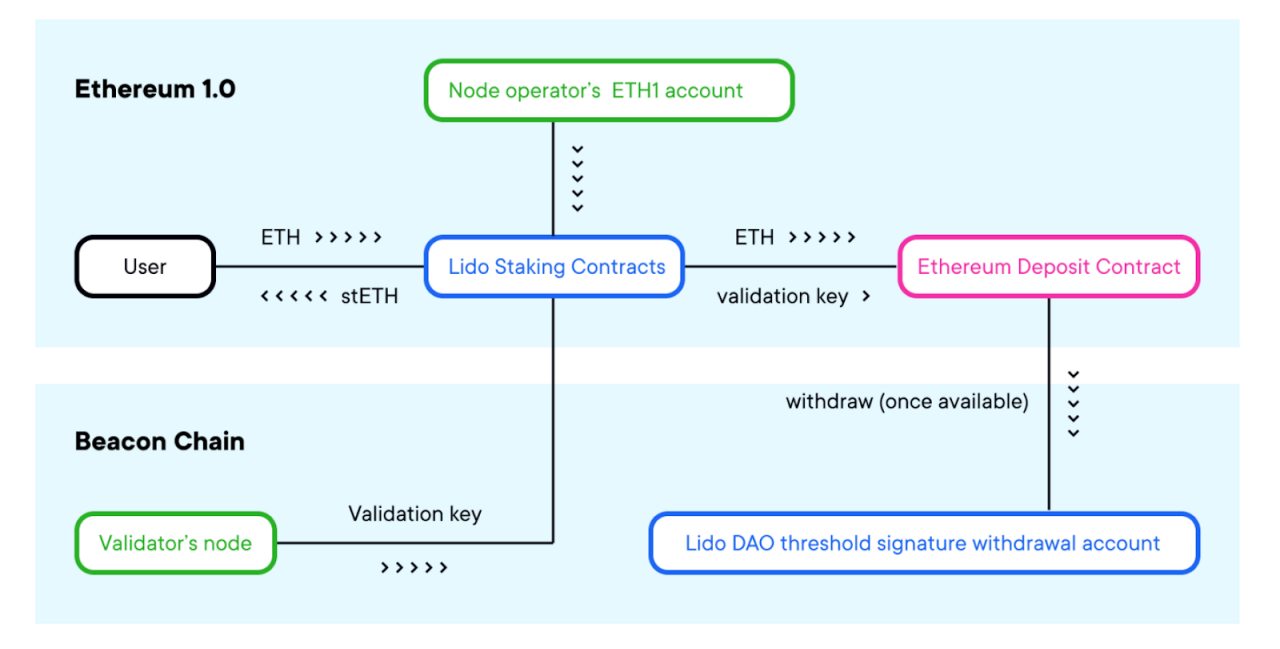
Lido Finance is a project developed by the well-known Staking service provider P2P Validator, and is supported by well-known DeFi institutions such as Certus One, Stake Facilities, Dokia Capital, and Stakefish. Its main features are:
1) Lido will maintain a group of node operators responsible for verifying ETH pledged with Lido;
3) Lido only allows high-quality Staking service providers to join as nodes;
Source: Lido official website
secondary title
Codefi Staking
3.4 Node service provider
Staked.us
Codefi is a service company under the Ethereum development company ConsenSys that focuses on the DeFi field. The ETH2.0 validator service tools developed by it include key management, validator Dashboard, Slash prevention solutions, 24*7 early warning services, etc. It can assist verifiers to better manage funds and keys, and ensure fund security and performance statistics. Partner institutions include Binance, Crypto.com, Huobi Wallet, etc.
Stakefish
Staked.us is a professional PoS mining pool. It has been rooted in the field of PoS services for 3 years. At present, the ETH2.0 API service developed by it can be automatically distributed across 5 cloud services. At the same time, it also developed the Node Provisioning API, which One of the better API tools in this category.
Stakefish is a professional PoS mining pool that provides staking services for major PoS projects. It released a non-custodial ETH2 validator service product in December 2020, which is now online. The core features are:
1) The new validator will need to pledge 32.1 ETH, of which 32 ETH is used for mortgage and 0.1 ETH is used to pay the mortgage service fee;
2) When ETH2.0 starts the withdrawal function, Stakefish will provide a grace period of at least 2 months for validators to choose to continue using stakefish or leave.
Blox Staking
3) The validator's pledge amount is 32ETH and its integral multiples.
Blox Staking provides custody-free Ethereum 2.0 staking for anyone who participates in staking or becomes a validator. Developed by the team behind the leading crypto accounting platform Blox.io, the project features:
1) Utilize technology built by the Prysmatic Labs team to support multi-client validators on the beacon chain.
2) Use Hashicorp Vault for private key management.
first level title
4. Future Outlook
4. Future Outlook
The ETH currently participating in the ETH2.0 pledge has exceeded 1 million in less than 9 days, accounting for less than 1%. If the pledge rate is 30%, it is estimated that 30 million ETH will participate in the pledge, which is different from the current pledge scale of 1 million. Compared with there is still a huge incremental market. Assuming that in 2021, the average price of ETH remains unchanged at 600 USDT, the corresponding increase in the 30 million ETH Staking market will be as high as 18 billion US dollars.