Author | Blockchain Financial Analyst. Matlif
Produced | NEST Fans (nestfans.com) has been authorized by the author to publish
Produced | NEST Fans (nestfans.com) has been authorized by the author to publishNEST Protocol is a decentralized price oracle network that provides on-chain price data and volatility data for DeFi protocols. NEST used to motivate quote miners is a Token issued by the NEST Protocol system, which is all generated through mining. The chain has the ability to capture value. At present, holding NEST has systematic income rights. The more NEST you hold, the more income you will get.
1. The main source of income from holding NEST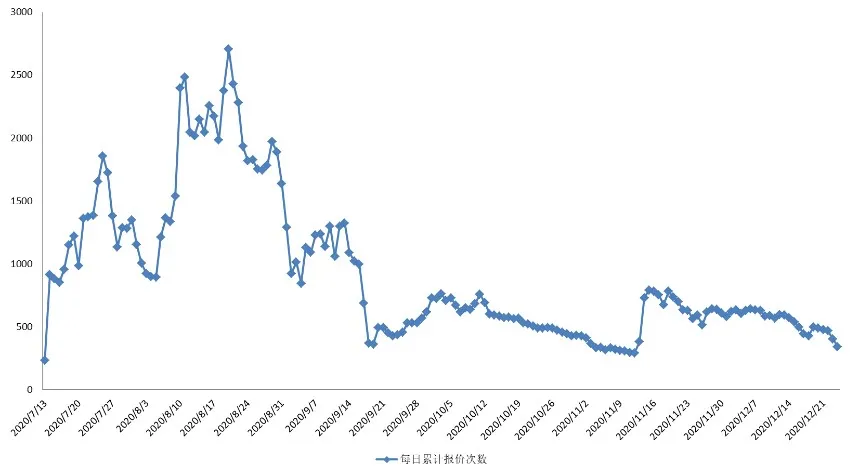
image description
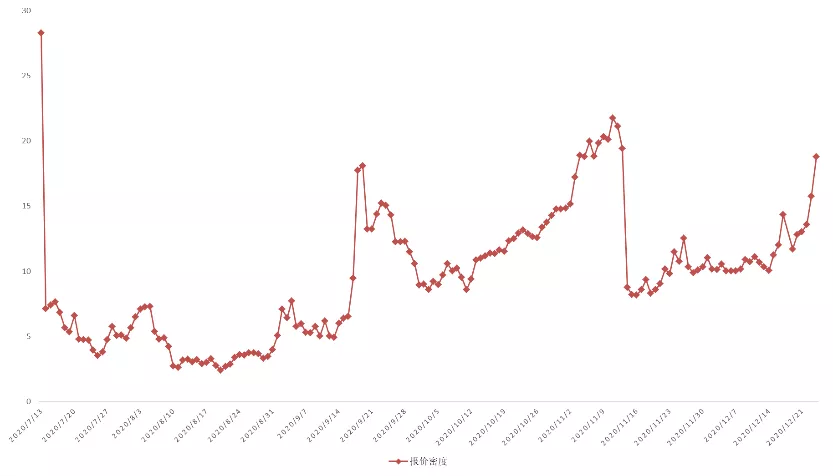
image description
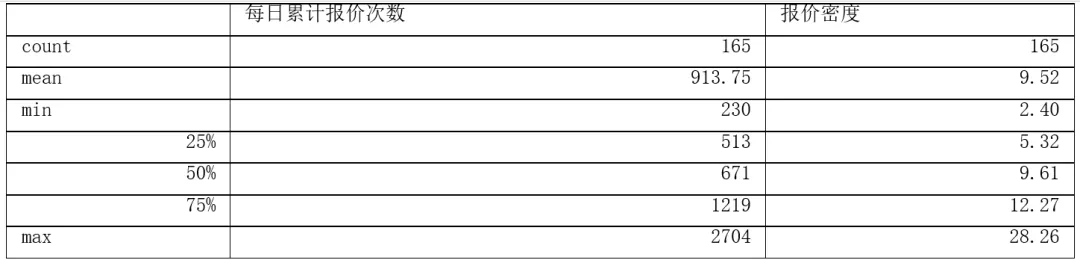
Chart 2: Quote density of USDT/ETH oracle track since the launch of NEST3.0
Chart 3: Statistics of USDT/ETH oracle track quotation times and quotation density since the launch of NEST3.0The data from July 13th to December 24th, 2020 shows that there is an average quotation of 9.52 blocks, an average of about 913.75 quotations per day, and at least 230 quotations per day (Chart 3), the number of quotations and the density of quotations There are clear advantages over other oracles.At present, the USDT/ETH price oracle track income mainly comes from the first point; the DeFi protocol call income source is still relatively small, the CoFiX protocol has been connected to the NEST oracle machine, and more DeFi protocol calls are under development.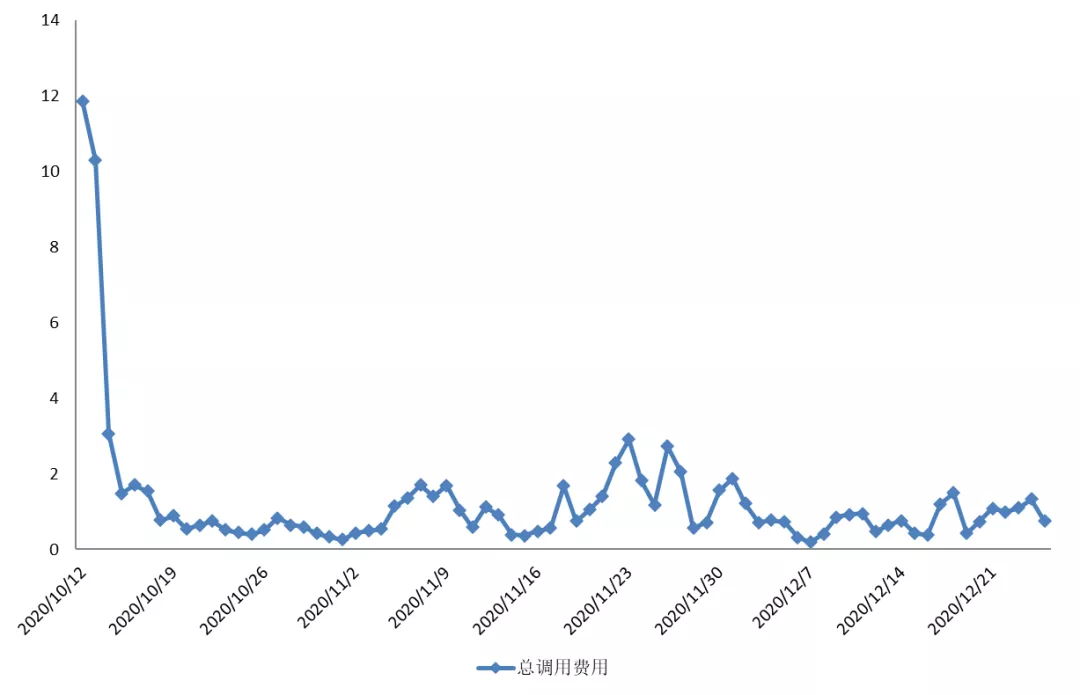
image description
Chart 4: Calls to USDT/ETH oracles since CoFiX went live
Chart 5: Since the launch of CoFiX, the USDT/ETH trading pool has called the NEST oracle machine statisticsCurrently, 40% of the income from other oracle tracks (all quotation pairs other than USDT/ETH quotation pairs) will be contributed to the NEST system (it will be reduced to 20% in the next NEST V3.5 version). Since the launch of NEST 3.0 in July 2020, up to now, 57 token/ETH price oracles have been launched on NEST Protocol (excluding USDT/ETH). Among them, the quotation density of the two price oracles, HBTC/ETH and YFI/ETH, is the best. On December 26, 2020, the quotation interval of HBTC/ETH is 28 blocks, and that of YFI/ETH is 41 blocks. The ETH/HBTC oracle has contributed 2125 ETH to the NEST system, and the ETH/YFI oracle has contributed 818 ETH to the NEST system.The above three points are the sources of income for the USDT/ETH price oracle track. Let's take a look at how the NEST system distributes income.
2. NEST system income distributionThe current NEST system mainly uses direct income distribution to reward NEST holders, that is, the NEST system distributes 90% of the income directly to NEST holders in the form of ETH (similar to stock dividends in traditional financial markets).The specific income distribution plan of the current NEST system is as follows:The NEST system will draw 90% of the ETH from the system income of each period for income distribution, and calculate the corresponding ETH income based on the proportion of NEST held by each user. The higher the proportion of NEST held, the more ETH income The more distributions; the distribution is once a week, and the individual needs to take the initiative to obtain the income. The remaining 10% of ETH assets are deposited in the system savings contract, and the ETH in the savings contract will be saved in case the ETH income is insufficient in a certain period to make up for it.2.1 Direct income distributionThe direct income distribution feature of the current NEST system is that it directly divides a large part of the income of the NEST system within a certain period of time, similar to the dividends in the stock market, which is the most familiar incentive method in the capital market, and the holders can obtain real benefits. gold and silver. Simple and rude, the user has a strong sense of direct experience. In the initial stage of NEST ecology, direct income distribution can better reflect the charm of investing in NEST.However, direct income distribution also has a certain negative impact on NEST: direct income distribution actually distributes a part of the value of NEST, and theoretically the value of the NEST system will decrease. If the value growth expectation remains unchanged or worsens, the price of NEST will fall. Since the quotation density of NEST is related to the price height of NEST, the decline of NEST price will firstly lead to the reduction of the number of quotations, thus affecting the price quality of NEST system, which should be considered the most.At the same time, the low price of NEST under the direct income distribution model is not conducive to the self-image of NEST ecology. From an investment point of view, although the direct income distribution is relatively safe, the income is less, and even the income generated is offset by the decline of NEST.In terms of compliance, since the direct income distribution is similar to the dividend mechanism of the traditional financial market, it is equivalent to giving NEST an equity attribute, and it is easier to be recognized as a Security Token by European and American regulators and touch the regulatory red line, which is not conducive to the internationalization of NEST develop.2.2 Direct income distribution VS repurchase and destructionThere is another form of return to NEST holders, which is repurchase and destruction (similar to stock repurchase in traditional financial markets). Specifically: the NEST system can use most of the proceeds to repurchase NEST from the secondary market and destroy it.Direct income distribution and repurchase and destruction are essentially ways for the NEST system to distribute income to token holders and encourage investors to hold NEST. Judging from the current development of the encryption field, the buyback and destruction model is also a mainstream model of income distribution.For the NEST system, I think that the income distribution model of repurchase and destruction is better than the direct income distribution model. The specific reasons are as follows:1) Repurchase and destruction directly reduces the circulation of NEST in the secondary market. This income distribution method is intuitively reflected in raising the price of NEST in the secondary market, thereby realizing indirect income distribution, although the user's direct experience is relatively direct. The distribution is weak, but the corresponding value behind each NEST is rising, and the corresponding future income (cash flow) is also rising.Direct income distribution and repurchase destruction, when all NEST is mined, the income objects are theoretically consistent. However, if NEST has not been fully mined (the actual situation), there is a significant difference in the effect of the two: the beneficiary object of the direct income distribution is the holder (the holder who has mined NEST), while the repurchase and destruction The beneficiary objects are the current holders, quote miners and future quote miners (holders corresponding to the unmined part of NEST). Since the main function of the NEST system is to output price data on the chain, and quote miners determine the quality of the price, it is more long-term beneficial for the NEST system to use the repurchase and destruction model to motivate current and future quote miners.2) For the NEST system, the repurchase and destruction model provides an open and transparent way to manage market value. On the one hand, the repurchase and destruction model allows a large number of NESTs to be locked up in order to obtain direct distribution income to flow, and at the same time increases the buying of NEST in the secondary market, which can significantly increase the overall liquidity of NEST as an encrypted asset.4) In terms of compliance, since the repurchase and destruction mechanism is more difficult to identify the attributes of rights and interests, the regulatory risk will be lower, so the repurchase model is an inevitable requirement for NEST to go international.For the reasons mentioned above, I think the NEST system should adopt the repurchase and destruction model to replace the previous direct income distribution model.
3. Assuming that the NEST system chooses to repurchase and destroy, a simple calculation based on the priceAssuming that the current price of NEST is P (Unit USD), the total amount of NEST in circulation is T, and the income scale of repurchase and destruction is E (Unit USD), here is a simple calculation formula for NEST price after repurchase and destruction:1) If the current system savings funds are all used for repurchase and destruction: Assuming that based on the NEST price on December 27, 2020, all system savings funds as of December 25, 2020 last week are used for repurchase and destruction, then the NEST price:P = 0.0204 USDT, T = 1.749 billion pieces (as of 2020.12.27)E = 4378.19 ETH, equivalent to USDT: 4378.19 * 697.61 = 3054269 USDT (based on the closing price of ETH on December 27).Then the NEST price adjustment after repurchase and destruction on December 27, 2020 is:The adjusted price is 0.022309 USDT, which will increase by 9.36% compared to the current NEST price.2) If all the proceeds since the launch of the NEST oracle machine are used for repurchase and destruction: Assuming that it is still based on the price of NEST on December 27, 2020, according to the rules of the NEST system, all returns since the launch of NEST are about 10 times the balance of the savings pool, then The total income since the launch is approximately:E = 43781.9 ETH, equivalent to USDT: 43781.9 * 697.61 = 30542691 USDT (based on the closing price of ETH on December 27).Then the NEST price adjustment after all proceeds are used for repurchase and destruction on December 27, 2020 is:The adjusted price is 0.141693 UDST, which will increase by 594.57% compared to the current NEST price.3) If all direct income distribution (dividends) since the launch of NEST is used for repurchase and destruction: According to the inference of all income above, then:The adjusted price is 0.088859 USDT, which will increase by 335.58% compared to the current NEST price.Four. Summary