

First-class warehouse research report: Helium (HNT)

Investment Summary
secondary title
Investment Summary
With the development of the Internet of Things industry, the current installation of IoT devices such as sensors is increasing exponentially. Due to the disadvantages of traditional IoT devices based on mobile cellular communication technology, such as high power consumption and high cost, the demand for low-power consumption and wide-coverage wireless networks has arisen.
Helium currently adopts the mainstream LoRaWAN long-distance wireless technology, with many compatible devices and a wide audience. As the only product in the current blockchain ecosystem that provides low-power, wide-coverage wireless network access, Helium has a significant competitive advantage in this track. And combined with the blockchain incentive mechanism, it is naturally superior to traditional IoT operators in terms of equipment construction costs and promotion speed in the early stages of the project.
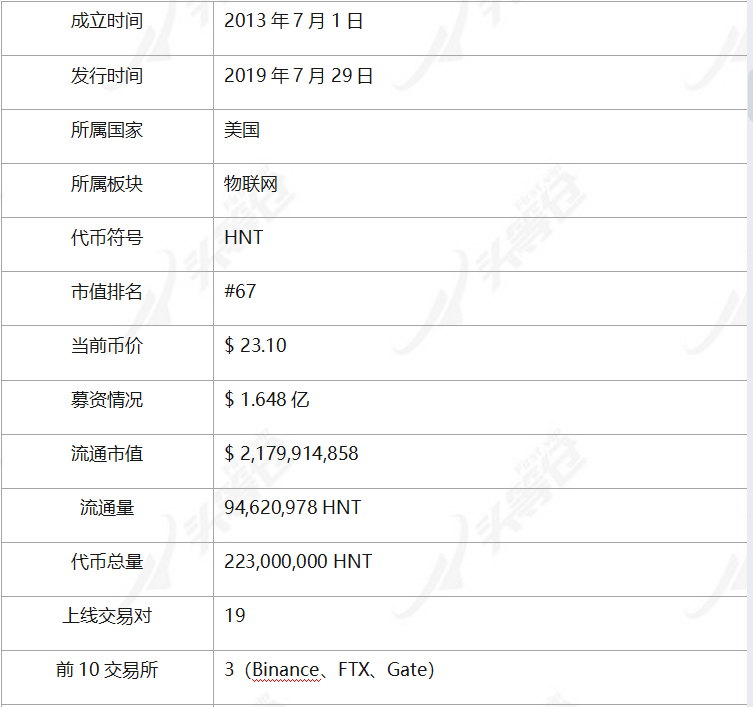
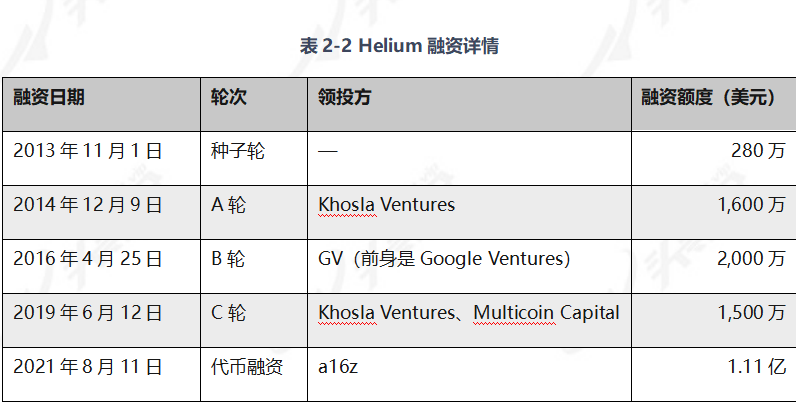
The Helium team is relatively well-configured, and the project has raised a total of about 164.8 million US dollars, and has been favored by many top investment institutions in the industry, with sufficient treasury.
In terms of technology, the Helium ecosystem involves a long technical chain. First, it independently built and distributed the LoRaWAN long-range wireless router to achieve a low-power, wide-coverage wireless network. Then mainly through the construction of the Helium public chain, combined with Proof of Coverage (PoC) and other technologies to achieve the construction and effective coverage of decentralized wireless networks. The overall technical logic is relatively clear.
The design of the economic model is relatively reasonable. HNT tokens are a necessity in the entire ecology, and the tokens play a significant role.
first level title
1. Basic overview
secondary title
1.1 Project Introduction
The team is currently planning to launch a decentralized 5G network and support mobile network operators to use Helium 5G to expand their signal coverage.

first level title
2. Project details
secondary title
2.1 Team
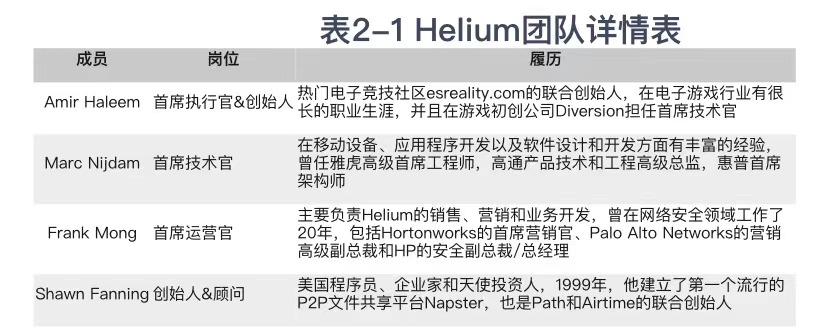
Table 2-1 Helium Team Details
On the whole, the Helium team configuration is relatively reasonable, and Helium product design has been carried out since 2013, which has a high degree of fit with the current project.
2.2 Funding
secondary title
2.3 Code
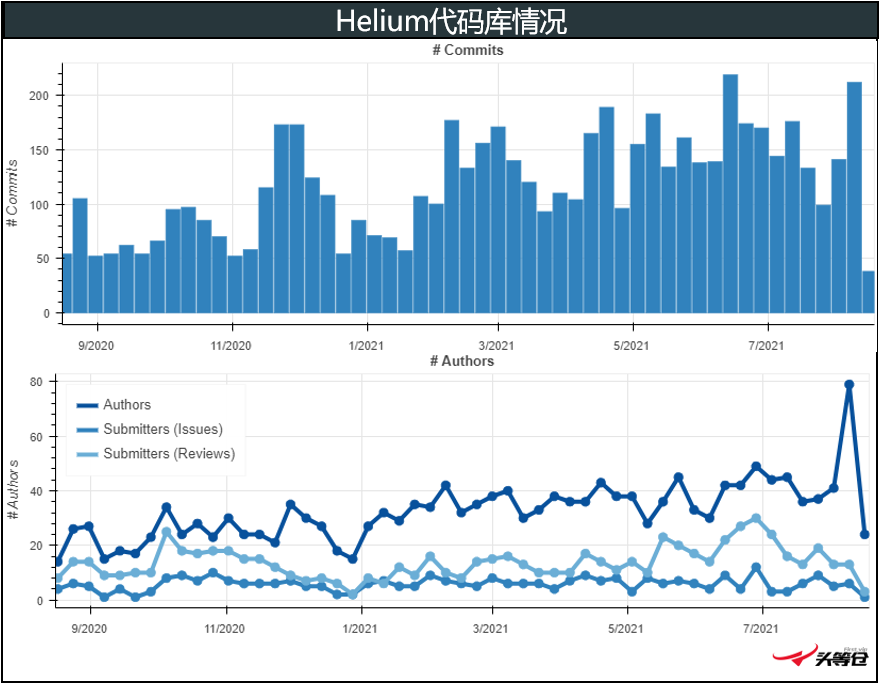
Figure 2-1 Helium code base situation
As shown in Figure 2-1 above, since Helium was launched, the number of project code submissions has been frequent and the development has been stable. The number of team developers has gradually increased since January 2020. At present, the number of project developers has been stable at more than 30 for a long time.
secondary title
2.4 Products
2.4.1 Overview
Helium is a peer-to-peer wireless network designed to provide a secure and cost-effective way for low-power IoT devices to interact with the Internet. Consumers can participate in network construction and earn tokens by purchasing Hotspots (hardware hotspots in the Helium network) to provide signal coverage for nearby IoT devices.
Helium represents a new business model for deploying and managing wireless networks. Traditionally, telecommunications companies like AT&T, Verizon, T-Mobile, China Mobile, China Unicom, and Softbank have centrally planned, managed, and deployed wireless networks. They built the towers, paid the labor, shipped the goods, and bought all the equipment before generating any revenue. Building a wireless network is expensive and slow. The Helium network does not pursue 3G/4G/5G like traditional enterprises. On the contrary, the Helium network provides low-power IoT devices, and through token incentives, it attracts participants to actively purchase Hotspots (hotspots), thereby transferring the construction cost of the project startup phase.
2.4.2.1 Hotspot
2.4.2 Product Introduction
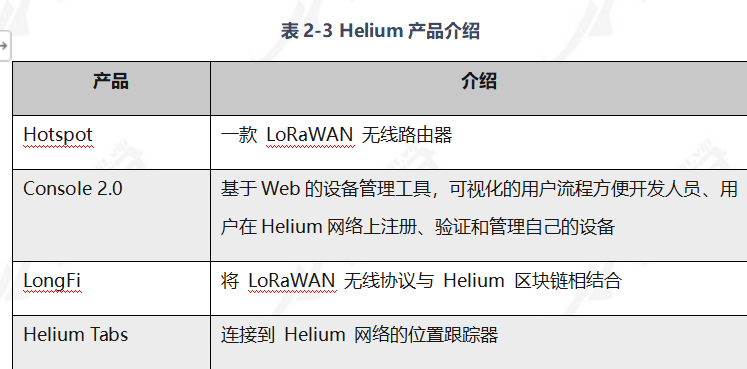
At present, Helium mainly has 4 products, the details are as follows:
Users only need to connect the Hotspot to the power supply and Wi-Fi, or connect to the Ethernet port, and deploy and complete the synchronization through the Helium wallet to provide wireless network coverage and obtain the corresponding HNT tokens. Hotspot is a hot spot device with low power consumption and supports long-distance data transmission. It consumes very little power, about 5 watts at the peak, and has low operating costs. Based on this low power consumption and long-distance transmission characteristics, miners can join the network to provide wireless network coverage and obtain corresponding tokens through simple settings, providing low-cost, low-power network access methods for IoT devices.
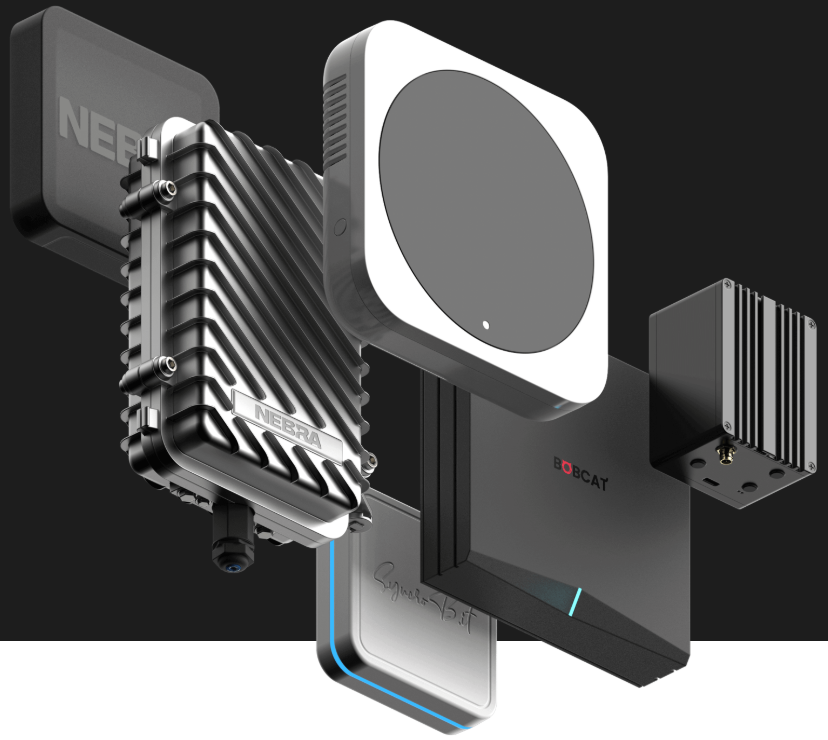
Helium Hotspot was previously independently built and distributed by Helium. After the HIP-19 proposal was approved, Helium supported third-party hotspot (Hotspot) manufacturers and suppliers to submit community applications for approval for manufacturing. There are currently 8 LoRaWAN hotspot mining machines supported by Helium, namely: Bobcat, Cal-Chip, Kerlink, LongAP, Nebra, RAK Wireless, Sensecap and Syncrobit. Details of each mining machine can be found by clicking this link.
2.4.2.2 Console 2.0
image description
Figure 2-2 Partial display of Helium mining machine
Helium Console 2.0 is a web-based device management tool that facilitates developers and users to register, verify and manage their own devices on the Helium network through a visual view. In addition to device management, Console also provides pre-built connections called integrations, which enable devices to connect to pre-configured, cloud-based applications or send data directly via HTTP or MQTT.
The device management capabilities of the Helium console include:
1) Organizational structure with labels and user-level permissions.
2.4.2.3 LongFi
2) Device ID registration, secure login and authentication.
3) Use Data Credits in the Helium network.
LongFi combines the LoRaWAN wireless protocol with the Helium blockchain, so any LoRaWAN device can transmit data in the Helium network, these devices are usually GPS trackers, environmental sensors, weather gauges, etc.
LongFi has the following characteristics:
1) Simple deployment: LongFi allows enterprise users to start as many devices as needed without additional configuration or third-party help.
3) HNT token incentives: LongFi allows device owners to earn corresponding HNT tokens when they help the network transmit data.
2.4.2.4 Helium Tabs
4) LoRaWAN support: Any LoRaWAN device or sensor can be integrated with the Helium network to transmit data.
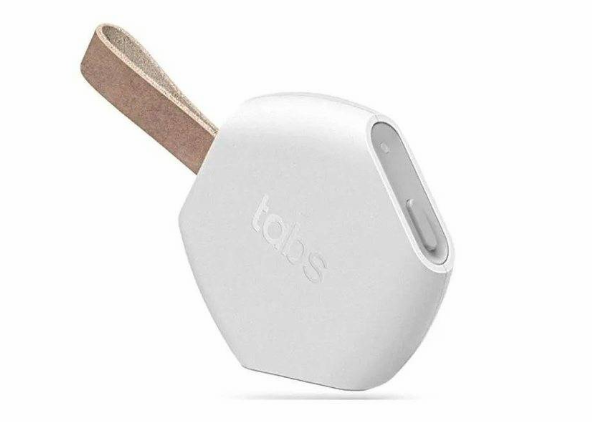
Figure 2-3 HeliumTabs tracking device
Helium Tabs is the first terminal positioning device running on the Helium network. Users can use the mobile device application to track the tag tracker, and can view the previous location and current location (only EU and US frequencies are supported). Basically sold out, bike-sharing company Lime already uses Helium to track their bikes.
secondary title
2.5 Technology
2.5.1 Summary
Helium builds a decentralized wireless network. Technically, from the hardware terminal to the server gateway, to a complete set of settings on the back-end server, and finally to the application side, how to provide users with a convenient access method involves There is a long technical chain in it.
On the payment side, through the "dual token" model, combined with OUI (Organization Unique Identifier) and state channels, convenient data transactions are realized. On the application side, the iteration from Console to Console 2.0 is also continuously optimizing the access threshold.
The implementation of Helium involves a variety of technologies in the traditional Internet of Things and blockchain. This chapter mainly analyzes several important technologies in the Helium network.
image description
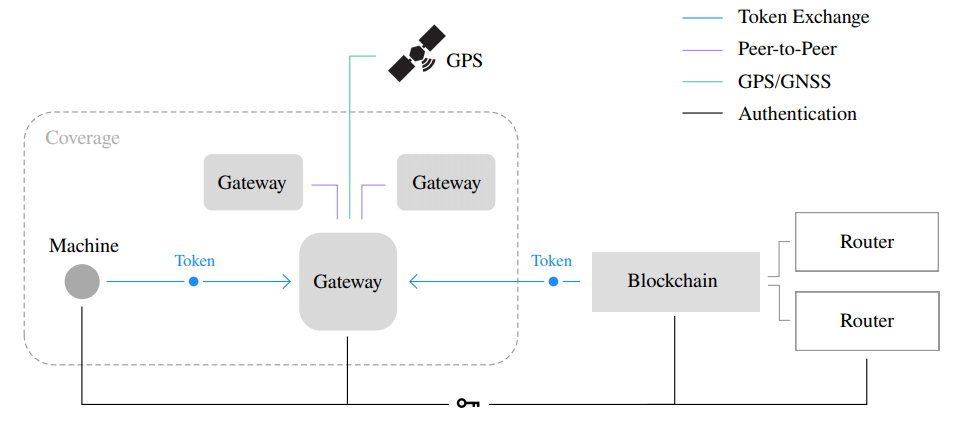
Figure 2-4 The overall flow of the Helium system
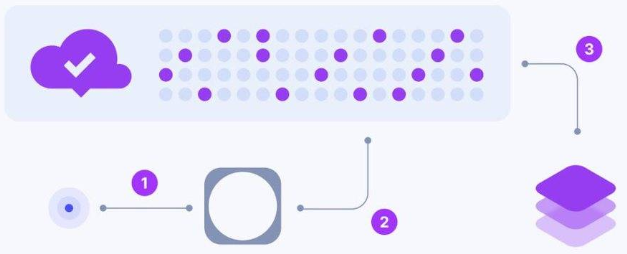
The data transmission process of the Helium network is roughly shown in Figure 2-4 above:
1) Users/miners connect to the Helium network through the Hotspots mining machine.
2) IoT devices (clients) on Helium will securely connect to multiple local gateways (Gateways) within the transmission range using the WHIP protocol.
3) After the device joins the network, Hotspots will send the encrypted data to all gateways, and each gateway will add the data to the Helium block.
4) The gateway sends the specified data to the specified router (Router). After the router obtains the data transmission service, it will pay the gateway.
5) The route decrypts the data, and the process ends.
2.5.2 Helium Consensus Protocol
The Helium consensus protocol draws on the HoneyBadgerBFT (HBBFT) consensus system, which not only can resist Sybil attacks, but also can confirm transactions at high speed, and has the characteristics of asynchrony and anti-censorship.
Originally, in order to ensure the validity and authenticity of data transmitted on the chain, Helium randomly selected consensus nodes from all hotspots to form a consensus group to verify each block. However, with the rapid growth of the number of hotspots and the number of blocks on the network, the original model has an impact on the block generation speed and operating efficiency of the blockchain, and at the same time brings great pressure on the hardware in the network. Therefore, Helium redesigned the generation mechanism of the consensus group and introduced the role of "verification node". This means that the consensus group of the Helium blockchain will be randomly selected from the verification nodes to undertake consensus tasks such as transaction verification and block generation on the chain, and receive consensus rewards. Hotspots no longer need to be synchronized with all nodes, so as to achieve the purpose of improving user experience and resource utilization efficiency in the Helium network.
image description
Figure 2-5 Verification node operation process
As shown in Figure 2-5 above, the operation process of the verification node in the Helium network can be roughly divided into three steps: 1) The terminal device uses the Helium network and transmits data to the hotspot; 2) Proof of Coverage (PoC) and Device-related information is forwarded to the consensus group; 3) The consensus group generates blocks after verifying the transaction and reaching a consensus.
The composition of the consensus group:
1) Users who meet the technical requirements can apply to become a verification node by staking 10,000 HNT (a pledge of more than 10,000 HNT will not increase the income), and there is no upper limit for validators. When a validator unstakes, it takes about 5 months (250,000 blocks) to unlock, during which the validator will not be rewarded and cannot transfer or withdraw the staked amount;
2) Every Epoch cycle (30 blocks, about 30 minutes), the network will randomly select 40 verification nodes from all verification nodes to be elected into the consensus group, responsible for performing consensus duties such as verifying transactions and producing blocks, and At the end of Epoch, corresponding consensus rewards will be obtained (consensus rewards account for 6% of the total amount of HNT released, that is, 150,000 HNT/month).
Therefore, it can be roughly calculated that the nodes that are successfully elected into the consensus group in each Epoch cycle can get an average of 2.6 more HNT token rewards. At present, the number of nodes on the Helium chain has reached 2,252, and it is still increasing. Therefore, the probability of most nodes being selected into the consensus group is getting smaller and smaller.
3) At the end of each Epoch, 25% of the verification nodes will be removed from the existing consensus group, and an equal number of verification nodes will be selected from the verification nodes that have not entered the consensus group to replace them.
In order to ensure that verification nodes can better serve the network, the team has established a "punishment score mechanism". Among them, if the consensus group is re-elected, most consensus nodes oppose it, and verification nodes cannot perform consensus duties as required, the penalty points of the nodes will be increased. The penalty score will not affect the pledged HNT principal. When the verification node is randomly selected into the consensus group, the node with a higher penalty score has a lower probability of being selected into the new round of consensus group. On the contrary, the lower the penalty score, the higher the probability of being selected into the consensus group. The penalty score for each node decays over time.
In addition, ordinary users can also choose to pledge their own HNT by choosing a third-party node pledge service, and get some consensus rewards (the current annualized rate of return is less than 5%).
2.5.3 Proof of Coverage (PoC)
The Helium network currently supports LoRaWAN standard IoT devices, aiming to provide open, large-scale global wireless network coverage.
In order to ensure the establishment of a globalized decentralized wireless network, one of the key points is how to verify in real time whether hotspots provide wireless network coverage through real positioning to ensure effective network expansion. Based on this, Helium established a Proof of Coverage (PoC) mechanism.
The PoC mechanism utilizes the characteristics of Radio Frequency (RF) to provide meaningful relevant proofs for the Helium network and its participants. Specifically, the PoC mechanism relies on the following RF characteristics: 1) The physical propagation of RF is limited by distance; 2) The strength of RF signal is inversely proportional to the square of the transmission distance; 3) Radio frequency propagates at the speed of light, so there is no delay in network transmission.
Taking advantage of these features, the Helium blockchain uses a mechanism called "PoC challenge" to continuously query hotspots, and these proofs of wireless coverage will be continuously generated and permanently stored on the chain. Each "challenge" represents an independent PoC verification. To date, tens of millions of challenges have been issued and processed on the Helium blockchain. With each new challenge, the blockchain records more data on the quality of network coverage.
Three different roles are involved in the PoC challenge:
1) Challenger: Hotspots in the Helium network can initiate a challenge to random hotspots in the network about every 300 blocks (about 5 hours), and challengers can get corresponding HNT rewards. For challengers, as long as they initiate a challenge, they will get corresponding rewards, and the income is relatively stable.
2) The challenged (Transmitter, sometimes called Challengee): After receiving the challenge information, the challenged hotspot (that is, the hotspot of PoC inquiry) will initiate an indiscriminate radio beacon (RF Beacon) based on the challenge information. ), surrounding hotspots that receive beacons act as witnesses, and can send information back to the Helium network for verification. Each challenge requires a valid witness, and the challenged can obtain the corresponding rewards.
3) Witness: The hotspot that receives the Beacon becomes a witness, and will send the challenge information back to the Helium network. The consensus group of each Epoch will determine whether the witness is valid based on a series of logics such as the positions of the witness and the challenged, cryptographic evidence, and the rationality of signal strength and attenuation. After effective witnessing, the witnesses will receive corresponding rewards.
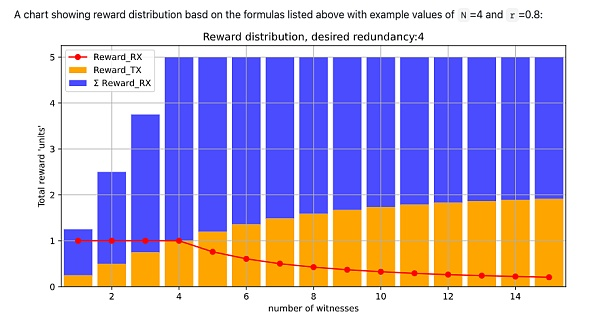
For witnesses, when the number of effective witnesses in a challenge is less than or equal to 4, the unit rewards received by each witness remain unchanged, and when there are more than 4, the unit rewards received by each witness decrease. For specific data, please refer to Figure 2-6 below:
image description
Figure 2-6 Witness income change curve
The community will continue to adjust the distribution of PoC rewards through new HIP proposals to encourage each hot spot to optimize its deployment strategy, thereby promoting the healthy deployment and development of the entire network infrastructure.
A simple understanding is that the POC mechanism determines the location by making the challenged hotspot send a beacon that marks a fixed location device, and the surrounding hotspots (witnesses) that receive the beacon are based on a series of logics such as the continuous pulse circuit sent by the challenger. its physical location, thereby guarding against dishonest false location of hotspots.
2.5.4 Data Transaction (Packet Purchasing)
How to realize the value exchange between wireless data providers and users is the core of the Helium network. Data transactions are realized on the Helium blockchain through two specific primitives:
1) Organizationally Unique Identifiers (Organizationally Unique Identifiers, OUI)
Organizationally Unique Identifiers (OUIs) are registered identities on the Helium blockchain. In order to send and receive packets to and from end devices, an OUI needs to be provided to network users. This can be their own OUI or an OUI operated by a third party, such as the official Helium-operated Console.
OUI has some features related to LoRaWAN and packet routing (details can be found here), but for blockchain it is important that only libp2p addresses registered as OUI endpoints can open and close state channels on behalf of OUI.
2) State Channels
A state channel is a sidechain opened by an OUI operator (any libp2p address registered to OUI). Through the state_channel_open transaction, the operator needs to pledge twice the data credits that can be used in the state channel (Data Credits, see the economic model for details). Additionally, the number of blocks before the channel expires is configured.
Once the state channel is open, hotspot and OUI operators are able to transact within the state channel. Generally speaking, the general process is as follows: 1) Hotspots provide the collected data packets to OUI operators; 2) OUI operators decide whether to purchase data packets, and if they decide to purchase, they sign the transaction; 3) After signing the transaction , the data packet is delivered by the hotspot to the OUI operator; the operator pays the corresponding data credits (Data Credits) to the hotspot.
2.5.5 WHIP wireless protocol
To ensure communication between devices, routers and gateways, several Low Power Wide Area Network (LPWAN) technologies are currently available. These wireless technologies focus on creating long-range, low-power Internet communications for sensors and other smart devices. But these technologies trade throughput for distance, with data transfer rates as low as 18 bits per second (bps).
WHIP is a long-range, low-power, narrowband wireless network protocol that supports two-way communication. It supports sub-GHz (that is, the frequency is below 1GHz, 27MHz~960MHz, the application covers consumer electronics, automotive, industrial and medical, etc., and it has more advantages in low power consumption, long-distance communication or wall-penetrating ability) unlicensed band, and authentication between communications uses
NIST P-256 ECC key pairs, as well as public keys of all participants stored in the blockchain, secure communications.
Summary: The Helium team has a relatively reasonable configuration. In terms of funds, it has obtained a total of about 164.8 million US dollars in financing, and there will be sustainable financial reserves for future use of the project. In terms of technology, the Helium ecology involves a long technical chain, and the overall technical logic is relatively clear. It mainly builds the Helium public chain and combines technologies such as Proof of Coverage (PoC) to realize the construction and effective coverage of decentralized wireless networks.
first level title
secondary title
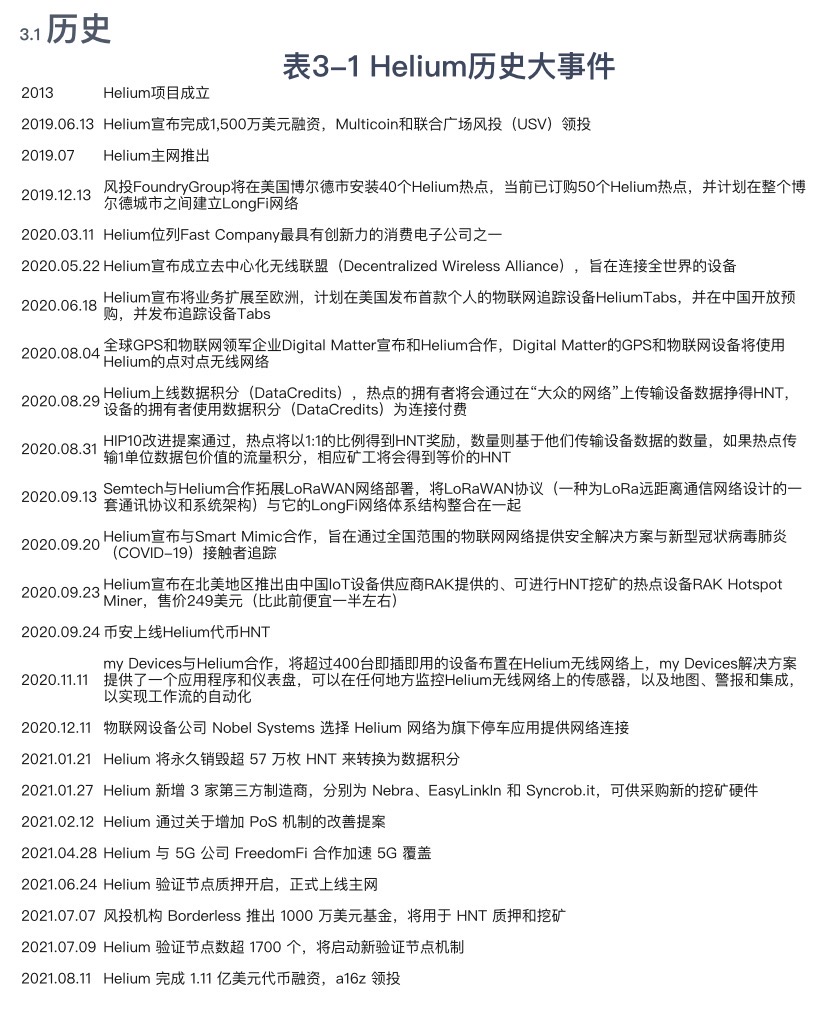
3.1 History
3.2 Status
3.2.1 Helium ecological data
image description
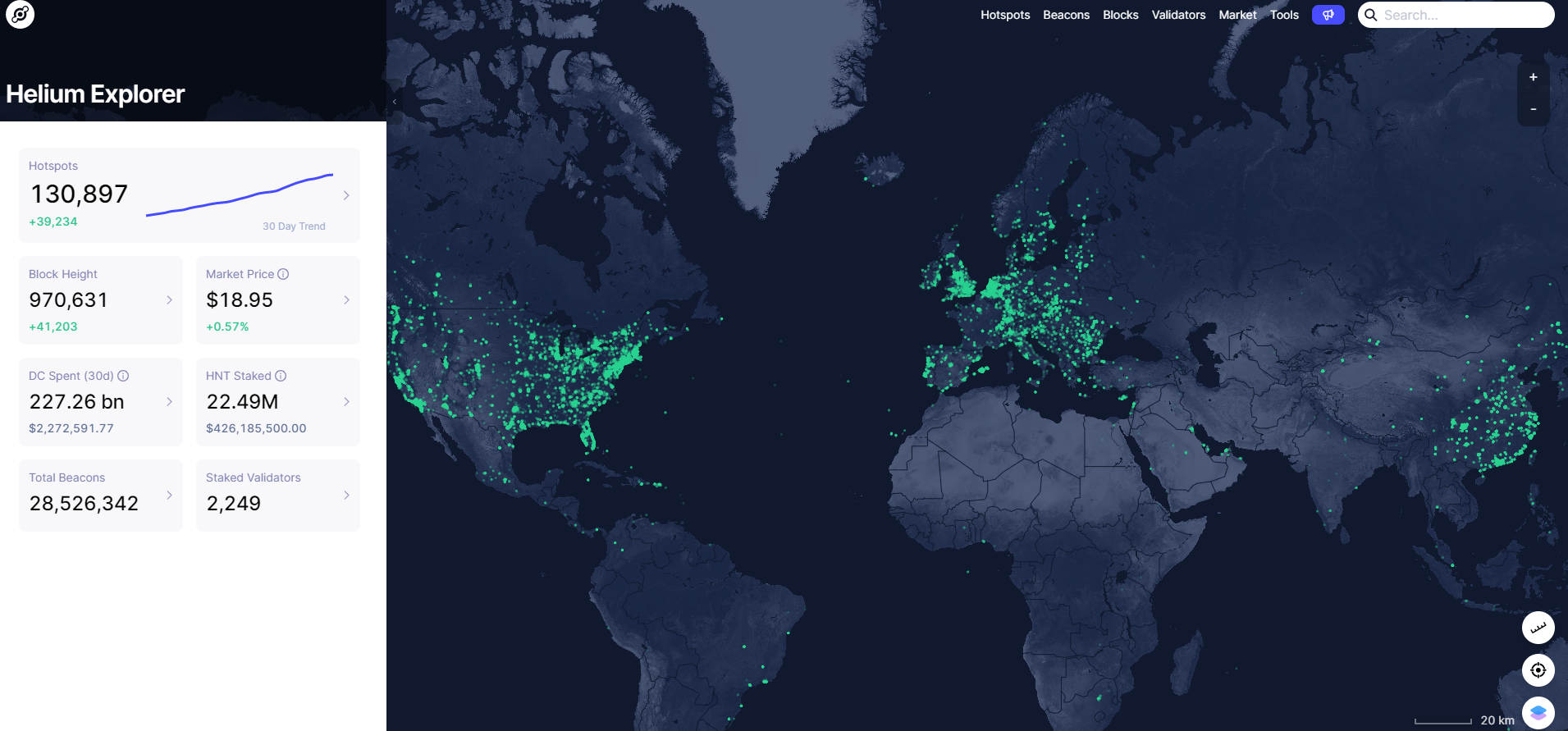
Figure 3-1 Helium network hotspot coverage status
As shown in Figure 3-1 above, the current number of hotspots on the Helium network has reached 130,897, mainly concentrated in the United States, Europe and China. Starting from June 2021, it will grow at a rate of more than 30,000 hotspots every month, with an average daily increase of 1,000 hotspots. The network scale has grown very rapidly in recent months.
As of August 18, 2021, Helium hotspots have covered 12,773 cities and 116 countries, with 41,570 hotspot owners and a hotspot online rate of 82.90%.
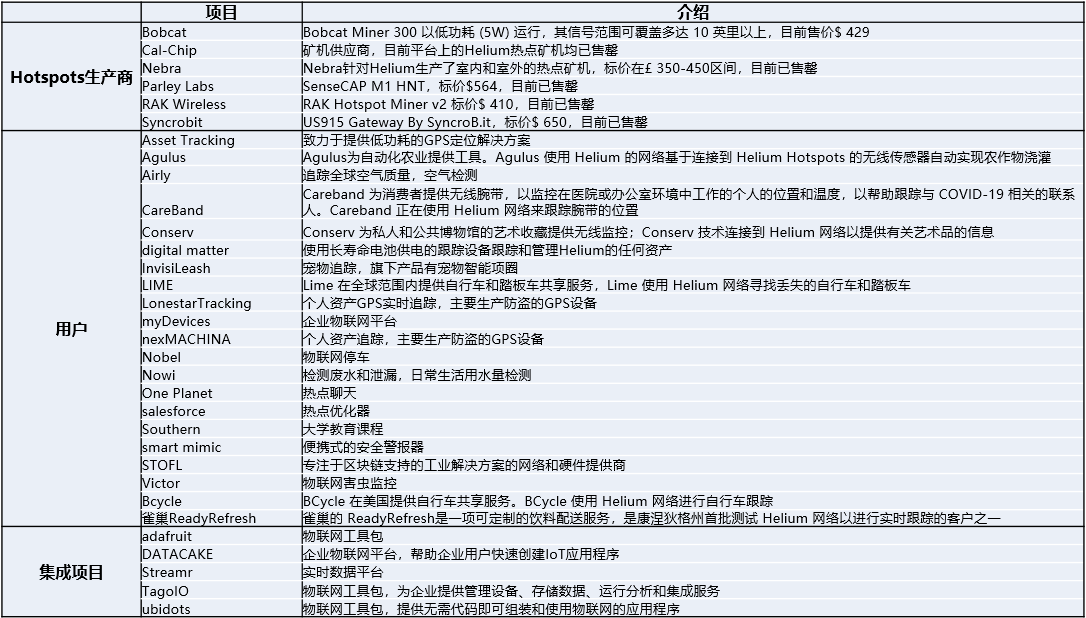
It can be seen that the current HeliumHotspot has formed a certain scale around the world. However, the surge in the number of Hotspots does not mean that the Helium project has been successful. It is also necessary to comprehensively consider factors such as usage in the ecosystem, actual participants, and real business volume. In order to let everyone better understand the current ecological situation of Helium, First Class Warehouse combined the information disclosed by the current team and compiled a Helium ecological overview. The details are as follows:
Table 3-2 Helium Ecological Overview
As can be seen from Table 3-2 above, Helium has a wide range of application scenarios, including pet tracking, air monitoring, food traceability, GPS positioning, etc. For example, in some foreign regions, express logistics is not as convenient as in China, and there are often cases of missing items. There are real application scenarios for GPS positioning of expensive express packages.
Hotspots hotspot mining machines are basically sold out in the market at present, and the hot spot mining machines in the secondary market have a substantial premium, which also reflects the current market that is in short supply.
However, due to policy reasons, there is basically no market for Helium hotspots in China. At present, most of the hotspot mining machines deployed in China are idling, purely for the purpose of obtaining HNT token rewards.
3.2.2 Hotspots mining rate of return
On the other hand, it should be noted that one of the main reasons for the rapid development of the Helium ecosystem is its token rewards.
At present, Helium releases 2.5 million HNT per month, 35% of which are allocated to hotspot infrastructure, which is divided into three parts: participation, witness and creation of coverage proof challenges. That is, 875,000 HNTs are used to reward Hotspots every month, and there are currently about 130,000 hotspot mining machines, so on average, each Hotspots can get 6.73 HNTs per month (the actual distribution is not evenly distributed, here is just for convenience of calculation).
Based on the Hotspots equipment cost of $500 and the price of $19/HNT (ignoring the cost of power consumption), the payback period for purchasing a Hotspots is about 4 months.
The above situation is just a rough estimate. In fact, it takes about 4.5 months (rough estimate, different regions to receive the goods) waiting time for ordering Hotspots on the official website. Because 35% of the tokens allocated to the hotspot infrastructure every month are further subdivided into three parts: rewarding participation, witnessing and creating coverage proof challenges. Therefore, if the user only buys one hotspot mining machine to participate in mining, the rate of return will be much lower than the above estimated average of 6.73 pieces per month.
More than 200 Hotspots on Helium Explorer were randomly selected by first-class positions, and the results showed:
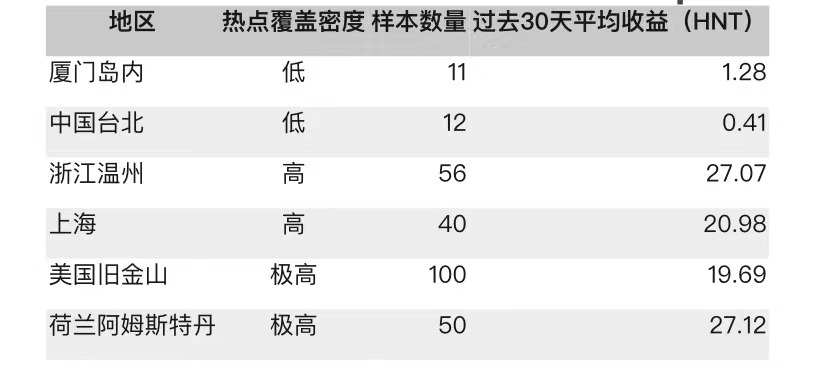
Table 3-3 Hotspots random sampling results
image description
Note: The random sampling results in the above table are as of August 20, 2021. Due to the small sample data, there may be some differences compared with the actual situation, which are for reference only.
Combined with the actual situation and the above table 3-3, we can see that the deployment of a single hotspot mining machine within a certain range, such as Xiamen Island and Chinese Taipei, has an average income of only about 1 HNT in the past 30 days; In areas with high coverage, such as Wenzhou and Shanghai, the average income in the past 30 days is 20+HNT; while in cities that basically achieve the coverage of hotspots in the entire region, such as San Francisco in the United States (the team's headquarters) and Amsterdam in the Netherlands, The average income in the past 30 days is basically 20+HNT.
From the results of random sampling, we can see that the coverage density of physical hotspots is positively correlated with the income of Hotspots. In areas with high coverage of Hotspots, the average income of mining machines is often higher, mainly because adjacent hotspots can Witness each other to get rewards for challenging proofs.
Smart hotspot deployers often choose geographical locations with relatively dense hotspots for network deployment, or purchase multiple Hotspots at one time. Increase yield by witnessing each other across multiple devices. In addition, the revenue of Hotspots is also affected by many aspects such as the openness of the terrain, the height of deployment, the strength of antenna signals, and whether there are real data transmissions based on Helium landing applications in the local area. Geography optimized with trials and tweaks. Interested users can refer to related videos officially released on YouTube to learn.
secondary title
3.3 Future
The most important thing in the next phase of Helium is the deployment of 5G wireless network.
First of all, we need to review the process of Helium deploying 5G wireless network:
· On February 23, 2021, the Helium community initiated the HIP-27 proposal of "Data Credit Support for CBRS 5G on Helium Network", which proposes an economic mechanism to support higher new wireless protocols on the Helium network, First support LTE and 5G in the CBRS frequency band (3.5-3.7Ghz in the CBRS frequency band).
· On April 14, 2021, Helium passed the HIP-27 proposal.
· On April 27, 2021, Helium officially announced support for 5G hotspot networks.
On April 27, 2021, Helium announced a partnership with FreedomFi, a connectivity company that produces open-source 5G equipment, to develop its second wireless network, 5G. According to the official description, "If you have a 5G-enabled phone, such as an iPhone or Samsung Galaxy, you will soon be able to connect to the network through a hotspot provided by people, and you may get 5G from your neighbors." So, this It is completely different from the current LoRaWAN wireless network with low frequency and low power consumption. If it is successfully developed, users will be able to use their mobile phones to directly access Helium's 5G network.
Helium said the new FreedomFi gateway will interoperate with the Helium Network and enable gateway hosts to mine HNT by providing 5G cellular coverage. Currently, the FreedomFi Gateway is accepting reservations and is expected to ship in the third quarter of 2021.
FreedomFi had previously estimated that end-to-end 5G equipment would cost between $1,000 and $5,000. In terms of equipment cost, it will be much higher than the current Hotspot or RAK hotspot mining machine. And since the currently supported CBRS frequency band is 3.5-3.7Ghz, the coverage will be much shorter than the previously deployed hotspots. Therefore, to achieve commercial use, more base stations need to be established.
· On August 11, 2021, Helium announced the completion of token financing of US$111 million, led by a16z, with participation from Ribbit Capital, 10T, Alameda Research, and Multicoin Capital. The fundraising price was not disclosed. The financing will accelerate the rollout of Helium's decentralized 5G network and support mobile network operators to use Helium 5G to expand their signal coverage.
For the construction of the Helium 5G network, the team expects to expand to other countries and cover various frequency bands as early as 2022.
Although Helium is currently promoting the construction of 5G wireless networks, if it can be successfully launched and adopted, it will undoubtedly be a major benefit to the entire project. But we also need to take into account that for the construction of 5G base stations, from investment to commercial use, the cost during this period is undoubtedly a very large number. Moreover, the deployment of 5G networks will involve many issues such as 5G operators, policy factors in different countries and regions, operating costs, and terminal ecology.
Since Helium's 5G network has not yet been launched, its specific commercial value remains to be discussed. The first-class warehouse will also continue to pay attention to the follow-up progress in this regard.
In the future, the most important thing in the next stage of Helium is to deploy 5G wireless network. If it can be successfully launched and adopted, it will undoubtedly be a major benefit to the entire project. But we also need to take into account that for the construction of 5G base stations, from investment to commercial use, the cost during this period is undoubtedly a very large number. Moreover, the deployment of 5G networks will involve many issues such as 5G operators, policy factors in different countries and regions, operating costs, and terminal ecology.
In addition, it should be noted that the current monthly yield of hotspot mining machines varies greatly, and miners who plan to deploy hotspots need to comprehensively consider various factors.
first level title
Helium's native token is HNT. With the approval of the HIP-20 proposal, the total supply of HNT tokens is 223 million pieces. All HNT are mined through Hotspots hotspot mining machines without pre-mining. Starting from August 1, 2021, the monthly issuance of HNT will be halved for the first time, from the original 5 million HNT/month to the current 2.5 million HNT/month, and will be halved every two years thereafter, with a total of 50 HNT issued. Year. As of August 19, 2021, the circulating supply of HNT is 94,160,119, accounting for approximately 42.22% of the total supply.
It is estimated that by the end of 2021, the circulation of HNT tokens will be 104 million, accounting for about 46.64% of the total.
4.1 Token Supply
4.1.1 HNT Token Distribution
image description
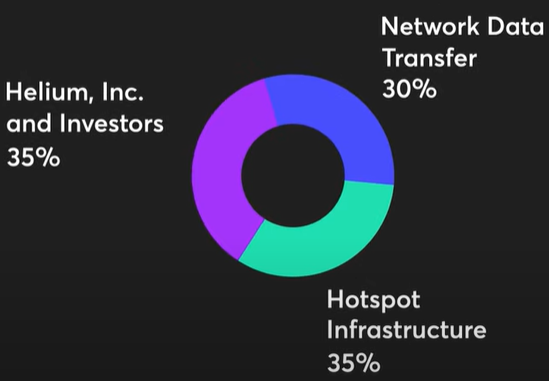
Figure 4-1 Distribution of HNT Tokens
The current distribution situation is shown in Figure 4-1 above, which is mainly divided into three parts:
1) 30% of the monthly release is used for network data transmission, rewarded to hotspots that transmit IoT device data, and allocated according to the data transmission ratio;
3) 35% of the monthly release is allocated to the team and investors.
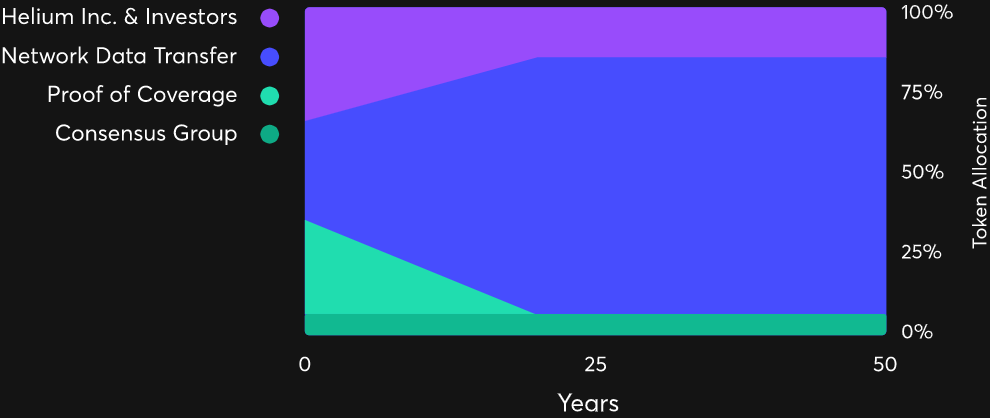
Note that the token distribution of HNT will change over time to align incentives with the needs of the early network. In the early days, a higher percentage of HNT was allocated to hotspot owners for building and ensuring coverage. As the network grows, revenue from hotspots streaming device data over the network will increase, while revenue from Helium and investors will decrease. After 20 years, the distribution is no longer adjusted and remains fixed. The details are shown in Figure 4-2 below:
image description
Figure 4-2 HNT Token Allocation Adjustment Over Time
Figure 4-2 above originally rewarded 6% of the Consensus Group consensus team. With the launch of the Helium verification node mechanism on the mainnet in July, it has been replaced by it. Validators will continue to perform the work of the original consensus group.
Since the reward issued to the verification nodes every month is 6% of the monthly release of HNT, that is, 150,000 HNT/month, it can be roughly calculated that the average annualized rate of return of the current nodes is about 8%.
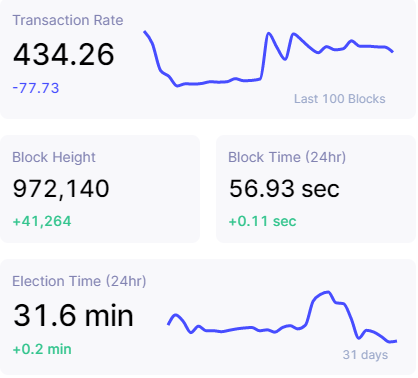
4.1.2 Block information
Figure 4-3 HNT block information
HNT will be issued around October 2019. When the token was launched, the supply was zero and there was no pre-mining. A block is packaged every 1 minute, and every 30 blocks is classified as a cycle, and a reward is released every cycle, currently at the height of block 972,140.
secondary title
4.2 Token Function
Currently Helium adopts a dual currency model, namely Helium Token (HNT) and Data Credits (DataCredits). Data credits are mainly used to pay service fees when using the network. Currently, HNT tokens mainly have the following two functions: 1) Mining rewards: incentive hotspot miners to deploy and maintain wireless network coverage; 2) Network service fee payment: users can burn HNT tokens generate data credits (DataCredits) to pay for network services.
From the perspective of the role of Helium tokens, as a utility token, its future value is more reflected in the coverage and quality of the overall wireless network. Only more hotspot miners provide wider wireless network coverage through hotspot machines Only in this way can the overall network be scaled up, enabling IoT devices to use the Helium wireless network at low cost and low power consumption, thus attracting more developers and enterprises to pay for data transmission fees of IoT devices by using data credits.
4.2.1 Data Credits (DataCredits)
Like most blockchains, Helium has a transaction fee system. All transactions in the Helium blockchain are paid in Data Credits (DC). Data points are generated by burning HNT. Through the Helium "Implicit Burn" system, users do not need to manually provide DC to pay fees under normal circumstances. As long as there are enough HNT in the Helium wallet to burn into DC to pay transaction fees, the burning will happen automatically and hidden in the background without user intervention.
Data Credits are generated by burning HNT tokens at a conversion rate specified by two on-chain variables:
1) The price of traffic credits in USD - 1 DataCredits is priced at $0.00001;
2) The price of Helium tokens in USD, as established by the Helium price oracle mechanism.
To calculate how many Data Credits Helium Tokens will generate, simply divide the number of Helium Tokens (in USD) by the fixed price of DataCredits of $0.00001. For example, if the price of each Helium token is $20, burning 1 Helium token will generate 2,000,000 Traffic Credits.
Data credits (DataCredits) are similar to mobile phone traffic. Once generated, they are not transferable and can only be used by the address that receives them.
As mentioned above, Data Credits are mainly used to pay service fees, which can be subdivided into: 1) Transmission fees: transfer sensor data back and forth between devices; 2) Transaction fees: similar to consuming ETH as Gas fees; 3) Node fees : Add a hotspot to the blockchain, report your location, purchase a blockchain organization unique identifier (OUI), and purchase a blockchain subnetwork; 4) Blockchain path fees: purchase OULs and subnetwork blocks .
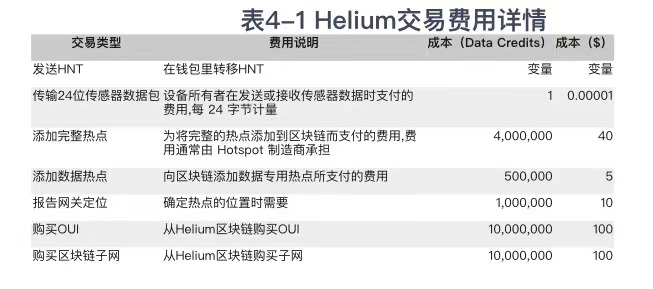
Table 4-1 Helium transaction fee details
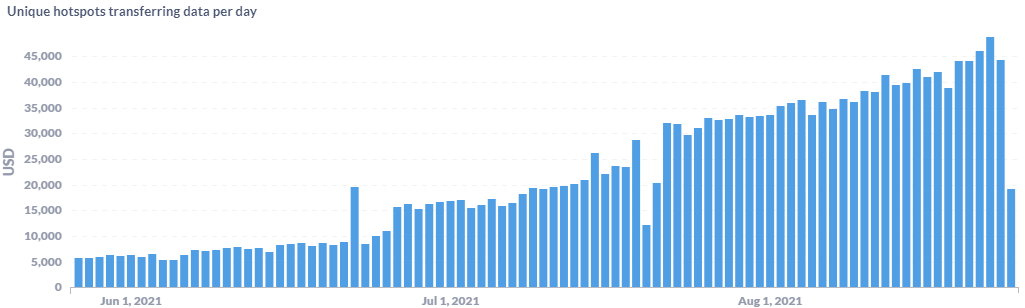
According to the information disclosed by the team in the Telegram community on July 28, 2021, "thousands of IoT devices currently use the Helium network and spend about 173 billion data credits per month", expressed as 1DataCredits = A pricing calculation of $0.00001, that is, $1,730,000 per month in Helium to pay for network services.
image description
Figure 4-4 The cost of hotspot data transmission per day
According to the above disclosure, the Helium network is growing at a rate of more than 30,000 hotspots per month, combined with Table 4-1, we can calculate that assuming that 30,000 new hotspots are added every month, and these hotspots are all on the Helium network Adding a full hotspot would cost 30,000*$40=$1.2 million.
Then the actual cost of transmitting data will be much lower than $1.73 million - $1.2 million = $530,000, because this has not yet excluded the cost of sending transactions on the Helium chain and confirming the location of the gateway. So in reality, whether the IoT devices that use the Helium network every month are really as "thousands" as the team said, First Class Cang has doubts about this. But we can make it clear that the current scale of practical applications in the Helium network is still small, and the project party needs to actively expand the actual use cases of the Helium wireless network.
In terms of token design, HNT adopts a dual-currency model, which are HNT tokens and Data Credits. Users pay for network services by burning HNT tokens to generate Data Credits.
first level title
5. Competition
secondary title
5.1 Industry Overview
Helium is a decentralized wireless communication network, which belongs to a subdivision of the Internet of Things track, and is currently the only product in the blockchain ecosystem that provides low-power, wide-coverage wireless network access.
At present, Helium mainly supports LoRaWAN standard IoT devices, aiming to provide open and large-scale global wireless network coverage. Long-distance wireless technologies in the IoT field, such as LoRaWAN supported by Helium, can be subdivided into:
2) Very Small Aperture Terminal (VSAT): A communication technology that uses a small dish antenna and transmits through artificial satellites.
The LongFi transmission protocol currently adopted by Helium is actually a wireless transmission protocol that combines the LoRaWAN wireless protocol (LoRaWAN is a communication protocol based on LoRa) with the Helium blockchain, so that any compatible LoRaWAN wireless protocol device can be in Data is transmitted over the Helium wireless network.
secondary title
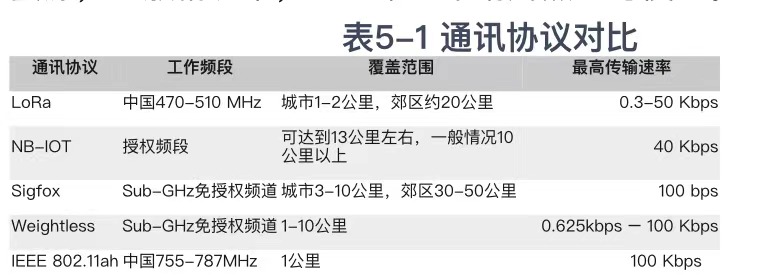 5.2 Comparison of Communication Protocols
Wide-area low-frequency communication technologies such as LoRa, Sigfox, Weightless, and IEEE 802.11ah are more suitable for the communication scenarios of the Internet of Things, and because they use unlicensed frequency band resources, in general, enterprises can use them without applying for a license.
The communication protocols in Table 5-1 above are mostly suitable for outdoor scenarios, large-area sensor applications, and low-power wide-area network application scenarios, but in some subdivided fields, the focus may be slightly different.
Combining the above Table 5-1 and the actual situation, we can also draw:
In terms of transmission rate: LoRa's maximum transmission rate can reach 0.3-50Kbps, compared with the Internet of Things transmission protocol NB-IOT, there is no direct advantage in transmission rate, but low-frequency and low-speed data transmission is relatively lower in power consumption.
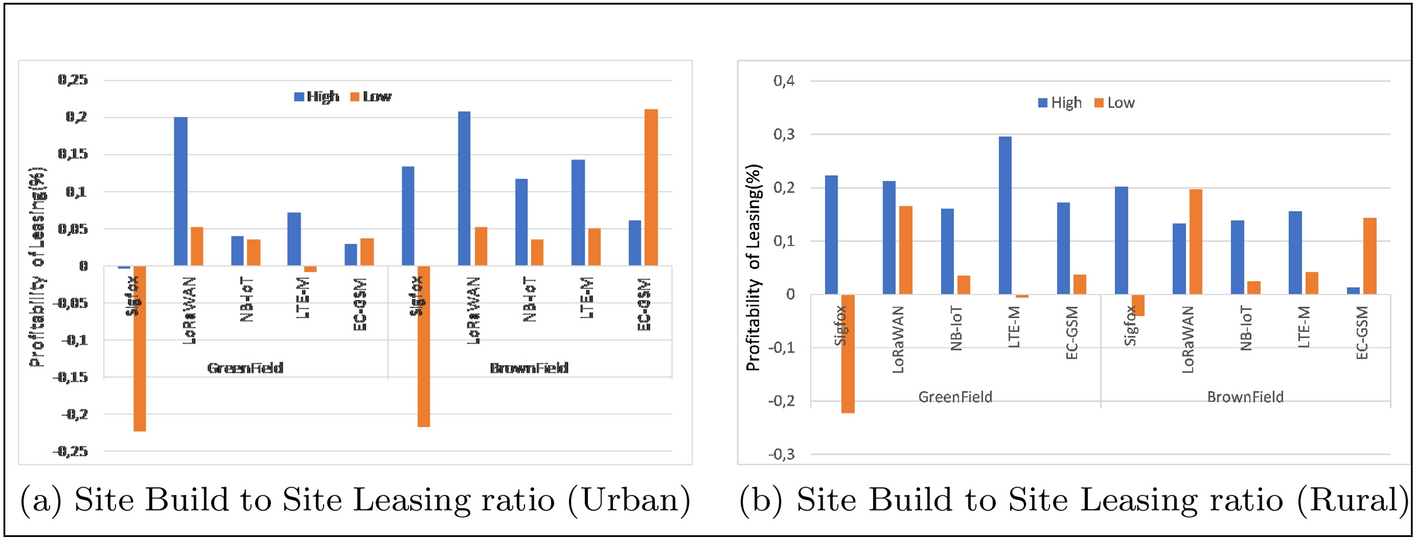
image description
Figure 5-1 Comparison of base station construction and website leasing profitability between different agreements
image description
Note: Figure 5-1(a) above shows the profitability of urban base station construction and network leasing; Figure 5-1(b) shows the profitability of suburban base station construction and network leasing. Blue represents the profitability of base station construction, and orange represents the profitability of base station network leasing.
However, Helium's model is different from that of traditional enterprises. It uses token incentives to attract participants to actively purchase Hotspots (hotspots), thereby transferring the construction cost of the project start-up phase. In terms of cost, it is ahead of the low power wide area network currently on the market.
Overall, LoRa and NB-IoT have received the highest attention in the industry. In addition, in contrast, NB-IoT has always been the main Internet of Things technology standard promoted by my country. The upper layer has the support of the government's industrial policy, the middle has the full investment of the three major operators, and the bottom layer has Huawei's technology blessing, making NB-IoT a my country's Internet of Things is a hot and vast market.
5.3 Industry Prospects
At present, global telecom operators have built mobile cellular networks covering the world. However, although 2G, 3G, 4G and other cellular networks cover a wide distance, IoT devices based on mobile cellular communication technology have disadvantages such as high power consumption and high cost. The carrying capacity of the current mobile cellular network is not enough to support the connection between objects. In communication scenarios such as smart home and industrial data collection, short-distance communication technology is generally used, but long-distance communication technology is required for wide-range and long-distance connections. LPWAN technology is a long-distance wireless communication technology that emerged to meet the needs of the Internet of Things.
image description
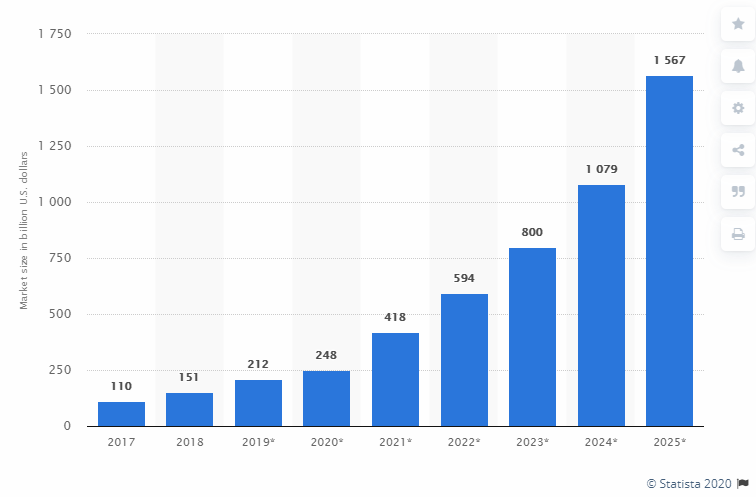
Figure 5-2 2017-2025 Global IoT Solution Expenditure Details
As shown in Figure 5-2, with the development of the Internet of Things and the popularization of IoT devices, the installation volume and data volume of corresponding devices are increasing exponentially. According to statista, the global market for IoT end-user solutions is expected to grow to $212 billion by the end of 2019. In 2017, the market revenue of this technology reached US$100 billion for the first time, and it is expected that by 2025, this figure will grow to about US$1.6 trillion. In the future, the installation of terminal smart devices such as sensors will grow rapidly.
It is worth noting that the global Low Power Wide Area (LPWA) connections have exploded significantly in the last 5 years. In 2015, the global low-power wide area network market was only 10 million. By 2020, this number has reached 423 million, and it is expected to grow at a compound annual growth rate of 30%-43%. It is estimated that by 2025, the market in this field will The value will reach 2.5 billion.
In addition, the 5G network that Helium plans to deploy in the future is also worth looking forward to.
Summary: The Internet of Things has a strong demand for low-power wide-area networks. Helium currently uses LoRaWAN, which is the current mainstream protocol. There are many compatible devices and a wide audience. As the only product in the current blockchain ecosystem that provides low-power, wide-coverage wireless network access, Helium has a significant competitive advantage in this track. And combined with the blockchain incentive mechanism, it is naturally superior to traditional IoT operators in terms of equipment construction costs and promotion speed in the early stages of the project.
first level title
6. Risk
Network stability risk: According to the Helium white paper, it aims to provide wireless network access with wide coverage and low power consumption for IoT devices, but in reality, due to some physical obstacles, whether the signal can be received stably Currently unknown.
Members who subscribe to the first-class warehouse with an annual fee can obtain timely analysis of popular projects and major events in the industry, as well as analysis of potential tracks from time to time. The first-class warehouse regularly selects projects from major ranking lists and information channels, and conducts multi-dimensional research and judgment to ensure comprehensive coverage of block innovation hotspots.
Members who subscribe to the first-class warehouse with an annual fee can obtain timely analysis of popular projects and major events in the industry, as well as analysis of potential tracks from time to time. The first-class warehouse regularly selects projects from major ranking lists and information channels, and conducts multi-dimensional research and judgment to ensure comprehensive coverage of block innovation hotspots.
References
Click on the website https://first.vip for more details.
u 《HIP19: Approval Process For Third-Party Manufacturers》,https://github.com/helium/HIP/blob/master/0019-third-party-manufacturers.md
u 《Console 2.0 is Here!》,Jacob Swinn,https://blog.helium.com/console-2-0-is-here-bd25a3aa5ee1
u 《Introducing the Helium Blockchain》,Andrew Thompson,https://blog.helium.com/introducing-the-helium-blockchain-dc2f8997083c
u 《HIP15: Beaconing Rewards》,https://github.com/helium/HIP/blob/master/0015-beaconing-rewards.md
References
u Helium Official Information: Developer Documentation, https://docs.helium.com/Developer Documentation (Chinese Version), https://heliumchina.gitbook.io/helium/ Team LinkedIn, https://www.linkedin .com/company/heliuminc/ code base situation, https://github.com/helium/Helium white paper, http://whitepaper.helium.com/Helium block explorer, https://explorer.helium.com/ Helium Ecosystem, https://www.helium.com/ecosystem
u 《HIP 27: Data Credit Support for CBRS 5G on Helium Network》,https://github.com/helium/HIP/blob/master/0027-cbrs-5g-support.md
u 《HIP 20: HNT Max Supply》,https://github.com/helium/HIP/blob/master/0020-hnt-max-supply.md
u 《Investing in Helium》,Ali Yahya, Guy Wuollet, and Eddy Lazzarin,https://a16z.com/2021/08/10/investing-in-helium/