

SOLANA blockchain research report analysis
Project Description
Project Description:
Solana is a decentralized blockchain built for developing scalable and user-friendly apps.
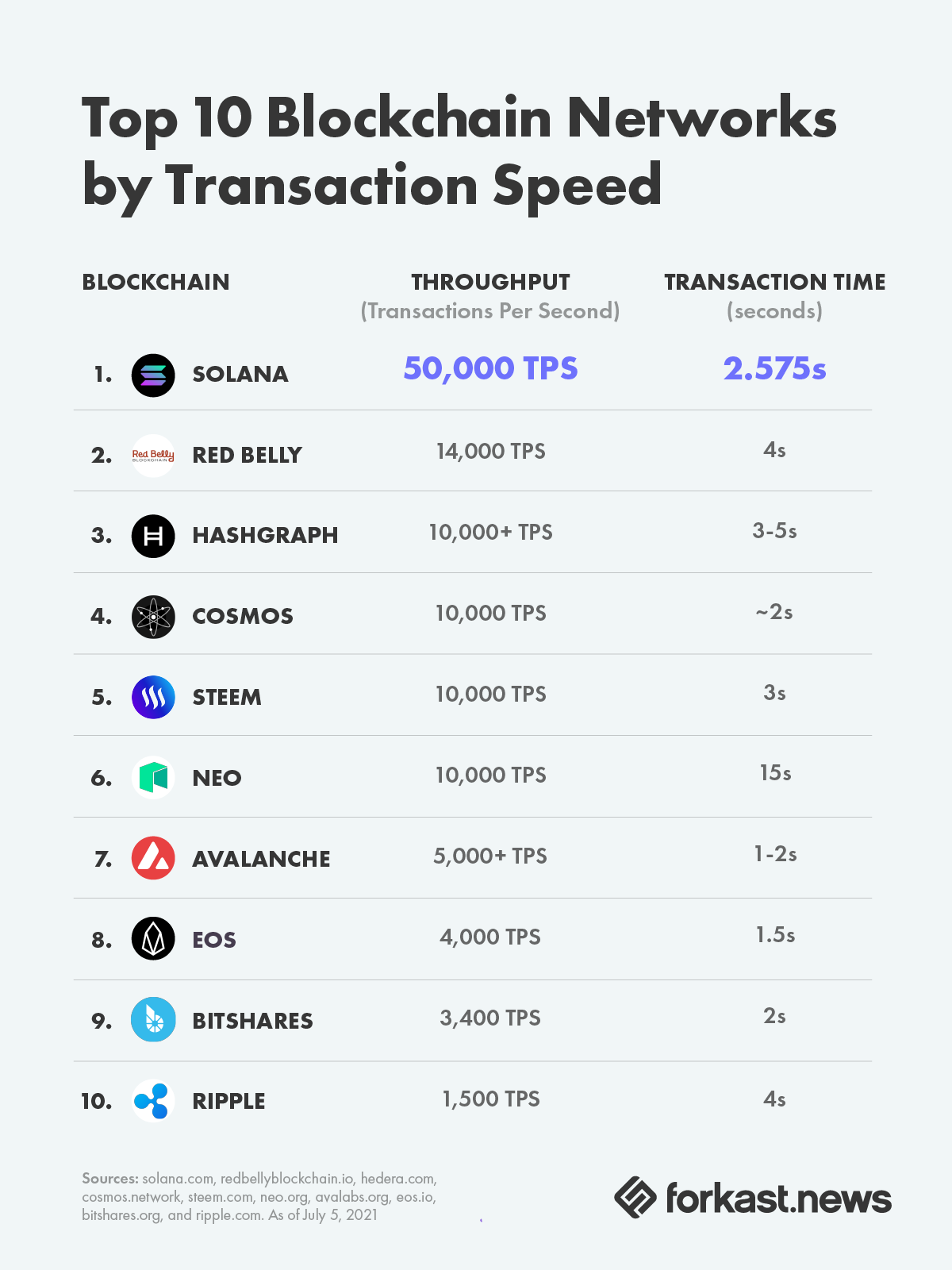
Solana is the fastest blockchain in the world and has the fastest-growing ecology, with more than 400 projects covering DeFi, NFT, Web3, etc. The project white paper was released in 2017, and it creatively proposes a core expansion solution called the distributed clock of PoH history proof. In October 2019, a network scalability test was conducted on 200 distributed nodes in 23 regions around the world. The main network of the project will be launched in March 2021. To ensure stability, the current beta version with all functions will last for about a year.
Functional Overview:
In addition to the basic blockchain functions of the Solana project, the following functions are its main features, including scalability, extremely high speed, ultra-low rates and outstanding censorship resistance.
1. Extensibility
The expansion and upgrade of the blockchain will be accompanied by a series of two-layer networks and shard chains, which will affect the compatibility of blockchain ecological application projects to a certain extent. Solana ensures composability among ecological projects by maintaining a single global state variable when expanding the blockchain, which greatly facilitates the use of DApp developers.
2. Low rates
The scalability of Solana ensures that the transaction fees for both developers and users will be less than $0.01. Such low fees are supported by its powerful architecture technology.
3. Fast
The Solana block speed is 400 milliseconds, and the more people use it, the faster it will be. Thanks to the design of the network architecture, solana has extremely high processing speed and does not suffer from the common network congestion problems of other chains.
4. Censorship Resistance
In addition to being ultra-fast and ultra-low fees, the chain is censorship-resistant, meaning applications on the chain will always function without restriction and will never stop. The so-called censorship resistance means preventing a single country, company, or third party from having the right to control transactions on the blockchain network, which is also one of the core features of the blockchain.
Program features:
image description
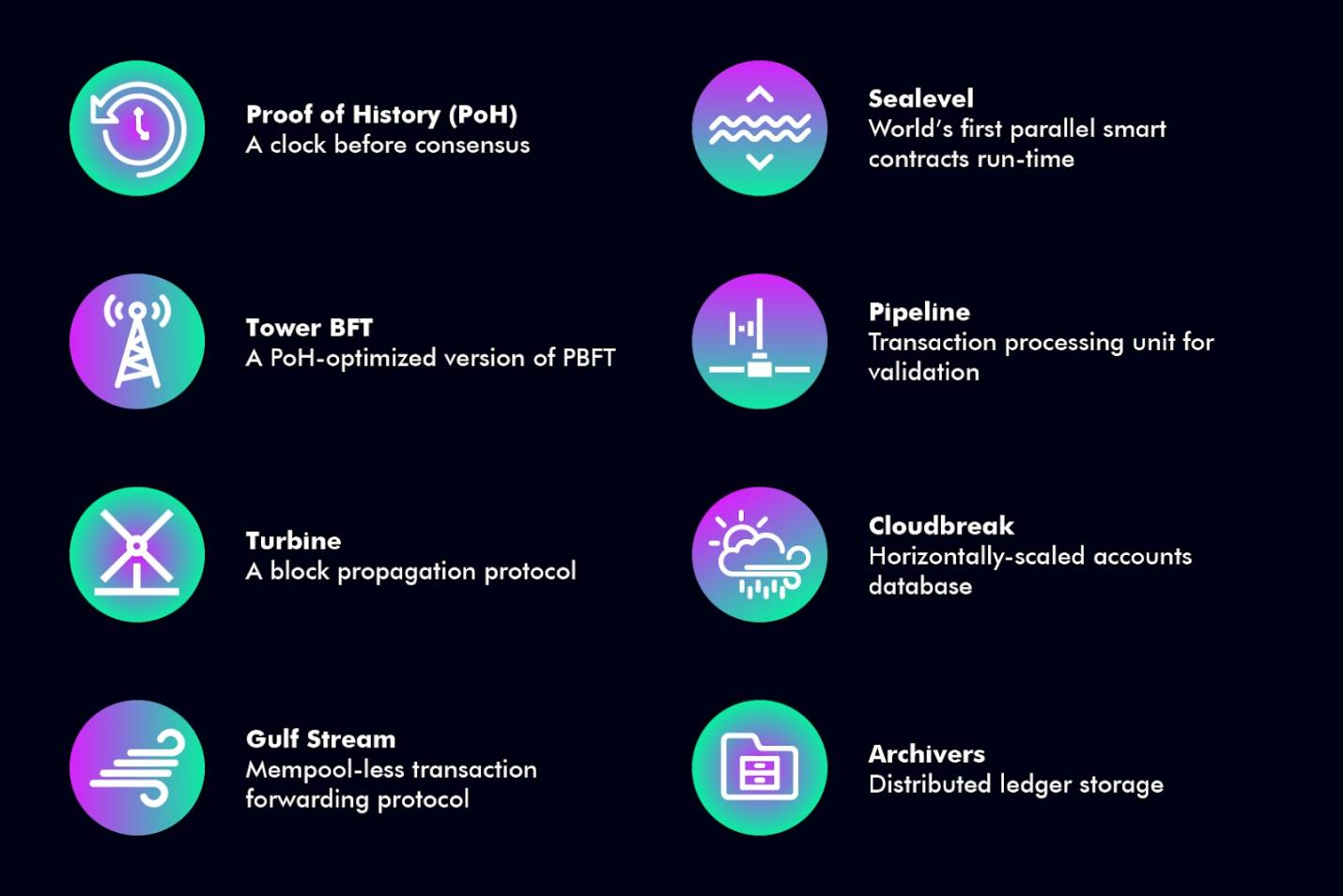
The picture shows the eight core technologies of Solana
1. History proof PoH (the sequence of verification events and the proof method of historical realization) combined with PoS pledge proof. PoH is an encrypted clock that enables nodes to jointly determine the sequence of events on the chain without communicating with each other. By storing the history of transactions and retracing the sequence of events, a more efficient and higher throughput blockchain network can be achieved.
2. Tower Byzantine Fault Tolerance. It is a consensus algorithm that uses encrypted clocks to save the process of traversing all information, so that nodes can increase the rate of reaching consensus.
3. The Gulfstream regime. Achieve high transaction per second volume. Cache transactions and send them to the edge of the network, which allows verification nodes to execute transactions in advance, greatly reducing the block confirmation time and the demand for node computer memory from the unconfirmed transaction pool.
4. Turbine. Block release mechanism. Divide the data into small pieces, making it easier to transfer data between nodes. Turbine helps Solana solve bandwidth problems and improve the overall processing speed of the network.
5. Sea level. Parallel smart contract runs. The parallel transaction processing engine enables Solana to expand the utilization of video memory GPU and solid state drive SSD. In short, Solana supports concurrent transactions on the same chain to optimize code execution.
6. Pipeline. Components that optimize the verification process. This enables transaction data to be quickly replicated and verified between nodes.
7. Cloud breaking. Extended account database storage. As a data structure, it is used to achieve network expansion and throughput improvement. Realize 32 threads parallel reading and writing.
8. Archives. Distributed ledger storage. As a carrier for nodes to store data. Can be a basic laptop. This innovation can greatly reduce the access threshold of nodes, allowing a wider group to join the network environment and jointly maintain the smooth operation of the blockchain network.
The above eight innovative technologies have improved the underlying efficiency of each link of the entire blockchain in terms of transaction verification, packaging and release processes, data compression and transmission, virtual machine memory utilization and processing speed, and distributed node access. . For detailed design concepts and technical details, please refer to the development documents and white papers.
Solving Blockchain Problems:
At present, the consensus algorithm of each block chain is: when members solve a mathematical problem (PoW proof of work mechanism), these miners will be rewarded with the corresponding cryptocurrency. This process takes about an hour on the Bitcoin blockchain and a minute on Ethereum. This method is extremely energy-intensive, which is why it is difficult for Bitcoin and Ethereum to scale.
Another way is the PoS proof-of-interest mechanism. People jointly pledge to lock a certain amount of cryptocurrency to activate the verification software to store data, process transactions, and generate new blocks to add to the chain. The verification node plays the role of a miner and receives cryptocurrency rewards, but the verification node does not require high-performance equipment like a mining machine, thus providing more people with the opportunity to join the node. At the same time, consensus can be reached faster as more validators join the network.
Because Solana is a delegated proof-of-stake network DPoS, compared with PoS, they all rely on verification nodes to process transactions. Whether a node is selected depends on the amount of pledge in the entire network. The more SOL you have, the higher the probability of being selected as a verifier high. Verifiers obtain rewards by verifying transactions and packaging blocks, and those who do not serve as verification nodes can pledge their coins to verification nodes. This system allows anyone to participate in maintaining the security of the network and empowers users to decide which nodes are suitable for validating transactions. The DPoS delegated proof-of-stake network is several times faster than the PoS proof-of-stake network. This is one of the reasons why Solana has a high block rate.
However, even the PoS proof method has drawbacks. Validators and bots have high-level access to transaction information and thus have the potential to exploit users, or front-run transactions, since they can control transaction order.
Yakovenko's idea PoH (Proof of History). The blockchain can develop a fully synchronized clock and assign timestamps to each transaction, so that miners and robots lose the ability to determine the order of transactions. He said this was done to improve security and censorship resistance.
In addition, Solana has other innovative methods, including delivering the transaction to the verification node before the previous transaction is packaged, so as to maximize the block confirmation speed and increase the transaction capacity of concurrent processing.
As a new generation of blockchain, the Solana network aims to solve the problem of how to build a fast and scalable network without losing security and decentralization. The Solana protocol introduces eight core technologies to realize the proportional expansion of transaction volume and bandwidth, thereby achieving the industry's top transaction speed and enterprise-level security.
Token economy:
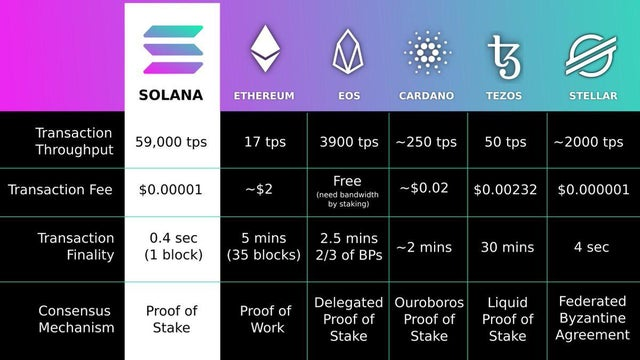
Token economy:
The initial total amount of Solana native currency SOL is 500 million pieces. The current circulation is about 16.35 million, accounting for 3.35%. The current total is about 490 million. Soon after its establishment, Solana cooperated with Serum, another blockchain DeFi protocol, to establish a decentralized exchange DEX, with the goal of building a non-custodial spot and derivatives exchange.
A batch of about 11 million SOL coins was previously destroyed by the government to stabilize the market. In 2020, the CEO issued a statement apologizing for failing to ensure the openness and transparency of the market-making team. This shows that its token financial operation methods are slightly immature.
In addition to being paid as a gas fee, SOL can participate in the verification node to help the blockchain verify transactions by staking 0.01 SOL or more, and generate corresponding staking income at the same time. The pledge has a 10% repurchase guarantee from the initial price. In addition, token holders can participate in governance voting.
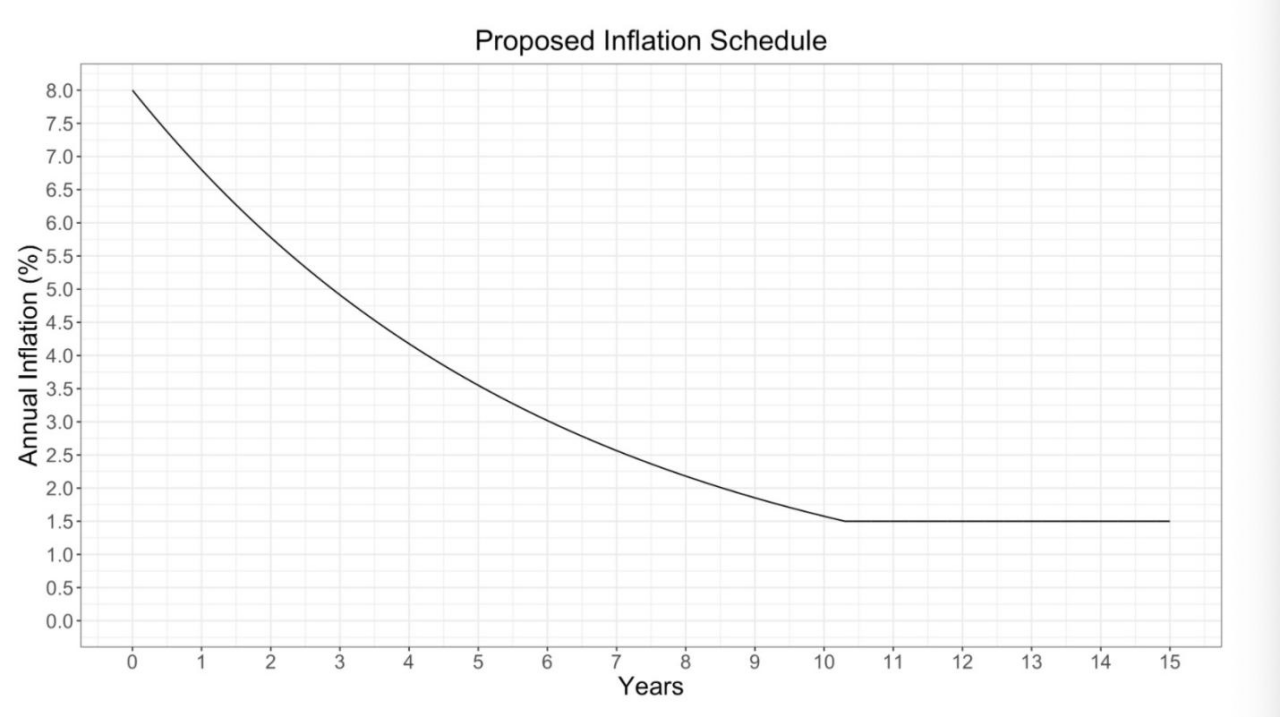
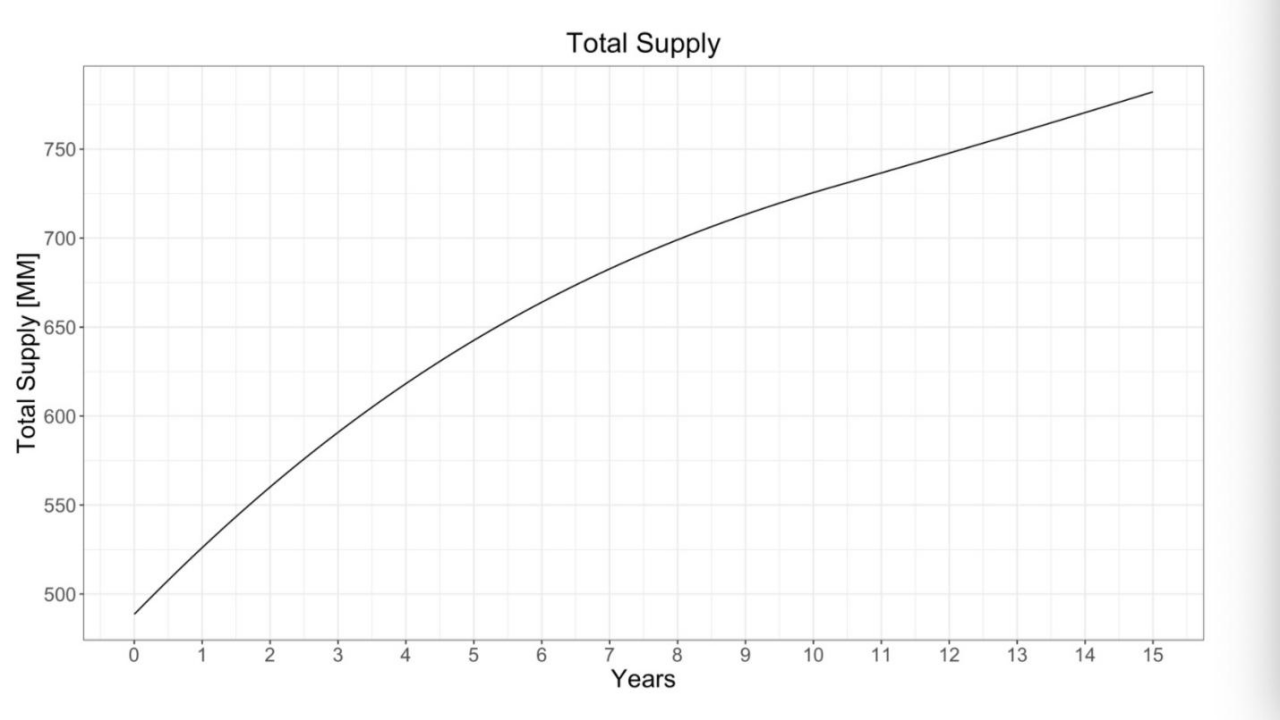
In addition to the above-mentioned sales activities, the only form of token generation is to generate income through the verification node pledge. The pledge rate of return is planned by the official and decreases over time, so that the inflation rate will decrease steadily until a benign balance is reached.
The following figure shows the planned inflation rate:
The figure below shows the simulated estimated total token output:
The transaction fee is determined by factors such as the historical throughput of the network, half of the gas fee is destroyed, and the remaining half is rewarded to the pledged nodes. The destruction mechanism is designed to prevent malicious attacks.
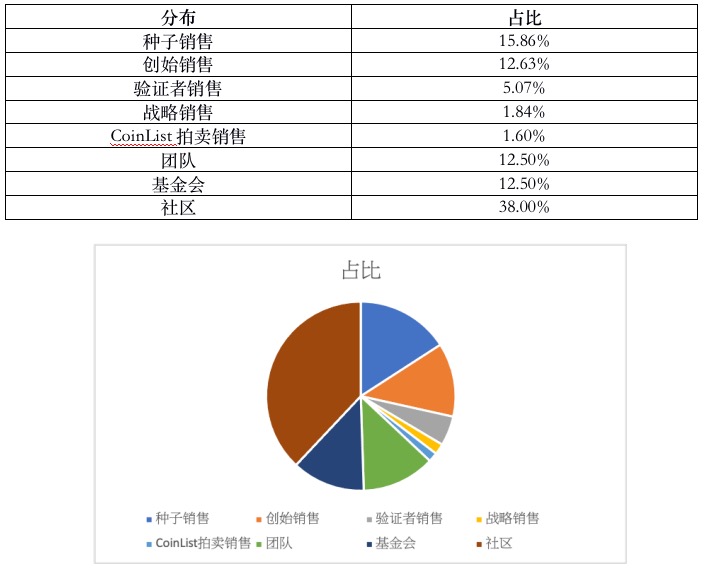
The token supply distribution is as follows:
Project popularity:
Solana drives participation in three core communities: users, developers, and validators. Solana's business in North America, Europe and China is growing rapidly.
Active numbers in the media community:
Telegram 85,032
Twitter 337,568
Discord 44,556
Youtube 14,000
Weibo 2,000
Reddit 32,791
team
team:
Founder and CEO Anatoly Yakovenko is a former Qualcomm and Dropbox network expert, specializing in distributed systems and compression algorithms.
Greg Fitzgerald (Greg Fitzgerald) serves as CTO, former senior software engineer at Qualcomm Boulder, and system software engineer at Alescers.
Raj Goka COO General Catalyst venture capitalist, former product director of Odama Health.
Eric Williams Chief Scientist, Former Chief Data Officer and Founder of Motion, President of Data Science at Odama Health.
Investment institutions & partners:
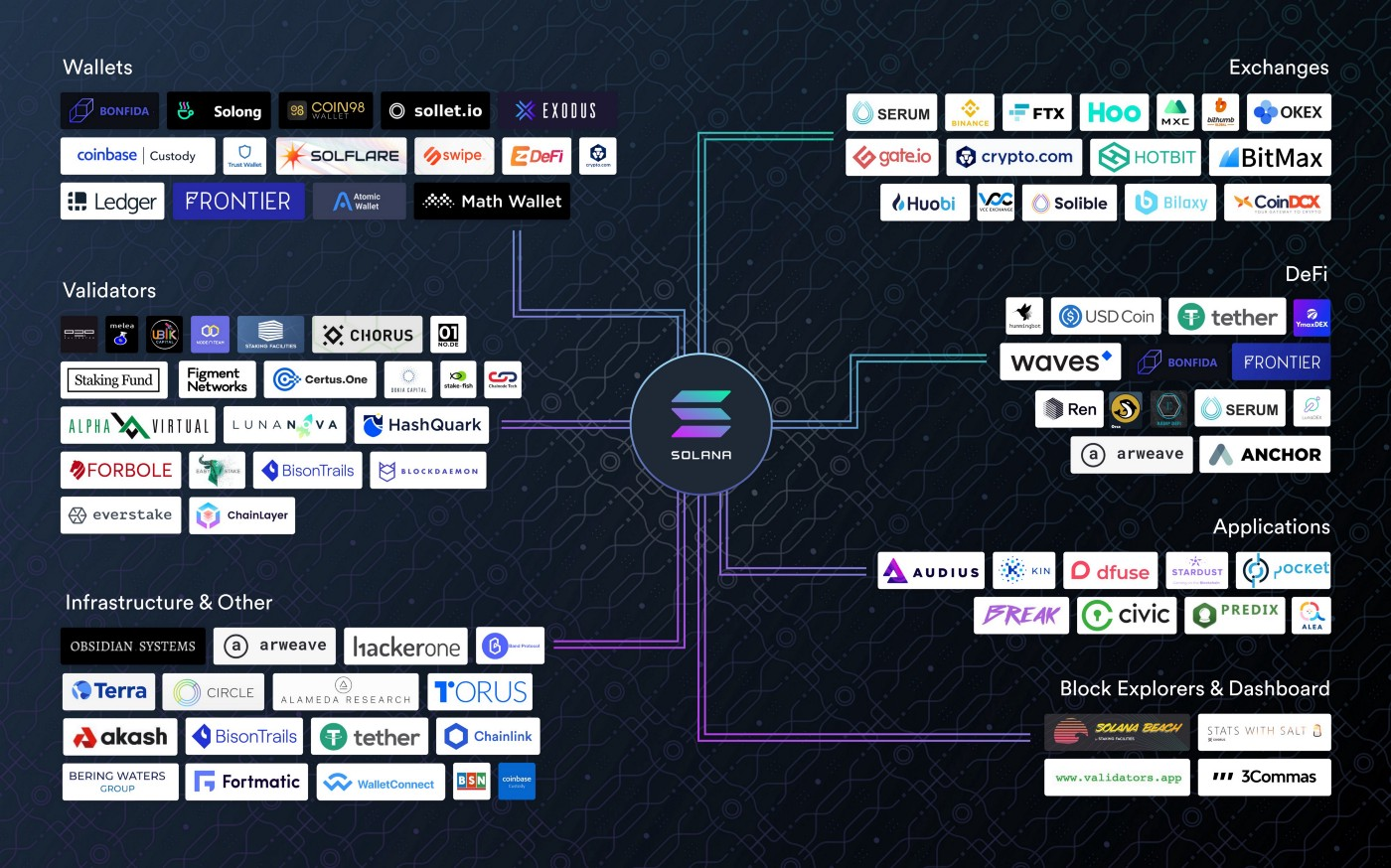
Solana Lab is the company behind the Solana chain, formerly known as Loom. Solana has raised over $20 million from investors including Multicoin Capital, Foundation Capital, Distributed Global, Blocktower Capital, NGC Capital, Rockaway Ventures.
Summarize
Summarize:
To evaluate Solana from the perspective of DApp developers, it has a front-end development library dominated by RUST language, and a detailed programming guide for getting started with smart contracts. Because the performance is better than the EVM of Ethereum or BSC, the parallel computing speed and the amount of memory that can be supported have been improved, which lays the foundation for richer application development.
The chain will be marked as Beta within a year, and the current network is stable but still under development. The potential problem is that there is currently a single deposit channel. If you want to develop potential users, you need to link more centralized exchanges and DEXs.
Judging from the current situation, the popularity of Solana is constantly rising, and the market value of the token has also risen to the top 10, which has great potential to revolutionize the blockchain field.
Disclaimer: This report only represents the views of the 8090 Investment Research Department, and is for sharing and communication only, and does not constitute any investment advice.