

The Financialization of Gaming: How GameFi is Leading a Paradigm Shift in the Gaming Industry?


Edit: Southwind
Edit: Southwind
Currently, a recurring theme in offline conferences, earnings calls, or board meetings in the game industry isGameFi。
earn while playingearn while playing"(Play-to-Earn) described as "An important part of the future of our industry, "This is no coincidence.
So what is GameFi, and how will it affect gamers?
If you're like billions of people around the world, you probably play games, or know someone who likes to. Overall, time spent in these digital worlds amounts to "wasted time", at least in the immediate monetary sense: when you leave the game, all the effort you expend, including building the most powerful Armies, the best power-ups ever collected, or the hardest levels to beat over and over again, are all gone.
What if this is not the case? What if you could keep what you built? Not only can you keep what you earn, but also sell or rent it to others? While this sounds like a dream, it's GameFi's promise, which is why leaders like Andrew Wilson are excited about this future.
GameFi is a whole new genre of gaming,The digital economy doesn't end when the game is closed, blurring the lines between in-game resources and real-world assets. For billions of gamers around the world,first level title
01. What does the financialization of games mean?
GameFi is「Game」(game) and「Finance」A compound word of (financial), whichRunning on a blockchain network, it aims to combine the fun of gaming with the financialization of the in-game economy.The distributed ledger technology of the blockchain is very important, not only to help players provide verifiable asset ownership, but also to establish a trading market inside and outside the game.
In this new type of game, all game objects are represented as tokens on the blockchain network. So, in a blockchain-based game, every sword, every piece of armor, or every piece of land can be owned by you or anyone else. In other words, in blockchain-based games,Each player is both a participant and an owner.Playing the game well allows you to accumulate more in-game currency (usually a fungible token) or tokens representing in-game assets (such as clothes, land, or items)NFTs(non-fungible tokens). The key to GameFi is,Once you have acquired these assets, you can exchange them in the market for other cryptocurrencies or fiat currencies such as USD for disposable income.
The concept of "Play-to-Earn" is not new, but other aspects of GameFi are. Broadly speaking, the combination of cryptographic primitives (such as token incentives, smart contracts, etc.) and games opens up countless possibilities. With blockchain composability, game NFTs can be integrated vertically or horizontally into a game studio's game content. Items from one game (such as digital clothing or clothing) can be integrated into other games to create a huge world.
first level title
02. Brief history of games & direction of game development
secondary title
1) Pay-to-Play: Early video games
secondary title
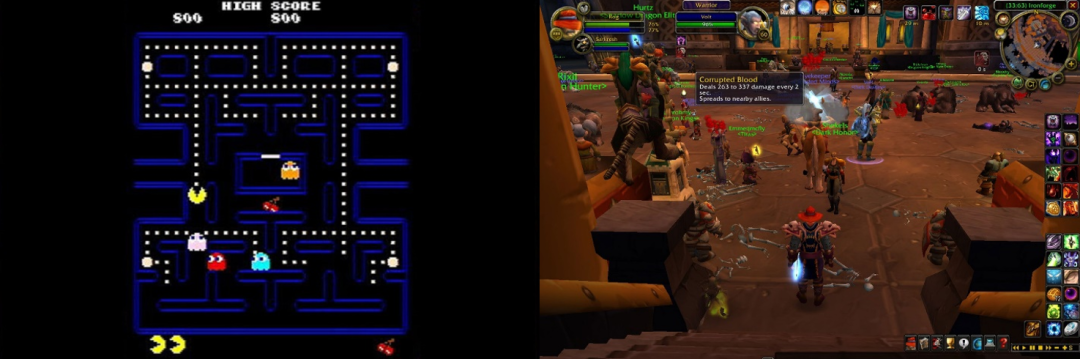
2) Free-to-Play: The democratization of gaming
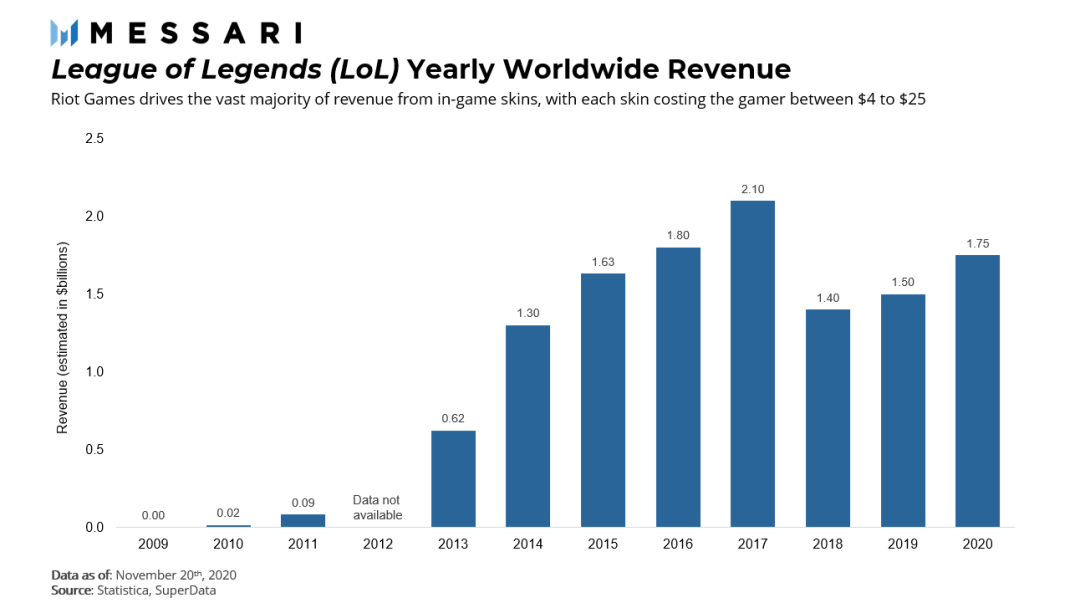
Beginning in the late 1990s, "Free-to-Play" removed barriers to paid entry. Game lovers can download a game product, start playing the game without paying up front, and then decide whether they want to pay for the game. Businesses generate revenue from this model through advertising or additional services such as selling virtual game items such as skins.
image description
text
secondary title
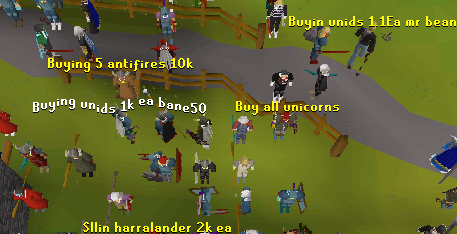
3) Play-to-Earn: A great way to make money
image description
Source: Sal's Realm of Runescape
Of course, in that era, such a deal was never sanctioned by law, tax agencies, or anyone else. Players can build their own small digital economies in a small corner of the internet, but are also vulnerable to scams, making participants more like shadowy online personas than busy entrepreneurs within the confines of an established ecosystem.
secondary title
4) The Future of Gaming: GameFi + Blockchain
All of this brings us to the key question at hand: If there is massive potential for GameFi, what would GameFi gaming look like today?
For those used to game engines on desktop or consoles, the answer might be disappointing. Since blockchain gaming is still in its early stages, the first generation of GameFi was mostly simple card-based games (the cards were issued as NFTs), where players used their NFT collectibles to battle each other. Think of it as being close to Pokémon. In these games, winning battles and completing objectives are how users collect resources. Hit games of this generation include Axie Infinity, Alien Worlds, Sorare, and Gods Unchained, among others.
Among these games, Axie Infinity is seen as the current leader. In 2021, its user base will explode (see chart below). Residents of the Philippines, restricted by the pandemic lockdown, are even playing the game for income. There are people who make more money in Axie Infinity than they did in their previous jobs, so they now make a living playing the game. Philippine award-winning short filmPlay-to-Earn:NFT Gamingimage description
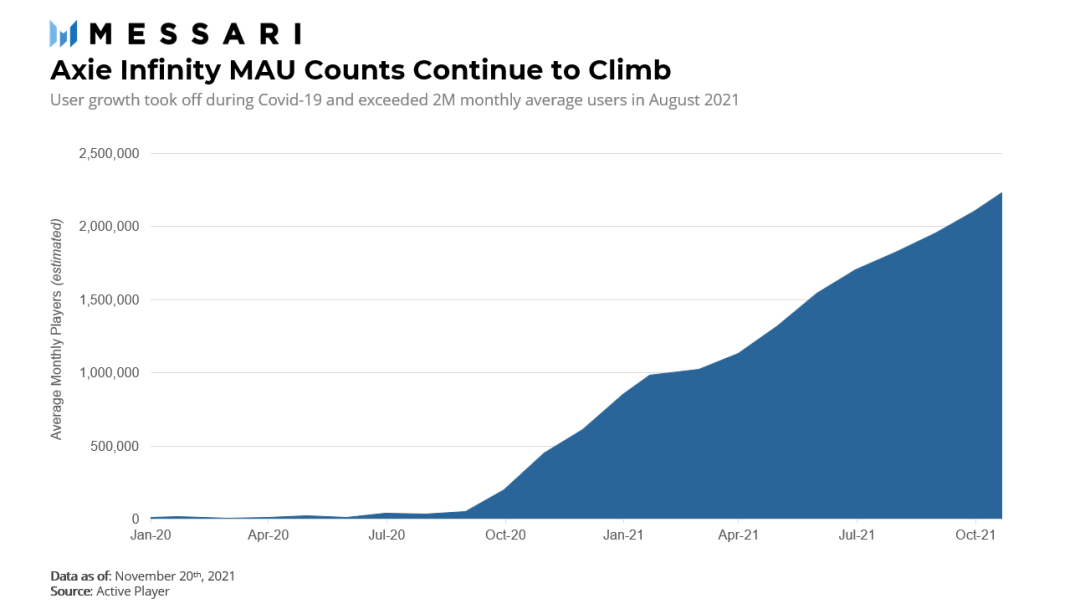
Above: Axie Infinity's monthly active users (MAUs) continue to grow.
While user growth points to interest in GameFi, developers must find a way around high network costs. Currently, expensive transaction fees and slow processing times on the blockchain hinder its ability to replicate the current top desktop and console based games, but ongoing blockchain network scalability experiments over time should alleviate this challenge.
first level title
03. The world of GameFi
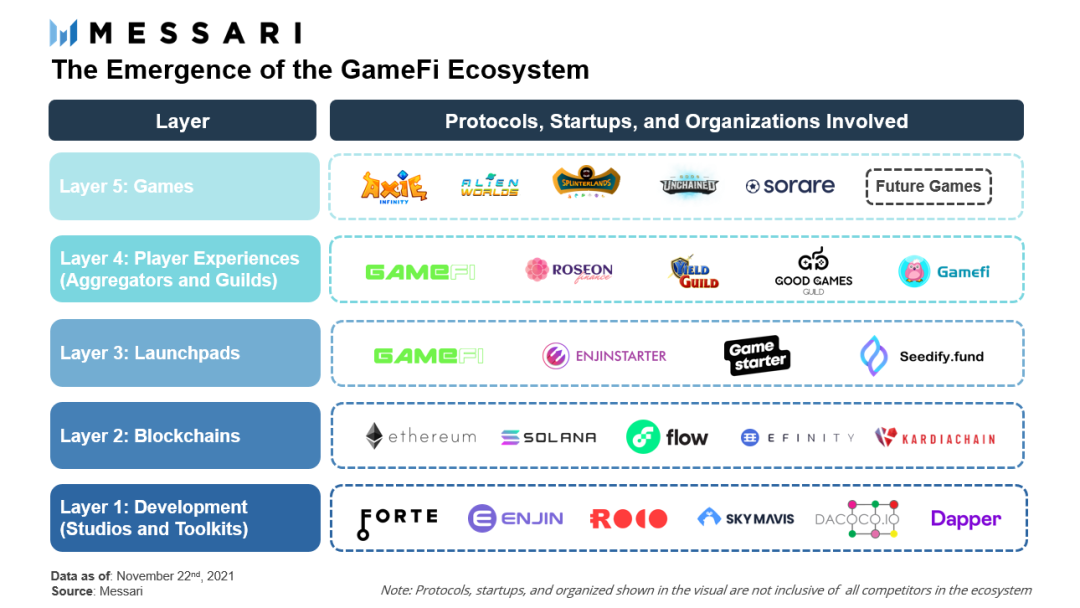
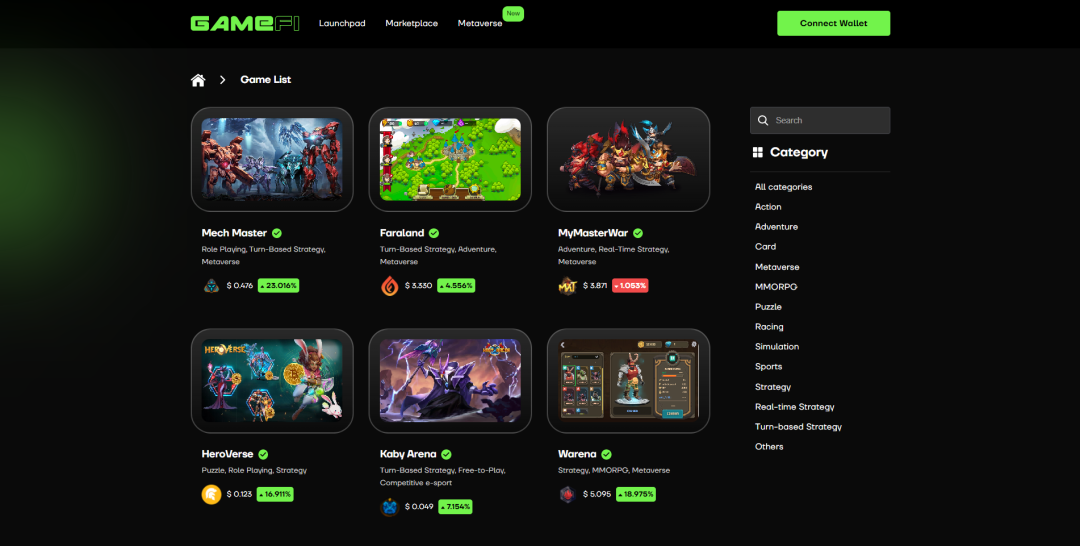
The potential of GameFi lies in the incentive mechanism. Players who own their own game assets will be more likely to become loyal players of the game and better manage the games they like. In order to achieve this goal, there are a large number of startups and protocols supporting players, developers and game studios. Here are some of the services adding value to the burgeoning GameFi ecosystem, from player games at the top to developers at the bottom.
secondary title
1) Players Union
secondary title
2) GameFi Aggregator
image description
secondary title
3) Initial Game Distribution (IGO) Launchpad
secondary title
4) NFT blockchain
secondary title
5) Developer Tools
secondary title
6) Game studio
first level title
04. Take the game to the next level
The characters in the game need to be constantly upgraded. The same goes for GameFi. Fortunately, there are two big tailwinds working in favor of the GameFi ecosystem.
The first is the increased interest in gaming. The rise of esports and live streaming are new developments in the last decade, making gaming not just a source of entertainment but a legitimate career. Today's popular games compete with traditional sports for fans in a way that was unimaginable 20 years ago. Crypto games in particular are seeing a surge in interest. Compared with other NFT industries, the amount of investment in the gaming industry is the highest, indicating a shift in the focus of venture capital as investors start to seize opportunities in this space.
The second positive factor is the continued adoption of cryptocurrencies. GameFi is one of several pillars simultaneously attracting new users to cryptocurrency. Combined with DeFi, NFTs, Web3, and more, it seems likely that increased blockchain activity over the next few years means GameFi could benefit from it.
So what does the future of GameFi look like? Forecasts are speculative, but interesting activity and development work is happening at a faster pace. In this new crypto space, people can own assets as they wish, earn money from games, and connect with the wider community, which is a compelling feature that is widely recognized. While the future is unknown, one thing is certain: So far, the mood among GameFi participants -- industry executives, game studios, investors, and gamers themselves -- seems to be pretty optimistic.