

GMX, DYDX, and SNX Token Supply and Demand Analysis

Original author: duoduo, LD Capital
In the case of similar fundamentals, token supply and demand have a significant impact on token price trends. This article will compare the token supply and demand of three major derivative DEX protocols, GMX, dYdX, and Synthetix, to gain a deeper understanding of the token economic models of the protocols and assist investment decisions.
I. Supply
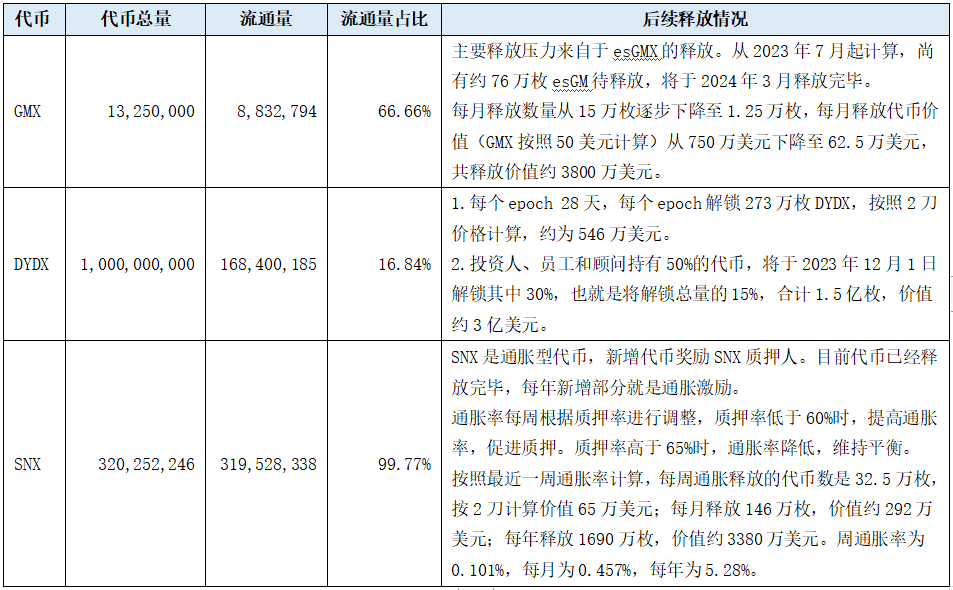
Source: LD Capital
Note: The token total supply and circulating supply are based on data from coingecko. "Subsequent release situation" is determined based on project documents, community votes, and other files, resulting in differences between the two data points.
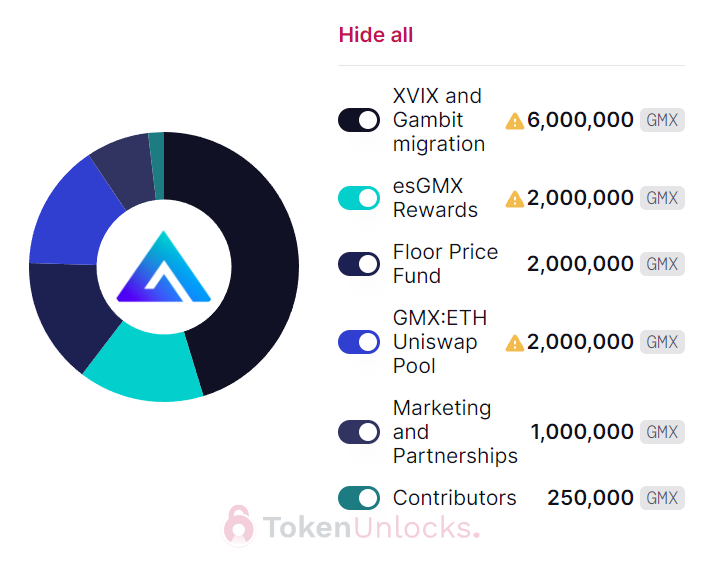
The token distribution of GMX is shown in the following image:
Source: TokenUnlocks
Apart from esGMX, the contributor tokens are released linearly within two years after launching. GMX was launched in August 2021, so the contributor tokens are still being released, but in smaller amounts, hence not analyzed separately. Other tokens have already been released.
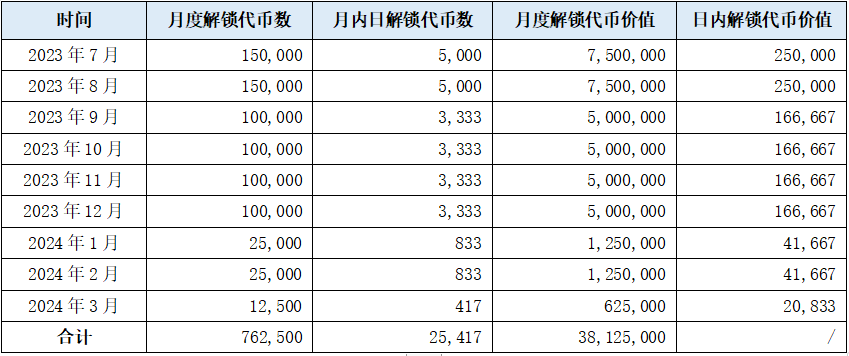
For esGMX, based on community voting decisions, the issuance will stop in March 2023. According to the release rules of esGMX, it has a one-year release period. Therefore, the specific release of esGMX is as follows:
Source: LD Capital
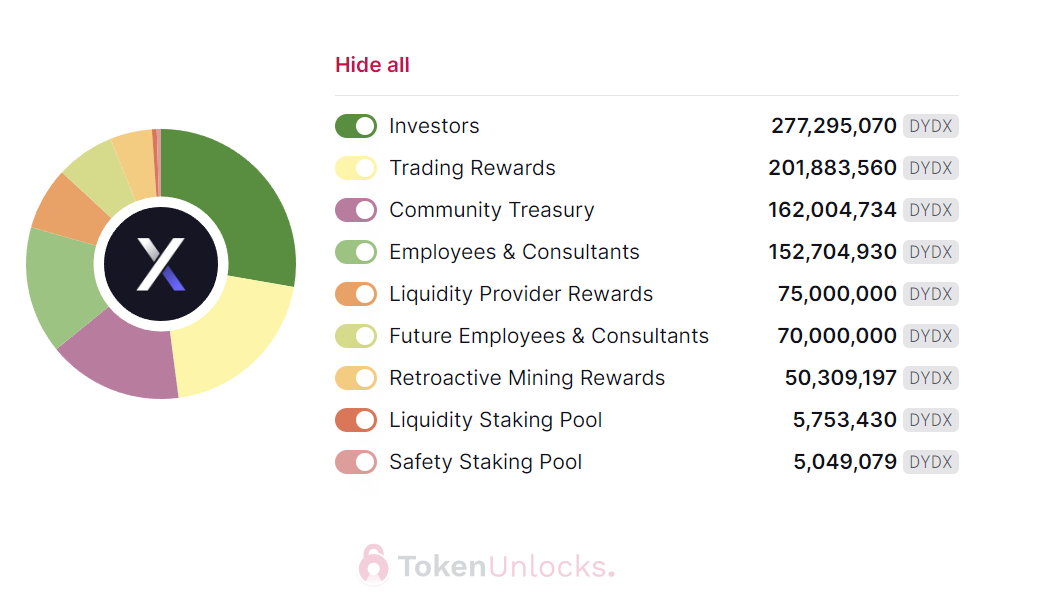
DYDX token allocation is as follows:
Source:TokenUnlocks
Investors, employees, advisors, future employees, and advisors collectively hold 50% of the tokens, which were originally scheduled to be released in February 2023. However, before the expiration date, the community voted to extend the release until December 1, 2023.
There is significant selling pressure from this portion, and the team is looking for new ways to lock up these tokens. According to the plan, DYDX chain will go live in the fourth quarter, and as a consensus node, DYDX tokens will need to be staked. Currently, the DYDX chain public testnet will launch on July 5, 2023.
Excluding these locked tokens, the main selling pressure at this stage comes from trading incentives and liquidity provider incentives. Both of these incentives unlock every epoch (28 days), totaling approximately 2.73 million DYDX tokens.
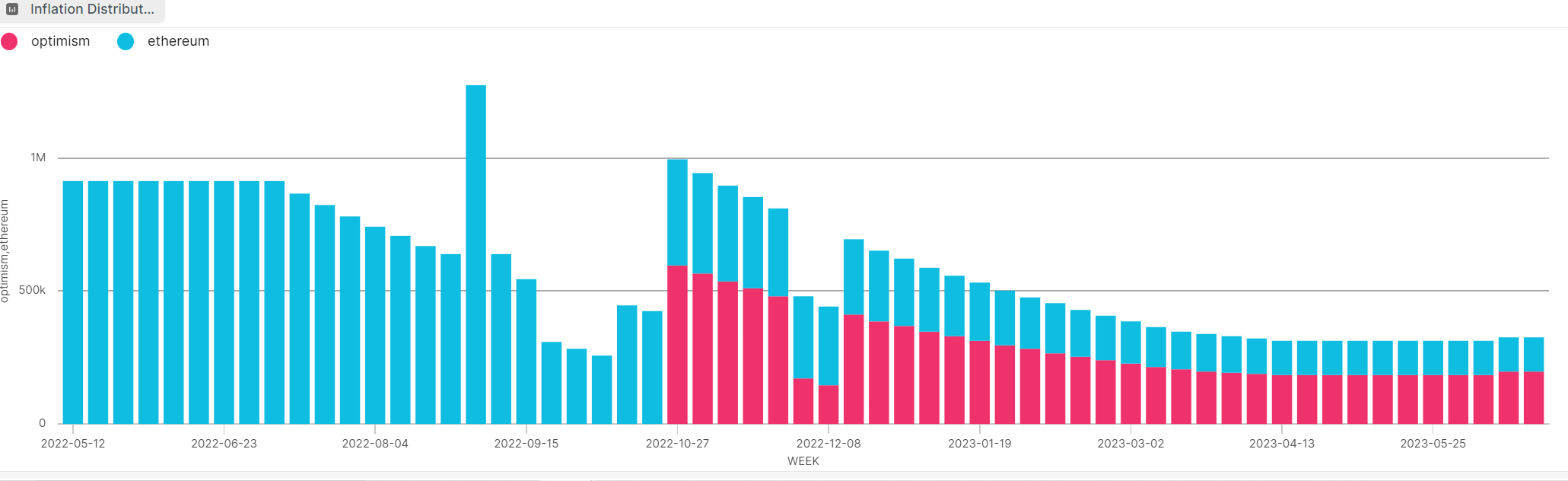
The SNX token has already been fully circulated, with additional issuance from SNX. SNX stakers can receive incentives in two parts, fees and SNX issuance. The inflation rate of SNX is adjusted weekly, primarily based on the staking rate of SNX, to stimulate the staking rate. The specific rules are as follows:
Staking rate > 70%: Inflation rate decreases by 5%; Staking rate between 60% - 70%: Inflation rate decreases by 2.5%; Staking ratio < 60%: Inflation rate increases by 5%.
The graph below shows the weekly release of SNX tokens.
Source: synthetix
Summary:
When comparing, GMX has the largest token release market value in the next two months, with basic completion of the release in six months, and minimum follow-up selling pressure. DYDX still has a large amount of selling pressure. Without a proper solution to unlock the locked tokens, it will greatly suppress the market value growth. SNX is an inflationary token with continuous addition of new tokens, but its initial tokens have already been fully circulated, and the new addition needs to be absorbed, approximately 5% per year.
II. Needs
Source: LD Capital
Summary:
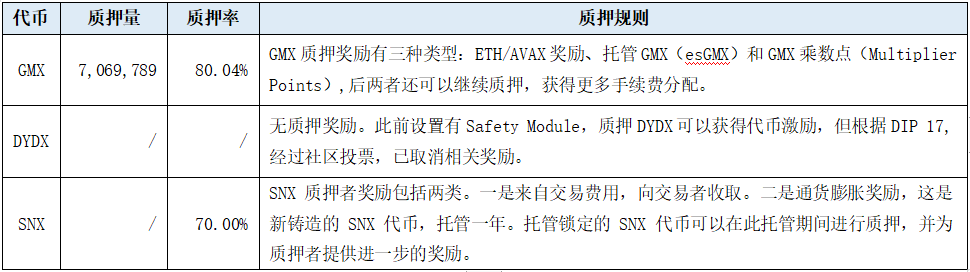
GMX's pledge provides more benefits, leading to a large amount of token lock-up and less circulating tokens in the market. After most GMX pledges, they will also be converted into esGMX. The release period for esGMX is one year, promoting long-term lock-up.
DYDX has no pledge lock-up mechanism, and the token has no direct utility for income.
SNX's model is similar to GMX, with a relatively high pledge ratio, and it has withstood a round of bear and bull tests, with more long-term pledgers.
As a whole, the DYDX token is mainly focused on governance and lacks practical utility. GMX and SNX, on the other hand, have a closer integration with the protocol, aligning with their narrative of "real yield."
III. Liquidity

Source: LD Capital
Summary:
All three tokens have been listed on mainstream exchanges such as Binance and OKEx, with sufficient liquidity. DYDX has the highest trading volume, followed by SNX, and GMX has the lowest.
4. Holding Status
GMX
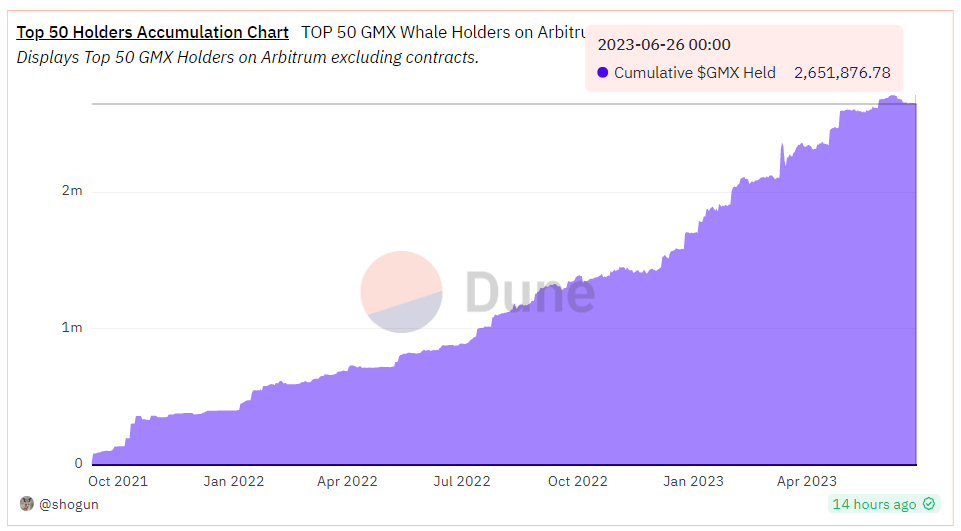
On-chain distribution of holdings

The top 50 holding addresses have accumulated 2.65 million GMX, accounting for approximately 30% of the circulating supply. The highest point was reached on June 7th with 2.71 million GMX.
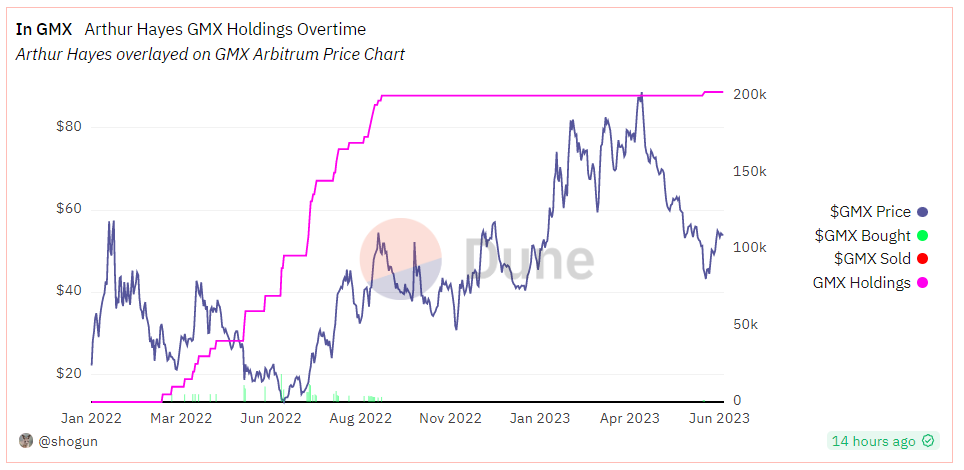
 Arthur hayes is the biggest individual holder of GMX, holding over 200,000 GMX and has been continuously staking them.
DYDX
Distribution of Holdings
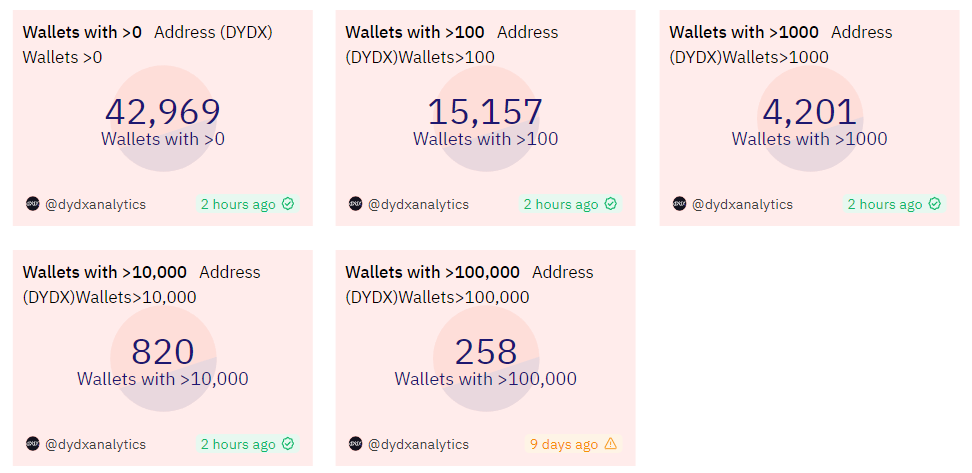
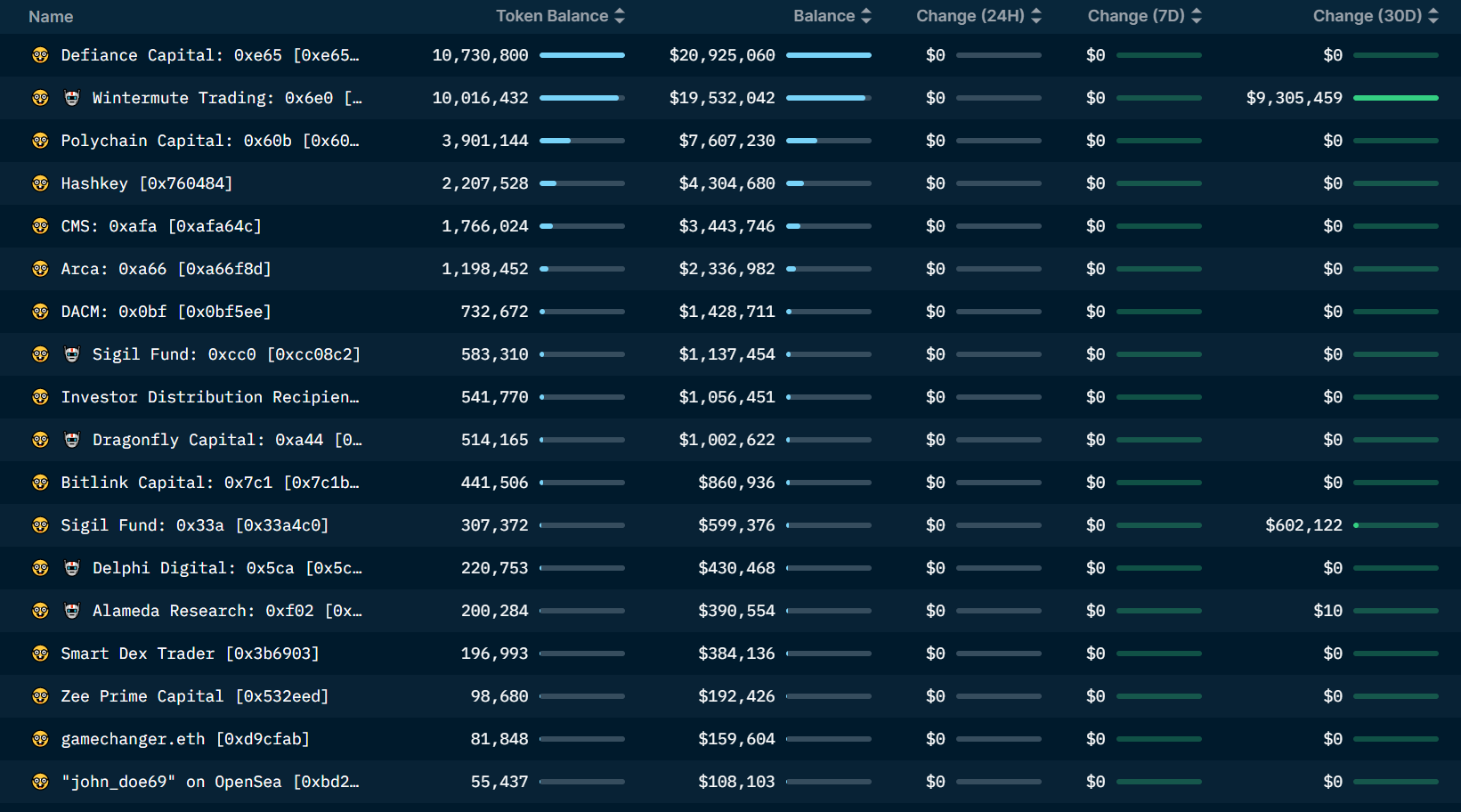
From the positions of smart money, we can see a large number of institutions, including definance capital, wintermute, polychain, hashkey, arca, dragonfly, delphi digital, alameda, and more.
SNX
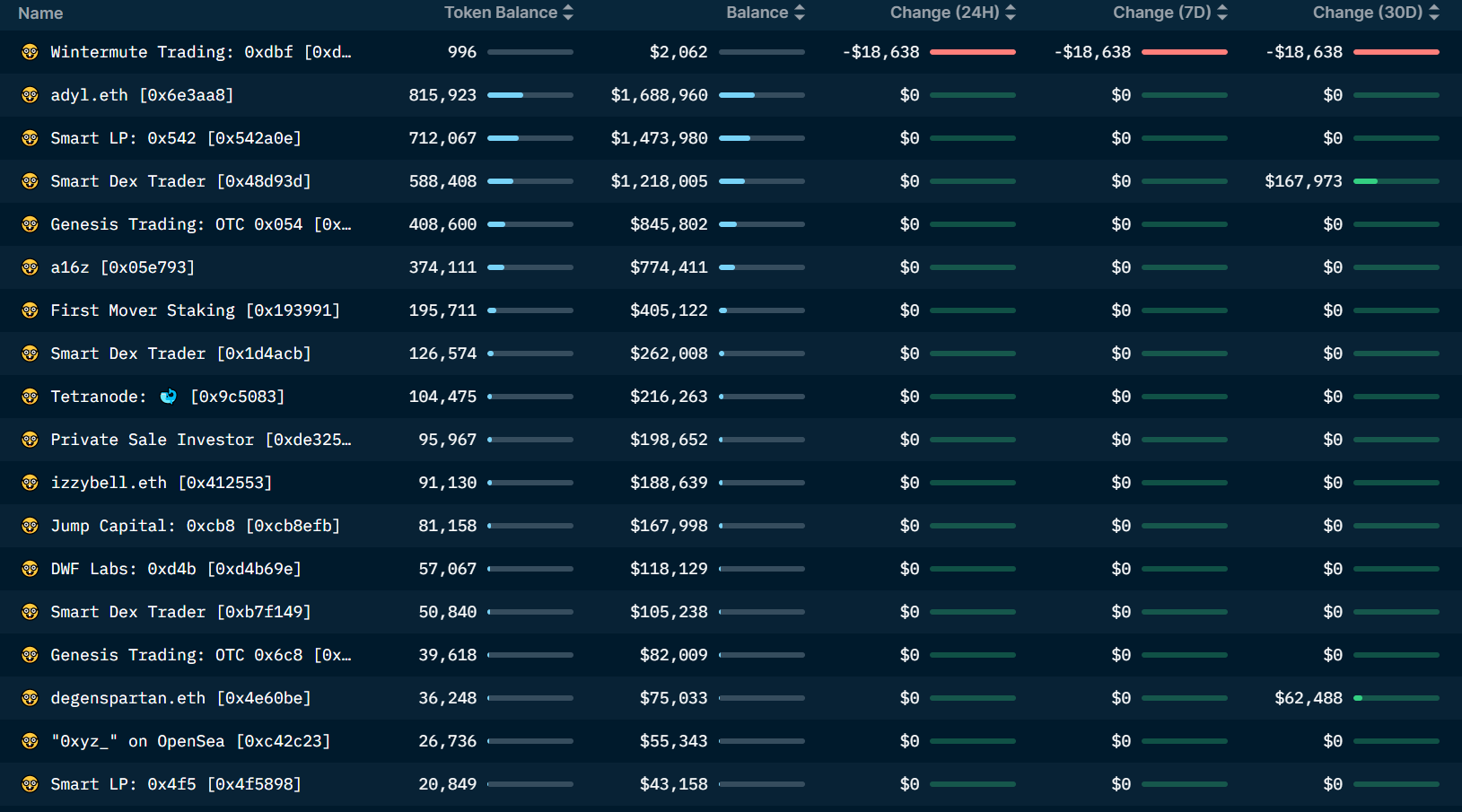
There are also many institutions in smart money, including wintermute, a 16 z, jump trading, DWF labs, and more institutions.