

OFR partner's feedback on attending EthCC: VCs and ZK are everywhere, Ethereum takes a big step forward.

Original Title: "One Giant Step Towards 'Settle Down'"
Original Author: JX, OFR Partner
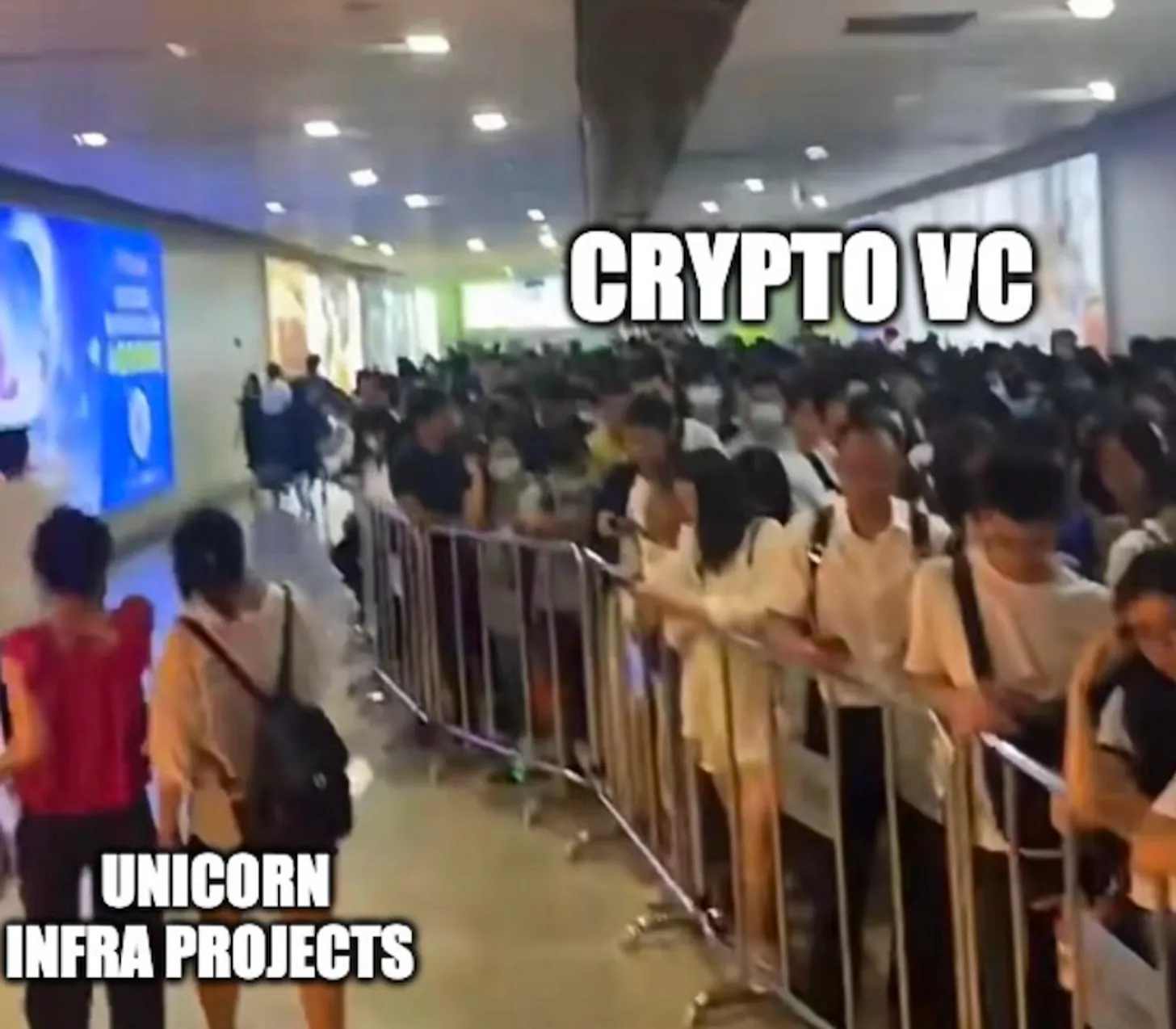
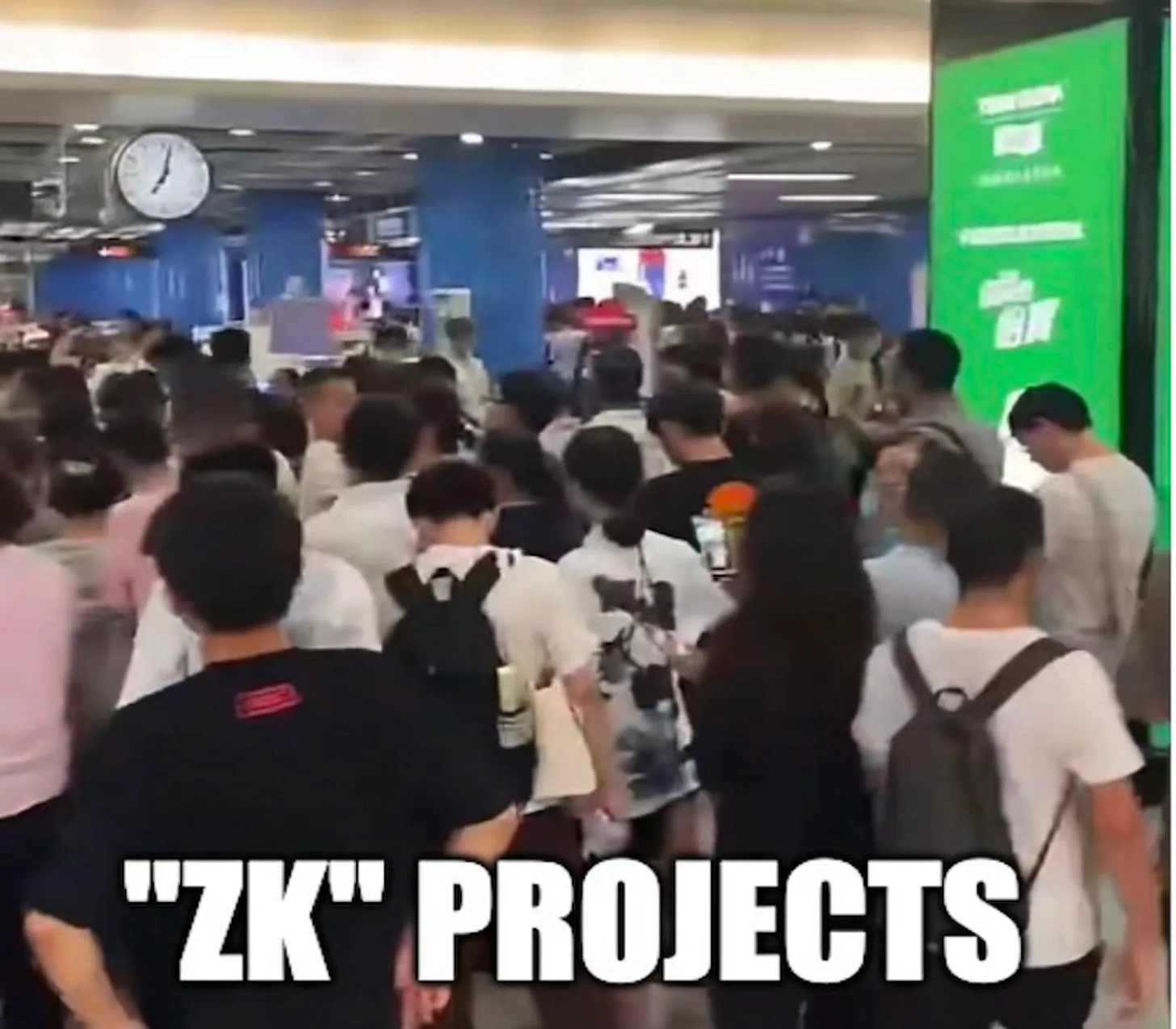
I made two meme images to represent my most intuitive experience at EthCC, which also reflects the current state of the industry:
There are too many crypto VCs, to the point where a side event organized by a unicorn project with a valuation of over 1 B for a private round implemented a policy of "VCs not allowed inside". Unfortunately, these session dogs can enter. Therefore, VCs are not as...
Almost all projects that started doing applications half a year ago, regardless of whether they are games, NFTs, or Social, have all expressed that they have started doing underlying infrastructure and have used ZK in every pore, which is very smooth. Don't believe me? Come and try our new Odyssey.
What's New
During the EthCC conference, many projects announced their updates and progress. Here are some projects that I think are worth paying attention to:
Chainlink CCIP - "Packaging"
Chainlink, the leader in the middleware track, announced its foray into the cross-chain direction during the EthCC conference on July 20th, following the Oracle track. Its cross-chain interchange protocol, CCIP, is officially launched and supports the testnets of Ethereum and four mainstream EVM L2 chains. But interestingly, this version is not called a testnet or beta version, but rather referred to as the "Mainnet Early Access phase." Interpret the art of language for yourself.
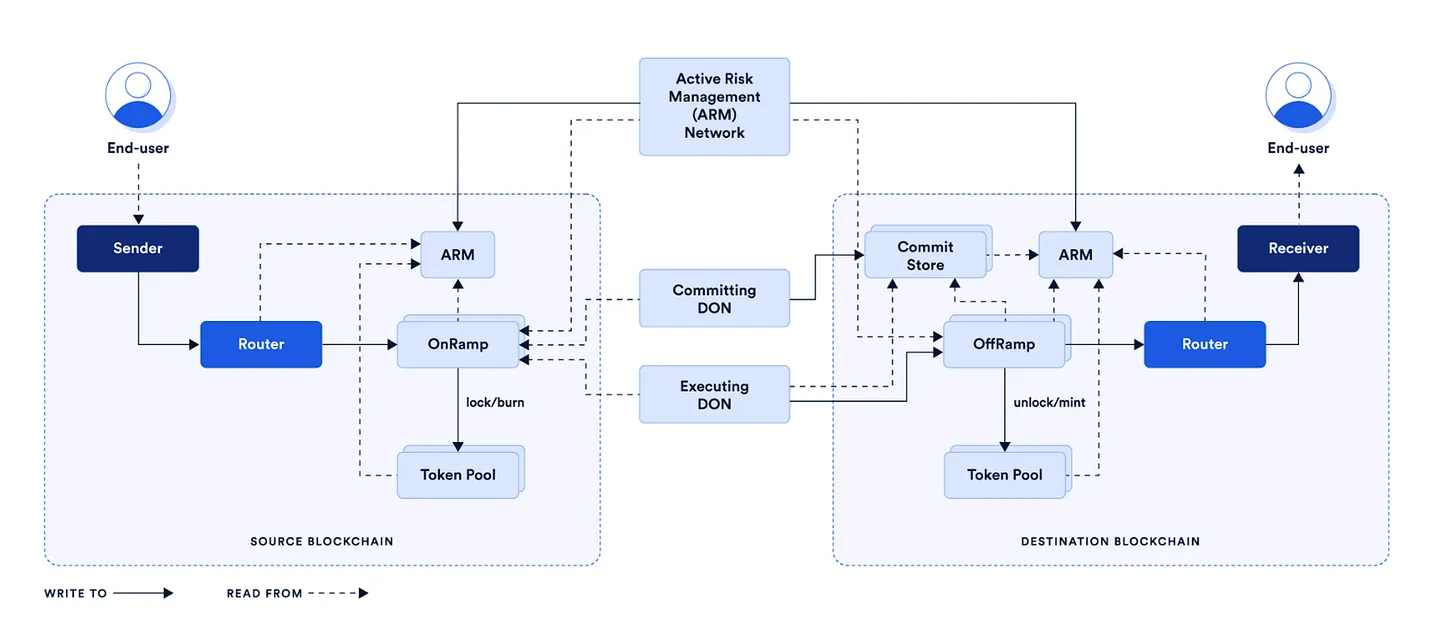
CCIP Overall Architecture Diagram
The overall architecture is divided into two parts: off-chain and on-chain. The off-chain part uses Chainlink's DON node network to submit and verify cross-chain transactions' Merkle Proofs, ensuring the finality of transactions on the original chain and meeting the risk control requirements of active risk management nodes (ARM) for cross-chain transactions.
For those familiar with cross-chain projects, does the architecture in the diagram above look familiar? The diagram below is the latest structure diagram of Layerzero, which is valued at 3 billion USD:
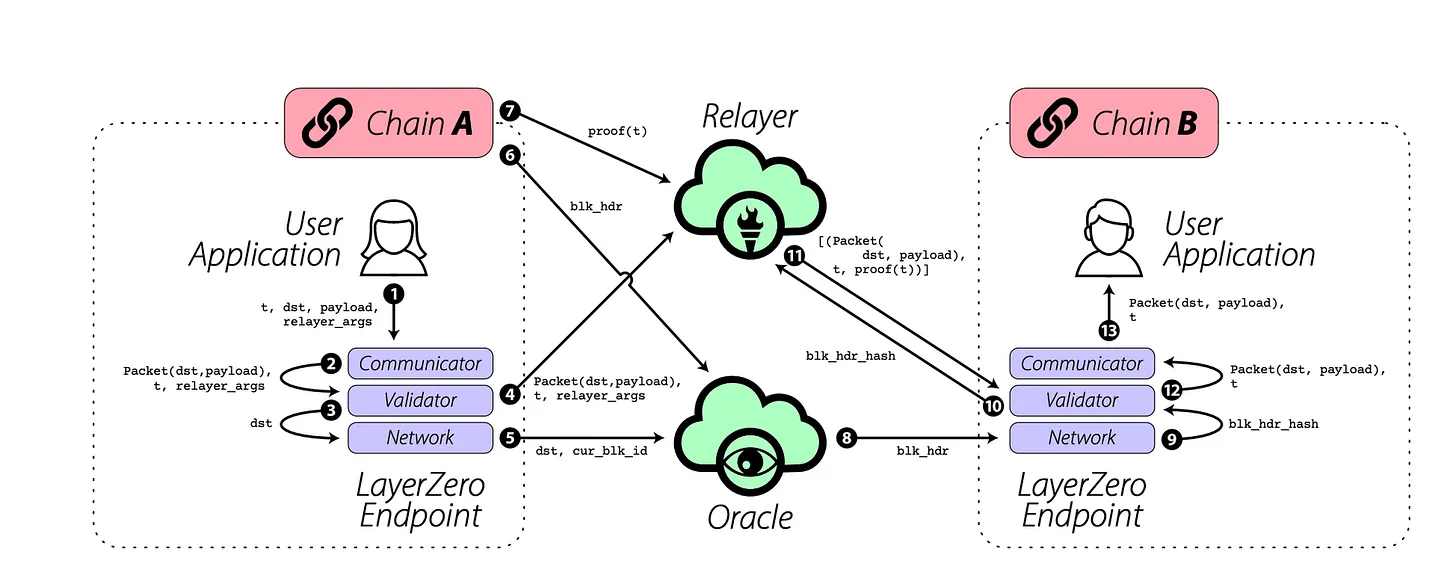
Layerzero Structure Diagram
Off-chain section: Relayer corresponds to Executing DON, Oracle corresponds to Committing DON;
On-chain section: Communicator corresponds to Router; Validator and Network correspond to on/off ramp. Chain A and Chain B correspond to two token pools.
The two main cross-chain architectures can almost be mapped one-to-one, with the difference being that Chainlink's CCIP adds an additional layer of Chainlink contracts implemented in Rust and independent nodes for independent verification of cross-chain transactions. Additionally, the underlying Oracle used by Layerzero is currently Chainlink.
This operation, in the most recent popular terminology, can be seen as Chainlink "encapsulating" Layerzero.
Uniswap X - "Decoupling"
The Uniswap team is slow in empowering tokens, but proactive in product innovation. After announcing the Uniswap V4 product plan in June, they launched a new product called Uniswap X on July 17. To make an imperfect analogy, Uniswap V4 is like Apple releasing a new generation of iPhone, with Uni V3 as the prequel and Uniswap X as a new product line similar to the iPad.
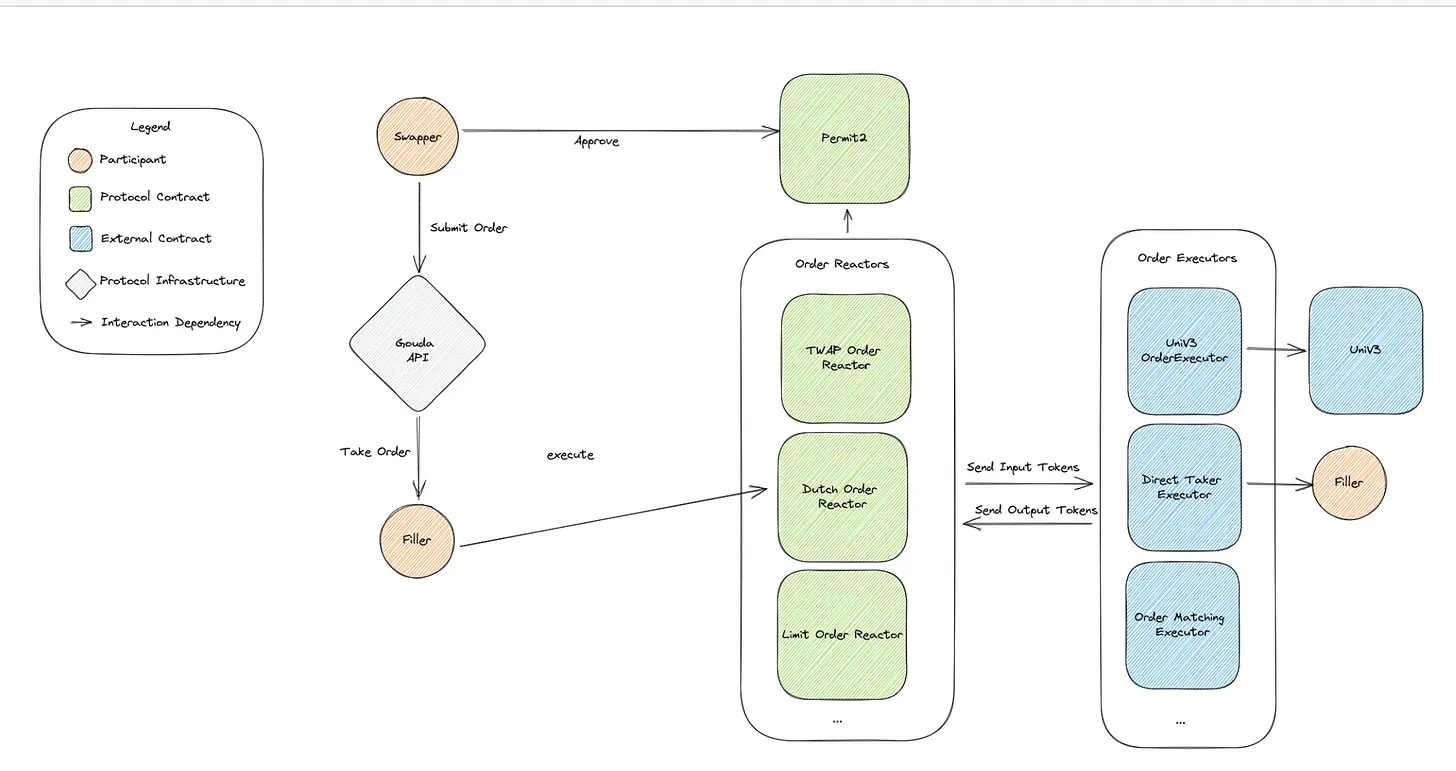
Uniswap X product architecture diagram
The core of Uniswap X is to outsource transaction routing and aggregated trading functions to a new participant called Filter. Filter works with Uniswap's Router to handle order placement and matching tasks. Filter can be a transaction aggregator like 1inch, a market maker, an individual, or even an MEV searcher. With the existence of a bidding mechanism, potential MEV losses for traders will be compensated during the auction process, internalizing the value of MEV.
This decoupling of system components to reduce core system complexity is also the essence of Uniswap V4. Uni V4 decouples the establishment authority of liquidity pools from the core system to a new role called Hook. Hook defines personalized rules for liquidity pools, thereby satisfying the flexible needs of users while maintaining the stability of the core system.
A similar system design logic is also part of Ethereum's Rollup-centric roadmap, gradually shifting transaction scalability to various L2 Rollups and continuing to decouple data availability, providing ample space for the emergence of numerous L2 and DA projects.
Of course, Uniswap X also brings important functional improvements to enhance user trading experience, such as Dutch auction orders, cross-chain transactions, and transaction fee optimization module for Permit 2. It is worth mentioning that Uniswap X defines the traded objects as signed orders, setting the tone for intent-centered on-chain transaction models.
Towards the Modular Blockchain Era - Endgame
With the launch of many Layer 2 solutions on the mainnet this year, many of them have chosen to announce important milestones for their products during the EthCC conference, marking the official arrival of Ethereum's modularity era.
· Consensys' Linea launches Alpha Mainnet
· Mantle, incubated by Bybit, launches Alpha Mainnet
· O(1) Labs' Zero Knowledge Proof solution proposal for OP Stack is selected
· Following OP Stack and Arbitrum Orbit, Starknet also releases its own Starknet Appchains
Since around 2020, with the establishment of the Ethereum Rollup-Centric roadmap, the trend of Ethereum's modularity has been basically predictable. This Ethereum scaling method involves using Rollups to handle transaction loads, breaking down the functions of the monolithic chain and distributing them to the modular chain system. Vitalik refers to this as Ethereum's Endgame. (Subsequently, the term "Endgame" has become a buzzword in Web3 and has been frequently repeated, such as MakerDao)
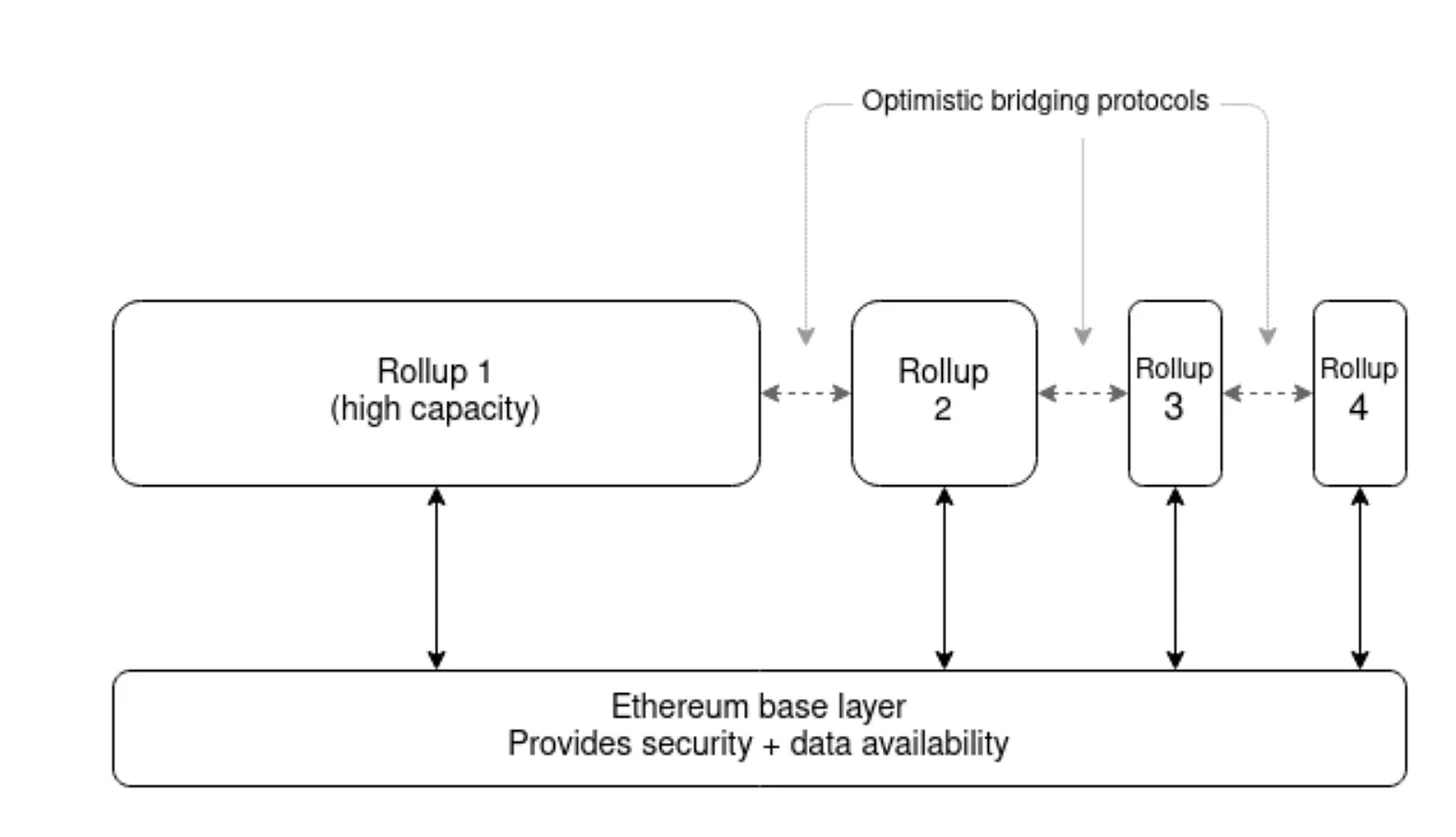
In the future, Ethereum will not only exist as a single chain or L1, but also as a secure DA layer and consensus layer solution. As Ryan, the founder of Bankless, said, "The Ethereum main chain is not for users, but for chains," more specifically, it is for different Rollups and Raas platforms.
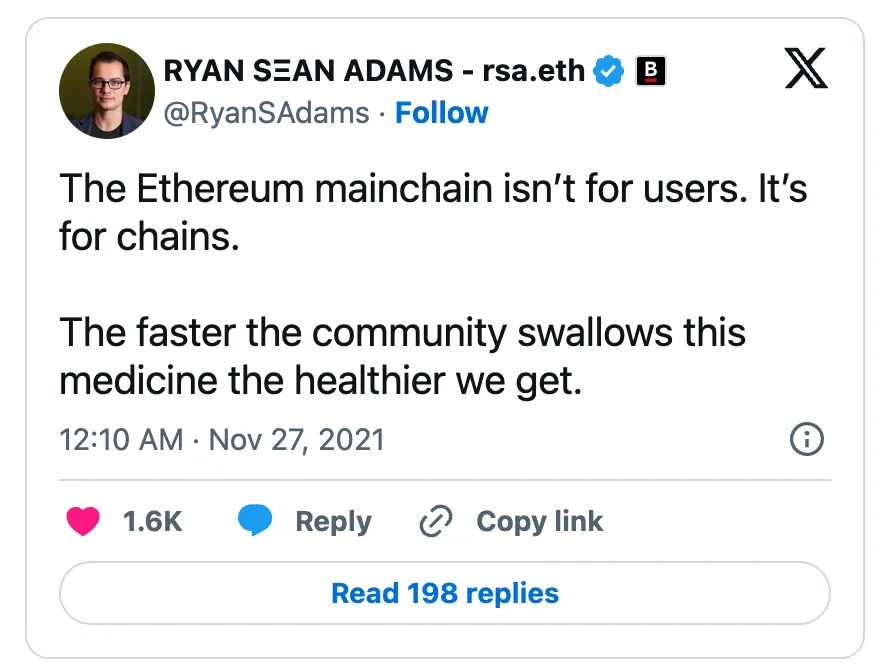
In the modular world, there is no longer a simple distinction between L1, L2, or L3 fractal scaling; instead, various execution layers, DA layers, and consensus layers are combined:
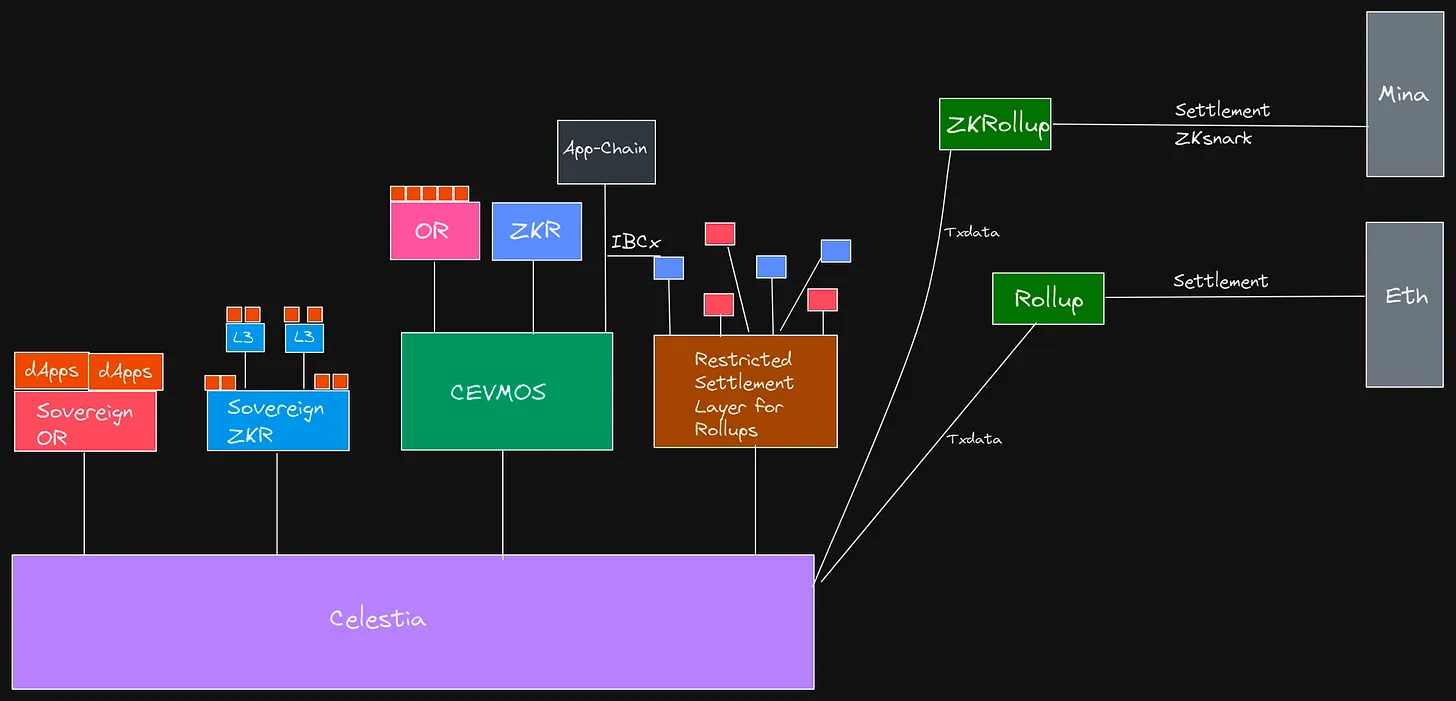
A modular ecosystem with Celestia as the central perspective
And the focus of blockchain infrastructure builders in the future will also shift from various L2 solutions to the components of modular blockchains. This change can be seen from the speakers at the Modular Summit over the past year: more decentralized sorters, faster execution layers, frameworks for adapting different types of Rollups, and so on.
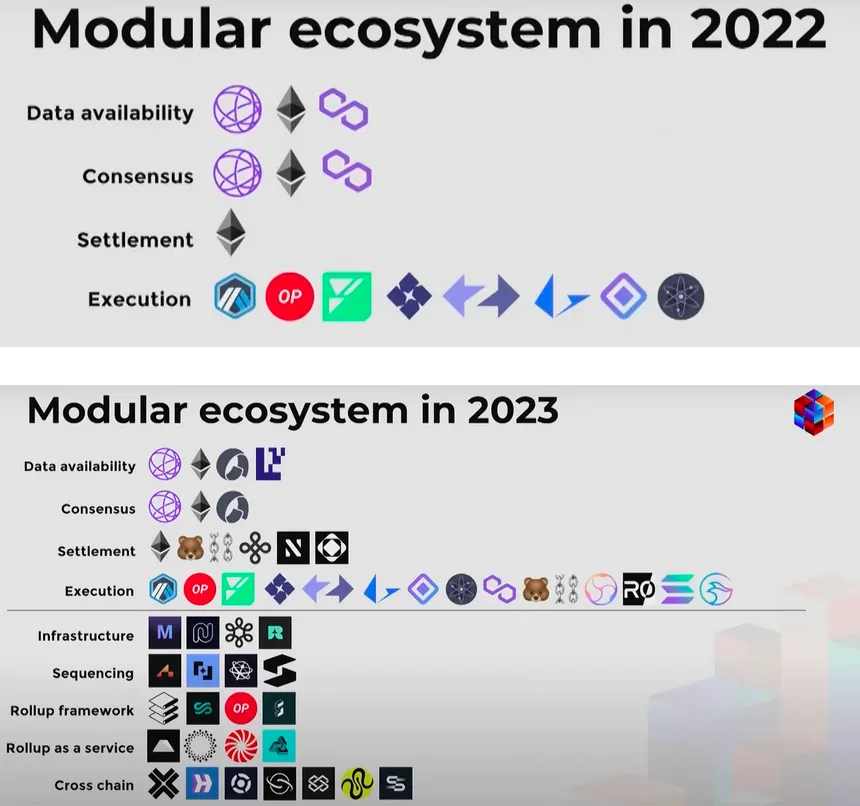
In addition, there is much more content released at this EthCC conference, such as Lens V2 and Gnosis Card, etc. Since the focus of the conference is still on infrastructure, this article will not go into too much detail.
To Be Continued
Vitalik's speech at the main venue this time is about the development history of Account Abstract. There is not much new stuff, but his speech on Aggregation at the Modular Summit is personally more interesting. He mentioned that one of the big advantages of ERC 4337 is the use of BLS aggregate signatures, which greatly reduces transaction size and saves Ethereum's block space. There is also a lot of work in using SNARK-proven aggregation to improve efficiency. The theoretical and technological progress in Aggregation may be a breakthrough for future Rollup upgrades.
One of the largest Side Events at EthCC, the Modular Summit, had a whole day dedicated to discussing PBS (Proposer-builder separation), which is also a long-standing topic. The Ethereum Foundation's R&D roadmap can be summarized in the following heart-shaped diagram, divided into in-protocol and out-protocol categories. The specific content is somewhat complex and will have to be explained in a dedicated article in the future.
Finally, looking forward to the future, let's review the "yesterday". At the EthCC conference in 2022, Vitalik's expectation for Ethereum is to eventually "Settle Down", which means enhancing Ethereum's system compatibility, reducing complexity, and achieving a balanced and stable long-term operation. If, as Vitalik said, Ethereum was at the starting point of a steep climb last year, then looking at this year, Ethereum has taken a big step towards the peak.
(Who says the view from the mountaintop is Cosmos'? Come forward)
Related Links:
https://vitalik.ca/general/2021/12/06/endgame.html
https://rainandcoffee.substack.com/p/the-modular-world
https://modularmedia.substack.com/p/modular-summit-2023-recap
https://www.stackup.sh/blog/understanding-aggregators-in-erc-4337
https://eprint.iacr.org/2019/1021.pdf
https://twitter.com/Louissongyz/status/1653770344694415362
https://eprint.iacr.org/2021/529
https://www.alexbeckett.xyz/stateless-rollups/
https://github.com/flashbots/pm/issues/98
https://medium.com/fourpillars/mev-burn-roadmap-after-pbs-8867d53ae25