

每周编辑精选 Weekly Editor's Picks(0725-0731)

The feed moves too fast, and in-depth analysis articles are easily drowned out by hot topics. This "Weekly Editor's Picks" column rescues these valuable insights from the vast sea of information, helping you filter out the noise, retain key takeaways, and spark inspiration.

Macro Landscape
The "Most Uncertain" Decision in Years: Will Tonight's Fed Deliver a Surprise?
This meeting carries the strongest "uncertainty" in recent years, stemming from the tug-of-war between two opposing forces. June's CPI came in broadly below expectations, non-farm payrolls were weaker than forecast, and oil prices retreated ahead of the meeting, all providing room for the Fed to continue waiting. However, inflation remains above target, Middle East tensions and oil prices remain volatile, several Fed officials have recently struck a hawkish tone, and Chairman Warsh has yet to establish a clear policy track record, making it difficult for the market to completely rule out the risk of a rate hike.
The market is already pricing in the risk of a rate hike.
Investment & Entrepreneurship
Real Vision Founder: After 13 Years of Bull and Bear Markets, Rethinking Crypto's Long-Term Value
The crypto track is a long-term game that severely tests mental fortitude, with many people's income and net worth deeply tied to the industry. The ultimate winners are not those with the strongest short-term trading skills, but rather investors who can clearly understand the essence of their holdings, remain confident in the network's continued adoption trend, and withstand the deep 50% drawdowns that occur every few years.
Zoom out and strip away the market noise. Position yourself in both the digital vault (Bitcoin) and the economic base layer (high-quality smart contract L1s), ride the industry's growth curve, and avoid wasting energy trying to outsmart the cycle.
I Built a Bitcoin Buying System: At $64,000, the Lower the Score, the More I Buy
A static, disciplined framework for investment execution.
Welcome Back to the Family Home: Global Stock Markets Are Increasingly "Crypto-ified"
Narratives overpower valuations, leverage amplifies sentiment, and social media rapidly pushes consensus to extremes. Global stock markets, especially tech stocks, are increasingly resembling the crypto space.
How a Fake SpaceX Engineer Shook Up the Trillion-Dollar Commercial Space Industry
Multiple mainstream media outlets, including Bloomberg, have reported on the news that "SpaceX will gradually phase out the Falcon 9 to focus entirely on Starship."
A netizen named Yatharth Mann posted on social media claiming that the "SpaceX insider" cited in these reports doesn't actually exist, and that he himself was the fabricator of this "leak."
Mann's claims have not yet been publicly confirmed by the involved media outlets, which have also not issued public responses.
Hyperliquid: Active prediction markets dropped from 125 to fewer than 20; Polymarket: Perpetual contracts see daily volume under $20 million; Kalshi Perps: Traded $16.1 billion in six weeks, but activity has recently cooled.
What Hyperliquid, Polymarket, and Kalshi are discovering is that the truly difficult thing to replicate across verticals is the long-accumulated user habits and liquidity built in their original domains.
For the so-called "Everything Exchange," the ultimate competition may not be about who covers the most categories, but who can continuously accumulate users, liquidity, and market depth in their core verticals. For platforms that already have a clear advantage, deepening their home turf might be more important than endlessly expanding their boundaries.
Several protocols are generating substantial revenue, but not all of them accumulate value for their tokens in the same way. Even when they do, it doesn't necessarily lead to higher asset prices, because there is usually sufficient selling pressure from unlocked tokens held by insiders, negative news, incentive programs, overall project sentiment, and the competitive landscape.
A good protocol doesn't always mean a good token. Only when revenue, distribution, and unlock schedules are all carefully scrutinized can token holders truly share in the growth dividends.
Also recommended: Microsoft, the Only Stock That Rose Post-Earnings: What's Supporting Its Share Price?, Cyclical or Growth Stock? Coinbase's Q2 Earnings Reveal a "Valuation Disconnect", Korea's KOSPI Halted 7 Times This Year: A Summer Ruined by Leverage for the Young, BitMEX and BitMart Shut Down: Do Exchange Closures Signal a Bear Market Bottom?, Even Tens of Millions in Funding Couldn't Save Them: Who Has Fallen in Crypto This Year?.
AI & Storage
Nvidia's Credit Default Rate Soars: Is the AI Debt Bubble About to Burst?
The credit market has already priced in the risk of AI cloud infrastructure expansion. Guarantees and partnership frameworks can lock in future demand, but they may also transmit customer financing risks back to Nvidia.
Is China's Lithography Entering a "DeepSeek Moment"? Are US Stocks Facing Another Sell-Off?
The rise of China's related chip industry is fundamentally shaking the pricing logic of the global memory market.
Memory Stocks Plunge: A Night of Shock
The "night of shock" in the memory sector is essentially a disconnect between fundamentals and market expectations.
Now, the sensitive capital markets have begun pricing in potential oversupply for 2027 in advance. According to "Big Short" investor Michael Burry's expectations, the window from the second half of 2027 to 2028, when new Korean fabs ramp up mass production, will be the real test for the memory industry.
There are currently two relatively rational approaches: hedge existing positions, or consider switching tracks (e.g., to Apple, Google).
A Decade of Support Pays Off Trillions! AI Spending Intensifies, Market Patience Wears Thin
Limited visibility into capital expenditure after 2027, coupled with increased investor demands for spending discipline, could continue to suppress risk appetite.
The bulls' core logic is that demand is real, and supply—not demand—is the limiting factor. The bears focus on the lack of return visibility.
SK Hynix's Most Profitable Quarter Ever: Why Is It Still "Below Expectations"?
What the market truly cares about goes far beyond how much money SK Hynix made in Q2; it's about how to reprice future growth potential—and the bulls and bears clearly haven't reached a consensus on that yet.
The bulls are betting on continued AI infrastructure expansion, while the bears worry the market has already front-run future growth.
SK Hynix enjoys the valuation of an industry leader, and it must also bear the pressure of being one—when the market already believes your story, good results are no longer enough. Only by consistently exceeding even higher expectations can the valuation continue to climb.
Also recommended: After Semiconductor Stocks Crashed 40%, Re-examining the Fundamentals of Compute Demand.
Policy & Stablecoins
So Close to the Finish Line: What's Holding Up the CLARITY Act?
The CLARITY Act has reached the final "goal line." Like in American football, that last yard can be the hardest on the field, and politically, it's a battle over every inch... Given the limited time remaining and the strong opposition from Democratic lawmakers involved in negotiations to the current ethics clause wording, the probability of the bill passing in 2026 has been downgraded to 30%.
The biggest obstacle to the bill's progress remains the ethics clause, which was previously interpreted as an area where Trump and Republicans had signaled a willingness to compromise.
The CLARITY Act not only faces the challenge of resolving its internal disagreements in time, but also must compete with other contentious bills—such as the Russia sanctions bill, the budget bill, and the SAVE Act—for the Senate's already limited floor time.
What Happens If the CLARITY Act Ultimately Fails?
For the crypto market, analysts generally believe the impact would be limited, as the market has already priced it in.
If it fails, it could pose a challenge to Coinbase, but might actually be good for Circle's long-term pricing.
For Washington's political landscape, it would mean future legislative efforts will be much harder.
CeFi & DeFi
More Accurate Than Brokers? TradeXYZ Prices CXMT in Advance
CXMT's listing marked the first confirmation of TradeXYZ's "dominance" in pricing the A-share market, with an error of less than $0.2 compared to traditional brokers, though it traded at a discount after the opening.
ONDO Up 30% in Three Weeks: What Are Funds Betting On?
Ondo just happens to be the most active player in the recent on-chain US equities trading narrative.
Many of those US equity contracts on Hyperliquid are backed by inventory sourced from Ondo. After capturing 70% of the upstream supply, Ondo is now moving downstream—directly using Ondo-issued tokenized stocks as collateral.
Constrained by the overall crypto market downturn, short-term catalysts are unlikely to drive a sustained structural rally for ONDO; this is more about short-term reactions to events and capital flows.
Airdrop Opportunities & Interaction Guides
Hot Interaction Roundup | Axis Robotics "Zero-Cost" Tasks; Orbinum Testnet Experience (July 30)
Ethereum & Scaling
When 8 Million ETH Start "Moving": Post-Pectra, Is Staking Undergoing a Structural Shift?
Lido is migrating over 8 million ETH (approximately $16 billion) from the hundreds of thousands of traditional validators backing stETH to the new validator architecture introduced in the Pectra upgrade.
This won't directly reduce the Gas users pay, nor will it suddenly speed up transaction confirmations. In fact, Lido estimates that the temporary loss of rewards during the migration is roughly equivalent to 0.28% of the protocol's annual staking rewards.
Compounding validators offer the ability to reinvest fragmented ETH into native staking. This represents the potential to manage more capital more efficiently with fewer validators.
Racing for Ethereum Dominance: Why Does ETH's Price Continue to Weaken?
The disconnect between price action and fundamentals is clear: more and more investors are struggling to understand ETH's value accrual narrative.
New Ecosystems
Platform Token Surges 15x in Two Weeks: Pons Tops Robinhood Chain in Both Token Launches and Trading
Security
Don't treat ordinary platform wallets or savings accounts as professional asset custody.
Week in Review: Quick Catch-Up
Policy & Macro Markets
The Federal Reserve held interest rates steady;
MiCA takes effect, triggering a "major reshuffle" in Europe's crypto industry: high regulatory barriers may fuel a new wave of M&A;
Korea's National Pension Service turned net buyer of KOSPI for the first time this year, heavily weighted in SK Hynix;
CXMT set multiple A-share records in its first hour of trading;
Opinions & Voices
Dan Bin: In a big crash, you must be brave enough to buy; I've just fired my last bullet;
Sam Altman in latest interview: Unfazed by open-source distillation, OpenAI will "shock the world" in the next 12 months;
Tom Lee responds to claims that Ethereum is being cannibalized by L2s: I disagree; ETH is on-chain money;
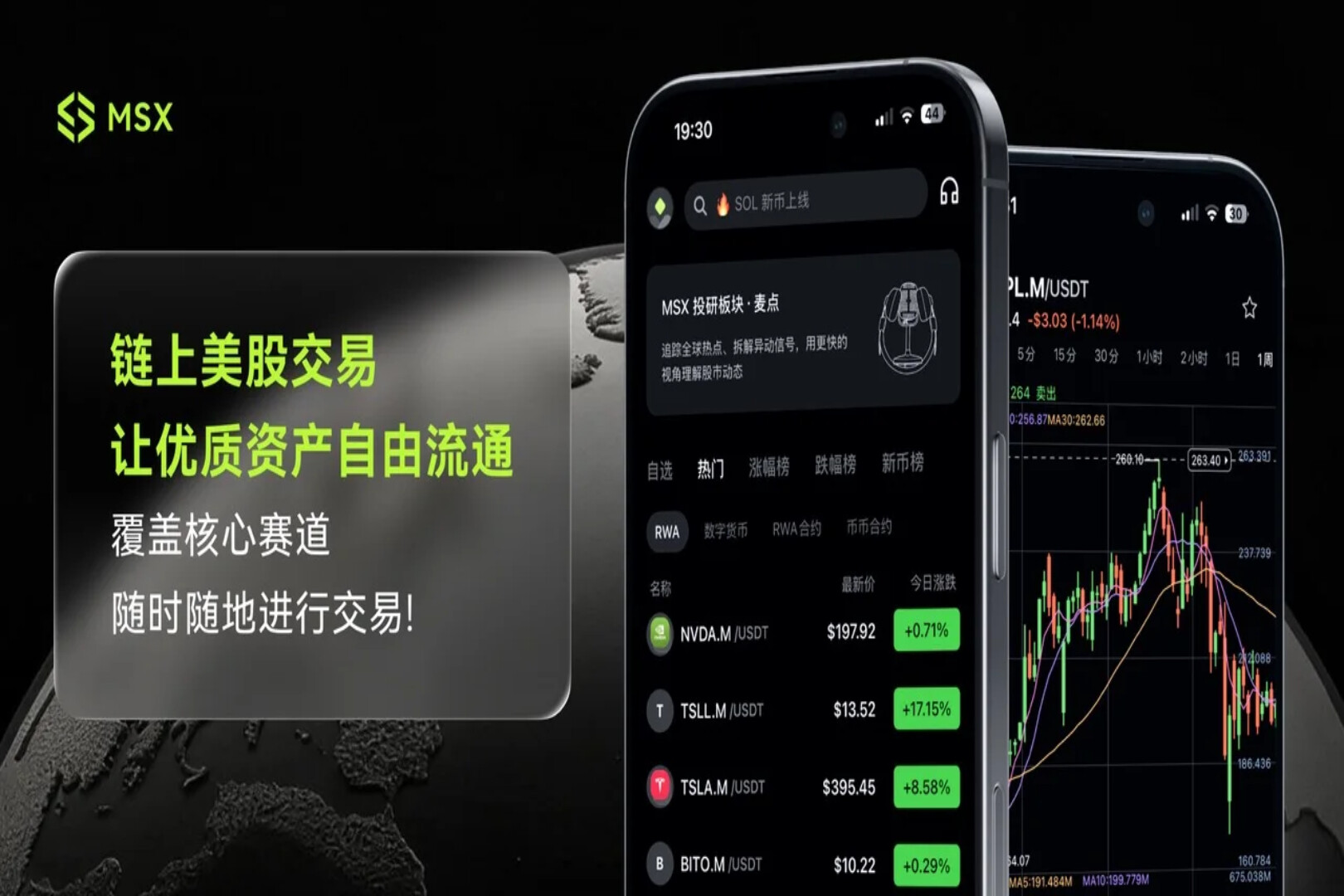
MSX Founder: If we acquire Bitmart, we will push for zero fees on crypto-to-crypto spot and futures trading;