

Meta and Alibaba Race to Put AI Agents "Into" Your Eyes This Week: The Undercurrents of the AI Glasses Industry

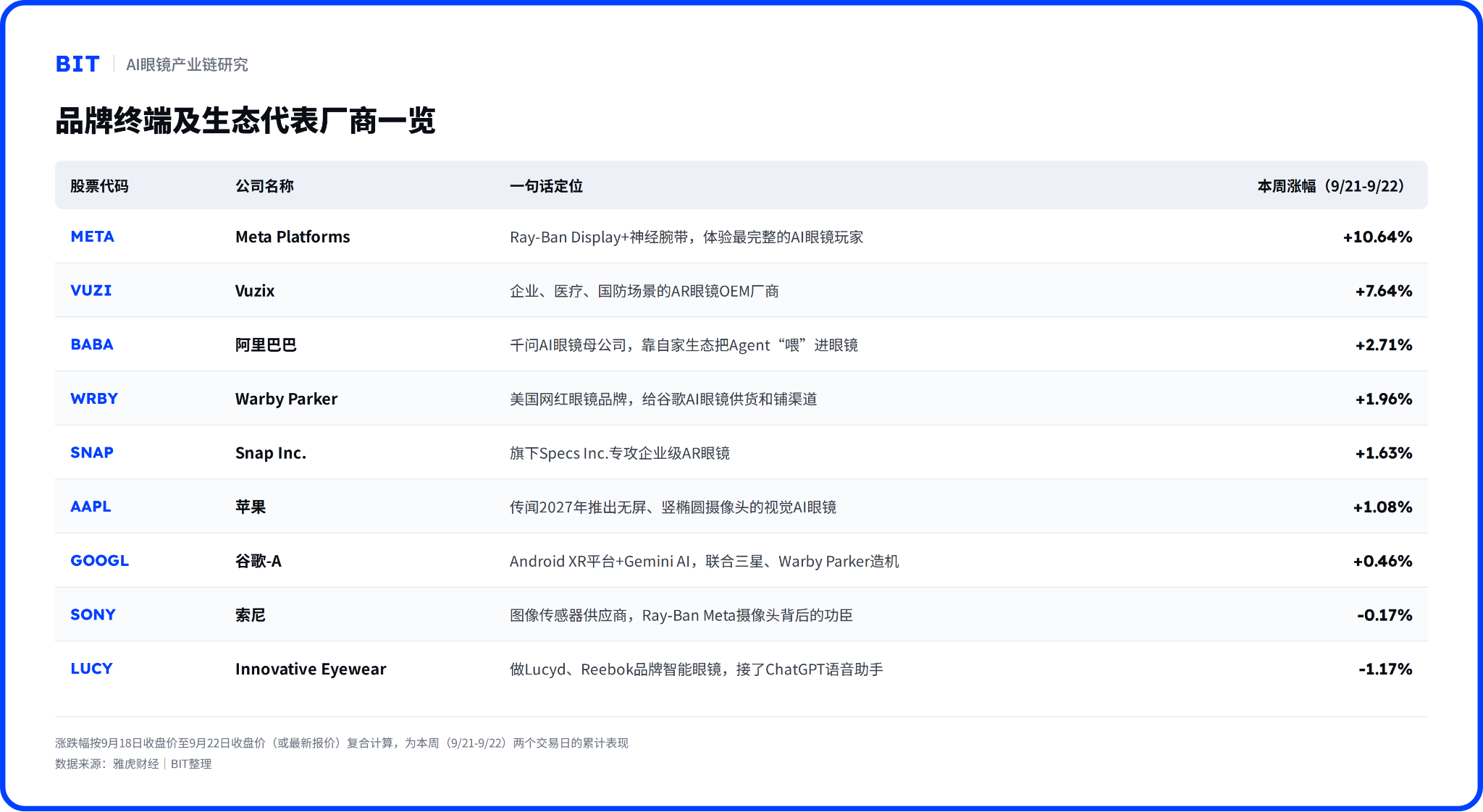
This week, the Alibaba Cloud Apsara Conference and Meta Connect developer conference were held back-to-back, and the two giants pushed AI glasses to center stage almost simultaneously. Alibaba's ambition is to turn glasses into a portable "AI Agent entry point that can get things done anytime, anywhere"; Meta, on the other hand, is betting on the evolution of the hardware itself, aiming to make it a "next-generation terminal that sees the world for you"; and Apple, far away in Cupertino, is also reported to be developing a new solution that uses "AI visual perception to replace traditional optical zoom." This hardware form, once regarded as a science fiction prophecy, is rapidly becoming the core focus of contention between the capital markets and the tech world.
1. Alibaba: Using a "mouth that gets things done" to pry open the local application ecosystem
Alibaba's approach is simple and direct: make AI glasses an assistant that can help you solve problems anytime, anywhere.
The Qoder glasses version launched in early September this year is a vivid example. Wearing glasses equipped with the Qwen or Leqi large model, you only need to say to it: "Help me see where this code is reporting an error." The camera on the glasses will follow your line of sight toward the screen, identify the error, or even handwritten sketches on a whiteboard, and deliver the answer directly to your ear. This kind of continuous follow-up questioning and chat-style interaction that is always available completely abandons the rigid feel of traditional voice assistants that answer only one question at a time.
At this week's Apsara Conference, Alibaba also launched the N1 series: the basic model focuses on 50-megapixel first-person casual photography; the more hardcore Pro version adds eye tracking and iris payment that lets you complete payments directly with your eyes, and has quickly set a release date of October 13. Backed by the underlying support of local super apps such as Taobao, Amap, and Alipay, Alibaba's previously released G1 and S1 have quietly captured the dual first place in domestic AI glasses sales volume and online retail sales.
2. Meta: Wearing a phone on your eyes to reconstruct wearable interaction
As the player currently公认 recognized as having the most mature experience, Meta has gone a bit further.
For Meta's Ray-Ban Display, the most attractive feature is not the tiny screen on the lenses that can display WeChat or text messages, but the accompanying neural wristband. Worn on the wrist, the band can capture the微弱 weak electromyographic signals of your arm. A light pinch of the thumb can switch songs and adjust volume, with no need to raise your hand to touch the glasses or take out your phone, and in the future it may even enable mid-air handwriting and typing. Combined with real-time subtitle translation and first-person video call sharing, scenes from science fiction films a few years ago are being turned into reality by it.
At this week's Meta Connect conference, the next-generation product line also surfaced: not only the Luna, designed specifically for privacy with the camera removed and interaction relying purely on a microphone array, but also an upgraded Ray-Ban Display that can show images in both eyes.
3. Apple Is Not to Be Outdone: A Big Bet on a Screenless Form Factor and Pure Visual AI
Compared with Alibaba's rapid implementation and Meta's high-profile appearance, Apple remains extremely mysterious about its AI glasses codenamed N50, which are expected to make their official debut only in 2027.
Apple's design approach is highly differentiated: it not only transforms the camera into an extremely low-key vertical oval design, but also simply abandons the display screen, instead doubling down on Siri visual interaction—whatever you see, you ask about, and the AI responds in real time by voice, focusing on a screenless "seamless perception" experience. As for the camera's zoom method, it most likely will not follow the old path of optical lenses used in phones, but instead rely on AI cropping and algorithmic sharpening, a "digital zoom" approach—after all, a complete set of zoom lens groups that can move back and forth simply cannot fit inside slender temples.
4. Behind the Cool Features: Who Exactly Is Backing Them?
If you take apart the "show-off points" displayed by these giants in reverse, you will find that the implementation of every cool feature corresponds to a huge and sophisticated supply chain.
1. Chip Computing Power: Cramming an Entire AI System into a Small Box Weighing Just Tens of Grams
For glasses to understand speech in real time and see the world in front of them, the real competition is in extreme computing power compression. Qualcomm is almost universally recognized as the industry standard. Whether it is Meta or Alibaba, both have extensively adopted Qualcomm's Snapdragon AR1 or the Reality Elite platform built specifically for AI glasses. AMD and Nvidia, meanwhile, stand behind this hardware revolution. They support the training and inference computing power of cloud large models, and then continuously push this capability down to terminal devices.

2. Display and Optics: How Do You "Stuff" Images into the Lenses?
How can a palm-sized lens clearly display images without affecting your ability to see the real world? Himax's LCoS microdisplays are a common choice for low- to mid-range solutions; Kopin is an "all-around player" covering AMLCD, LCOS, and OLED; MicroVision takes the laser beam scanning route, which is extremely small in volume but relatively niche. And whether all these precision optical components can be stably manufactured and whether yield rates can improve depends entirely on whether semiconductor process control and inspection equipment providers such as KLA can deliver.
3. Application Ecosystem: From Metaverse Experiences to Naked-Eye 3D Teaching
Cool hardware alone is not enough. What ultimately retains users is a continuous stream of content and real-world use cases.
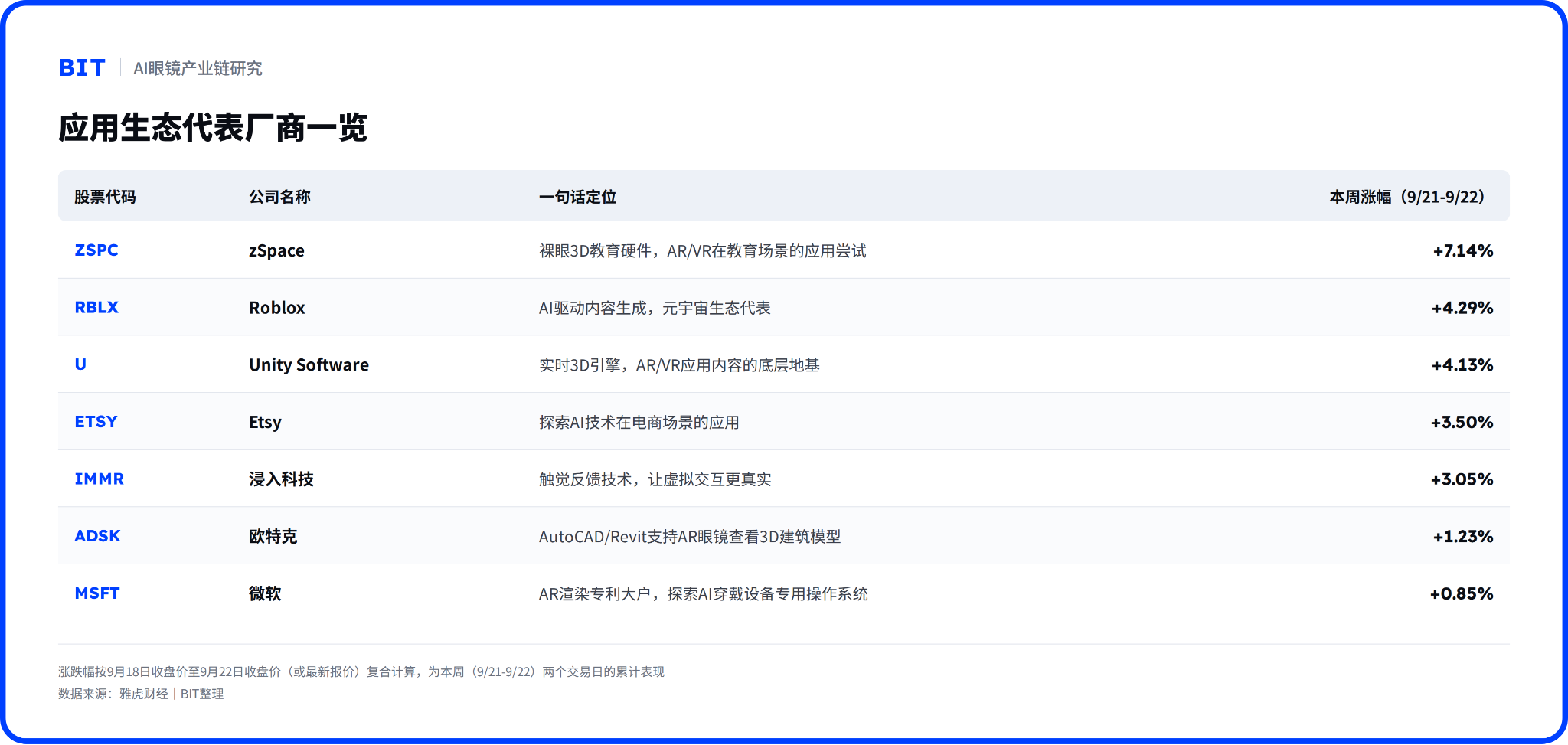
In this track, Microsoft is holding a large number of AR rendering patents and working on a dedicated operating system; Unity is the foundation on which the vast majority of AR applications are built; Autodesk has brought AR glasses to construction sites, where architects can directly see 3D building models overlapping with reality when wearing them.
In niche areas, Roblox is using AI-generated content to fill the metaverse, Etsy is exploring shopping scenarios, and Immersion is doubling down on haptic feedback, hoping to let you touch a sense of realism in the virtual world. zSpace focuses on "naked-eye 3D" teaching scenarios. Students do not need to wear glasses; standing in front of the screen, they can use a pen to grab a floating virtual heart for dissection practice.
5. Software and Hardware Conspire as Wearable Hardware Reaches a Tipping Point
After sorting through the entire industry chain, it is not hard to find that terminal giants are responsible for telling the story and defining "what glasses can actually do"; while the three hidden lines of optical display, chip computing power, and content ecosystem are the real driving forces behind turning the story into reality.
When computing power bottlenecks are broken, see-through optics mature, and scenario applications gradually become richer, AI glasses may no longer be just a toy in the hands of geeks, but the ultimate terminal that takes over our digital lives in the next generation.
Disclaimer: The company names, stock tickers, and business descriptions involved in this article are compiled based on public information and do not represent their real-time latest holdings, financial condition, or operating performance; the price change data in the article comes from historical quotes on Yahoo Finance and may contain delays or errors, and is for informational reference only. The content of this article does not constitute any investment advice, offer, or recommendation for the purchase or sale of any specific securities, and BIT and the author do not assume responsibility for any investment decisions made based on the content of this article. Markets carry risks, and investment requires caution. Specific investment decisions should be based on the latest announcements, prospectuses, and regulatory disclosure documents of listed companies, and it is recommended to consult a professional financial advisor.