After the cooldown, let's review: who actually made money on Papertrade?

Source:Max
Compiled by Odaily (@OdailyChina); translated by Azuma (@azuma_eth)
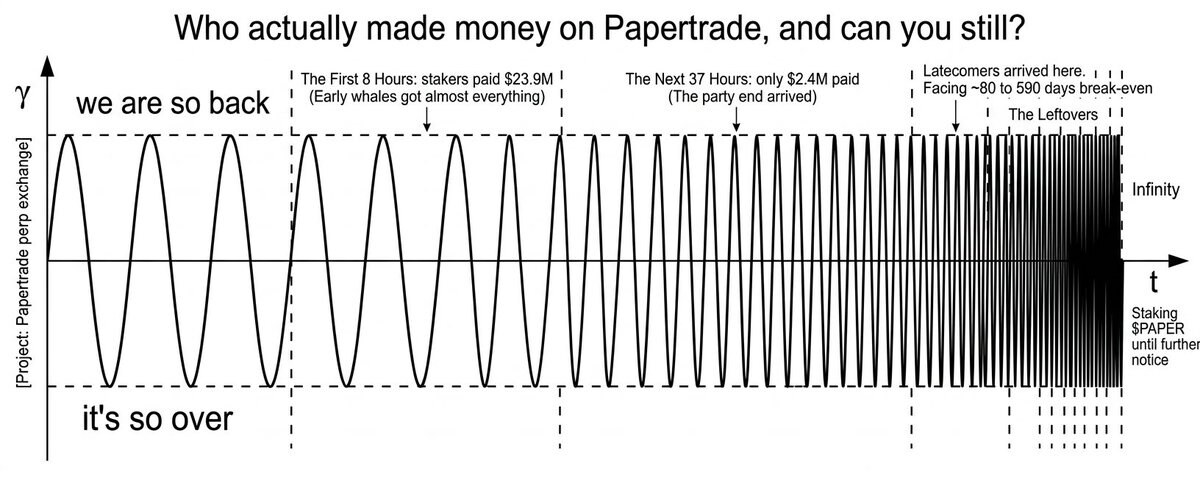
In its first 8 hours after launch, Papertrade distributed a total of $23.9 million in dividends to stakers; over the following 37 hours, it distributed only $2.4 million.
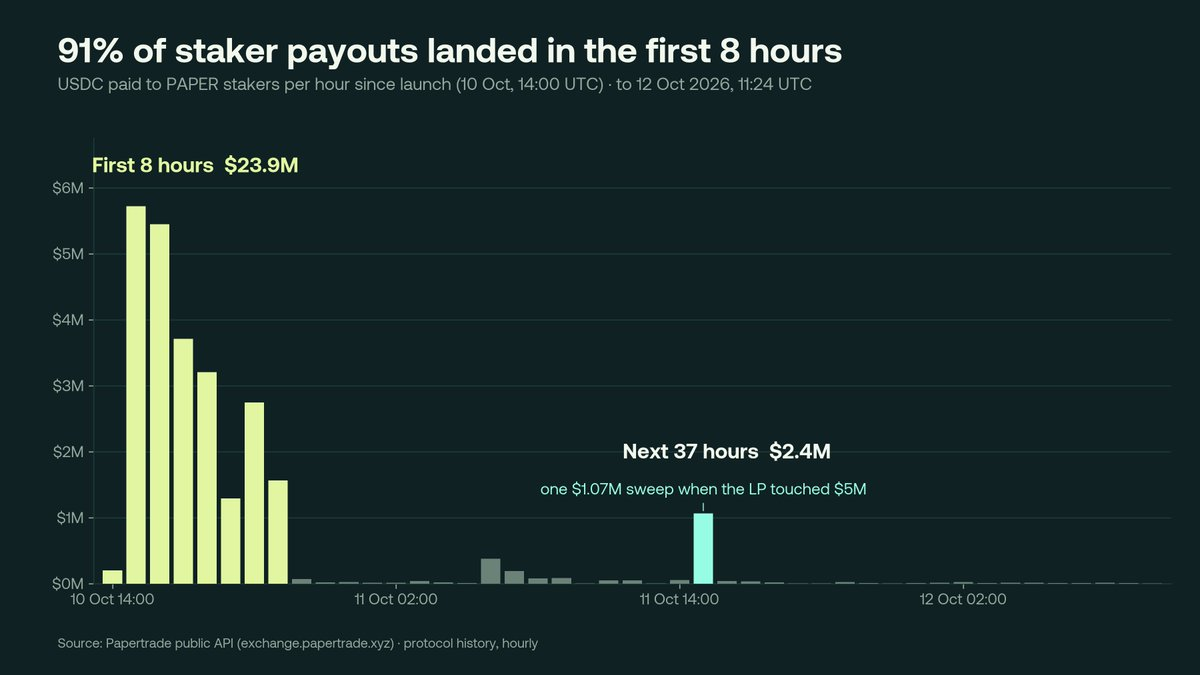
These two numbers essentially sum up the state of this game. Still, who actually took the money home, and how they did it, is worth a few minutes of unpacking — especially if you're still planning to farm the PAPER token this week.
Every Research Report Nailed the Mechanics, but Got the Timeline Wrong
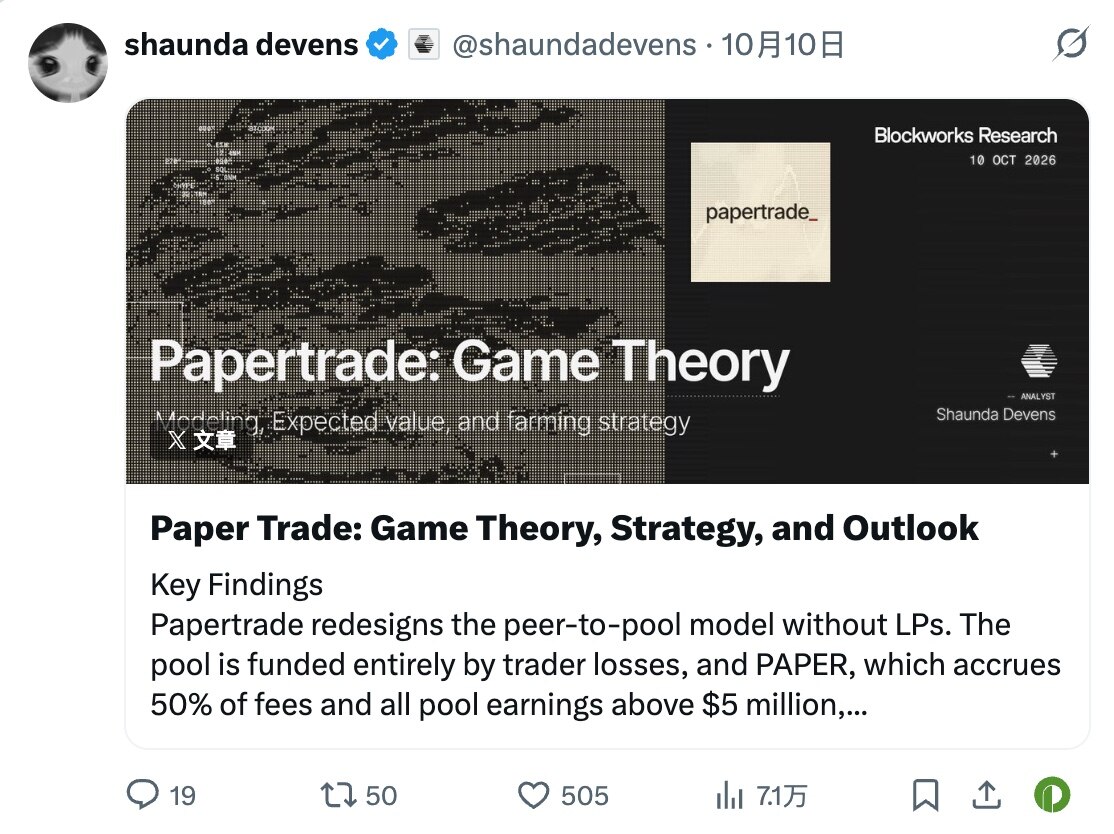
Before Papertrade launched, the highest-quality research came from Blockworks Research's Shaunda Devens, Delphi Digital's tempest, and another investment firm, schema. All three explained the underlying mechanics with great clarity, but they all estimated that this game-theoretic process would play out over several weeks.
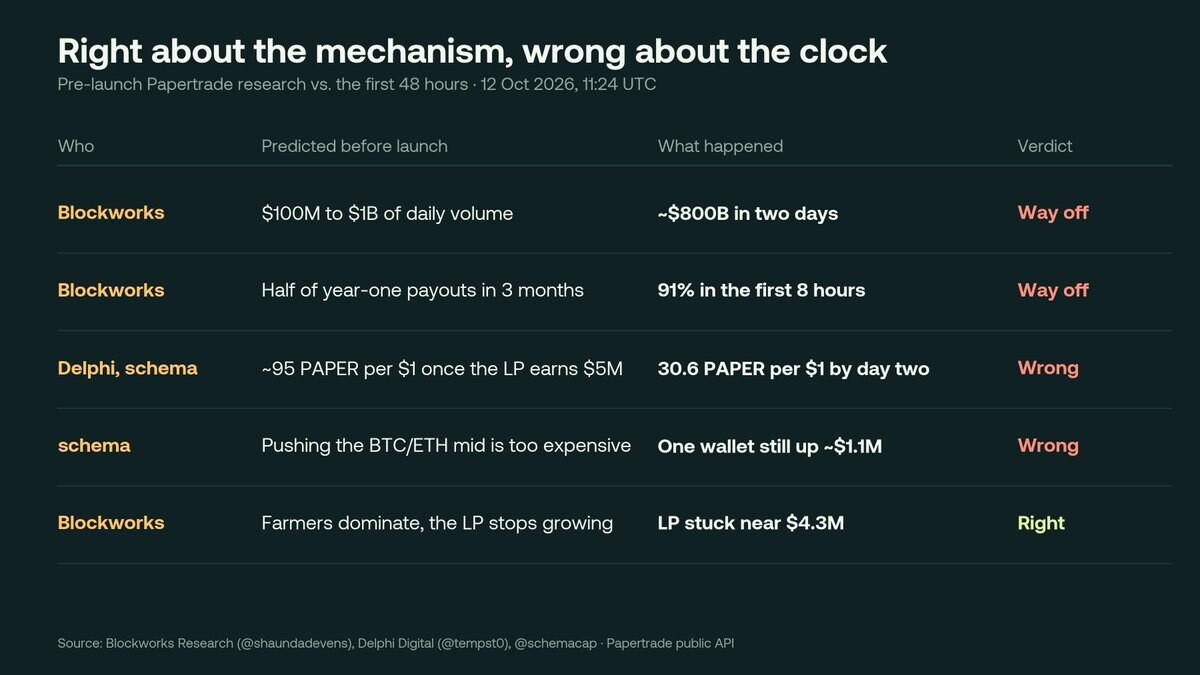
The only thing that has stood the test of time is an unsettling warning — Blockworks Research cautioned that hedge-arbitrage farmers could crowd out genuine traders, leaving the protocol's LP stalled. That is exactly where we are now.
To be honest, no one was foolish — the mechanism simply evolved far faster than anyone had priced in.
Who Actually Took the Money Home?
Genuine traders on Papertrade suffered a net loss of $32.4 million, of which:
- $26.3 million flowed to PAPER stakers;
- $4.3 million settled in the house LP pool;
- The remainder went to developer fees and loose change.
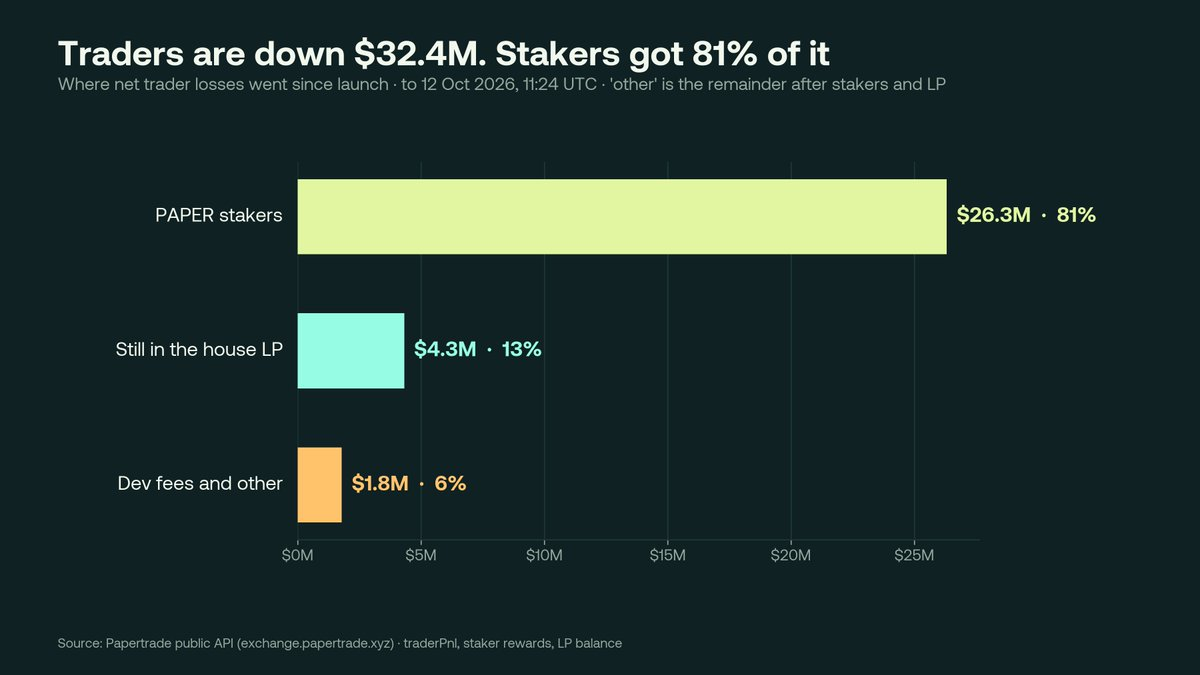
The vast majority of that $26.3 million was split among early users who staked before roughly 22:00 UTC on launch day. In practice, this meant "winner takes all" — Papertrade's Relayer prioritizes large orders, which means an order of around $75,000 would be queued beyond the 3,000th position, while eight-figure orders could be matched within seconds.
Two of the most representative addresses illustrate two completely different money-making strategies.
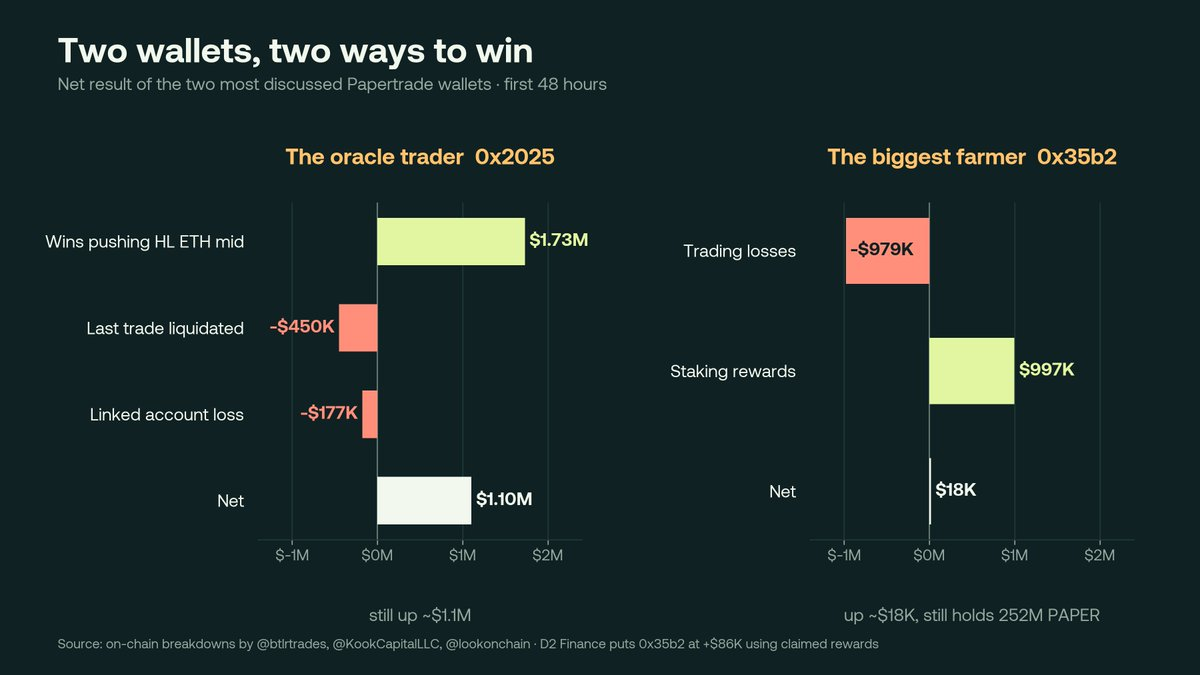
- Address starting with 0x2025 (arbitrage predator type):
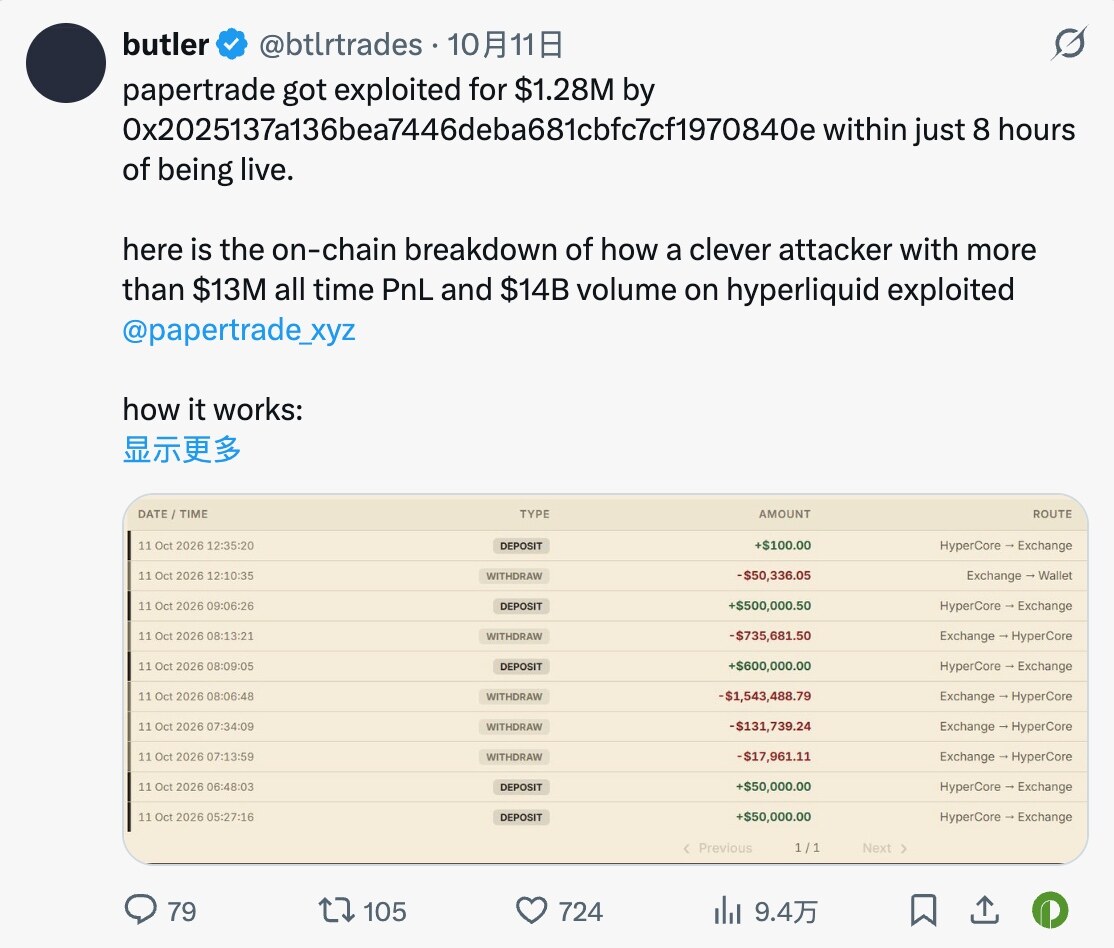
This address would push ETH's mid-price by 10 to 20 basis points on Hyperliquid, then open a reverse position of around $200 million on Papertrade. It won 296 out of 305 trades, with an average holding time of just 98 seconds. Although one stuck order liquidated and lost $450,000, it still netted approximately $1.1 million. Although the Papertrade team (Jez, Blurr) claimed he returned most of the funds, on-chain analysts butler and kook presented on-chain evidence suggesting otherwise.
- Address starting with 0x35b2 (volume farming type):
According to Lookonchain data, this address generated $10.1 billion in trading volume at a loss of $979,000, but recovered approximately $1 million in cash through staking, essentially breaking even on principal. But the key is that he still holds 252 million PAPER tokens (about 4% of total staked supply). At current yields, this portion generates roughly $14,000 per day in passive income. This is the real big winner.
Incidentally, to debunk a rumor: the Papertrade team did not, as on-chain analyst onchainmonk suggested, "cut staking yields from 99% to 1%."
The staking reward rule is — stakers receive the surplus from the LP pool exceeding $5 million, plus half of the 2% fee on profitable orders. As the LP pool fell below $5 million, surplus dividends automatically paused. The rule never changed — only the state of the pool did.
Can You Still Make Money Entering Now?
Here is the math for newcomers planning to enter today:
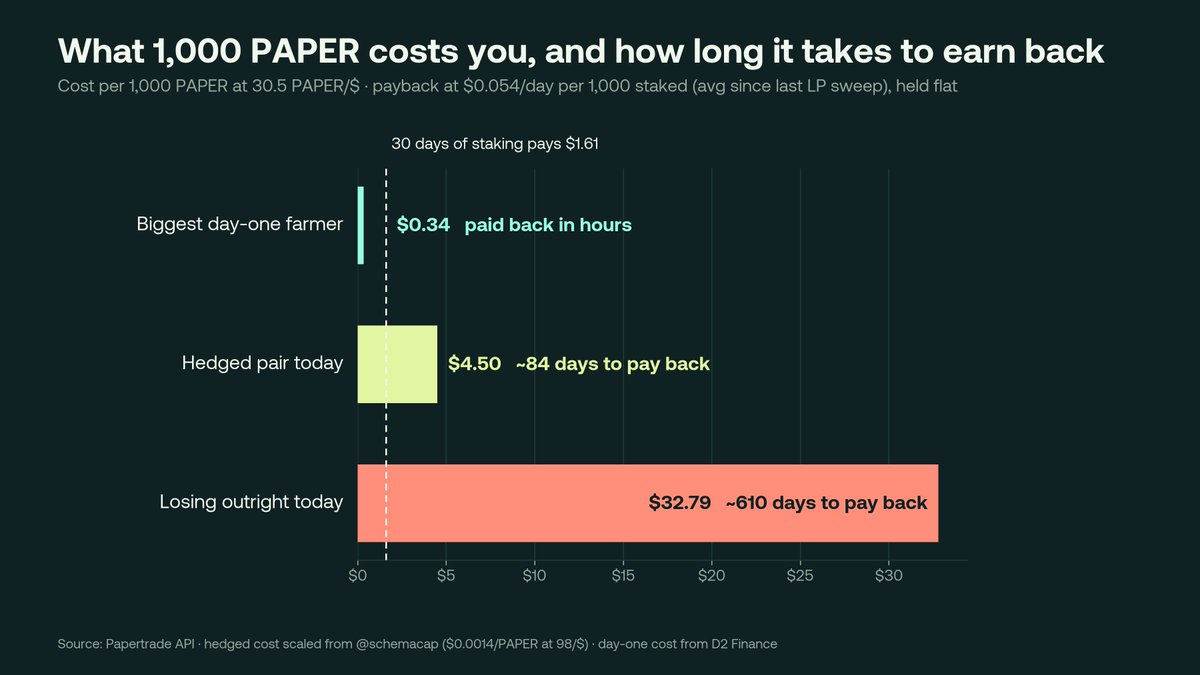
- Active attrition is suicide: At today's mint rate, hard losses to earn 1,000 PAPER cost about $33;
- Hedged wash trading: Using a long-short hedge combo (100x long and short simultaneously, closing when volatility reaches about 1%), the cost is about $4.50;
- Dividend yield: Since the last LP settlement distribution, every 1,000 PAPER staked earns about $0.055 per day.
In other words:
- Hedge farmers have a payback period of about 80 days;
- One-sided hard-loss farmers face a payback period of 590 days.
- This assumes yields remain stable and no one else continues minting new supply — which is simply impossible.
What's more, from October 17, the difficulty will increase sharply, as the dividend trigger threshold will be raised from $5 million to $10 million on that day. As of the time of writing, the house LP pool holds only $4.3 million, meaning the next roughly $5.7 million in trader losses will go entirely to filling the LP pool rather than being distributed to stakers. Until the pool is filled, stakers will only receive pure fees.
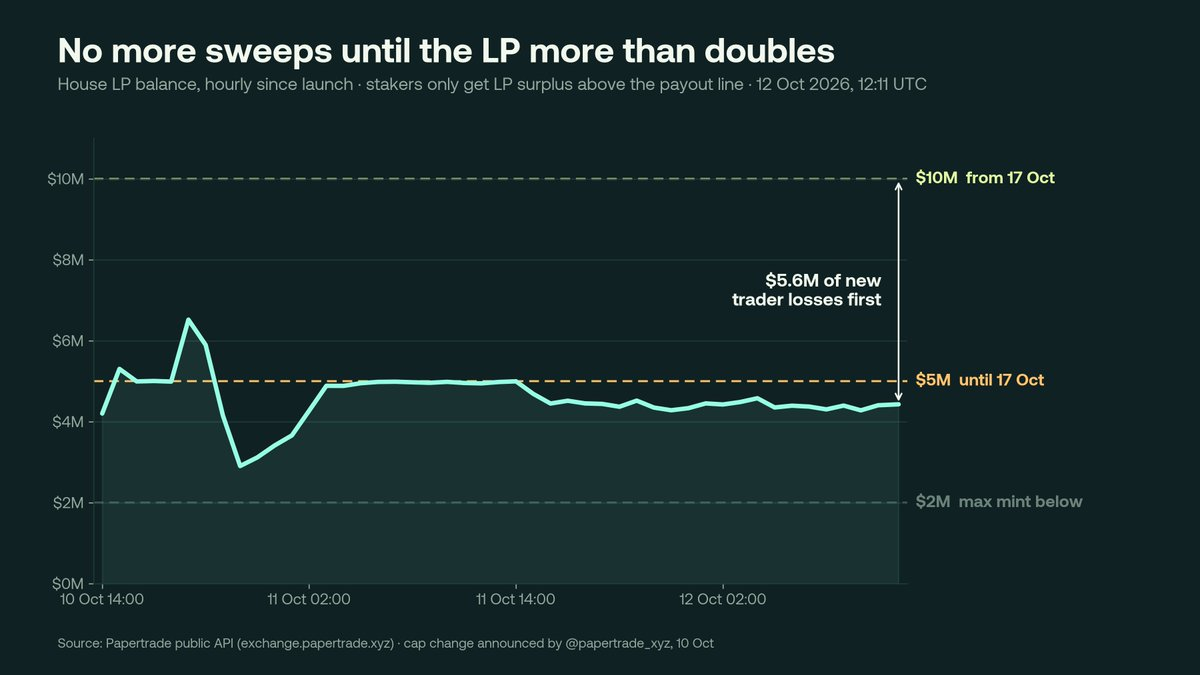
Personally, I think farming now is not a stable yield strategy at all — it's a gamble — a bet that genuine gamblers will keep entering to donate money, and that losses will be sufficient to push the LP pool past the $10 million mark. If you agree with this logic, then hedge with 100x leverage, guard strictly against one-sided liquidation, and make sure both sides of the order are actually filled; if you don't believe it, there's no need to rush in now.
Four Key Metrics
Four key metrics will determine whether this is just Act One or the finale:
- LP pool breaking past $8 million and continuing to climb: This is the precursor to the next large dividend distribution.
- Non-farming genuine trading volume: Only directional traders can inject fresh capital into the LP; hedge farmers are essentially just inflating supply.
- Net long open interest (OI): Currently net long exposure is about $150 million, while the pool holds less than $4 million. A clean 2.5% market rally would mean profitable positions must be redeemed through a queue rather than settled instantly in cash.
- Whether the redemption queue can consistently remain at zero.
After October 17, I will run a review using the same data model.