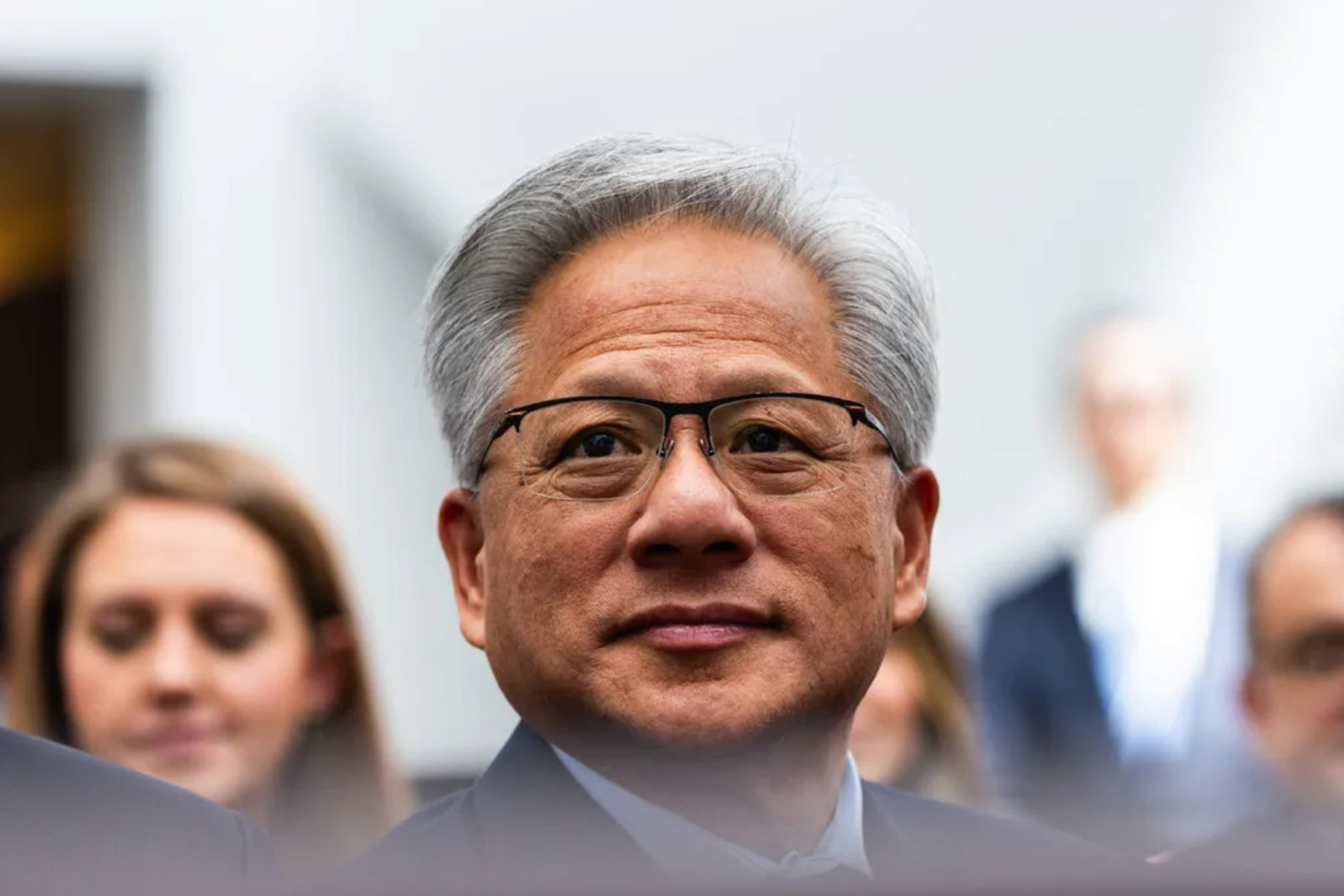


Jack Dorsey says AI has no moat

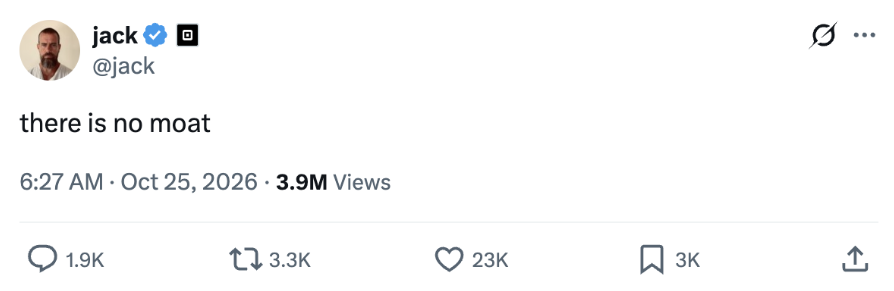
On October 24, Block founder Jack Dorsey posted a provocative tweet on X: "There is no moat." Just four words, with no context whatsoever, yet it quickly sparked discussions about moats in the AI industry.
Just the day before, Block released its self-developed speech model, Dessa. Trained by a small internal team, the model uses only a single Nvidia GB200 NVL72 rack and learns directly from human conversation audio without relying on text pre-training. In Block's official demo, Dessa can listen and speak at the same time like a human, and can naturally handle pauses, laughter, and shifts in tone just like a real person.

Dessa is still in the research preview stage and is not yet sufficient to prove that its performance has caught up with leading speech models. But the fact that a company whose main business is payments can, with relatively limited resources, explore a technical path different from mainstream large models is still noteworthy. It at least shows that there is more than one path to implementing frontier AI technology, and that latecomers do not necessarily need to fully replicate the R&D routes of leaders in order to build competitive products.
Some interpreted Dorsey's tweet as a subtle jab at OpenAI and Anthropic. After all, leading model performance has long been an important competitive advantage for these companies and one of the factors underpinning expectations of their long-term commercial value. But as model capabilities spread and training methods become more widespread, even if you have the most advanced model today, how long can that lead be sustained, and how much of it can be converted into commercial returns?
Perhaps what is more worth asking than "Does AI have a moat?" is this: when advanced technology becomes increasingly easy to replicate, catch up with, or even replace, how much economic value can the companies that create the technology actually retain?
Business history tells us that the dividends created by technology do not necessarily accrue to the technology providers. If competitors can offer similar AI capabilities at similar cost, part of the gains from technological progress may be transferred to downstream enterprises and consumers through price competition, rather than remaining entirely on the income statements of model companies. This also explains why "AI can create enormous economic value" and "some AI companies may be overvalued" are not contradictory: the former concerns the contribution of technology to the entire economic system, while the latter depends on how much profit a specific company can ultimately capture.

Dorsey's "There is no moat" may be too absolute. AI has not rendered all competitive advantages obsolete; it has simply made some capabilities that were once scarce easy to obtain, while making other advantages built up over time seem even more important.
From the perspective of the software industry, AI has accelerated the depreciation of pure software engineering advantages. AI coding tools have dramatically lowered the cost of building and replicating software features. Product experiences that large companies once built through intensive engineering investment can now be quickly replicated by small teams at extremely low cost; but this change cuts both ways: small companies can catch up with large companies faster, and the lead of small companies can also be replicated faster by latecomers.
So what else can serve as a moat? When "features" are no longer scarce, assets that are difficult to generate through algorithms become more important instead, such as proprietary data, deep customer relationships, industry knowledge embedded in corporate operating processes, and distribution channels. The strategic importance of these elements is becoming increasingly prominent. In the real economy, this gap is even more evident. AI can certainly help restaurants find customers, optimize menus, or manage inventory, but it cannot conjure out of thin air the reputation and trust a restaurant has accumulated over many years. In the long run, profits will flow from "companies that provide intelligent technology" to "enterprises that apply these technologies"—that is, those that control scarce data, own key entry points, and facilitate actual transactions.
For startups in the AI era, this technological democratization not only reshapes the competitive landscape, but also creates a paradox in strategic choice. In the past, high R&D costs were themselves a natural constraint, forcing companies to stay focused. Today, when the cost of building products and conducting experiments has fallen dramatically, companies face the temptation of "being able to do anything."
However, the lowering of execution barriers has not correspondingly improved companies' ability to identify real business needs and build closed transaction loops. When execution becomes unprecedentedly cheap, a loss of strategic focus instead becomes the most expensive cost. In a market environment where technological moats are rapidly dissolving, maintaining restraint and clearly defining "what not to do" may be the strongest line of defense startups can build at this stage.