

CoreWeave's surge gives AI cloud a "breathing room," and next up are Anthropic's IPO and Nvidia

Source: Long Yue
Author: Wall Street Journal
CoreWeave released its third-quarter earnings on Tuesday, with both revenue and losses beating expectations, and its full-year guidance also exceeding the upper end of market expectations. The news lifted the "neocloud" sector, which had been under sustained pressure amid concerns over returns on AI investment.
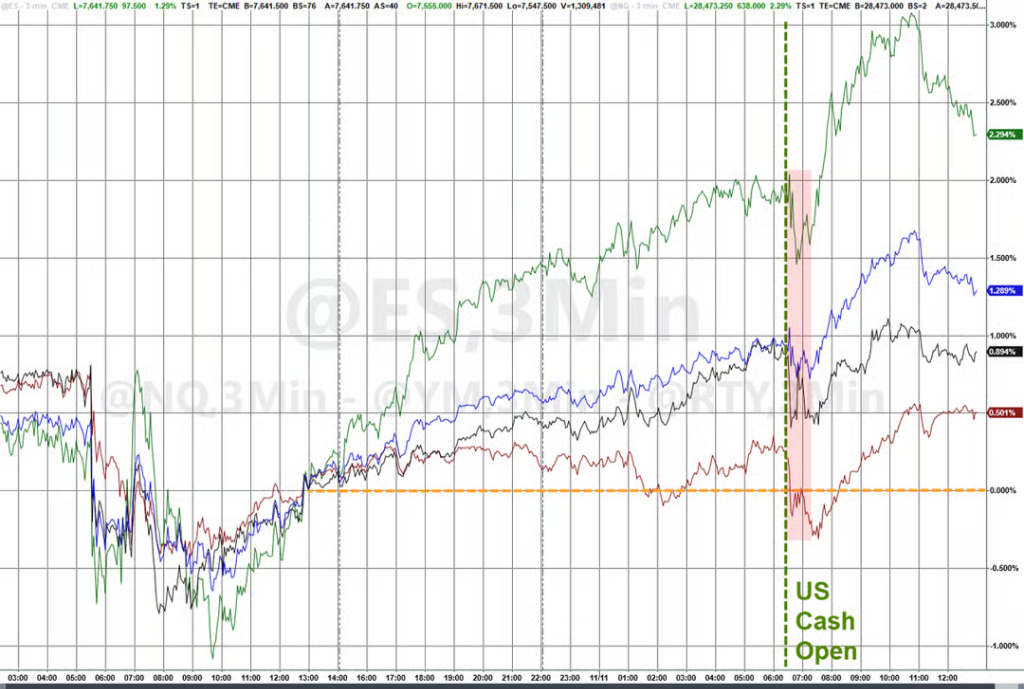
Driven by a single-day surge of about 25% in CoreWeave's stock price, the NeoCloud sector rose more than 12% intraday at one point, and the Nasdaq also recovered the ground lost after the midterm elections.Market optimism was further reinforced by two pieces of news: Anthropic is reportedly discussing an IPO valuation of as much as $1.5 trillion or more, dispelling earlier concerns that the company's valuation would be significantly cut; in addition, OpenAI's quarterly revenue was strong, reaching $10 billion for the first time.
For Anthropic, which is about to enter the capital markets next week, this earnings report comes at just the right time—CoreWeave is an important computing power supplier to Anthropic, and the fortunes of the two companies are bound to each other to some extent.At the same time, Nvidia's earnings next week will be another touchstone, as investors will look for more reasons to judge whether the AI infrastructure boom can continue.
However, the foundation of this rebound remains shaky: on the one hand, capital is shifting from hyperscale cloud providers to "pick-and-shovel" players and computing power leasing providers; on the other hand, CoreWeave's future financing gap, debt costs, and expansion of computing power supply remain the core variables determining whether this round of AI infrastructure trading can go far.
CoreWeave Drives a Collective Rebound in the Neocloud Sector
CoreWeave's third-quarter revenue was $3.66 billion, exceeding analyst expectations; its loss per share was $1.27, smaller than the level the market had previously feared. More closely watched was the full-year guidance: the company expects full-year 2026 revenue of between $13 billion and $13.3 billion, about 3.4% above the upper end of the consensus estimate.
CoreWeave CEO Michael Intrator disclosed a noteworthy detail on a conference call with analysts:more than half of the customers added this year came from outside the AI field.This data partly addresses market concerns that demand for AI computing power is overly concentrated and that once the AI investment boom fades, demand will fall off a cliff. Intrator's remarks suggest that demand for high-performance computing power is spreading to a broader range of industries, rather than relying solely on purchases by AI labs.
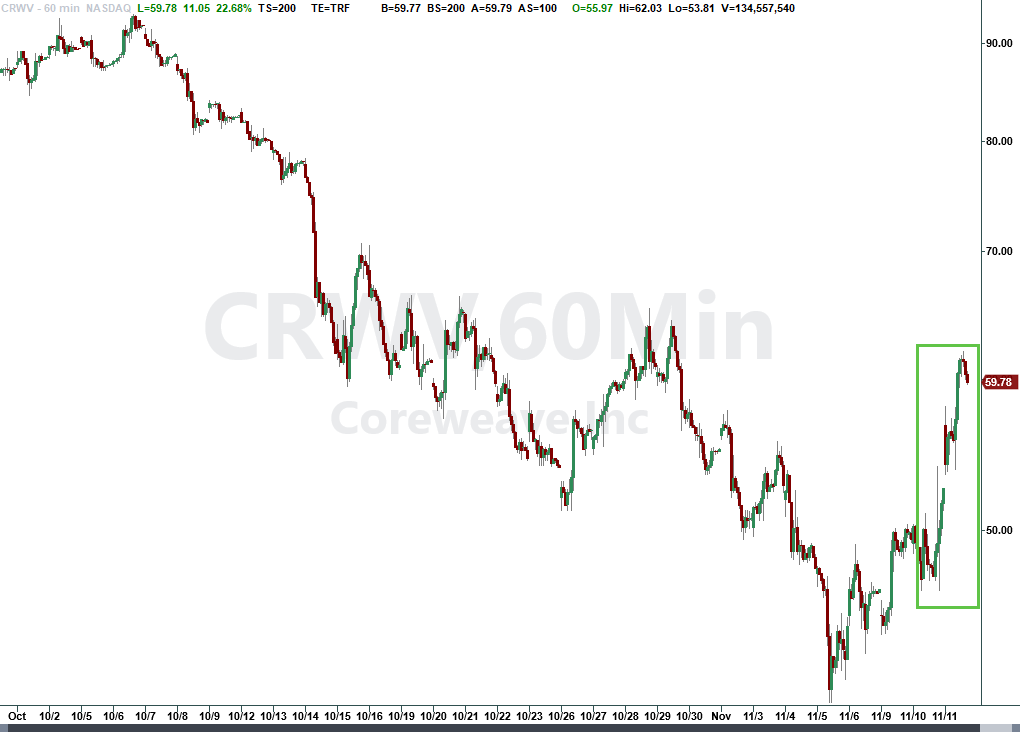
Before this, CoreWeave's stock had fallen 39% year to date, making it one of the worst performers in the AI computing power sector. Deutsche Bank analyst Brad Zelnick said after the earnings release that he thanked the company for providing "reassuring details," a remark that aptly represents overall market sentiment.
After the earnings release, CoreWeave's stock surged about 25% in a single day, becoming the core name driving the rebound in the neocloud sector.
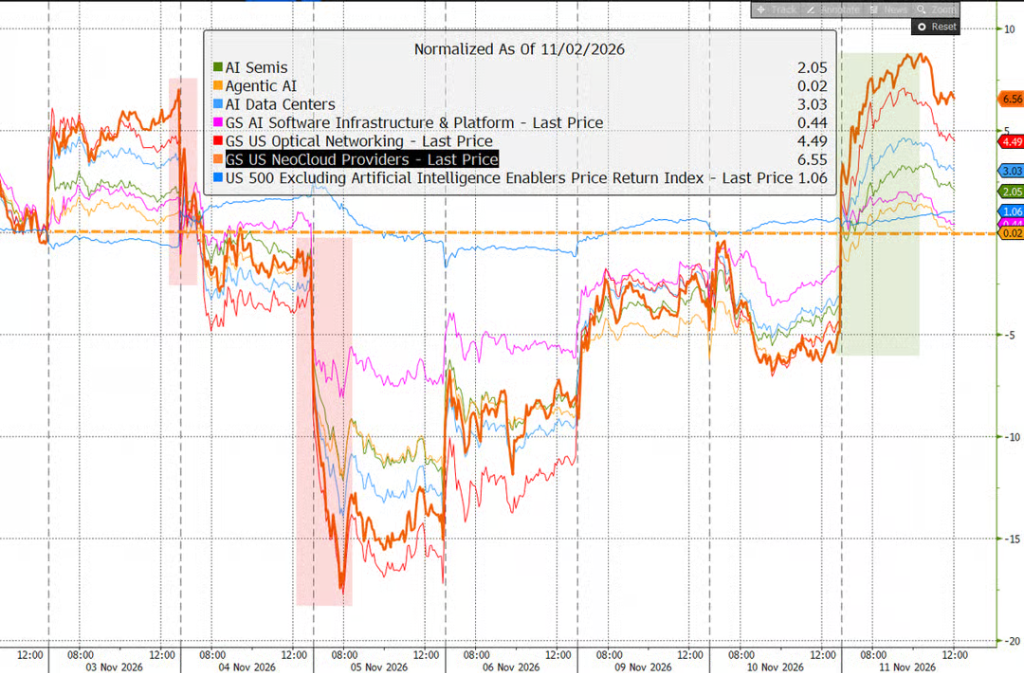
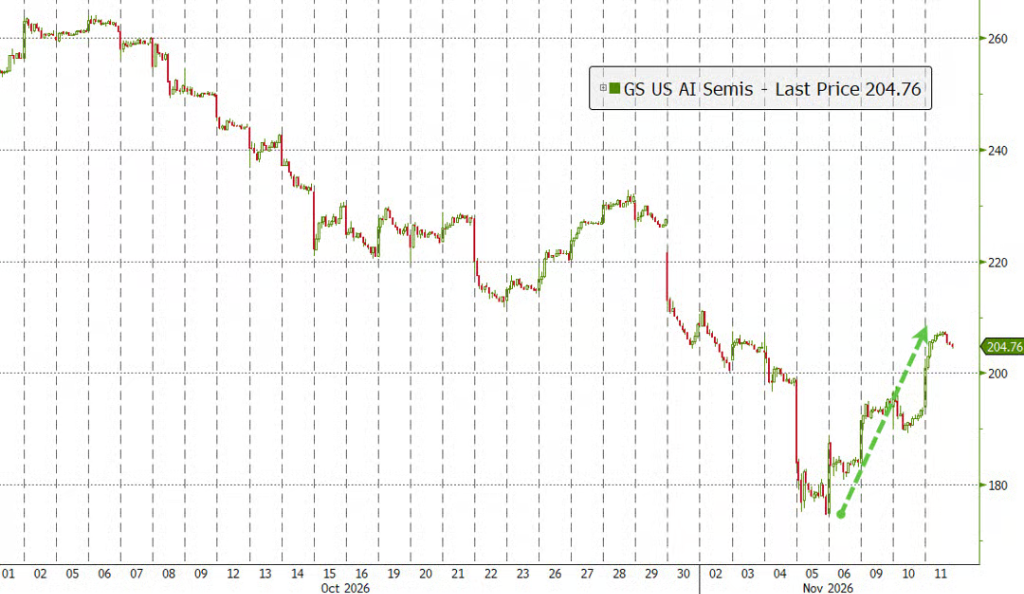
Market data showed that neocloud concept stocks rose more than 12% overall that day, while Goldman Sachs' broad AI stock basket rose about 5%, significantly outperforming non-AI stocks. The computing power supply chain, previously weighed down by doubts over returns on AI capital expenditure, saw a rapid round of valuation repair.
The Nasdaq also recovered the ground lost after the midterm elections.
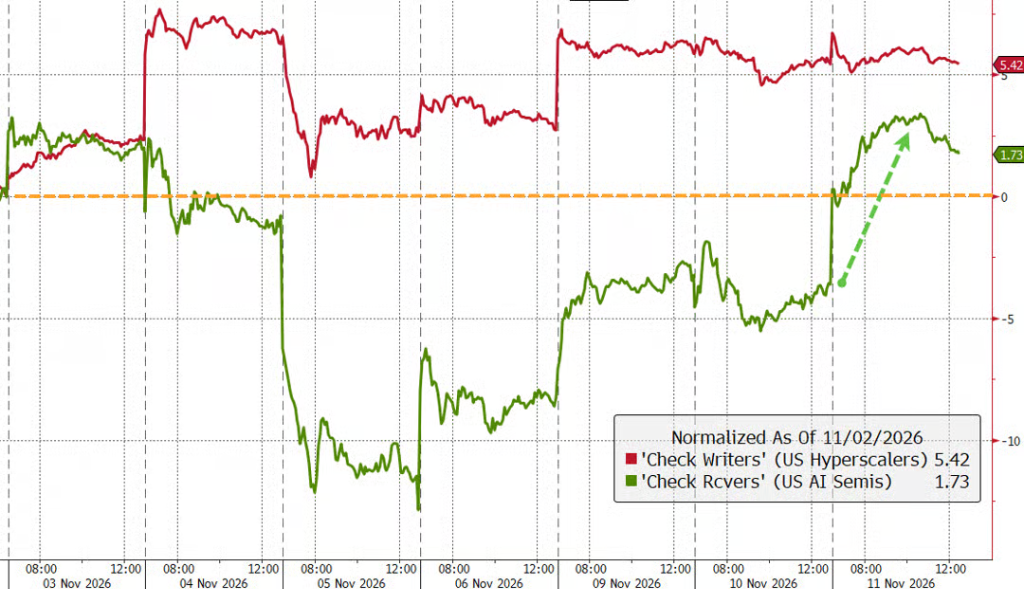
But from the perspective of market trading structure, capital flows also reflect that investors have not fully dispelled their doubts.Computing power leasing providers, semiconductor companies, and other "recipients" of AI capital expenditure performed more strongly; Microsoft, Google, Amazon, and other hyperscale cloud providers that bear massive data center investments lagged relatively. In other words, the market is currently more willing to bet on the direct beneficiaries of the AI buildout cycle, rather than continuing to pay for the "payers" of massive capital expenditure.
CoreWeave and Anthropic: Fates Intertwined
CoreWeave's earnings are of direct significance to Anthropic.
Anthropic is a CoreWeave customer, using computing power from CoreWeave and several other neocloud providers to support its Claude series products, while also having contracts with hyperscale cloud providers such as Google.The two companies have never publicly disclosed the contract terms, but Intrator described the partnership with Anthropic in April this year as a "multibillion-dollar contract."
According to Bloomberg, Anthropic plans to complete its listing next week. As the first U.S. frontier AI lab seeking a public listing, Anthropic has no traditional businesses such as search engines, social media, or cloud operations to serve as a "moat," and its valuation will depend entirely on the market's judgment of AI prospects. CoreWeave's strong performance could theoretically help Anthropic gain higher valuation recognition during its roadshow.
The latest market news has further raised the profile of this IPO: according to reports, Anthropic's underwriters are assessing the possibility of an IPO valuation of $1.5 trillion or higher.If this valuation expectation holds, Anthropic will not only be a sample for testing the commercialization capabilities of frontier large-model companies, but will also become a direct yardstick for what premium the market is willing to pay for the long-term AI growth story. There had previously been reports that Anthropic's valuation could be substantially discounted, or below $1.5 trillion.
At the same time, the news that OpenAI's quarterly revenue reached $10 billion for the first time also provided new support for demand at the AI application layer.For investors, this means the market is trying to find a closed loop in which "model revenue growth—expansion of computing power procurement—returns on chip and data center investment" can mutually validate each other; but whether this closed loop is enough to support high valuations still needs to be verified by more companies' earnings and order data.
For Anthropic, the positive signal from CoreWeave's earnings is that its upstream computing power supplier can still secure strong orders, raise revenue guidance, and maintain financing capacity. But this also highlights the shared risk of both sides—whether demand from large-model companies for external computing power can continue to grow rapidly, and whether computing power suppliers can maintain stable delivery under a model of high capital expenditure and high debt, will jointly affect the valuation foundation of this supply chain. It is worth noting that Anthropic also relies on several other neocloud providers with uncertain prospects for computing power supply, including Nscale—which is reportedly considering delaying its own IPO plans.
The Next Test for AI: Nvidia's Earnings
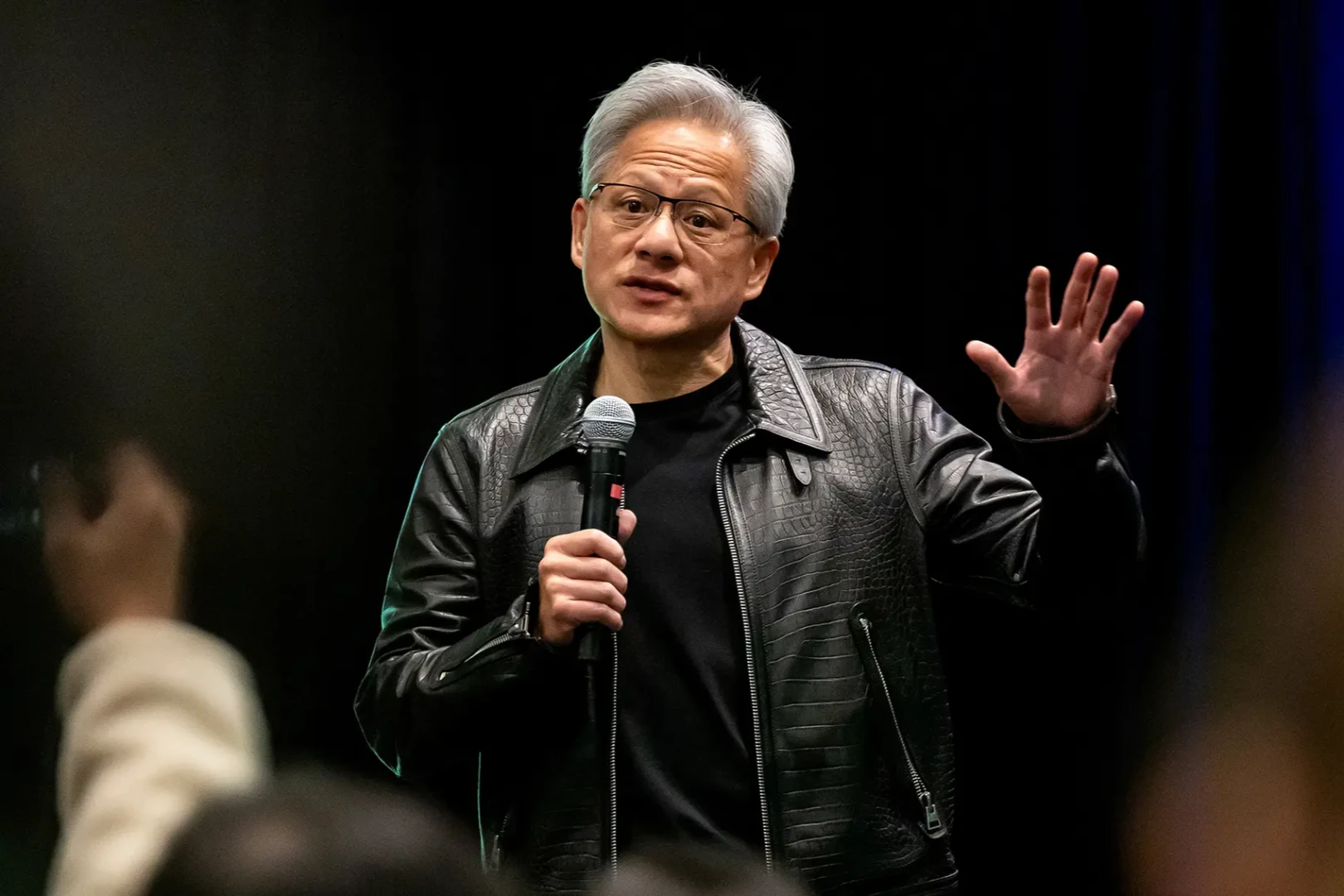
Next week, Nvidia will report earnings. If investors can temporarily set aside concerns about CEO Jensen Huang and other related issues, Nvidia's results may provide the market with more reasons for optimism.
The importance of Nvidia's earnings is no longer limited to verifying whether demand for GPUs is strong.The market is more eager to confirm three things:whether procurement intensity from cloud providers and neocloud providers continues, whether the supply and delivery of new products such as Blackwell can match demand, and whether the rapid growth of customer capital expenditure can translate into more sustainable revenue and profit.
In this rebound, the semiconductor sector performed strongly, with the Philadelphia Semiconductor Index posting its largest single-day gain in months and recovering most of the ground lost in the previous week's pullback; Nvidia's stock price also rebounded. However, traders observed that some active funds and retail investors were still selling ahead of Nvidia's earnings. This means market expectations for the chip leader remain very high, and if the earnings fail to provide sufficiently strong guidance, volatility in AI trades could widen again.
Bloomberg columnist Dave Lee analyzed that back in March 2025, when CoreWeave listed, he had warned that the company would become "the first truly real bellwether stock of the AI revolution," and facts have proven this to be true—CoreWeave's stock price has become a major "punching bag" for market volatility.
Behind the Rebound: Financing Gap and Supply Expansion Remain Hard Constraints
However, the foundation of this rebound remains shaky. CoreWeave's future financing gap, debt costs, and expansion of computing power supply remain the core variables determining whether this round of AI infrastructure trading can go far.
CoreWeave's results have eased short-term concerns that the "AI buildout will grind to a halt due to financing obstacles," but have not thoroughly answered the long-term questions.
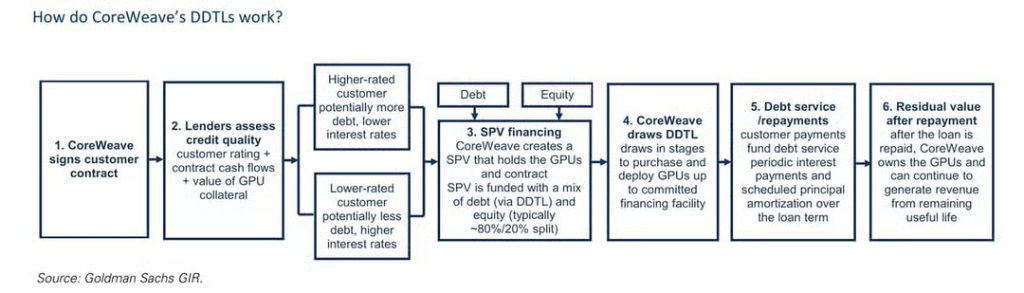
The bull case is thatCoreWeave can set up financing entities around customer contracts, covering construction costs with a high proportion of secured debt; after repaying debt during the contract period, the company still retains GPU assets and can re-lease equipment whose financing has been repaid. If computing power remains scarce for a long time, this model could allow existing equipment to continue generating cash flow.
Bears focus on three risks.First is pricing: there is still a gap between the revenue per megawatt mentioned by management and the actual monetization level reflected in the financial statements. Second is financing: market views hold that the company may face a funding gap of about $33 billion next year and will still need to rely on new debt or customer prepayments to fill it. Finally, supply: by 2028, the market expects about 55 gigawatts of new computing capacity to come online; if supply is released faster than demand grows, both rental rates and residual values of older-generation GPUs could come under pressure.
Therefore, what CoreWeave proved this quarter is that when computing power remains tight, the company can win orders and obtain financing; but it has not yet proved that supply tightness will last long enough to cover massive debt and support the residual value of old GPUs. Next, the market will closely watch the final pricing of its investment-grade secured loans, the scale of customer prepayments, and whether the inflection point in the company's capital expenditure and free cash flow can appear as expected.
The Macro Environment Has Not Given the All-Clear; Regulatory Uncertainty Remains a Hidden Risk
After the U.S. midterm elections, Democrats control Congress, and Texas Governor-elect Gina Hinojosa advocated a moratorium on data center construction during her campaign. Intrator wrote to Hinojosa last week, seeking consensus on the "responsible completion" of already-approved projects and "durable standards" for future projects.
On the earnings call, Intrator tried to reassure investors. He said: "We do not expect to be affected by recent major regulatory changes. We believe these changes are statements about how to build, not whether to build."
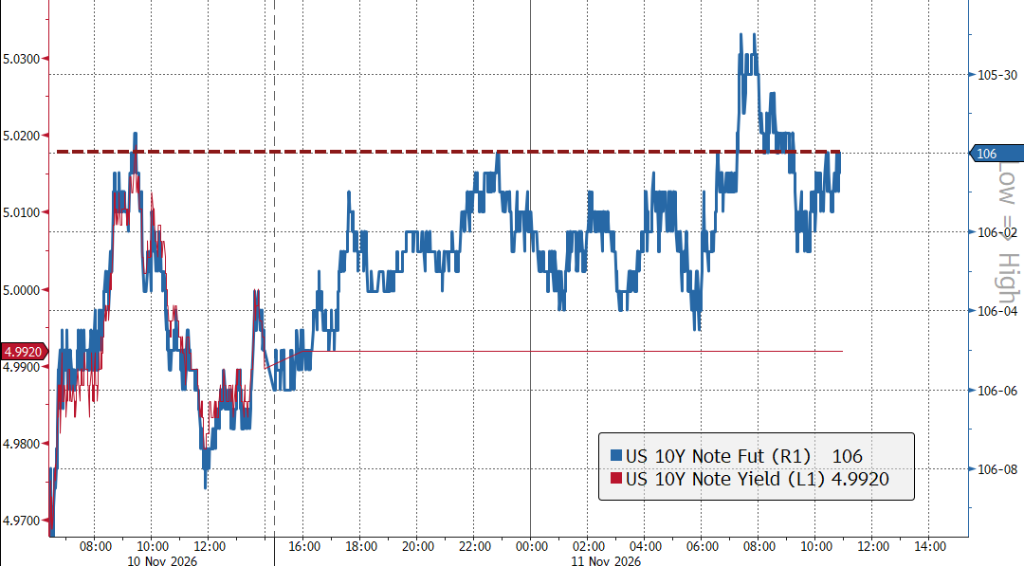
Beyond regulation, interest rates may remain another constraint on AI infrastructure valuations. During this round of stock market rebound, the market's pricing of future rate hikes rose somewhat, and the implied yield on 10-year U.S. Treasury futures again approached 5%. For neocloud companies that rely on debt financing to build data centers, rising financing costs will directly affect project returns and equity valuations.
More importantly, volatility in equity, credit, rates, and crude oil markets has not fully subsided. Although some previously established hedges were partially unwound during this rebound and the VIX briefly fell to around 17, cross-asset volatility remains at a relatively elevated level. This means whether the "breathing room" brought by CoreWeave can evolve into a trend-based recovery still depends on whether subsequent earnings, financing markets, and the macroeconomic rate environment can all give positive answers at the same time.
Overall, CoreWeave's earnings have temporarily restored market confidence in AI computing power demand and financing capacity, and have also created a more favorable sentiment window for Anthropic's IPO and Nvidia's earnings. But moving from "short-term short covering" to "long-term fundamental re-rating" still requires answering four difficult questions: financing, supply, GPU residual value, and interest rates.Next week's Anthropic and Nvidia will be the two key exams determining whether this round of AI rebound can continue.