

Anthropic IPO Capital Game Simulation: 6% Free Float and a 30-Day Liquidity Vacuum
Original author: Kuli, Deep Tide TechFlow
Introduction:
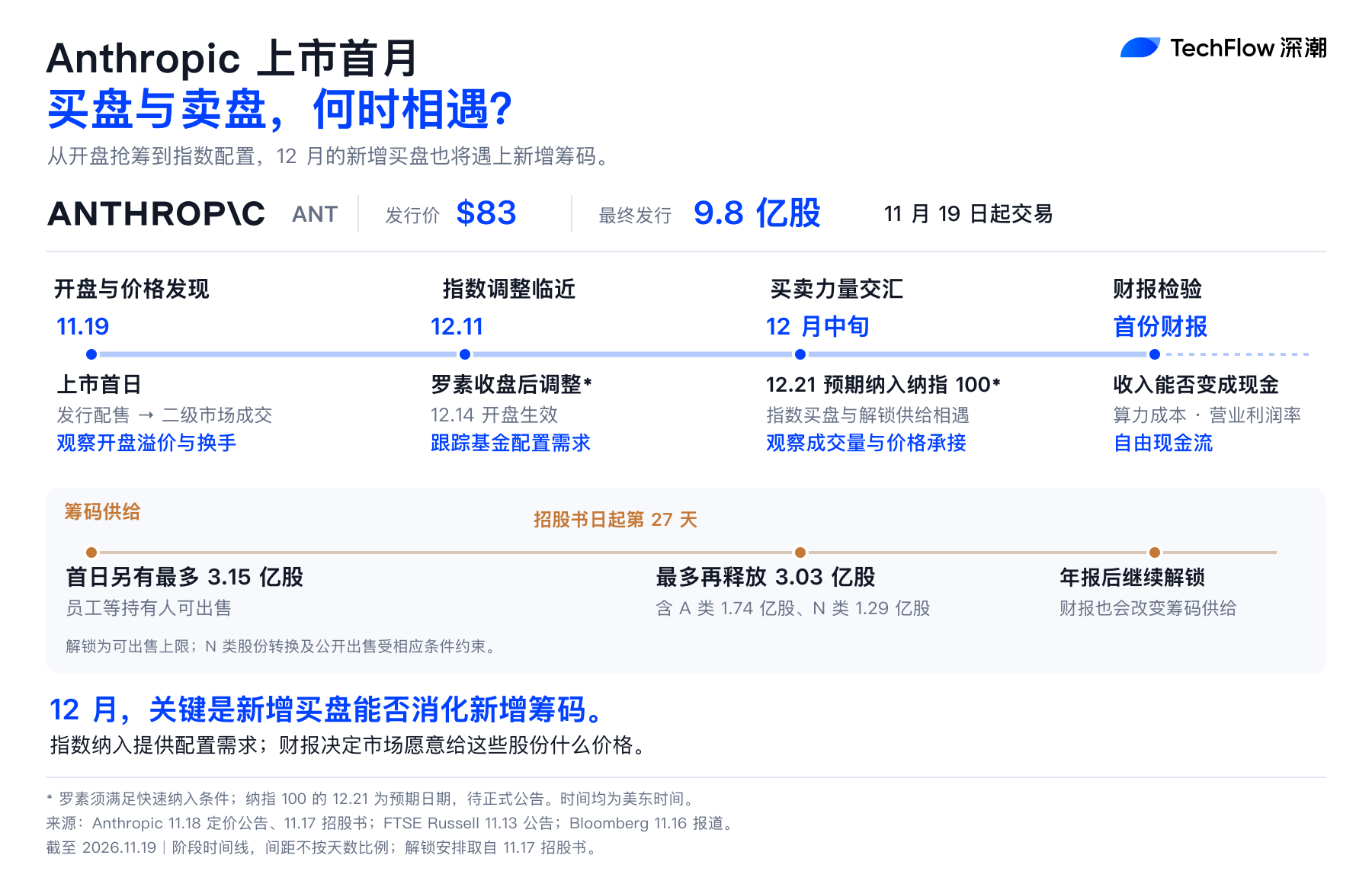
On November 19 (US Eastern Time), AI giant Anthropic (ticker: ANT) officially listed on Nasdaq, with the final issue price set at $83. Facing this hundred-billion-dollar IPO frenzy, many secondary market investors are preparing to snap up shares at the open, but a look at the trading calendar reveals that the next 30 days will be a capital game with a unique structure.
From the tiny 6% float on the first day driving sentiment higher, to a vacuum period of nearly a month with no passive index buying, to the entry of Russell and Nasdaq 100 funds in mid-December to absorb shares, the stock price will go through multiple rounds of reshuffling: sentiment peaking, momentum exhaustion, and passive absorption. This means that rather than taking over early chips at the opening premium, it is better to understand the capital rhythm of the next four weeks and reserve the real entry window for the fundamental verification period after passive buying lands.
If you plan to place a market order to buy Anthropic right after the opening bell tonight, you had better first understand the capital flow timetable for the next 30 days.
The final pricing of $83 exceeded the midpoint of the previous valuation range of $74, pushing the market's scramble for shares to a peak. But this price tag is only the internal settlement cost for a minority of priority allocation institutions; ordinary retail investors will find it difficult to buy directly at this price in the secondary market.
Confusing a great technology company with a profitable investment is the most common way to lose money in IPO trading.
Rather than blindly chasing the rally with sentiment in the few minutes before the open, it is better to clearly map out the capital dynamics for this hundred-billion-dollar giant in the four weeks after listing. This is not only about where the stock price will peak, but also determines when ordinary investors should actually enter with their principal.
Phase One (Days 1 to 3): 6% Tiny Float, Don't Rush In When Sentiment Is Crowded
The core logic of the first three trading days is entirely dominated by artificially created chip scarcity.
In this IPO, Anthropic offered only about 6% of its shares for public market trading. With such a tiny float as protection, as long as a small number of hedge funds chase orders and retail market orders flood in, the stock price can easily be pushed to levels detached from fundamentals early in the session.
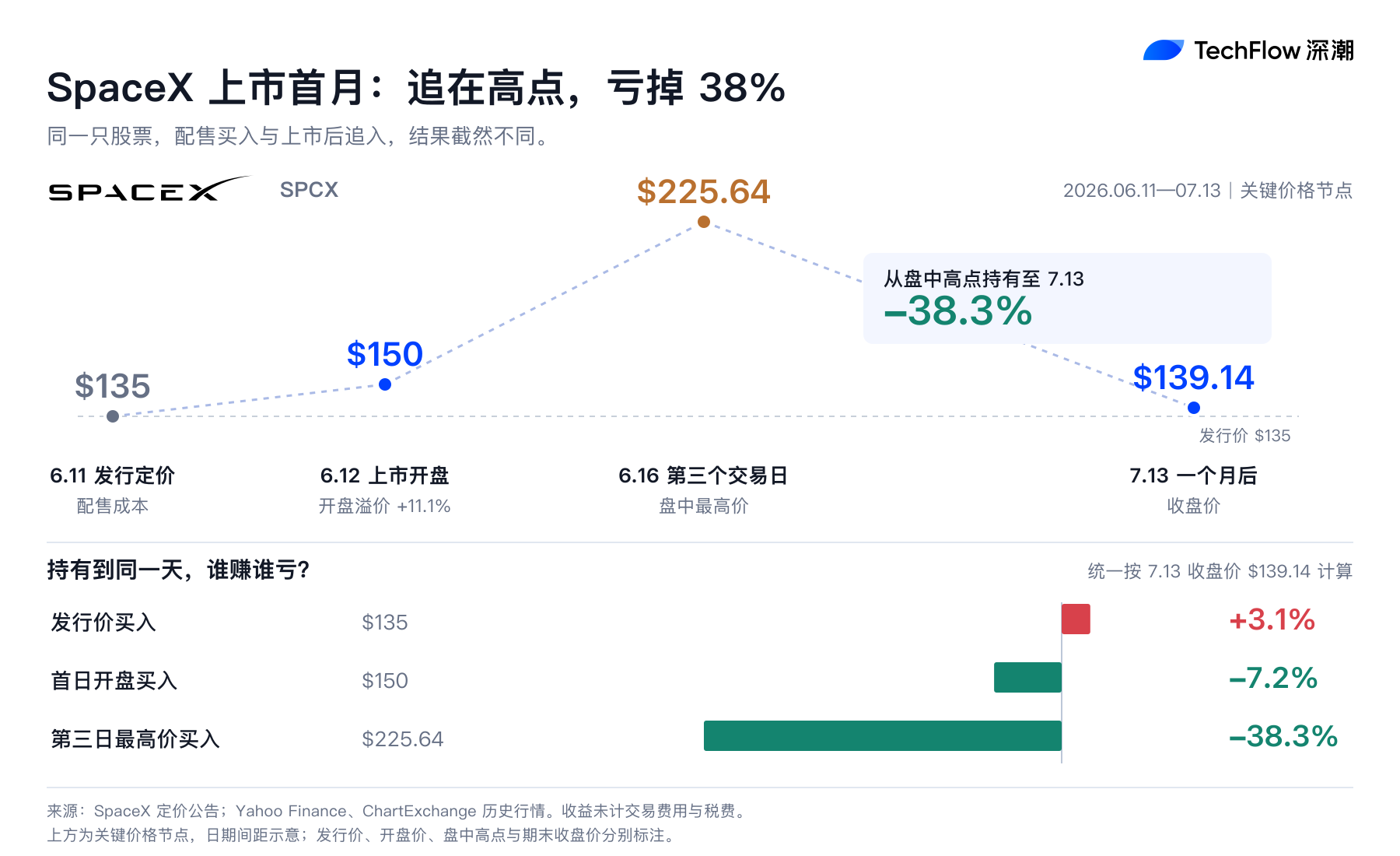
SpaceX, which listed more than five months ago, already fully demonstrated this three-day script.
In June this year, SpaceX priced at $135, jumped to $150 at the open, and then, driven by frenzied retail pursuit and quantitative trading, surged nearly 50% above the opening price in just three days. But that is often the moment of highest short-term risk, because all the follow-on buying is quickly exhausted within the first 72 hours.
Facing ANT tonight, the first trading discipline is to control your fingers and never use market orders to chase highs in the first three days after the open. Rushing in after seeing the strong opening candle will most likely mean buying directly at the most crowded high of the entire IPO chip distribution.
Phase Two (Weeks 1 to 3): The Passive Buying Vacuum
Many people assume index funds will enter and scoop up shares on the first day of listing, but the actual rules are completely the opposite.
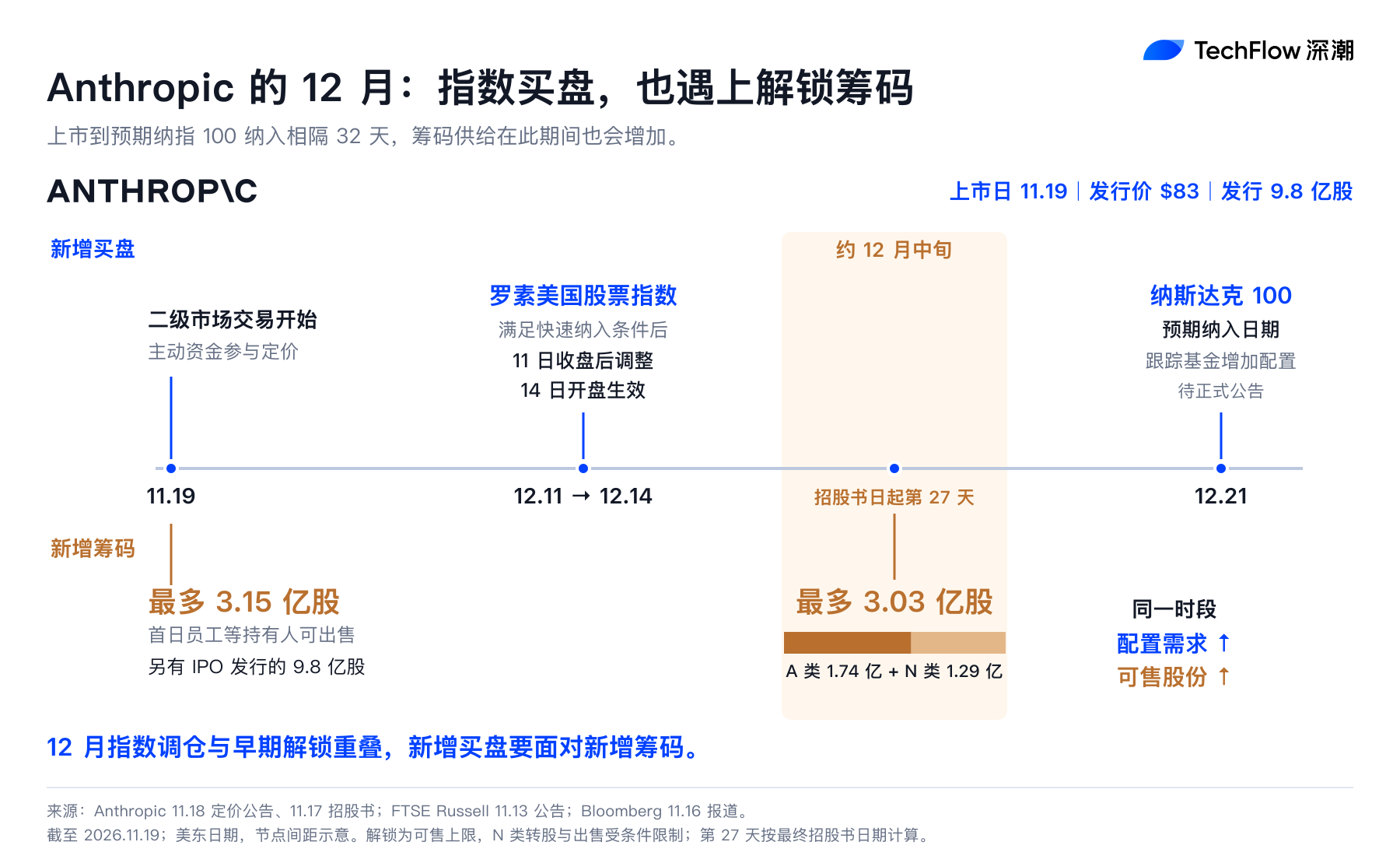
According to the established schedule of major index providers, Anthropic will not be included in the Russell Index until December 11, and inclusion in the Nasdaq 100 Index, which carries the greatest liquidity weight, will not happen until December 21.
This means that starting from tonight's open, there is a liquidity vacuum period of more than three weeks.
During these 20-plus days, no passive ETF has a legal obligation to buy, and all trading in the market depends entirely on the existing game between hot money and retail investors. At the same time, Anthropic has established an unusual early liquidity arrangement: some employees and early shareholders can sell shares in the early stage, and as time passes, the actual tradable supply of shares in the market is instead continuously increasing.
On one side is a vacuum period with no large capital support, and on the other is the quiet release of cash-out chips. The stock price often gives back all of its early gains during this period, forming a low-volume, slow-decline bottom-seeking trend.
At this stage, the rational strategy remains to stand aside, refrain from catching a falling knife, and patiently observe the true support level where the stock naturally falls after losing sentiment support.
Phase Three (After Week 4): Passive Funds Take Over in Mid-December
The real decisive battle between bulls and bears should occur at the moment index buying enters in mid-December.
When the index inclusion nodes on December 11 and December 21 arrive, a large number of passive funds tracking the Russell and Nasdaq 100 will be forced to enter and allocate. At that time, a wave of certain buying flow will appear in the market, but this is also the key watershed for testing the quality of the stock price.
There is only one core indicator to watch: whether this anticipated passive buying drives the stock into a second rally, or is merely used by early institutions as an ATM for retreating from highs.
If the stock price still cannot break through previous highs after index buying enters, or even stagnates amid massive turnover, it means the selling pressure from cash-out positions has completely overwhelmed institutional buying power.
Phase Four (After Earnings Release): Waiting for the Real Safe Entry Point
After the 30-day capital game settles, the market will truly sit down and calculate Anthropic's fundamental ledger.
The company achieved $33.2 billion in revenue in the first nine months of 2026, an astonishing leap compared with $2.5 billion in the same period last year, with revenue in the just-ended third quarter alone approaching $17 billion.
But the other side of high growth is an equally massive computing power bill and infrastructure commitments.
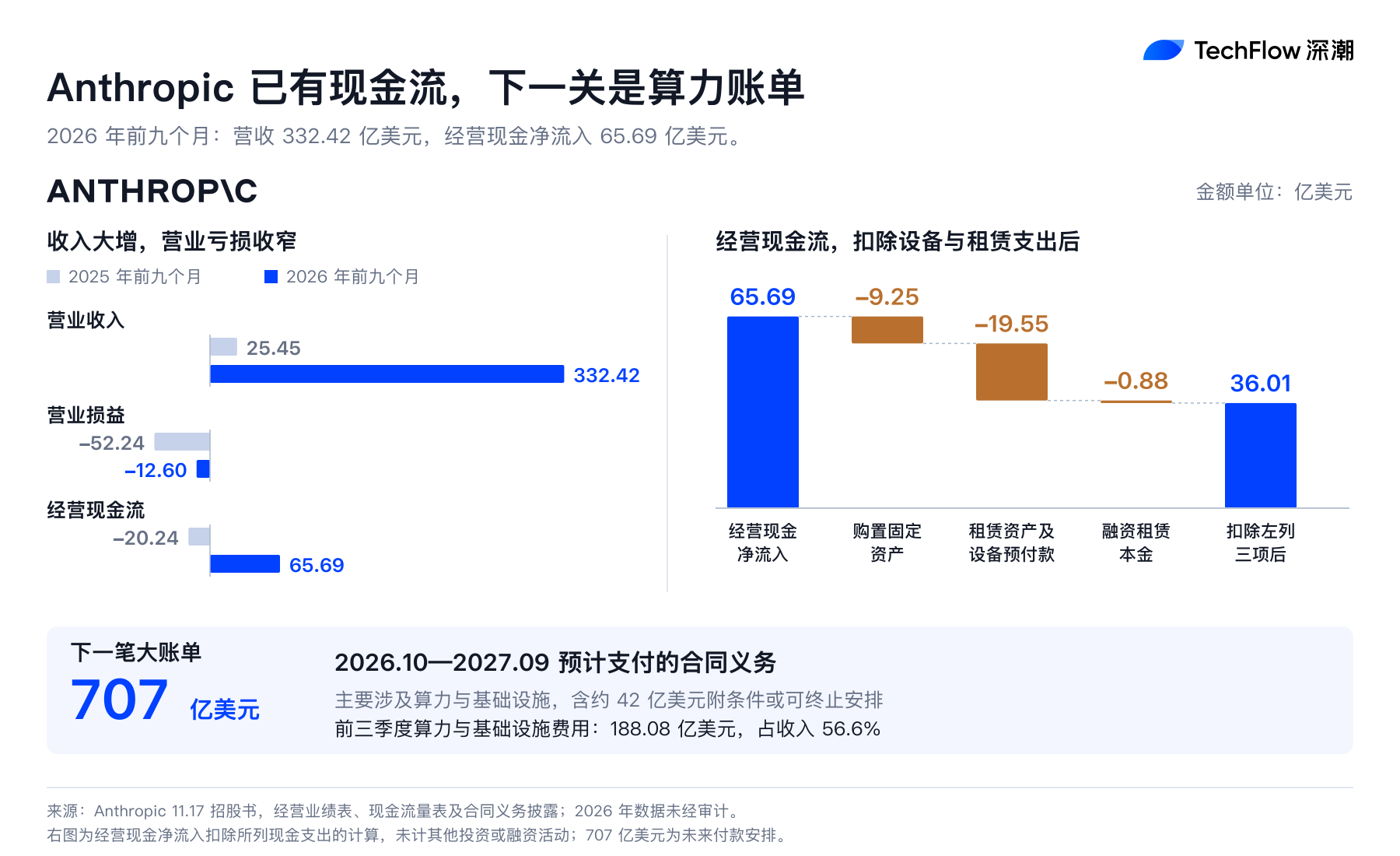
In the subsequent first quarterly earnings report, investors need to closely watch three hard indicators: whether the ratio of computing power expenditure to revenue has materially improved, whether operating margin can escape huge losses, and most importantly, whether free cash flow has begun to form a positive cycle.
Any revenue surge detached from cash generation ability is fragile during the valuation digestion period.
For long-term investors who want to participate in Anthropic, the next 30 days come with clear operational guidance. Do not chase the opening spike in the first three days, do not catch the low-volume pullback during the middle two weeks, patiently wait for passive buying to fully land in mid-December, and combine that with the truth about computing power costs revealed by the first earnings report. The turnover price that appears in the low-volume stabilization range at that time is the truly safe-margin buying window.