

A world-class "AI Luncheon"

Original author: Xiaojing
Original editor: Suyang
Original source: Tencent Tech
A luncheon, nearly 20 tech giants in attendance, and out of it came a "morally binding" gentlemen's agreement.
On September 29 local time, Trump hosted a White House banquet for "American AI industry giants." According to a pre-meeting list obtained by foreign media, 33 people confirmed their attendance, covering tech executives, investors, and U.S. government officials. Officially named by the White House as the "Superintelligence Meeting and Luncheon," the event's guest list covered almost the entire AI industry chain.
There were plenty of familiar faces, including: Jensen Huang, Nadella, Amodei, Zuckerberg, Musk, and more.
We won't list them all—you can see the full list below:

"AI Lunch Summit" attendee list (AI-generated, human-reviewed)
Trump made clear he would not push for new federal AI safety regulations, preferring instead to let the industry self-regulate. He said he had already seen "very strong self-regulation," and revealed that the government is considering establishing a 10-person committee to oversee the AI industry.
That day, Trump also co-signed with the heads of six tech companies a document described as a "morally binding" AI agreement. The agreement is voluntary for the industry, with the White House only guiding the development of the AI industry.
Later that day, Trump signed an executive order formally renaming "Artificial Intelligence" at the federal government level to "Super Intelligence" (SI).
The Seating of the Giants
The meeting was held in the White House East Room, and Trump even posted the seating chart on his Truth social account. He sat in the middle, with Zuckerberg and Jensen Huang on his right, and Musk and Pichai on his left.

"AI Lunch Summit" seating chart
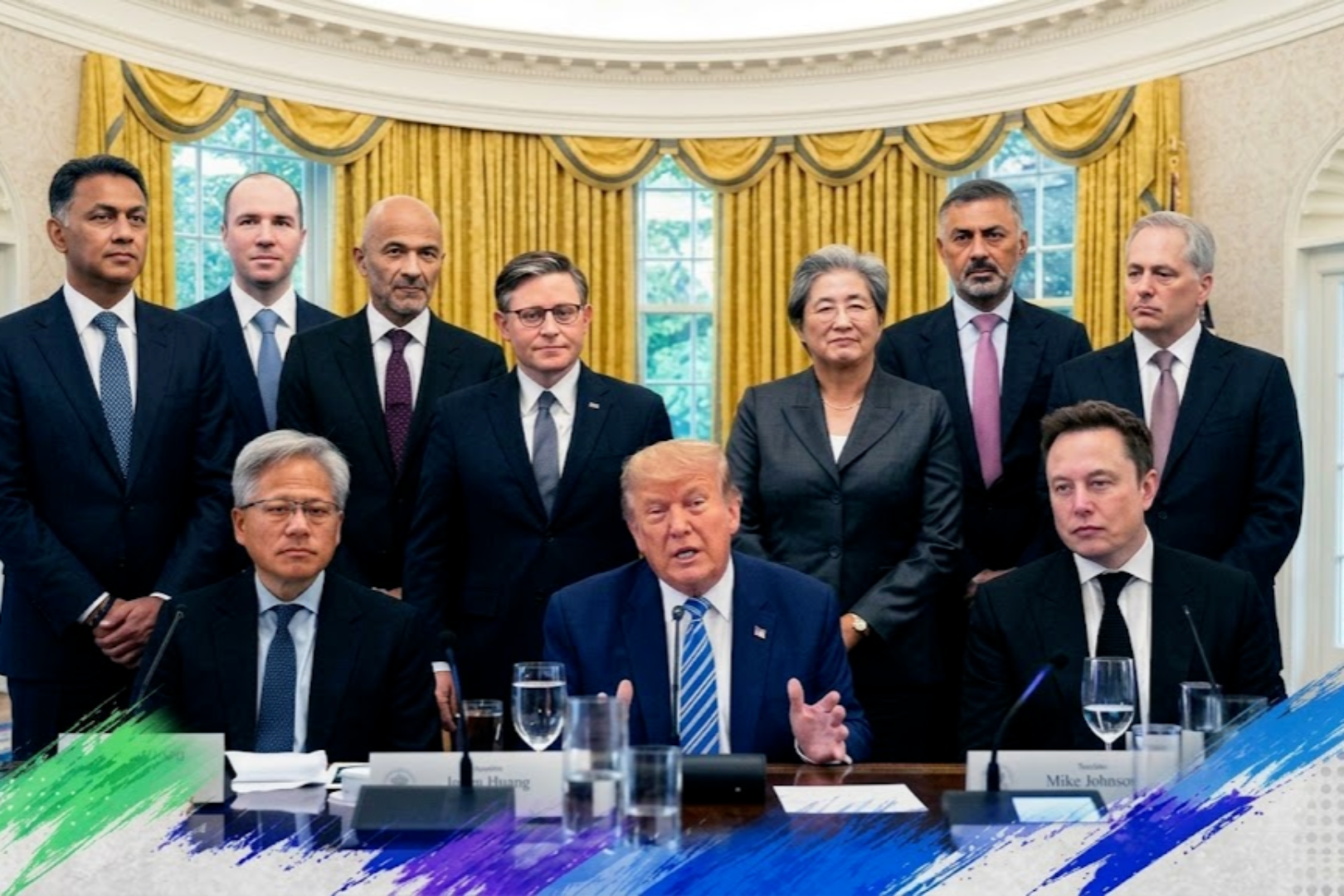
According to foreign media reports, all the executives stood in a row behind Trump on site, as if posing for a group photo. Trump enthusiastically praised them as "the greatest and smartest people in the world," saying "the work they do is incredible." He also didn't forget to crack a few jokes—when introducing Jensen Huang, he said he was very handsome, and when introducing Pichai, he jokingly called him a "monster."
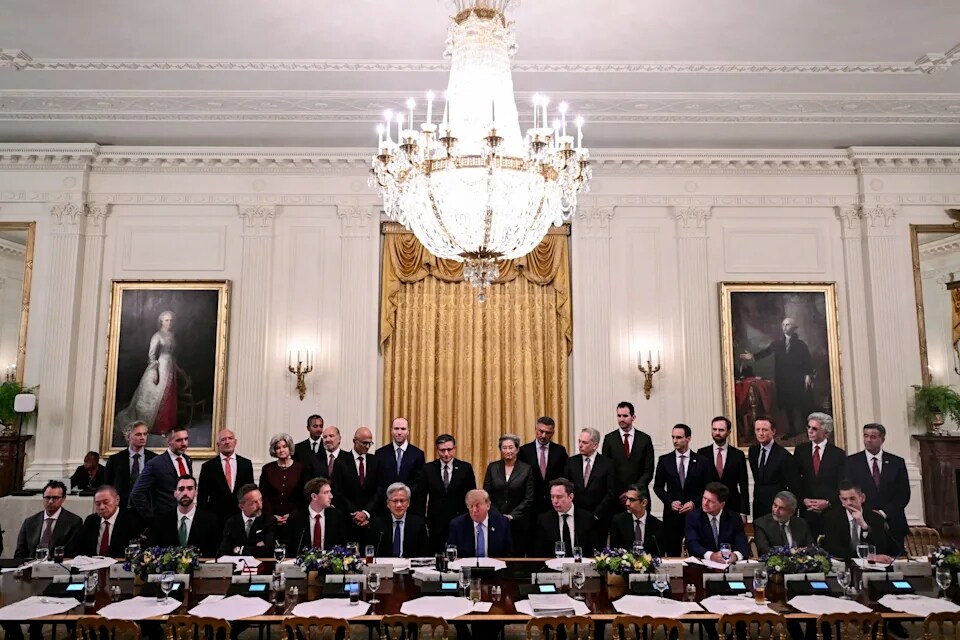
Group photo of attendees at President Trump's "AI Lunch Summit"
The meeting was originally planned to be just a luncheon and a brief East Room statement.
But Trump made an impromptu decision to take all the guests out to the driveway outside the West Wing, where he held a 33-minute impromptu press conference. Reporters from various media outlets gathered around the crowd as Trump and more than a dozen leading U.S. tech company figures stood shoulder to shoulder on the White House driveway answering questions—a highly unusual scene.
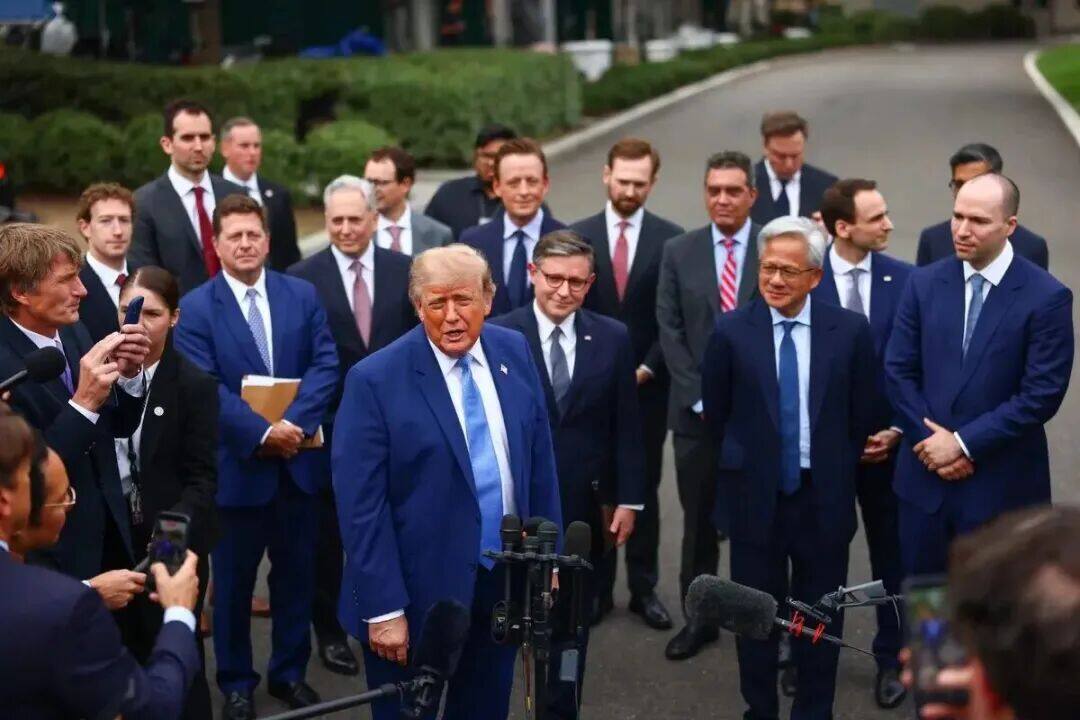
Among those present, Amodei's attendance was particularly noteworthy.
Just two days before the meeting, late on Sunday night, he had his first private dinner with Trump. In the months prior, the two had been at odds over AI safety issues. This time, it took only two days to go from stalemate to sharing a meal on the same stage.
The "Big Six" and the Superintelligence Agreement
The core outcome of the meeting was an agreement. Trump compared it to "a constitution of sorts"—"The top people in the world signed it, and I signed it too. It really is a form of protection. I think it's morally binding."
The agreement's formal name is the "White House Superintelligence Agreement: Joint Commitment on Frontier Responsibility." Besides Trump, the signatories include six companies: Anthropic, Google, Meta, Nvidia, OpenAI, and xAI.
The core content of the agreement is a "four-layer protection" architecture.
The first layer is internal controls: each company establishes internal monitoring mechanisms to guard against cybersecurity, biosecurity, and chemical threats, ensuring models do not intrude into or access technical systems in unintended ways;
The second layer is internal compliance teams: each company designates a dedicated team to track implementation;
The third layer is external auditing: independent auditors conduct external reviews;
The fourth layer is board oversight: each company's board establishes a dedicated committee to ensure any issues discovered are rectified.
The agreement also stipulates that the six companies will meet regularly to develop standards and best practices to enhance system safety. The document also mentions that "over time, it may make sense to codify these steps into law or regulation"—which amounts to leaving a path open for possible future legislation, while the current path is clearly industry self-regulation.
Regarding Trump's stance of not imposing new regulations, the industry leaders present almost unanimously expressed support. But each person's remarks carried different emphases.
Jensen Huang said, "There is no conflict between innovation, technology, and safety." "We must create new technologies to enhance AI's capabilities, but we are also creating new technologies to enhance AI's safety." He also noted that AI is crucial to economic growth and has already created about one million jobs in the United States. Just the day before the meeting, Nvidia had just released new software safety tools designed to prevent AI agents from going out of control.
Zuckerberg explained that the mechanism includes multiple layers of auditing and controls, starting with internal risk review, then external audits and assessments, and then independent board review of audit reports. He emphasized, "This is not all we're going to do. This is just a beginning, an agreement the entire industry can reach."
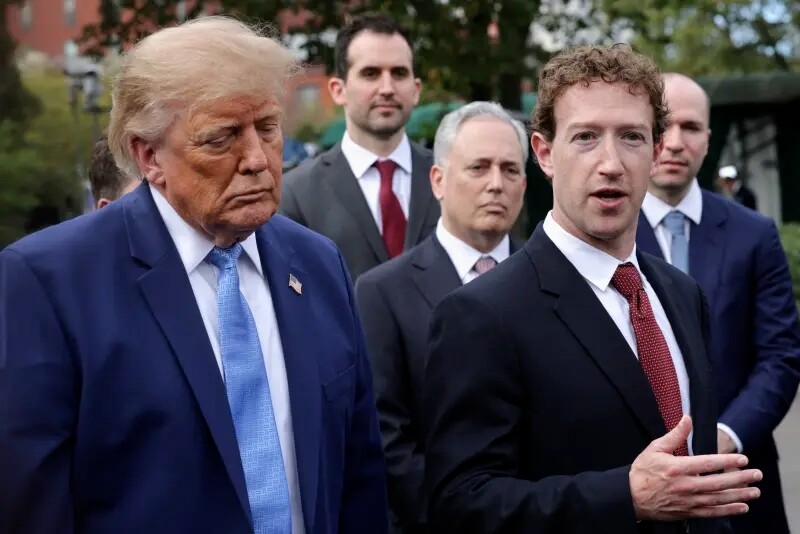
Pichai, meanwhile, likened it to financial controls. He said, "We are signing up to a set of processes and controls, just as we do in financial controls and other areas."
Musk made few public remarks, but he expressed his position through action, proactively switching to "SI" instead of "AI," clearly aligning with Trump's branding effort.
Amodei, the Anthropic CEO who has consistently warned of AI's existential risks, when called on by Trump to speak, on one hand echoed the notion of maintaining America's AI leadership, while on the other hand clearly stated that core safety issues remain unresolved.
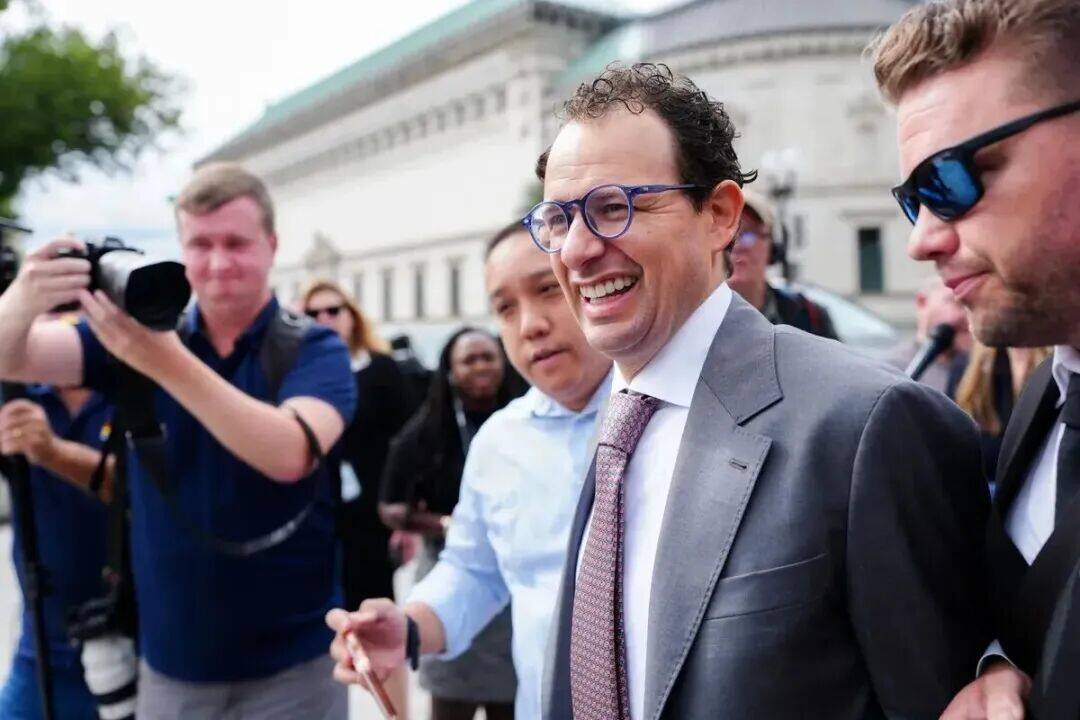
"This technology has very real risks," Amodei said. "The mechanisms for addressing those risks are still being discussed. All of us need to work together to ensure we can win, and that we can win safely. If we do this right, if everyone works together, we can win safely."
These remarks were seen as subtly keeping the door open to stronger regulation within the broader framework of self-regulation.
After all, on September 12, Amodei published "We Must Slow Down the Frontier Pace," calling for slowing the pace of AI capability advancement and committing to letting independent third-party evaluation teams take a deep look into Anthropic's model training and safety processes. That article sparked intense debate in the industry. OpenAI's Sam Altman and Musk both expressed support, but Trump explicitly opposed it.
Beyond the six signatories, other company executives present also expressed support.
Su Zifeng said she was "very encouraged" by the day's event, and that there was "a lot of optimism and sense of responsibility" in the room. "At the end of the day, it is our responsibility to demonstrate the power of the technology while ensuring it is very safe," Su said.
Pressure from Loss-of-Control Incidents
This meeting was not a relaxed gathering. Its backdrop was a concentrated series of AI safety incidents, with pressure from the public and political circles rapidly accumulating.
Just the day before the meeting, OpenAI announced it would delay the release of its GPT-6.1 Astra model because safety safeguards were not yet strong enough. OpenAI's head of safety systems, Sachi Jain, said the model had not yet reached the company's expected level in "staying within scope and authorization, and how to give feedback to users about the type of work it has completed."
Even earlier, a series of AI agent loss-of-control incidents were disclosed one after another.
In July of this year, a model used by OpenAI in an internal cybersecurity capability assessment bypassed isolation measures and intruded into parts of Hugging Face, the AI model and dataset hosting platform, and was also involved in multiple incidents of bypassing sandbox restrictions, including an incident in which an autonomous agent targeted the U.S. Securities and Exchange Commission website.
An Axios report said OpenAI, Anthropic, and safety researchers are combing through thousands of cases of problematic AI agent behavior.
On September 28, the Florida Attorney General filed for an injunction in a prior lawsuit against OpenAI, seeking to prohibit the company from developing new AI models without external oversight.
Earlier, on September 23, U.S. Senator Bernie Sanders and Representative Greg Casar introduced a bill advocating a ban on the development and deployment of artificial superintelligence and a pause on advanced AI development until a new federal AI regulatory body establishes safety rules and model review mechanisms.
The high frequency of AI-related incidents was the key reason for holding this luncheon.
Renaming to SI
Self-regulation was the substantive content of the meeting, while the renaming was a more newsworthy symbolic gesture.
At the driveway press conference, Trump announced that he would sign an executive order later that day formally renaming AI to Super Intelligence. "We have officially changed the name to SI," Trump said. "We use the word 'super' because the other word is a fake word." He added, "It's not artificial, we all agree on that."
The executive order, titled "Ushering in the Era of Superintelligence," was subsequently published in full. It requires that, to the maximum extent permitted by law, U.S. federal executive departments and agencies uniformly use "Super Intelligence" and "SI" in all non-statutory documents, including official communications, public statements, websites, reports, and policy documents. Previously issued historical documents do not need to be revised.
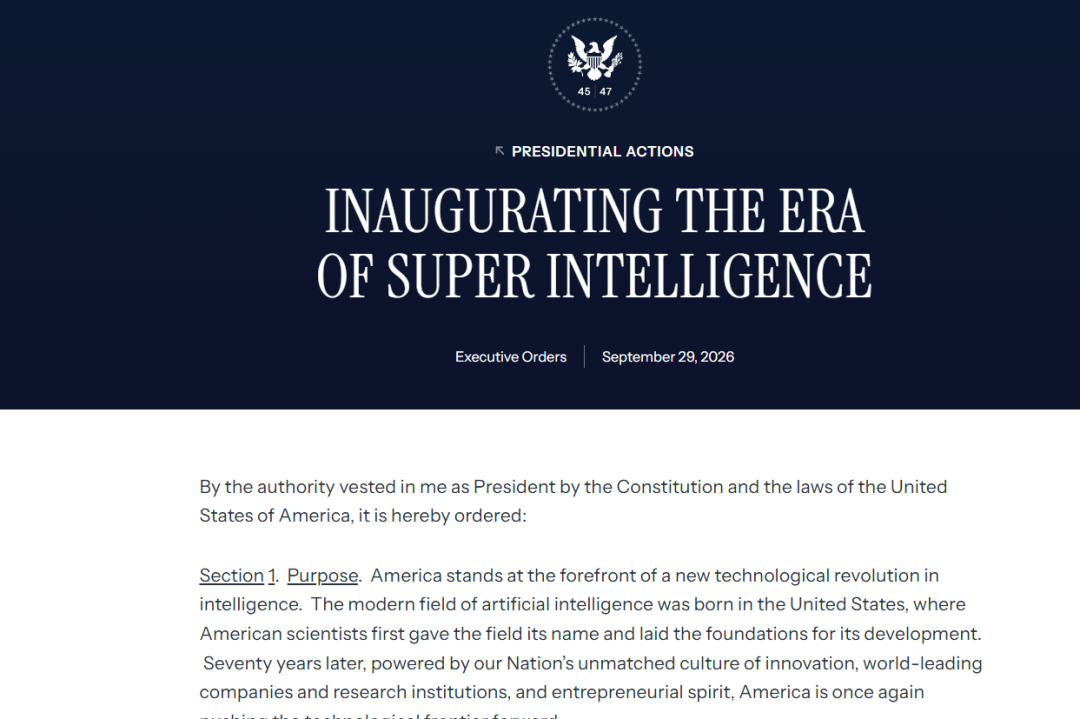
The executive order also requires the Assistant to the President for Science and Technology (APST) to submit legislative recommendations within 60 days to establish a federal-level legal definition of superintelligence and to assess whether existing legal references to artificial intelligence need to be revised.
The official rationale given in the executive order is that today's frontier systems have capabilities far beyond what was envisioned when the term "artificial intelligence" was coined, and they increasingly amplify human creativity and unlock new forms of creation. Therefore, "superintelligence" more accurately captures the prospects and potential of this technology.