

Aave Proposes Cayman Foundation: Can the DAO Still Control the Protocol?

Source: Aave Community Governance Forum
Compiled by Odaily (@OdailyChina); Translator: Moni
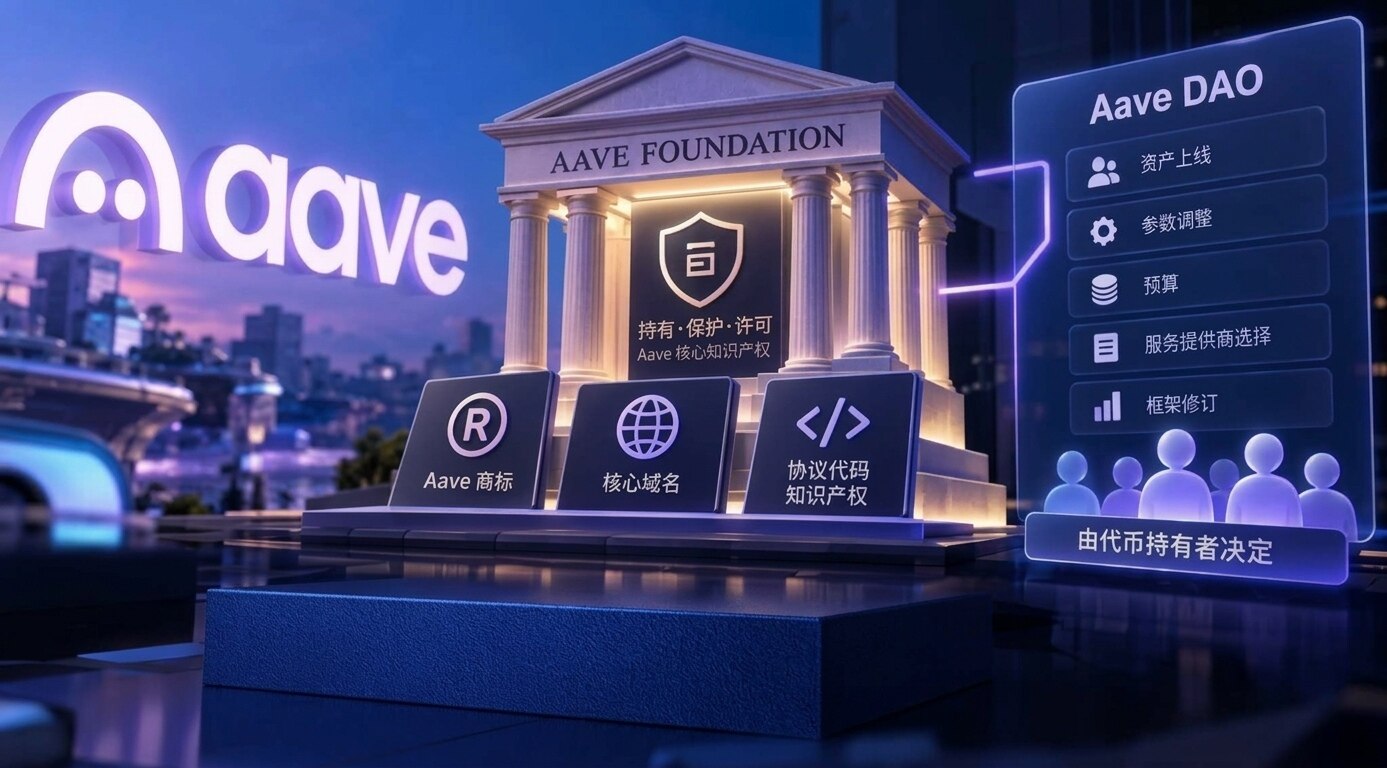
Recently, Aave Labs published an "ARFC" (Aave Request for Comment) on the Aave community governance forum, aiming to establish the Aave Foundation, a memberless foundation company incorporated in the Cayman Islands, to hold ownership of the Aave trademark and related intellectual property on behalf of the Aave Protocol. The ARFC is the detailed proposal stage within the Aave governance forum, where proposals undergo final refinement and a binding Snapshot vote before proceeding to the on-chain governance process.
Why Does Aave Need a Foundation?
For years, Aave governance has funded various service providers to develop code, risk tools, models, and documentation. However, the ownership of these outputs has been handled inconsistently across different collaborative projects, and in some cases, the relevant assets have even been owned by the service providers that actually developed them. Today, the Aave trademark and primary domains also remain outside the DAO's control. The DAO cannot register trademarks, initiate infringement lawsuits, or hold ownership of domains, so the practical result is that the DAO has paid for assets it cannot protect.
A Cayman foundation company can solve these problems because it can hold asset ownership, sign contracts, and participate in litigation, while also adopting a memberless structure, meaning no members hold any rights over the entity.
In DeFi, foundations have long been subject to a degree of scrutiny, typically because they accumulate significant discretionary power over time. This usually stems from foundations being funded through annual treasury grants and being operated by the same team that originally proposed their creation. The design proposed below eliminates both of these conditions.
Moreover, entity incorporation, cross-jurisdictional transfer of registered trademarks, and the inclusion of IP assignment clauses into existing agreements all require separate legal work and incur corresponding costs. A phased approach ensures that each funding request has a clearly defined scope, allowing the community to evaluate each item individually and conduct reviews before proceeding to the next phase. The DAO can halt progress at any stage, and the Foundation will continue to exist as a properly functioning entity with a clear governance structure.
What Exactly Will the Aave Foundation Do?
Aave Foundation Legal Structure
The Aave Foundation will be incorporated in the Cayman Islands under the Foundation Companies Act as a memberless foundation company. According to its memorandum of association, the Foundation's purpose is limited to holding, protecting, and licensing intellectual property for the Aave Protocol.
The Foundation will be managed by an independent director and supervised by an independent supervisor with no affiliation to the director. After the initial appointments, directors may only be appointed and removed through AIPs.
Neither Aave Labs, nor any service provider engaged by the DAO, nor their affiliates shall have any right to appoint directors or supervisors, nor may they serve in either position.
What Assets Will the Aave Foundation Hold
The Aave Foundation will acquire legal ownership of the following assets:
- The Aave trademark;
- Intellectual property in the protocol codebase assigned to the Foundation;
- Primary domains;
- Intellectual property assigned to the Foundation under service provider agreements.
As the owner of these assets, the Foundation is responsible for the filing, maintenance, protection, and enforcement of the relevant assets. Brand licensing will take a one-way authorization approach. The Foundation will license the Aave name to product developers so that Aave-branded products can continue to launch, without charging any licensing fees.
The DAO will still select service providers, determine their scope of work, and approve their compensation through existing governance mechanisms. Code, tools, models, and documentation produced by these services will be assigned to the Foundation and become standard terms in the relevant cooperation agreements. In this way, the technological achievements accumulated by the DAO will have a long-term, stable owner, while the Foundation will have no decision-making authority over what is developed or by whom.
Other Responsibilities of the Aave Foundation
The Aave Foundation will publish quarterly reports to the governance forum, covering the assets it holds and any ownership changes, operating expenditures, and any legal actions taken to protect the trademark or codebase. The first report will be published within 90 days after the end of the first full calendar quarter following the commencement of the Foundation's operations.
The DAO will bear the reasonable costs of entity registration, engagement of a qualified company secretary, legal fees, and formalities related to trademark and IP transfers (this proposal does not request any recurring budget; any future funding needs must be requested through a separate governance proposal). All listings, parameter adjustments, budgets, service provider engagements, and framework amendments will continue to be decided by the DAO through existing governance mechanisms.
The DAO may appoint and remove directors through AIPs; the DAO holds consent rights over any amendments to the Foundation's articles, the disposal of core intellectual property, and the merger or restructuring of the Foundation; the DAO may also instruct the Foundation through an AIP to liquidate and transfer remaining assets to a successor entity.
Next Steps for the Aave Foundation
If the community reaches consensus on this ARFC, the proposal will proceed to a Snapshot vote, followed by submission of an AIP to authorize payment of reasonable entity registration fees, legal fees, and director appointment costs. The Foundation will then be registered in the Cayman Islands, and independent directors and supervisors will be appointed. Once the entity is established and capable of holding assets, the transfer of the Aave trademark, primary domains, and codebase intellectual property will begin.
For future service provider collaborations, IP assignment clauses will be included as standard terms in new service provider agreements upon renewal of the relevant cooperation agreements or replacement of service providers through the normal governance process.
The Aave Foundation will subsequently carry out its work strictly in accordance with the aforementioned purposes, while the governance system will continue to hold control over all protocol decisions, exactly as is currently the case. Listings, parameters, budgets, service provider selection, and framework amendments will continue to be decided by token holders through governance mechanisms. The Foundation will have no voting rights, veto rights, or advisory rights over these matters.
The Aave Foundation has no members or shareholders, and no individual holds any ownership over it. The Foundation's director is an independent director, and the supervisor is an independent service provider with no affiliation to the director; neither Aave Labs nor any DAO service provider holds a seat on the Foundation or has any appointment rights.
Each phase of the Aave Foundation's development will be re-submitted to the governance forum as a separate proposal and voted on separately, and the community may decline to proceed with any of these phases.
Can the DAO Still Control the Protocol? FAQ
Will Aave Labs gain control over the protocol?
No. The Aave Protocol continues to be governed by the DAO through token holders.
Furthermore, Aave Labs does not hold a Foundation director seat, does not serve as supervisor, and has no appointment rights. The Foundation adopts a memberless structure, so there is no situation where any shareholder sits above the Aave ecosystem; the same restrictions apply to all service providers engaged by the DAO.
What will change about Aave's governance mechanism?
Nothing will change.
Listings, parameters, budgets, service provider engagements, and framework amendments will continue to be decided by the DAO through existing processes. The Foundation is only responsible for holding ownership of the relevant assets and does not have discretionary authority over protocol decisions.
Why choose the Cayman Islands?
Under the Cayman Islands Foundation Companies Act, a foundation company can exist without members or shareholders while still being able to hold legal ownership of assets, sign contracts, and participate in litigation.
This enables the Foundation to hold and protect the Aave trademark without creating an owner that sits above the DAO.
What happens if the DAO wishes to dissolve the Foundation?
The DAO may at any time replace directors through an AIP or instruct the Foundation to liquidate and determine the disposal of remaining assets, including transferring them to a successor entity.
However, in such cases, the fiduciary and statutory obligations of the directors, as well as applicable laws, must still be observed.
Which intellectual property will be transferred? When?
The Aave trademark, primary domains, and protocol codebase intellectual property will be transferred after the Foundation entity is established.
Intellectual property arising from future service provider collaborations will be assigned to the Foundation as a standard term under the relevant agreements.