

Learn about the 5 major trends of DeFi in 2020 in one article

Editor's Note: This article comes fromBabbitt Information (ID: bitcoin8btc)Editor's Note: This article comes from
Babbitt Information (ID: bitcoin8btc)
, Author: makerdao, translator: overnight porridge, published with authorization.
Decentralized finance (DeFi) has become an exciting and closely watched movement in the blockchain space, bringing impressive innovations and creating more and more Great attraction. In February of this year, the total value locked (TVL) of DeFi projects exceeded $1 billion for the first time. Although in the following March, the value experienced a sharp decline, but recently, it crossed the $1 billion milestone again. Although a billion-dollar figure is relatively small by the standards of traditional finance, decentralized technologies clearly have the potential to drive innovation and diversify products and services. The Maker Protocol is front and center in this movement.
The Maker protocol has grown in popularity as Dai has become the most used cryptocurrency in DeFi. But DeFi is a fast-moving field, even for blockchain technology, so the question is not just which protocols are establishing a DeFi foothold, but how existing services are used, where new products are headed, and trends How will it develop?
secondary title
5 DeFi Trends to Watch
There are many trends and themes emerging within the DeFi movement. Here are five areas you can focus on over the next few months and beyond:
1. Ethereum continues to lead
Although other DeFi and smart contract platforms (including Binance Chain, Neo, Waves, etc.) are vying for some market share, the Ethereum blockchain will continue to dominate the DeFi space. Except for Bitcoin’s Lightning Network, every major DeFi protocol is built on the Ethereum blockchain, and this trend will continue in the future. Despite the high volatility of ETH, the long-term uptrend of TVL in DeFi remains intact. The amount of ETH locked in DeFi, considered a useful indicator of adoption, is currently around 80% of its all-time high.
Additionally, complex DeFi-related transactions have increased 5-fold in the past two years. Ethereum analytics firm Covalent has predicted a "flip" event where DeFi transactions overtake simple ETH transfer transactions.
Finally, due to the composability of the Ethereum blockchain and the Maker protocol, new solutions built on top of both will endow the DeFi ecosystem with incredible value. Composability helps create "network effects," a powerful phenomenon where the value of a good or service grows with the number of users. It is precisely because of the network effect that the Maker protocol accounts for more than 50% of the TVL in DeFi. To date, more than 600 projects have integrated Maker's Dai into applications built on the protocol.
2. The rise in the use of stablecoins
Paxos
Gemini Dollars
Demand for stablecoins will grow as traders look for on-chain ways to hedge and store value. Tether (USDT), a centralized stablecoin with most of its supply concentrated on Ethereum, has maintained its multi-billion dollar dominance. Meanwhile, other centralized fiat-collateralized stablecoins are gaining popularity, and they all take the form of ERC20 tokens:
Circle’s USD Coin
TrustToken’s TrueUSD
While the Ethereum blockchain itself is decentralized and all of these tokens are publicly transferable and tradeable, they are centralized in terms of storing value. That's because they are managed by those who deposit the funds in one or more bank accounts, so their value can be frozen or even confiscated. Just using a decentralized infrastructure does not eliminate all single points of failure.
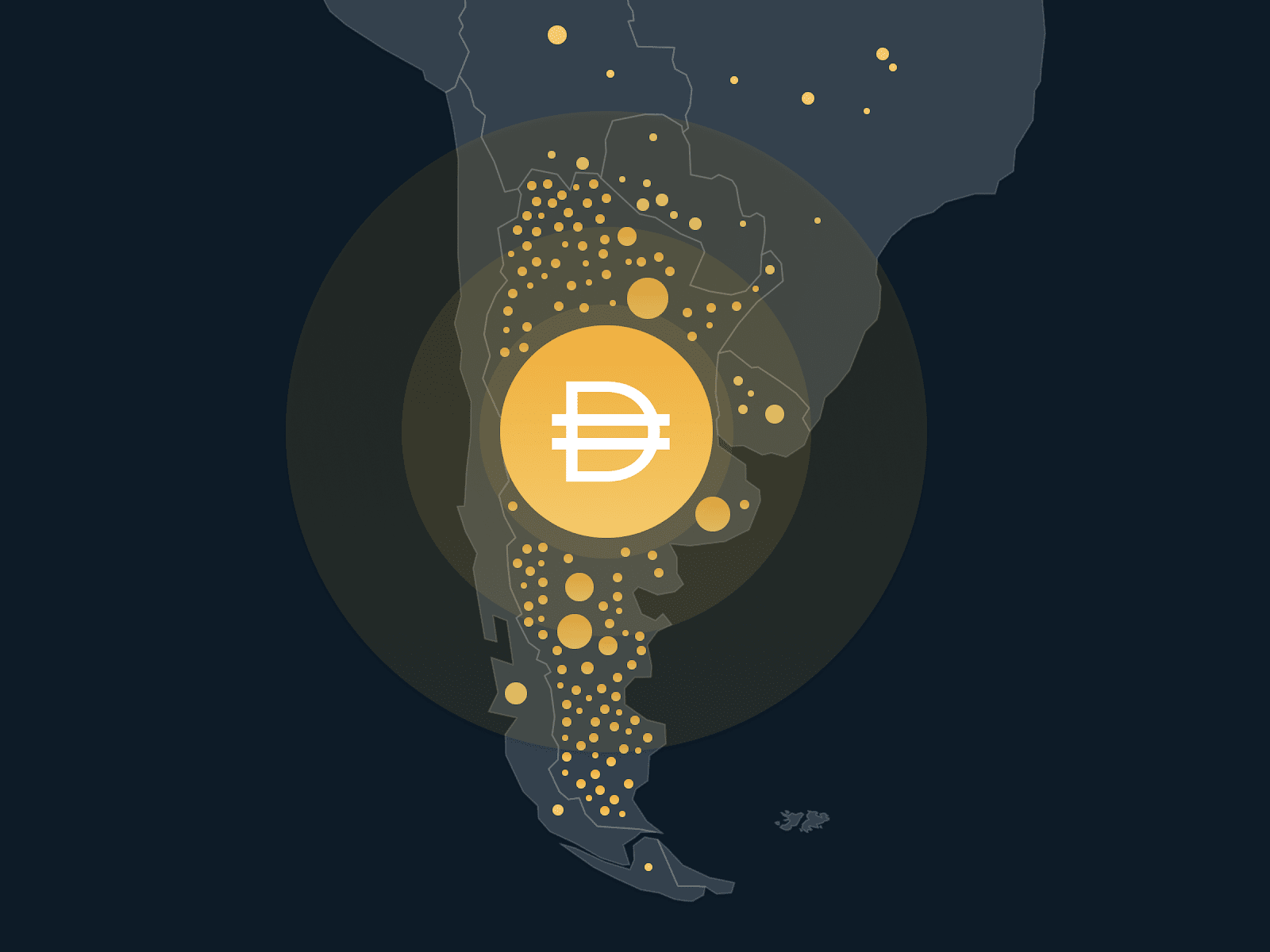
The Dai stablecoin is different, it is open to anyone and is not bound by a central institutional party. On the one hand, people are very interested in centralized stablecoins, on the other hand, Dai is the most important decentralized stablecoin in the DeFi field. Dai has also gained traction in Latin America due to its openness, stability and resistance to censorship, and has become a tool against hyperinflation.
Dai is gaining popularity in Latin America, especially in Brazil, Colombia, Venezuela, and Argentina.
3. Innovative new products
The initial handful of DeFi projects have given way to a wave of experimentation and innovation in the space, which includes offering decentralized versions of mainstream financial products. Dai is the financial “glue” that connects these services.
Dai allows anyone to gain USD stability and deploy it throughout the DeFi world. Dai, on the other hand, has been integrated into more complex products, including:
insurance (such as Nexus Mutual);
Prediction markets (such as Augur, etc.);
Decentralized leveraged trading (such as dYdX);
Lending protocols (e.g. Compound, Aave, Aave, InstaDApp, etc.)
Synthetic assets (such as UMA)
All of the above allow users to access products that would otherwise be out of reach. For example, Synthetix (growth over 2,000% in a year and currently has $125 million in locked assets) provides exposure to global equity markets and commodities through crypto-backed assets. In the coming months and years, the DeFi space will almost certainly welcome more and more novel and experimental projects.
4. DeFi lending under the spotlight
“Decentralized lending protocols” are a hot topic in the DeFi space, even though it’s not as secure as unsecured loans are available in the traditional financial world. Instead of signing massive paperwork to secure repayment, DeFi "borrowers" post crypto collateral on the blockchain via smart contracts. This allows them to free up cash for day-to-day spending or transactions without selling cryptocurrencies they believe will appreciate in value. If they allow the collateral to become insufficient due to market volatility, the lending protocol immediately liquidates the collateral. At present, this field of DeFi is very popular.
5. Evolving exchanges
Exchanges are moving beyond the paradigm of standalone, purely centralized or decentralized services, with new platforms incorporating the best of both paradigms. The composability of DeFi enables both enterprises and users to have their own cake.
Additionally, exchanges are integrating other services so users can acquire cryptocurrency and then deploy it instantly. In December 2019, an update to the decentralized exchange 0x protocol enabled staking of ZRX tokens. Liquidity aggregation protocol Kyber is now doing the same.
And Oasis.app provides a unified DeFi hub, providing users with an easy-to-use interface to generate Dai and exchange it for other tokens on the built-in DEX, or by acquiring Dai on the DEX and locking it at the Dai savings rate (DSR).
Meanwhile, centralized exchanges are integrating decentralized protocols, such as Coinbase Wallet, which provides users with access to Compound (borrowing) and dYdX (margin trading), while OKEx integrates the Dai Savings Rate (DSR). All of this points to further convergence and blurring of the edges as centralized services tap into decentralized services.