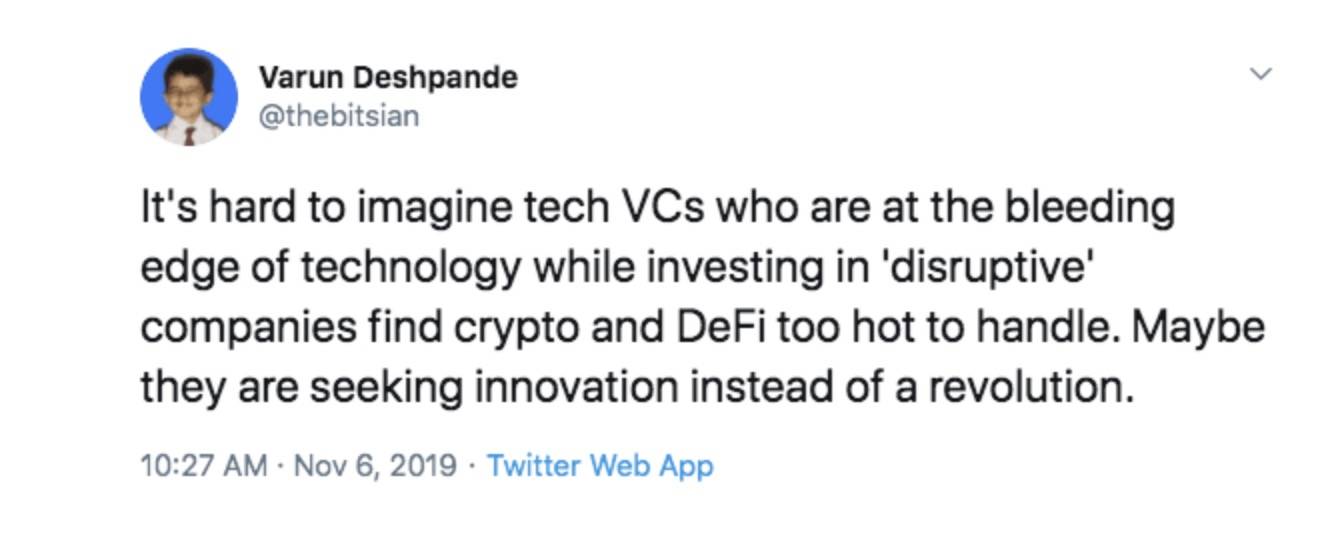


Why are the VCs who used to hype the public chain so indifferent to DeFi today?

Editor's Note: This article comes fromBabbitt Information (ID: bitcoin8btc)Editor's Note: This article comes from
Babbitt Information (ID: bitcoin8btc)

, Author: Jonathan Joseph, translation: free and easy, published with permission.
The original author is Jonathan Joseph (JJ), the founder of Smart Money. In this article, he explained a very interesting phenomenon, that is, why all financial technology (Fintech) venture capital companies do not pay attention to DeFi. He explained that the 2017 ICO bubble had many similarities to the 2001 dot-com bubble, and three years after the ICO bubble burst, cryptocurrency startups generally found themselves in the throes of the trough of disillusionment, but it’s worth noting Yes, some of the best years in the history of venture capital came just a few years after the dot-com bust, when most institutional capital left the space in a similar fashion, and DeFi is facing a similar situation today.
image description
(picture from: pxhere.com)
One of the interesting aspects of exploring the DeFi world is that you feel like you are inside a very big secret.
Peter Thiel is always on the lookout for billion-dollar innovations hidden from plain sight. Well, DeFi is a trillion dollar idea hiding in plain sight. Maybe hundreds of trillions, depending on how you want to measure it.
But DeFi is not synonymous with "cryptocurrency," it may or may not involve cryptocurrencies at all, and that's part of the confusion that's causing a lot of it. As a result, DeFi is almost entirely out of the limelight for the traditional financial technology (fintech) industry, and for the venture capitalists who invest in these companies.
If DeFi is a huge paradigm shift in financial services and fintech, how has it been overlooked? Platform shifting is often a thorny issue for the venture capital asset class, meaning early-stage capital is scarce.
How to explain this paradox?
secondary title
A Brief History of Platform Shifts and Venture Capital (VC)
The risky asset class emerged because risky, early-stage businesses without reliable cash flows often do not have access to capital through traditional banks. This has created a new highly specialized form of finance that many see more as an art than a science. This new form of financing basically funds the research and development of new technologies and hopes to bring huge returns to its investors.
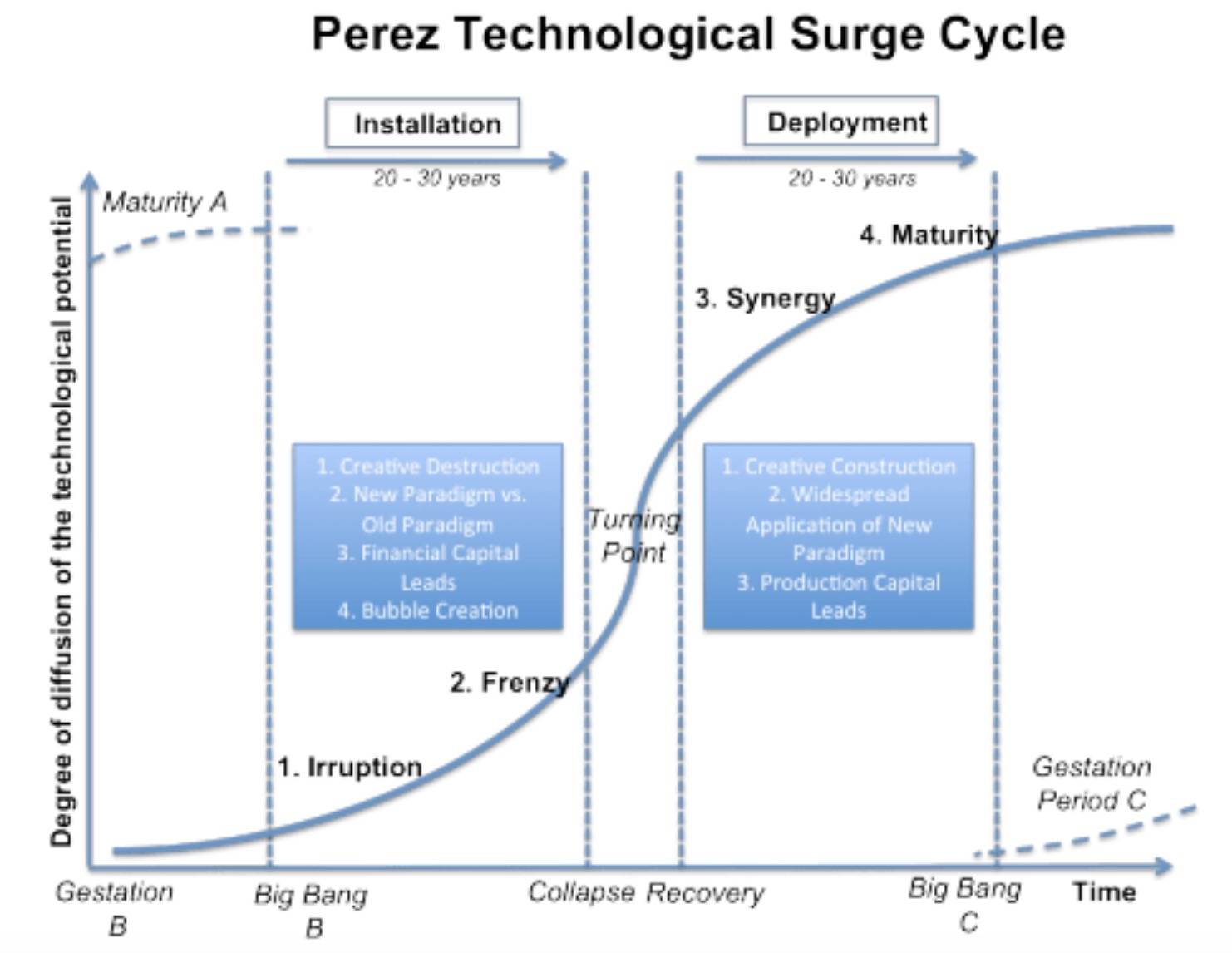
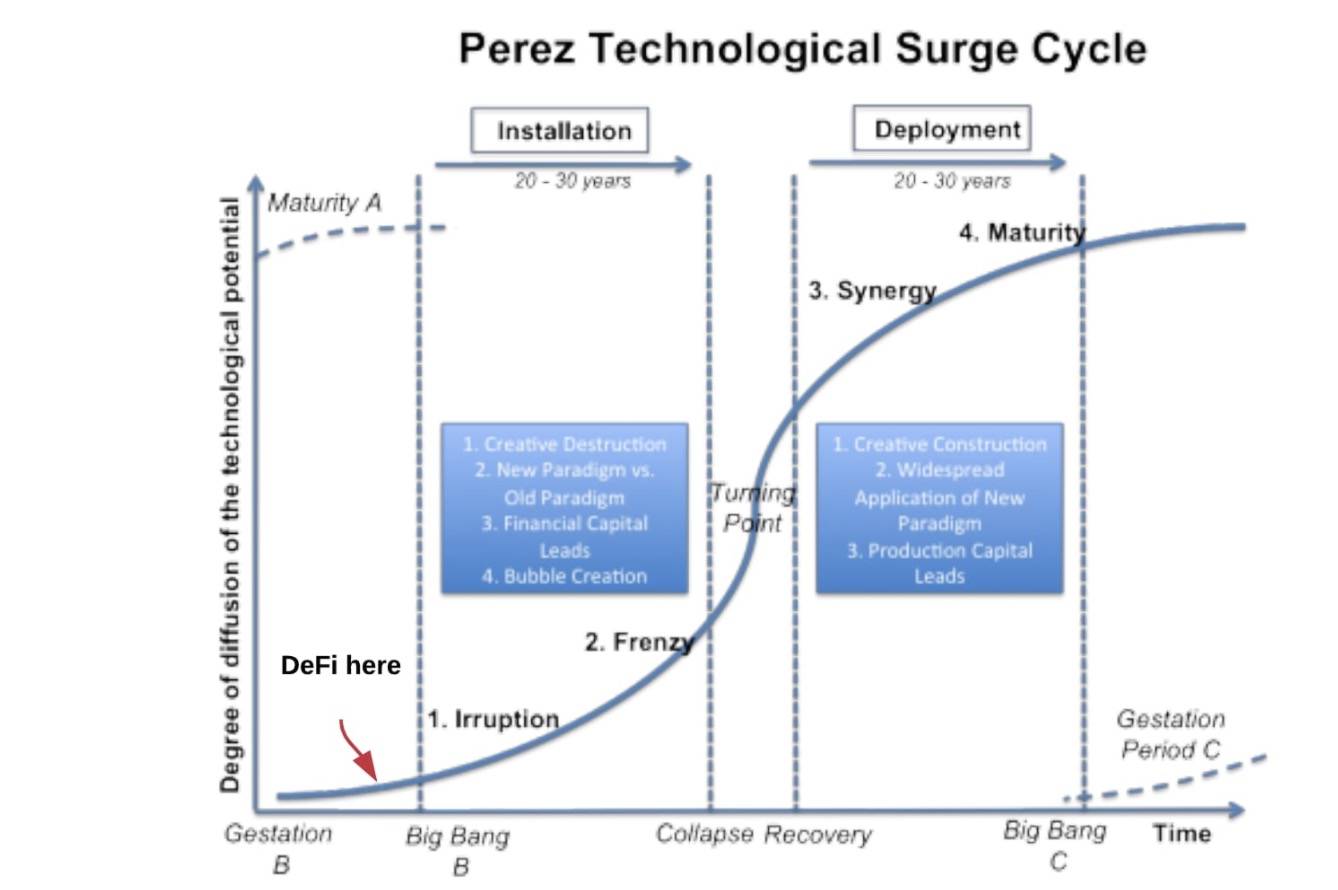
The key to understanding the pursuit of excess returns lies in understanding the timing and cycles of early-stage technology markets and technology platforms. Carlota Perez's work on cycles is typical.
To reap big returns, it makes sense to allocate capital more to technology platforms in the early stages of the S-curve.
But is this what we see in practice?
secondary title
The Birth of Early Blockchain VC
Those familiar with early technology know that history doesn't simply repeat itself, but it always rhymes with the same rhyme. It is not difficult to find similarities between the Internet bubble in 2001 and the ICO bubble in 2017.
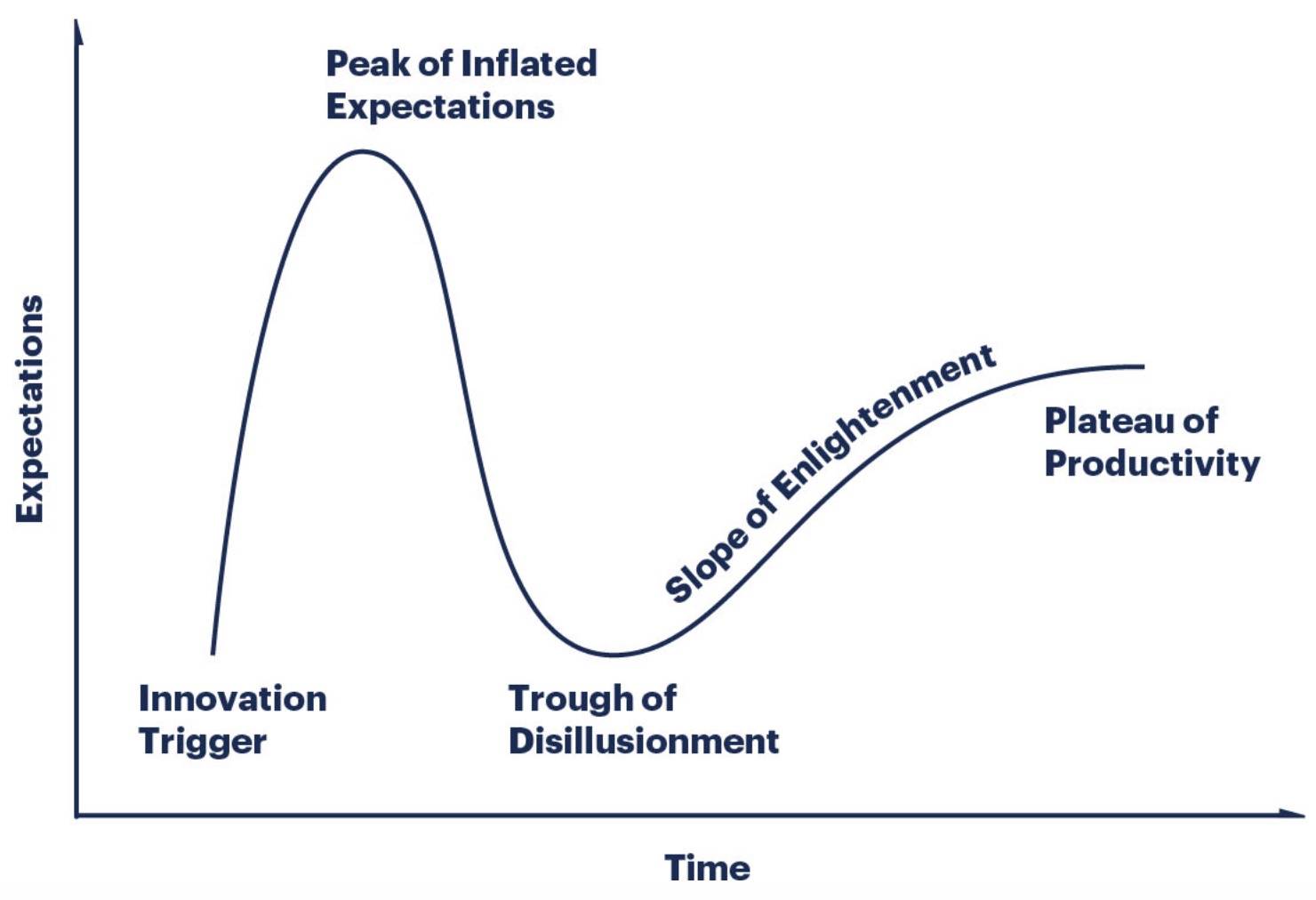
Just as internet startups collapsed after the dotcom bubble, three years after the ICO bubble burst, cryptocurrency startups generally find themselves in the throes of the trough of disillusionment — yet another rerun of the proverbial tech cycle.
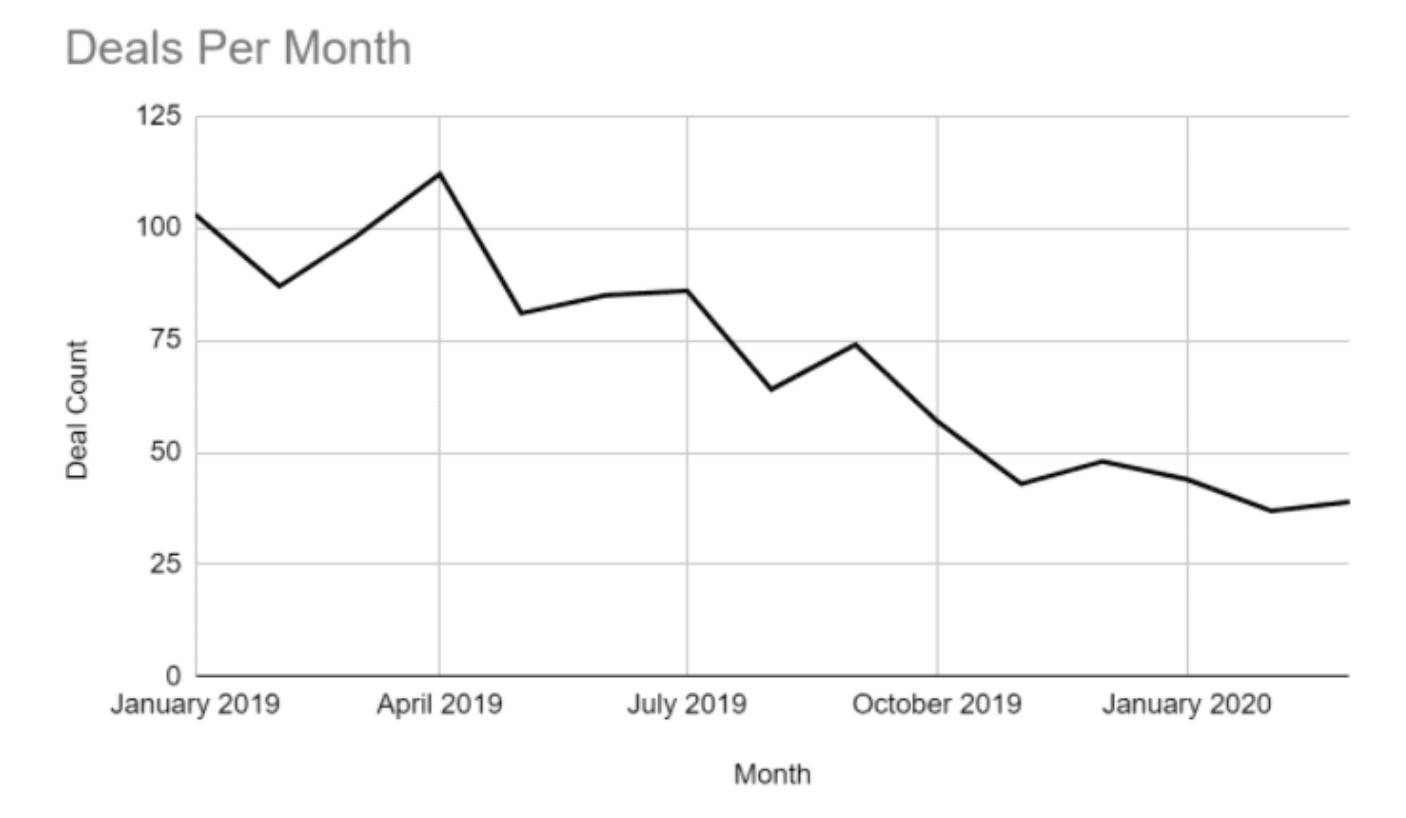
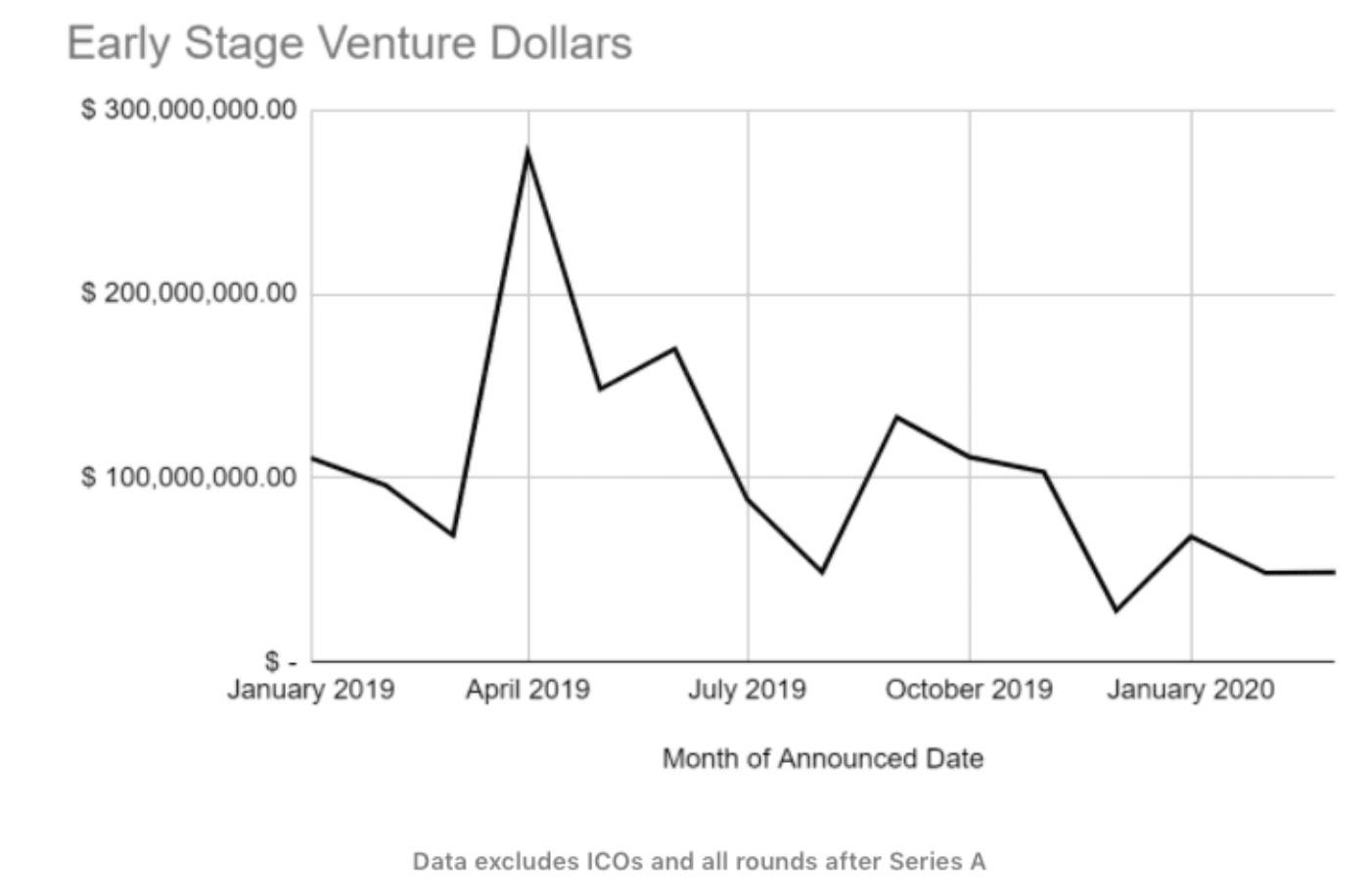
In fact, before the outbreak of the new crown epidemic, the volume of early blockchain venture capital transactions had fallen to the bottom. According to a recent analysis by Joel John (Outlier Ventures):
"Simply put, if you are financing before the B round, the average monthly investment in the VC market is only about $50 million."
“In fact, if there is less investment backing seed round companies, 18-24 months later, we will not have healthy growth stage companies. The power law requires us to have enough companies in the early stage to continue to optimize later. "
According to recent estimates by Brooke Pollack (Hutt Capital), the current VC “bullet” funding for blockchain/cryptocurrency ($1 billion-$1.5 billion) accounts for roughly 0.5% of global VC “bullet” funding.
(Note: Dry powder is a commonly used term in venture capital and entrepreneurial circles, referring to cash reserves or highly liquid assets held by companies or venture capital funds, here translated as bullets)
Separating "early stage" and "DeFi" from the total blockchain venture capital, the capital available for DeFi startups is very poor.
secondary title
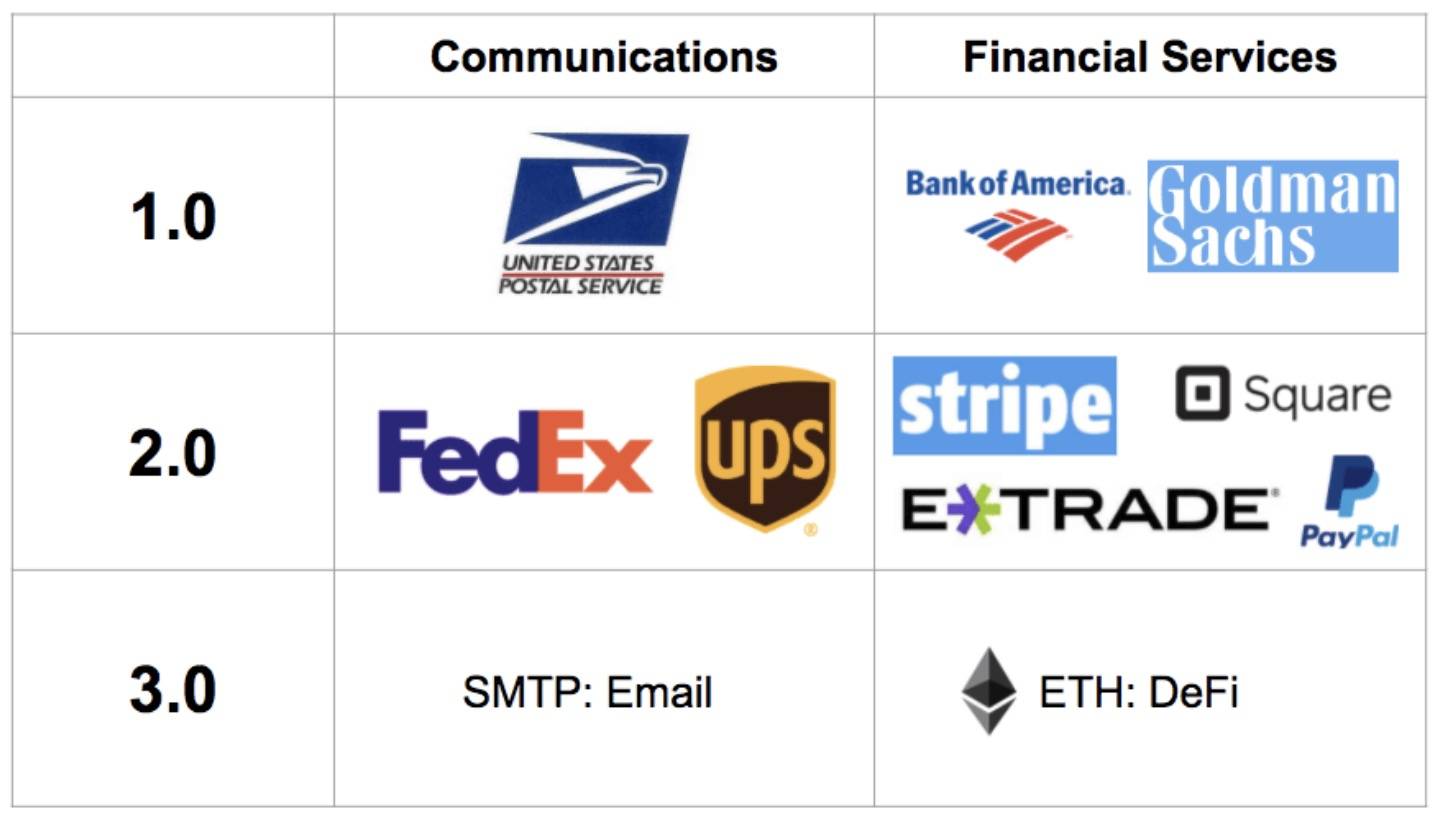
SWIFT, Stripe and Plaid platforms make up the existing Fintech stack
What is even more curious is that the current low water level of cryptocurrency VC funding coincides with the financial technology (fintech) financing boom. One of the biggest drivers of the financial technology (fintech) boom cycle is the use of developer tools to enable platform-like dynamism.
But every assumption about fintech today assumes that SWIFT continues to play the role of the dominant global financial router. Not only is it the current global standard for international banking messaging, but it is the standard for imposing sanctions by denying access to the SWIFT network.
Technically, SWIFT is a protocol. Given that SWIFT was created in 1973, it's not very useful for modern society. SWIFT assigns codes to member banks and uses these codes to conduct transactions and route messages between member banks.
A key flaw of SWIFT is that it is only a messaging standard and does not actually facilitate the transfer of value. Because of these fundamental technical constraints, everything built on top of the existing fintech stack will suffer from these design constraints, which are flawed from the start.
However, on the whole, these technologies are incremental improvements that are inevitably hindered by potential technical debt.
For example, critics have fairly justly pointed out that some of Plaid's banking connections use screen scraping, which represents a massive security hole. According to Plaid's own data, this laborious method causes about 2%-5% of bank authentication requests to fail, and this failure rate is usually unacceptable for software.
Simply removing most of the friction from accepting payments and accessing financial data is enough to create massive enterprise value and a continued wave of fintech innovation. But fundamentally and structurally, this innovation is still limited to the application level of finance.
secondary title
DeFi is a Programmable Fintech Platform
In this article, we say that DeFi is an open-source Fintech platform free from the burden of legacy technical debt and built on a foundation of transparent, sound economic and monetary policies. In the DeFi economy, the Ethereum blockchain is the global settlement layer, and ETH is its base layer currency, or "M0". Unlike the existing SWIFT architecture, every layer of the stack is programmable, including the base currency itself.
Programmability aside, DeFi’s secret sauce is a combination of standardization and composability, and the impact will be far-reaching.
As Dmitriy Berenzon (Bollinger Investment Group) points out in his recent article on Constant Function Market Makers (CFMMs), CFMMs are a “zero to one” innovation for liquidity protocols.
This substantive innovation in liquidity removes the friction (middlemen, relationships, and paperwork) that hinders current capital markets, enabling the frictionless flow of liquidity required in modern global financial markets.
"Earnings don't affect the market as a whole, what really moves the market is the Fed ... focus on the central bank, focus on the flow of liquidity ... most people in the market are looking for earnings and conventional measures. It's liquidity that drives the market .”
Based on the continuous innovation of trading and market making through smart contracts, various types of financial instrument protocols, smart contracts and code libraries have emerged (even previously impossible). As DeFi is both standardized and composable, the design space for finance and financial services will grow exponentially. Anyone in the world with access to the Internet can conduct any type of transaction or access financial instruments.
Once the DeFi technology stack matures and the DeFi economy has grown to a sufficient scale, every product or company built on the traditional fintech stack will find it extremely difficult to compete with DeFi products. This is similar to the invention of the automobile, compared with the best horse-drawn carriage company. Right now, DeFi technology isn’t mature enough to deliver on this promise, but it’s making progress toward making it happen faster than anyone realised.
This is something that traditional fintech companies and the VCs who fund them are still unaware. In general, they still believe that the existing technical system is deeply entrenched and do not think DeFi is a viable threat.
secondary title
How DeFi is Breaking the Existing Paradigm
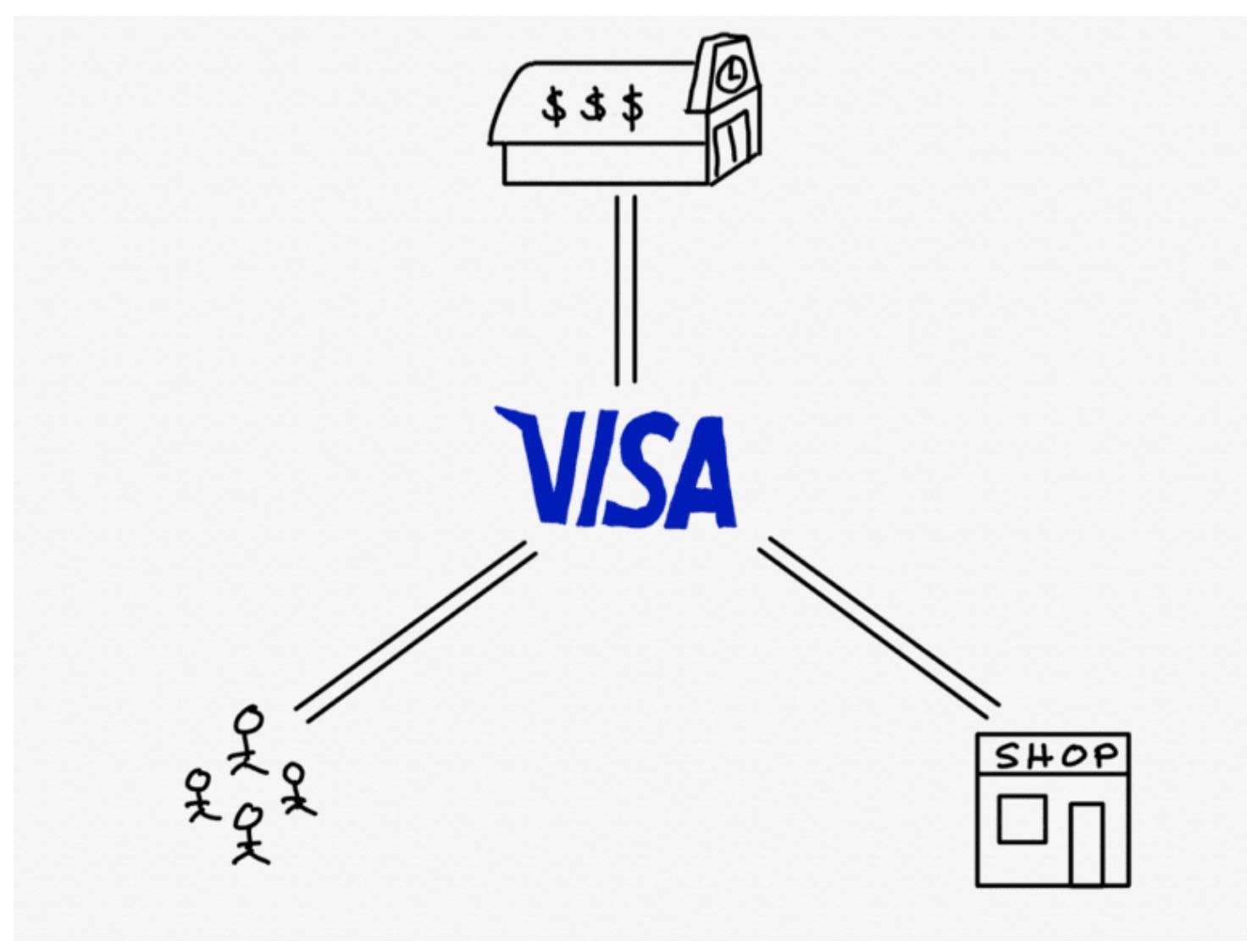
Ben Thompson's analysis of Visa's acquisition of Plaid breaks down the network effects that seem to be entrenched in this legacy stack. He explained that Visa sits in the middle of a powerful multifaceted network between banks, merchants and consumers.
"Once a job is done, and the credit card is doing the job really well, it takes a 10x improvement to make the user switch, and in a three-sided network, 10x means 10^3."
In the DeFi economy, Ethereum addresses replace SWIFT codes and bank accounts. The DeFi stack reroutes value traditionally accrued to the Visa network and banks back to merchants and consumers.
the best part? Merchants and consumers have access to better banking and financial services. Banks have become unnecessary middlemen. Therefore, this is why we want Bankless.
This is just a 1000x improvement that can break even seemingly entrenched network effects.
secondary title
DeFi infrastructure adoption is happening
No organization has been more vocal about the limitations of SWIFT's architecture than the world's central banks, which are often not champions of innovation. Someday in the future, central banks will issue currencies in digital form to compete with this liquidity.
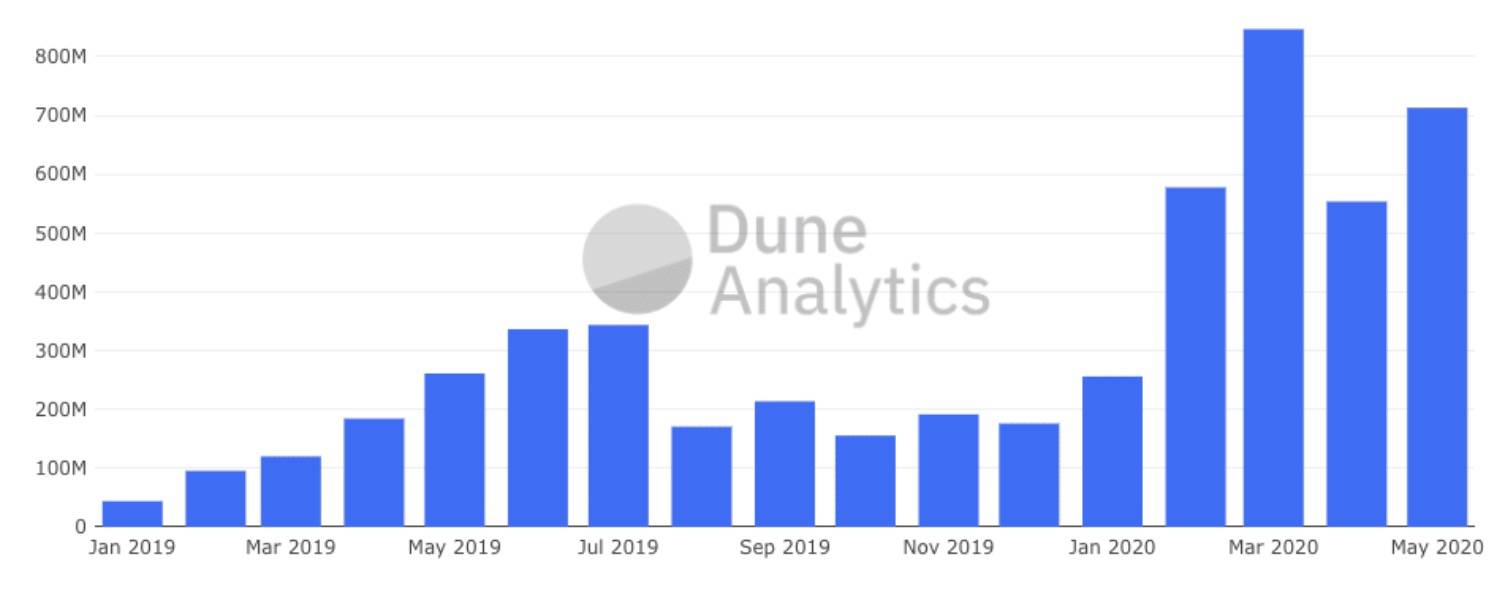
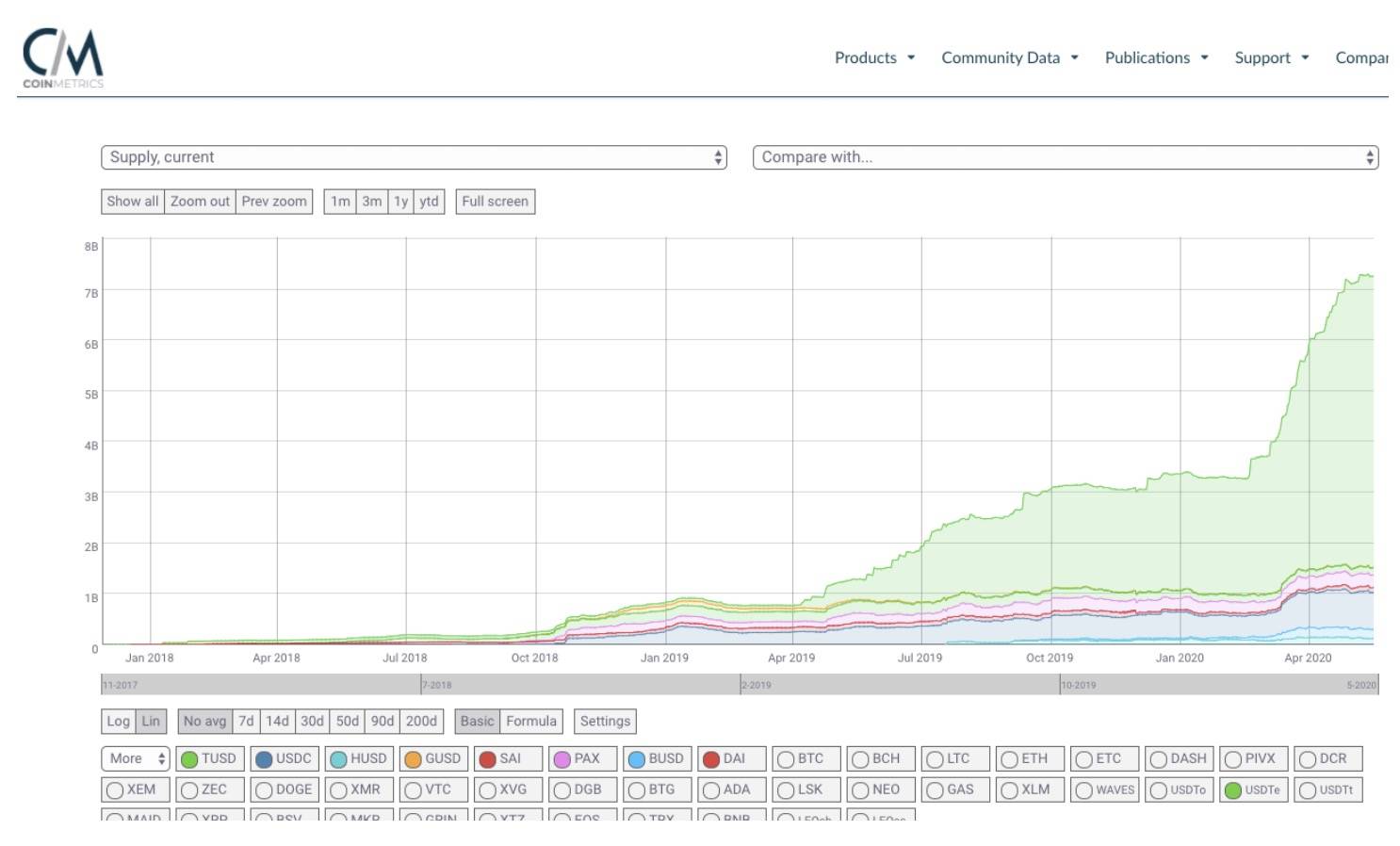
But the market is not waiting for the central bank. Stablecoin issuance on the Ethereum platform has grown by more than 100% since the market correction caused by the COVID-19 outbreak in March, a critical but early sign that the product market is suitable for DeFi, a crisis largely attributed to liquidity. lack of sex.
Similarly, decentralized exchange infrastructure (DEX) also shows such a growth pattern.
The issuance of stablecoins and the adoption of DEX infrastructure are important precursors to the adoption of DeFi for users. The liquidity of USD-denominated assets combined with the programmable and composable aspects of DeFi protocols ensures that all other programmable financial services built on top of them will have access to liquidity, which is a key enabler of mainstream adoption of DeFi.
At present, the adoption of DeFi infrastructure has begun, but the direct adoption of users has not yet begun. Obviously, the DeFi platform is still in the gestation stage of the Perez curve. You don't need to be on the Forbes Midas list to know what's coming.
secondary title
DeFi and the Maturity of the Funding Cycle
So, when will institutional capital be injected into DeFi?
Adding to the background of another macro cycle view here, the current low tide is called the "price innovation cycle" of crypto by A16Z. Will institutional capital return to the industry when the market price of ETH rises again?
Many crypto VCs think so.
In an era of trillion-dollar markets with negative yields, the stock market has gotten so drunk that bankrupt companies are the hottest topic of the week, and anything can happen.