

Uncover the secret behind DeFi's abnormally high returns: what is farmer farming?

Editor's Note: This article comes fromBabbitt Information (ID: bitcoin8btc)Editor's Note: This article comes from
Babbitt Information (ID: bitcoin8btc)
Babbitt Information (ID: bitcoin8btc)
Long story short:

DeFi projects yearn.finance and mStable are introducing a new "mining" mechanism that will bring yield farming to a new era: farmer farming. Whoever wants to join the yield farming game will be farmed by previous "farmers".
You think you are doing yield farming, but in reality you are the "crop" being cultivated.
secondary title
Value Proposition of Protocol Tokens
Recently, many DeFi projects will introduce a token into the system, whether it is a governance, agreement or ownership token, and each token will be used for voting or fee sharing, or both.
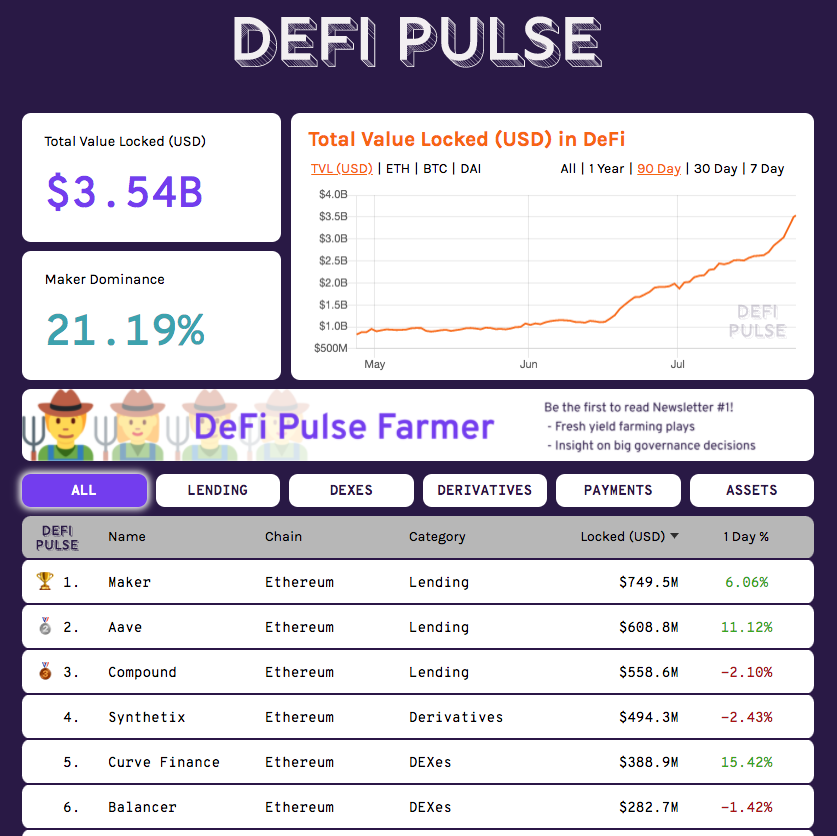
DeFi project parties distribute tokens to users, which has set off a wave of "liquidity mining". For example, Compound, the most well-known liquidity mining project, distributes the protocol token COMP to depositors and borrowers. According to Compound officials, this is to achieve the purpose of decentralized governance and put power in the hands of those who regularly use the protocol.
But everyone is not stupid, we all know that Compound makes money: about 10% of the interest paid by borrowers is collected by it as a reserve fund, and Compound governance can easily withdraw it as income of the protocol itself. Although COMP is now a governance token, holders will eventually be able to profit from the protocol’s revenue.
We have seen that Synthetix, Compound, Kyber, Balancer, Curve have all announced similar governance token (but actually these tokens are dependent on future earnings) issuance proposals, and they have achieved great success in the industry.
It seems that yearn is just another DeFi issuance token. However, unlike dozens of other DeFi protocol tokens, yearn.finance's YFI and mStable's MTA are creating the next era of crazy protocol tokens.
So what makes YFI so different?
secondary title
The value of YFI
yearn.finance (formerly iearn.fianace) is a lending aggregation protocol. It used to be a non-profit protocol, and its creator, Andre Cronje, turned it into a public good. Since the lending protocol will distribute tokens to users, Andre feels that it is unwise not to collect these tokens.
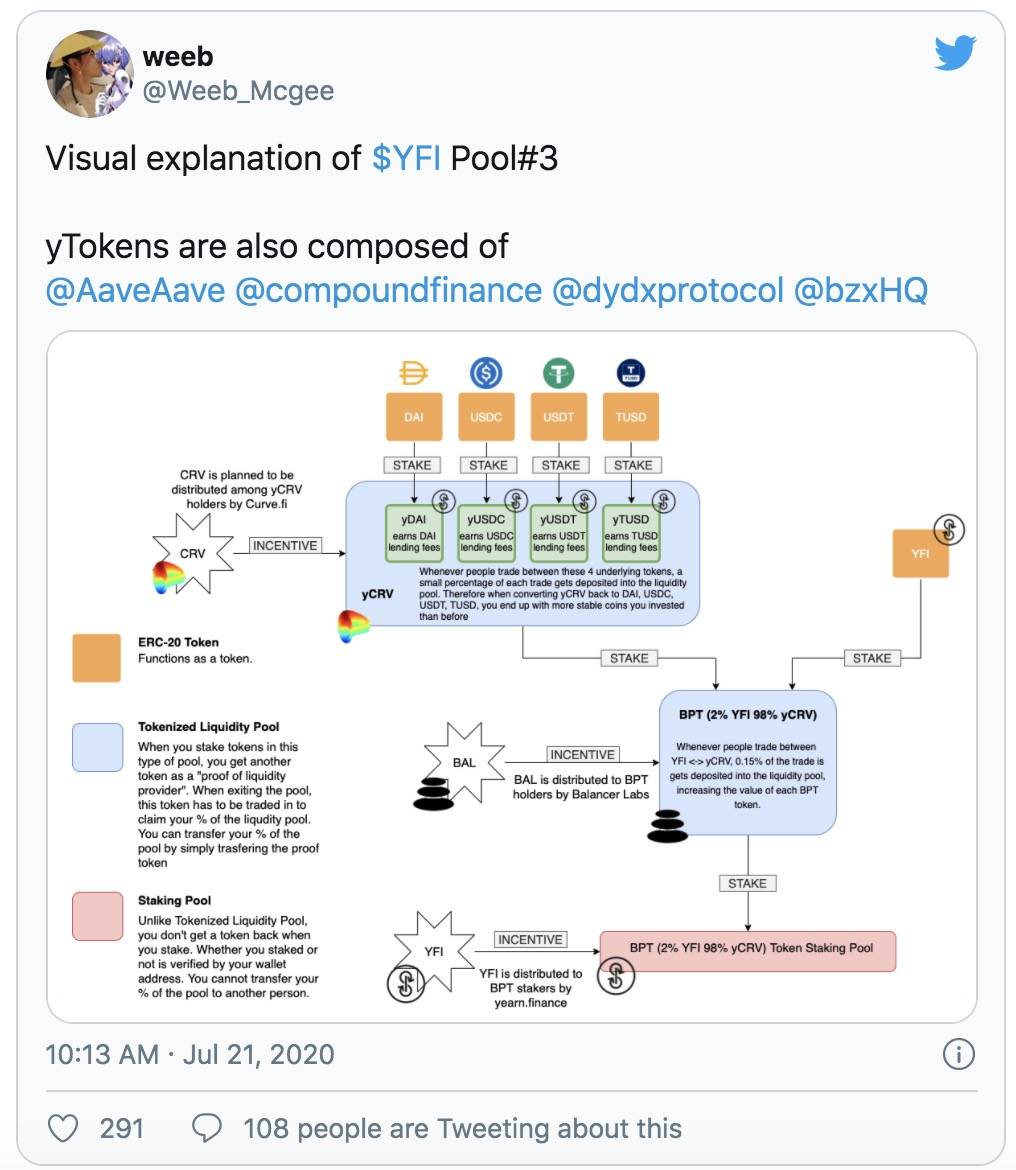
Therefore, he proposed a new mechanism: create a pool, collect all random airdropped protocol tokens, convert them into stablecoins (aDAI), and then distribute these stablecoins to token holders of the yearn protocol. Despite Andre's claims that YFI has no financial value, people are still buying and farming it. Participants believe that a token that creates an income stream must be worth something.
In the section above, YFI is still exactly the same as COMP, both have a profitable protocol, both have airdropped tokens to early users, and both tokens represent a portion of the project’s future revenue.
Then, things started to change. The following are the most popular YFI farming methods:
The whole picture of YFI farming (mining):
Deposit into yCurve to farm YFI;
Source of income:
Deposit 98% of yCurve+2% of YFI in the Balancer pool to cultivate additional YFI;
Pledge BPT (Balancer Reserve Pool Token) and vote on the governance plan;
Source of income:
Supply income from Compound/AAVE/dYdX/bZx;
Transaction fees from Curve;
CRV token mining (coming soon);
YFI obtained by staking BPT;
yearn agreement fee (COMP, LEND, etc.);
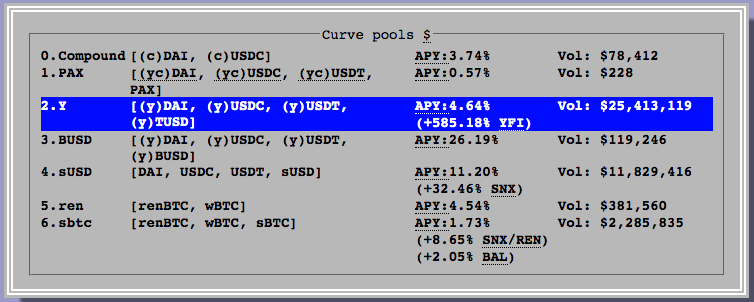
Farming in these pools, you will get the following incredible annualized rate of return.
secondary title
The Secret Behind the Crazy Returns
Faced with such a high annualized return on yCurve, those Yield Farmers will naturally be attracted, and of course they will want to get all the income. So what will they do? They will mint yCurve and deposit it to cultivate YFI. Later, they find that they can get more YFI by depositing into the Balancer pool. They hope to join, but most people do not have YFI at that time.
Thus, YFI farmers add liquidity with a single asset, yCurve.
That's the point. Since YFI/yCurve is a 2%/98% Balancer pool, people will not feel the friction immediately. However, just using yCurve to increase liquidity has the same effect as buying YFI with yCurve (what logic is that?). In short, whenever a new YFI farmer joins the pool, he deposits into yCurve as if 2% of it was used to buy YFI.
The 98% composition of the Balancer pool is YFI's secret recipe, which starts a feedback loop: more capital deposits will push up the price of YFI, and higher YFI prices mean higher annualized returns, and then higher annualized returns. Maximizing the income will attract more people to join this income farming game, and then repeat the process.
So what happened to mStable?
At first glance, mStable seems a bit strange, 1:1 exchange of stablecoins? Because in reality, there will always be a price difference between stablecoins! The AMM should have a dynamic exchange rate so that it can do two-way arbitrage, otherwise, the higher priced base stablecoin can easily be drained.
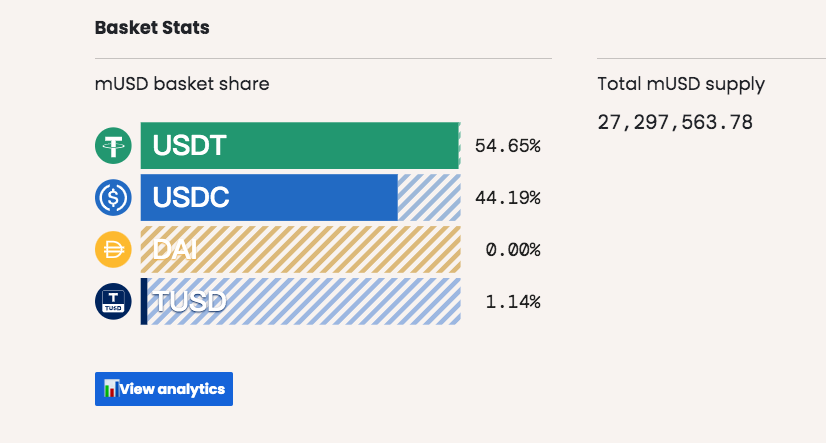
Not surprisingly, a basket of mUSD should be 55% USDT+45% USDC (since it has a 55% limit on a single asset), then the system would stop and no new minting/withdrawal/ Swap operations will no longer incur any fees (except for loan interest).
However, mStable is not facing a death spiral, instead, its protocol token MTA is still climbing. I suddenly realized that mStable's model is exactly the same as YFI: if someone wants to farm MTA, he must first mint mUSD. And to mint mUSD, he must supply stablecoins other than USDT. Then the percentage of USDT will drop, other people can use USDT to trade, mint, etc., and the agreement can regain the fee again.
secondary title
Yes and no, depending on how you define Ponzi. According to the definition with the broadest coverage, social security, pension funds, and $1,500 Tesla stock also belong to this concept. Anything that makes profits highly correlated with other people's investment (especially later investors) may constitute this concept. . So how do we distinguish between Ponzi and non-Ponzi? This is not an easy question.
Back to the DeFi scene, both YFI and MTA have created a positive cycle of token prices and lock-up values. The slight difference is that yCurve is able to earn some yield without the protocol token, but mUSD itself is not sustainable without the MTA.
At the moment, I can't tell you which DeFi protocol will survive, but it's clear to me that if the party ends one day, yearn will still have some fundamental, self-sufficient value, but mStable probably won't since holding mUSD is more likely to There is a loss.

secondary title
Y phenomenon
“Don’t buy it, earn it. — Andre Cronje”