

Deloitte China Fintech: How to promote the application of blockchain in the digital transformation of enterprises | 2020 new district trend

image description
Editor | Hao Fangzhou
Produced | Odaily
Many authoritative experts and professors from financial institutions such as funds, securities, banks, and industry leaders gathered here to share new information on financial technology and explore the future potential of blockchain. (Link to the live broadcast of the summit:
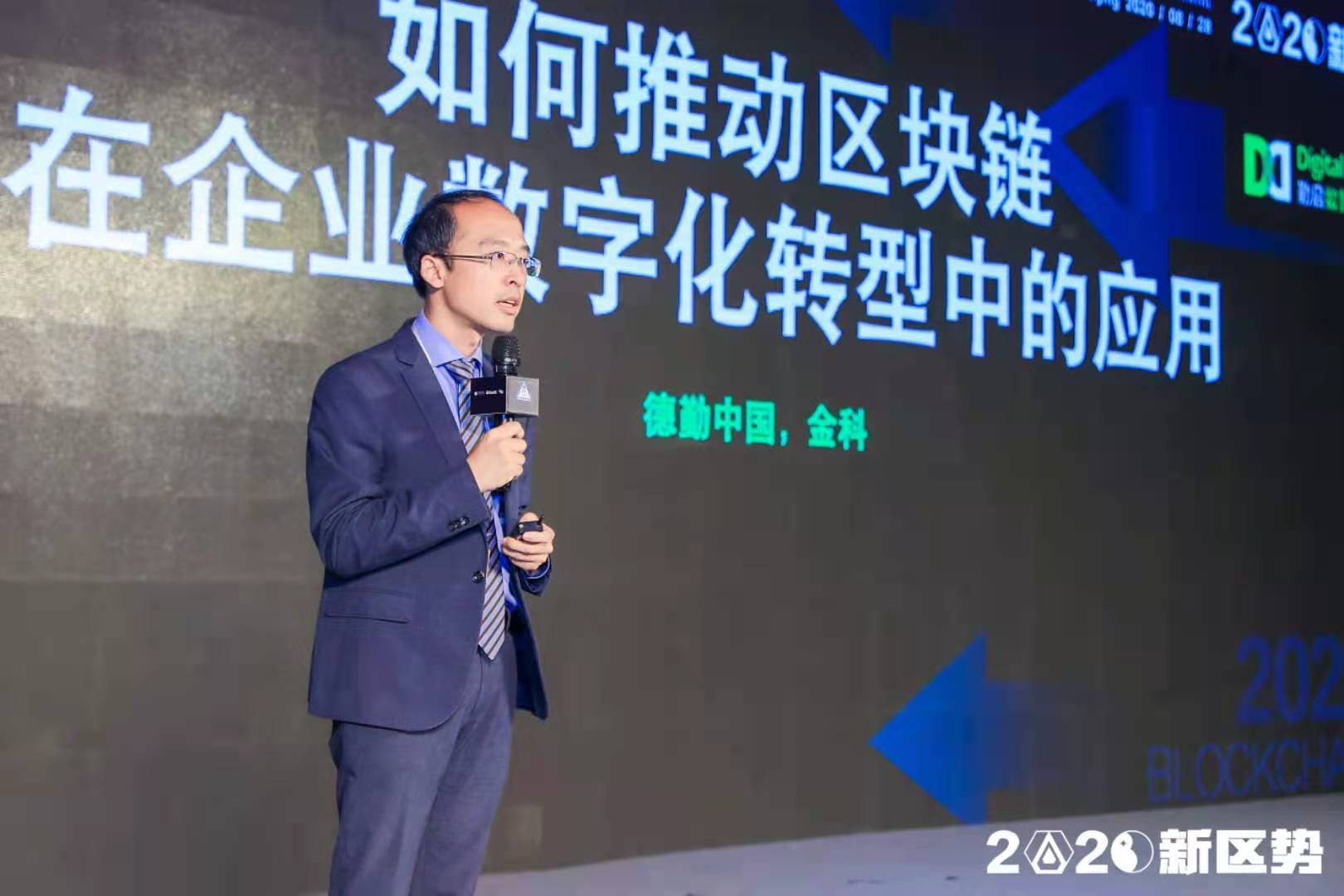
On August 28, the "2020 New District Potential Blockchain Technology Finance Summit" was held in Beijing.
This summit is co-hosted by Huobi Group, 36kr and Odaily, sponsored by Behelix & HBTC, strategically sponsored by ChainUP, specially sponsored by PayPal Finance, Conflux, BitUniverse, WaykiChain, XnMatrix, Hashi Co-sponsored by Technology, Mixpay, COCOS, and Shanghai Diyi.
Many authoritative experts and professors from financial institutions such as funds, securities, banks, and industry leaders gathered here to share new information on financial technology and explore the future potential of blockchain. (Link to the live broadcast of the summit:https://play.yunxi.tv/pages/27c9b4494d09487c8e9c9866e38895e8#/)
In the afternoon session, Deloitte China partner Jin Ke made a presentation on "How to Promote the Application of Blockchain in Enterprise Digital Transformation?" "Keynote Speech.
He said that the current blockchain application scenarios on the enterprise side are distributed in data verification, data access/sharing, identity protection, tracking and tracing; the main factors that hinder enterprises from increasing investment in blockchain are: implementation (replacing or changing existing systems) , regulatory issues, potential security threats, lack of relevant capabilities (technology and understanding) within the enterprise, and uncertainty about return on investment.
Jinke added that there are five key success factors to promote the application of blockchain in enterprises:
To improve performance and throughput, developers are developing new consensus mechanisms to improve blockchain performance;
Strengthening standards and interoperability, standardization can promote cooperation between enterprises in many aspects, including application development, proof of concept, sharing blockchain solutions, and integration with existing systems;
Reduce complexity and cost. Cloud service providers are releasing more and more blockchain templates to help users automate the setup of blockchain infrastructure, thereby reducing blockchain-based application development time from months to days;
Regulatory support, requiring positive action from regulators, such as recognition of cryptographic signatures, definition and use of smart contracts, use of blockchain for business records, etc.;
The following is the full text of the speech, organized by Odaily
The following is the full text of the speech, organized by Odaily
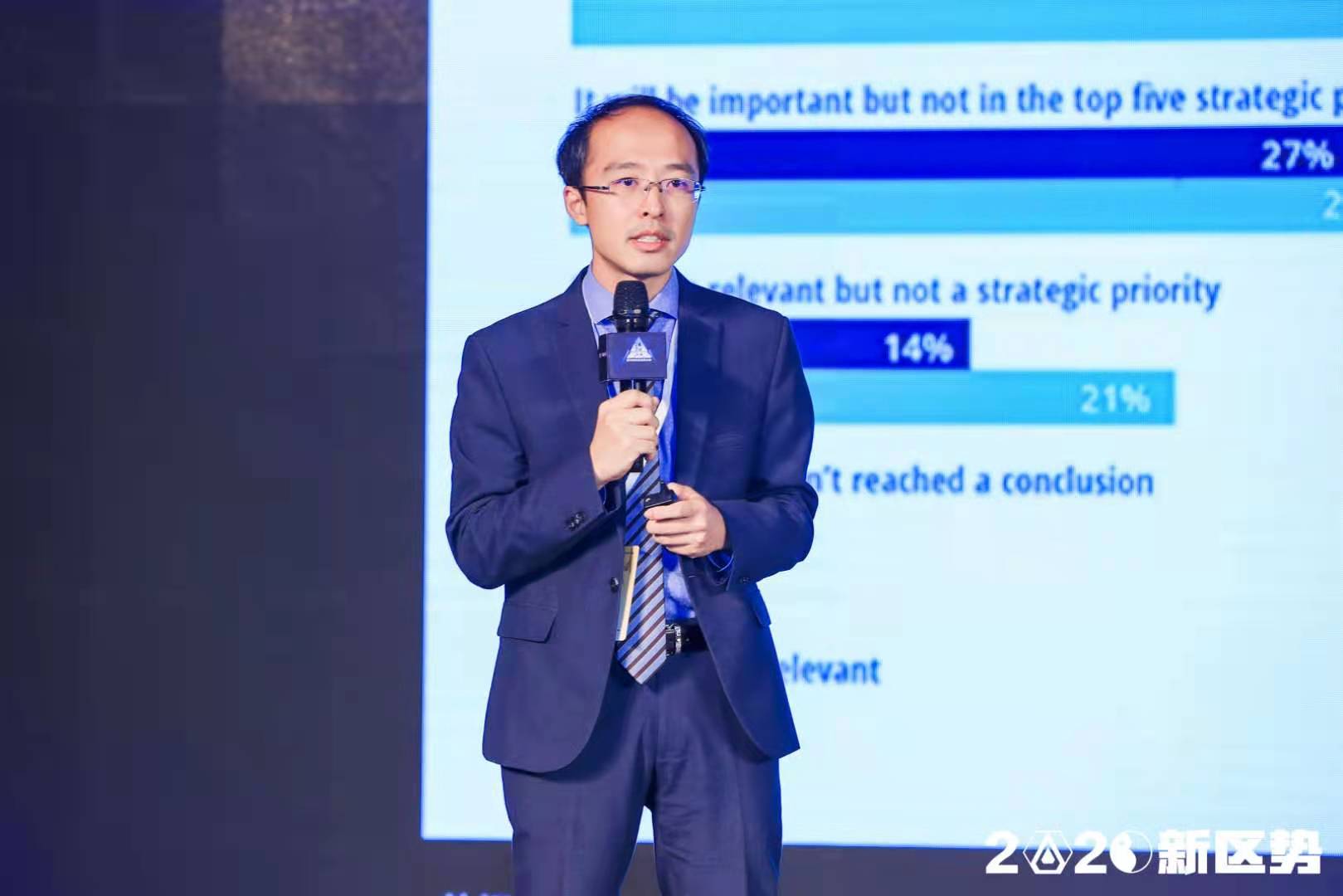
Dear leaders and distinguished guests, I am very glad to have this opportunity to communicate with you today.
I am the managing partner of Deloitte Innovation Digital R&D Center, responsible for innovation and digital R&D.
We are very concerned about the application of digital technology in the industry, not only the application of Deloitte itself in the field of professional services, but more about how the customers we serve face the challenges of technology in the entire digital transformation, and how to use these technologies to promote the growth of enterprises. digital transformation.
My speech today will be combined with our annual research report on the global blockchain industry. From the perspective of the industry, we will share the challenges and difficulties that the blockchain currently encounters in the application scenarios of various industries. Finally, we will put forward some of our views and insights. The use of blockchain technology in the process of digital transformation of domestic enterprises will further promote Digital transformation includes product form, service delivery, operation, efficiency improvement, etc.
Last year, we conducted a survey on more than 1,380 companies around the world (200 of which are Chinese companies), and the surveyed objects were all senior executives of the large companies we serve. We conduct this survey every year to observe and perceive the acceptance and challenges of blockchain technology among people in all walks of life.
The first question is, how do the interviewed companies view blockchain technology in the next two years?
The darker bars are for 2019 feedback, and the lighter bars are for 2018. Judging from the feedback, 53% of enterprises believe that blockchain technology will be a priority in their enterprise digital applications, and 27% of enterprises believe that blockchain technology is very important for the development of enterprises in the next two years, although not Among the priorities, but also very important, the two add up to exactly 80%. From a global perspective, 80% of enterprises believe that blockchain is very important.
Compared with 2018, in 2019, the proportion of putting blockchain in the "top 5 priorities in the next 2 years" increased by 10%. In the process of communicating with customers, many companies are making their own future strategic planning.
Yesterday afternoon, we visited a leading IT company in the domestic construction industry. They are now making a plan for digital transformation of the company in the next 10 years. Blockchain technology itself is also an area of concern in their future digital technology. For these companies, everyone thinks this technology is very important, and there will be many differences in where they go in the future.
Next, look at the second question. What do they think about blockchain technology?
The first small question is, in terms of scalability and whether blockchain technology is likely to become the mainstream application of enterprise IT infrastructure in the future, 86% of business executives in 2019 believe that this will become a reality in the future. 83% of managers believe that blockchain has good application scenarios in their own industries, and they can at least hear some stories, such as financial industry, logistics industry, medical industry, etc.
Looking further down, we can see that the proportion of enterprises began to gradually decrease in the process of using blockchain technology to accelerate their incubation and transformation.
For example, if the enterprise plans to use blockchain technology to replace the existing transaction storage system in the future, the proportion will start to go down; whether the blockchain technology may subvert the industry in which the enterprise is located, the proportion may only be 56%. %, a further decline compared to 2018.
An emerging technology, gradually evolving to its peak, also has expectations shattered. Many companies have been very enthusiastic in the past few years. In recent years, everyone has increasingly discovered that there will be some difficulties and challenges in the application of blockchain in various industries. This also makes enterprises look at this technology more calmly, and its position in the entire technical architecture of the enterprise in the future.
The following picture reflects customers from more than 20 major industries, and what are the main usage scenarios in their current blockchain application practice.
We can see that in several large industries that use blockchain more mainstream, everyone is still focusing on data verification, data access, identity protection, and data tracking. In fact, in most industries and enterprises, there are still relatively few applications.
Through research, we also found that in the process of blockchain landing in various industries, industries that are particularly enthusiastic about blockchain include the financial industry, TMT, life sciences and health care, and manufacturing. In addition to these major industries, most other industries are still exploring the state of the combination of blockchain and more business scenarios in their own industries. Because the attributes of a certain aspect of the domestic blockchain cannot be used in China, a large part of our scenarios is also limited.
From a global perspective, the adoption and application of blockchain technology by domestic companies lags behind that of European and American companies.
For these corporate executives, what are the specific factors that hinder everyone from increasing investment in the blockchain in the future?
First, in terms of blockchain implementation, enterprises have many concerns and pain points. If you are familiar with the application of enterprises, many large enterprises are now in the stage of moving from informatization to digitalization. The earliest informatization enterprises in China, such as OEMs in the automobile manufacturing industry, have developed to the original core ERP system. Such a functional module is actually relatively complete.
But for enterprises, new technologies will face new challenges. The blockchain is only a link in the overall challenge. If there is a lack of verifiable solutions on the ground, how can it be well operated with the existing digital infrastructure of these enterprises, can iterate sustainably, and support For the core operation of enterprises, if these problems are not resolved, it will be very difficult for mainstream enterprises to adopt blockchain as their core.
Encryption, digital signatures, electronic certificates, etc. are all required to be recognized by regulatory authorities in various industries; security risks and lack of relevant capabilities within the enterprise are also very typical hindrances. Because many companies are facing digital transformation, not only blockchain technology, but also big data cloud and artificial intelligence lack corresponding professional talents and capabilities. Under such circumstances, if there is no external force for the enterprise, such as blockchain technology or consulting companies, it is actually very difficult for the enterprise itself to take this step.
There are many difficulties. After years of analysis, we still have some key success factors to promote the further development of blockchain, because after all, it still has many inherent advantages from a technical point of view.
We have summarized the key success factors. There are five main points. For practitioners in the blockchain industry, especially technology companies and future solution providers, if you hope that the digital transformation on the enterprise side will have more expansion and better For business scenarios, everyone must solve these problems.
First, improve performance and throughput.As the nodes of the chain become larger and larger, its TPS will drop extremely. The TPS of Ethereum is only 15. This kind of TPS support is completely unbearable for large enterprises.
If you want to conduct transactions in the business backbone system, you must increase the barriers in blockchain technology. Now there are some new technologies, such as sharding technology, which allow some different nodes in the entire chain to improve processing speed through sharding, and some are verifying the progress of the technology. These are very, very important.
Second, strengthen standards and operability.Many new systems now face barriers, and data does not interact. This pain point, if the blockchain can make good use of its information interaction attributes, can help companies solve this problem, and it can become a technology that everyone welcomes. Our research has found that various programming languages are very diverse. In this case, it is difficult for enterprises to promote the implementation of blockchain. Standardization can facilitate cooperation between enterprises in many ways, including application development, proof of concept, sharing blockchain solutions, and integration with existing systems.
Third, reduce complexity and cost.Now due to the large economic environment, including the huge investment in digital transformation, the application of blockchain must be able to control costs and reduce the complexity of development. As for the talent issue of the enterprise itself, we have also seen that there are some relatively good attempts. To promote the rapid deployment and development of blockchain services.
Fourth, regulatory support.From the perspective of supervision, the whole country is promoting digital currency, and supervision in other industries is also orderly and gradually guiding everyone to a reasonable blockchain application scenario. In the future, fields such as smart contracts still need regulatory support.
Fifth, cultivate blockchain alliances.Many enterprises in the field of blockchain applications can establish blockchain alliances based on upstream and downstream. Through the alliance, everyone can cooperate to better verify the scenarios of blockchain usage and build digital transformation steps. In China, there are relatively few industry-level blockchain alliances to promote better concept certification and implementation of blockchain in a specific industry.
If these five aspects can be better resolved in the future, blockchain will be better applied in the digital transformation of domestic enterprises.
Finally, thank you all for listening.