

Combinability of DeFi users: Uncovering the reasons why food-based projects such as sweet potatoes and sushi become popular

Editor's Note: This article comes fromBabbitt Information (ID: bitcoin8btc), Author: Chris Powers, Compile: Overnight Porridge, published with permission.
Editor's Note: This article comes from
Babbitt Information (ID: bitcoin8btc)
Babbitt Information (ID: bitcoin8btc)
Composability is often cited as DeFi’s secret sauce, and “money LEGOs” enable products and services to be interconnected permissionlessly, extending innovation vectors beyond siled companies.
Let’s say Pooltogether, a lossless DeFi lottery, creates an interesting savings product that pools deposits and then hands the accumulated interest to lucky winners each week. Pooltogether doesn't need to build much, it mainly relies on Compound and Dai, and doesn't need permission from them.
Composability is undoubtedly the bible of DeFi, entrepreneurs don't need to build what already exists, but only need to use existing products to make new things. As of now, tokens and smart contract calls are the best examples of DeFi composability, and in recent months, DeFi users have also shown composability.
Just as new entrepreneurs can build on top of Aave, Synthetix, or Uniswap, they can build for Aave, Synthetix, or Uniswap users.
secondary title
Community Piggyback ("Riding Piggy")
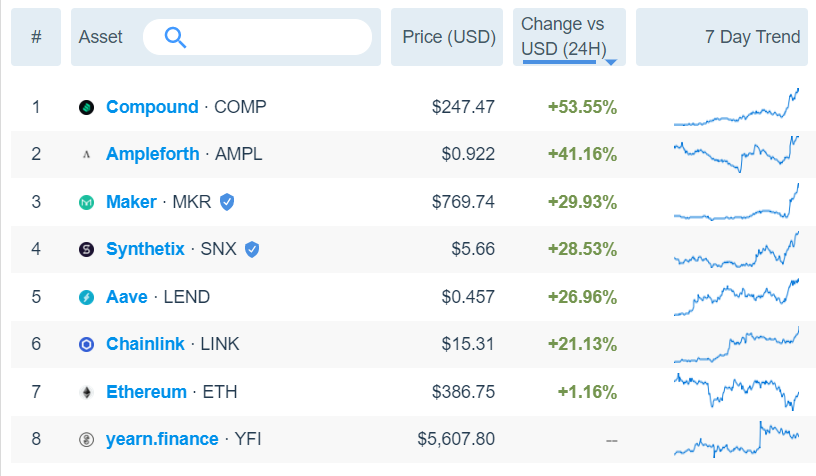
We'll talk about Sushi later, but the best example of a new community project inheriting an existing project is YAM. YAM is launched without pre-mining, new YAM tokens will be distributed to stakers, but not all tokens can be obtained, 8 tokens are selected that meet the conditions of the YAM deposit game.
One might think, wouldn’t it be better to accept any asset to grow the value locked (TVL) of the protocol? In fact, at the initial stage, rewards for specific token issuance are very attractive to these communities and token holders.
In fact, YAM is not after these pledged tokens, but the community behind these tokens.
YAM is essentially a combination of Compound’s governance, Synthetix’s staking, and Ampleforth’s reset adjustment, so it makes sense to target holders of these tokens.
Of course, this is a symbiotic relationship (at least at first), and new entrants need to buy tokens to play in this game, which makes holders of target token assets happy.
As Maker experienced, when Dai demand soars and becomes the go-to for this type of farming activity, token design needs to defend against potentially exponential demand, and currently, Dai is still trading above its peg at $1 .
For liquidity providers, not token holders
As YAM pursues token holders, more and more projects are targeting liquidity providers (LPs) to play the token issuance game.
In my opinion, BASED is the first project to target existing liquidity providers (LPs) for new token distribution. Participants can stake Curve $sUSDv2 LP tokens for an initial $BASED distribution, obviously, the designers of BASED knew their target audience.
The sUSD pool is basically SNX holders, some people may call them the degen-est token community, but 80% of the SNX has been pledged in Synthetix, so BASED is targeting the popular LP tokens in the community to guide users group. Dai and sUSD tokens traded even up to $1.1 after BASED rewards kicked off.
secondary title
"Sushi" Moment
Ok, now it’s finally SushiSwap’s turn, a Uniswap fork project that hasn’t officially launched yet. Last week, the project started a token distribution activity. It uses a staking interface similar to YAM, but for Uniswap LP tokens, not underlying tokens. And SushiSwap targets two overlapping groups:
Uniswap Liquidity Provider (LP);
After the "sushi" tokens started to be distributed, the price of the target tokens started to rise, some of them experienced pumps (such as UMA), but their price movements may weaken because the target tokens are still in the Uniswap pool, rather than being locked in a contract.
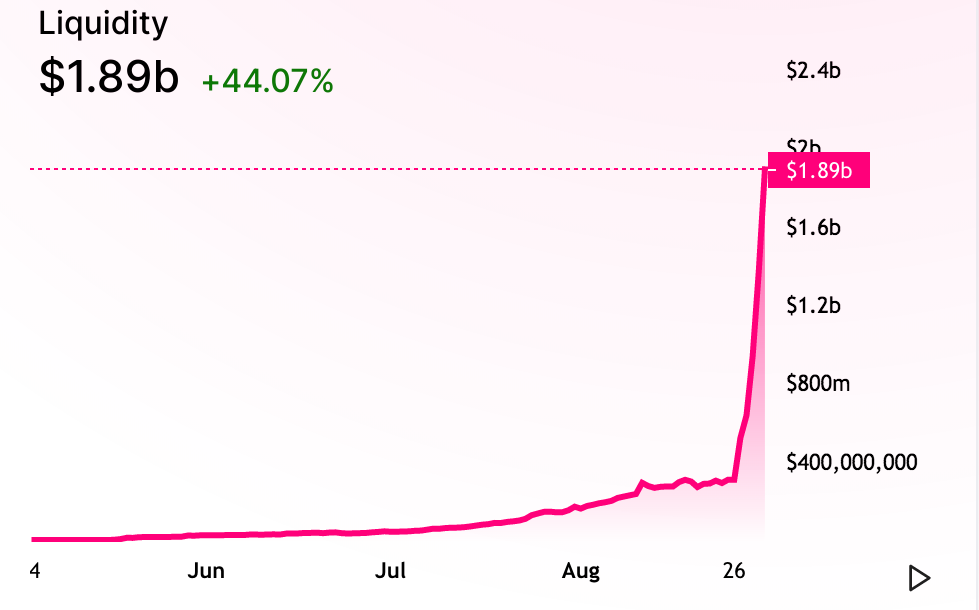
Just as YAM increases the demand for tokens required to participate in its mining game, "Sushi" also increases the demand for related Uniswap LP tokens. Participants need to deposit funds into a specific Uniswap pool, which leads to the liquidity of Uniswap surge.
Although the current liquidity is in Uniswap, more than 80% of LP tokens are hosted in SushiSwap Staking contracts. SushiSwap hopes to migrate its liquidity to its own DEX after launch, but according to speculation, once the return decreases, part of the pledged LP tokens will leave. In addition, the unknowns of the migration process are very large. Therefore, before the migration , there may be more pledged LP tokens that will choose to leave.
secondary title
Liquidity Provider (LP) ≠ Trader
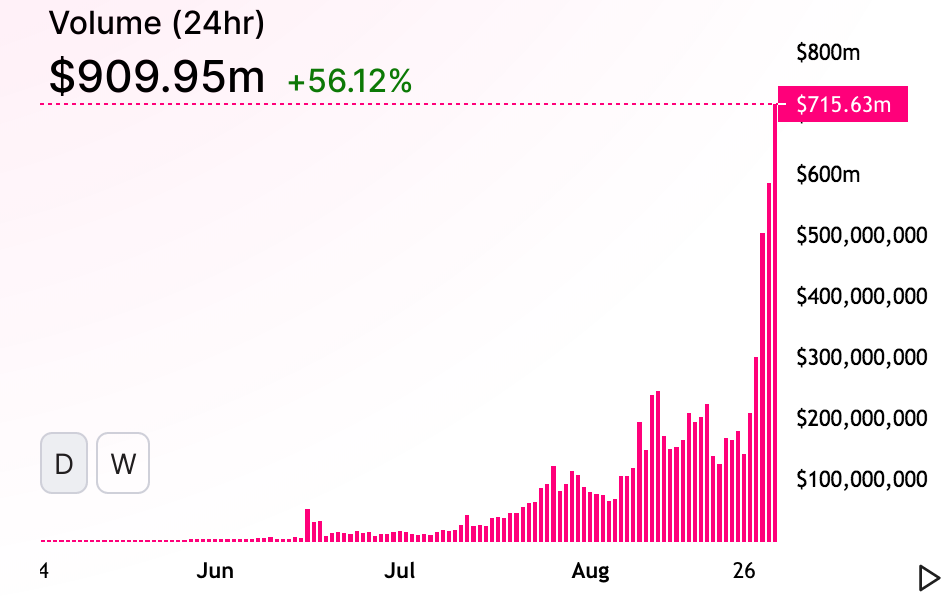
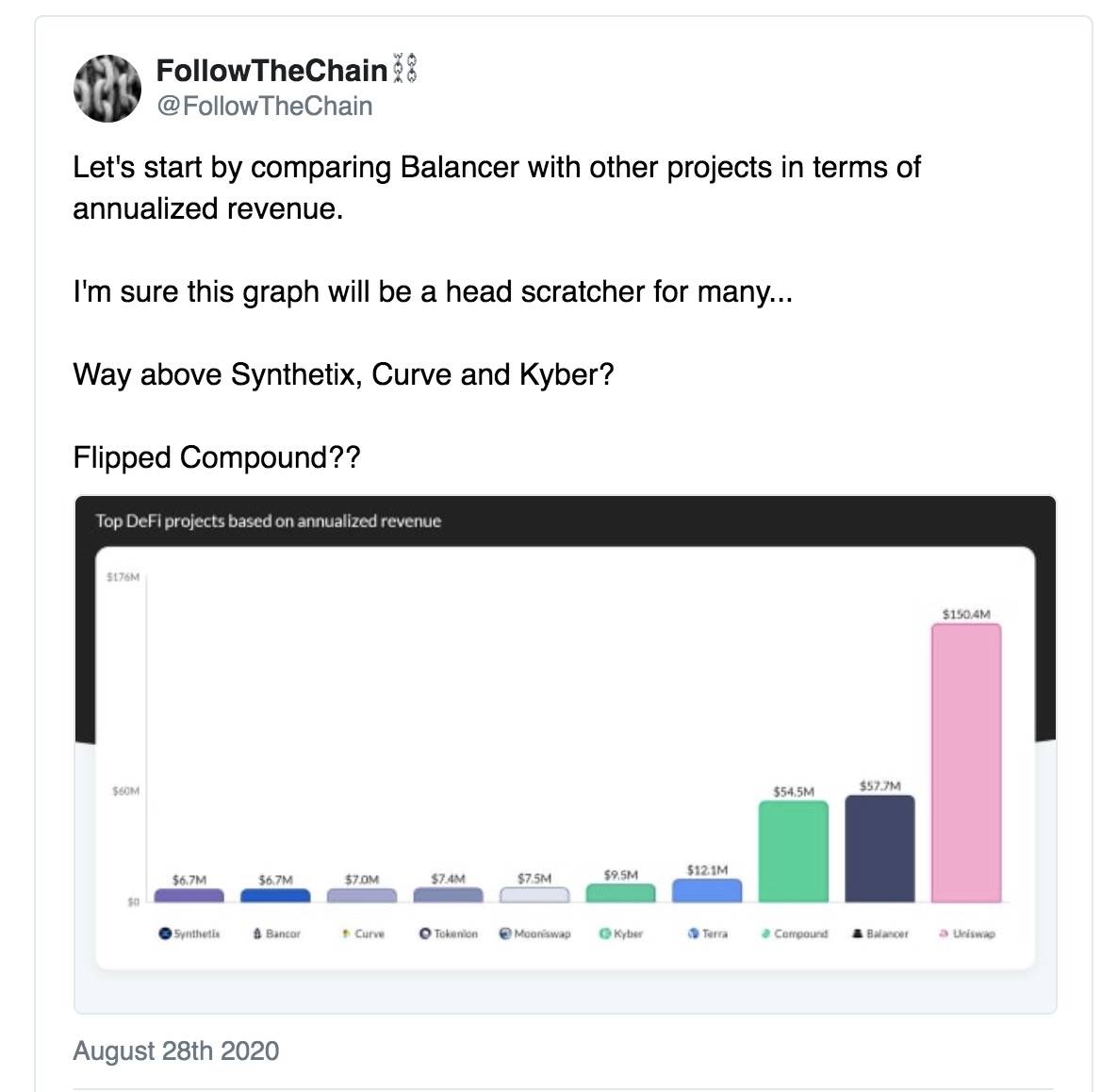
Liquidity providers (LP) pursue fees, and fees are linked to trading volume. In this regard, Uniswap is still the king:
Compared to a month ago, this is an incredible volume achievement, especially with gas fees so high.
In general, other projects can compete with Uniswap for market share, but more emphasis should be placed on attracting traders, not just liquidity providers (LPs).
secondary title
Phenomenon to watch this week: Balancer’s growth