

The price is far higher than Bitcoin, Yearn dedicated to letting users lie down and win
This article is from:Hashpie (ID: hashpie)Hashpie (ID: hashpie)

SummaryHashpie (ID: hashpie)
Since 2019, the decentralized financial market has grown at an astonishing rate. In the past year, the amount of locked positions in DeFi has continued to soar, and it successfully exceeded 10 billion US dollars last month. Although affected by the collective decline in the encryption market in recent days, the lock-up volume has fallen back to a level of about $8 billion, but compared with a year ago, it has achieved an increase of more than 15 times. The development of decentralized finance is in full swing, and participants in the entire industry are eager to move; but regardless of the secondary market, there are very few people who actually use DeFi projects. In order to break the gap between new users and decentralized finance, Hashpie will launch a series of reports in the near future, detailing the working methods and revenue mechanisms of potential projects.
Series 1: Derivatives platform Synthetix with no lock-up volume surged by more than 20 times and no liquidation | Research Report
1. Yearn: an automated lending aggregator dedicated to letting participants lie and win
At the beginning of 2020, Andre Cronje, a blockchain technology geek, spent tens of thousands of dollars in development, auditing and hosting fees, and almost single-handedly built an aggregated ecosystem iEarn.Finance that supports multiple DeFi protocols (now renamed yearn. finance). In Andre's original idea, Yearn is a loan aggregator that can find the highest yield rate. It automatically transfers stable currencies between various lending agreements to provide users with high returns without active fund management. The lying win mechanism.
image description
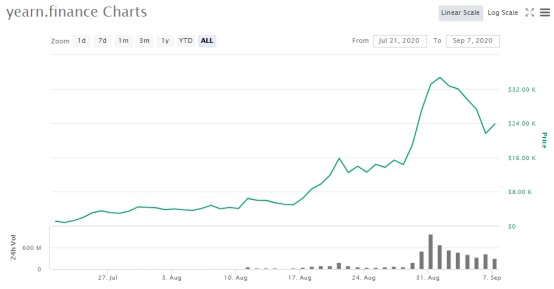
Since its launch, the price rise and fall of YFI tokens (data source: Coinmarketcap)
image description
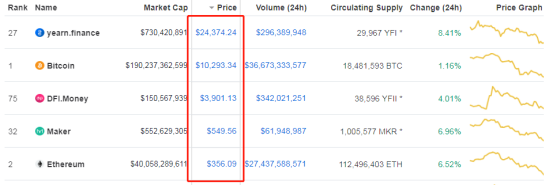
Price ranking in the global cryptocurrency market (data source: Coinmarketcap)
Since the release of the project token YFI, its price has skyrocketed by nearly 10,000 times, detonating the entire encryption community in just two months. From $3 when it was making a market on Balancer on July 19, to the opening price of more than $7,000 when it was listed on Binance Exchange, and then to $34,728, which broke through the $30,000 mark on August 31, the price of YFI has been rising all the way. Surpassing Bitcoin to become the most expensive currency in the field of cryptocurrency. Although affected by the collective decline of cryptocurrencies last week, YFI fell by about 26% within a week; but its current price is still twice as high as Bitcoin, with an increase of 383 percentage points within the month, and its total market value ranks 28th in the field.
2. Understand the YFI token
The market is unprecedentedly hot, and the media is rushing to report, but the founder poured cold water on it at the beginning of this month, saying that in his opinion, the valuation of the YFI token is only $3.
image description
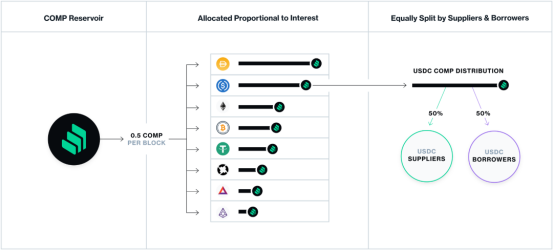
Schematic diagram of the distribution mechanism of COMP (data source: imToken)
Similar to the lending project Compound, the platform’s native token YFI is also generated through liquidity mining; depositing USDC, USDT and other currencies on yearn.finance can also obtain bond tokens yUSDC and yUSDT with a certain rate of return. But the difference is that yearn.finance itself does not have a lending function, and the operation of the platform depends on other DeFi services.
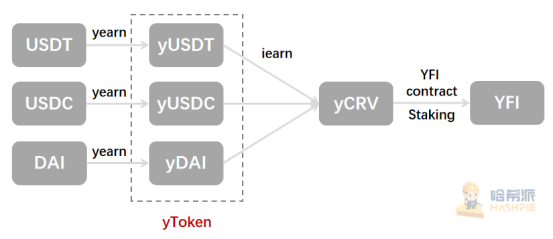
Ways to obtain YFI (data source: Internet)
To obtain the initial issuance of the platform’s native tokens requires the participation of other projects. Users can only mine YFI by becoming a liquidity miner in the stable currency automatic market maker Curve and the investment portfolio management platform Balancer’s Yearn fund pool. Taking Curve's yPool pool as an example, depositing USDC on yearn.finance will generate a corresponding amount of yUSDC, depositing the latter into Curve's iEarn fund pool will generate yCRV, and finally pledge yCRV in the YFI Staking contract, and the platform will A certain amount of platform native tokens will be distributed to users according to the deposit ratio.
secondary title

3. How to create profits on Yearn
image description
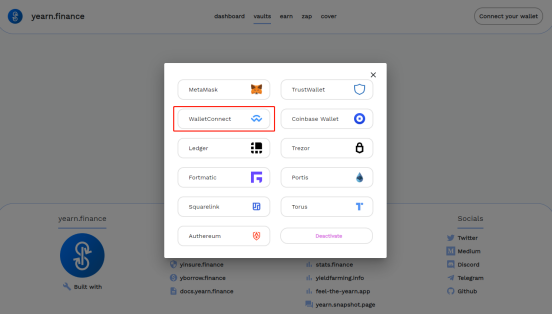
Main functions of the Yearn.finance platform (screenshot from: https://yearn.finance/)https://yearn.finance/
image description
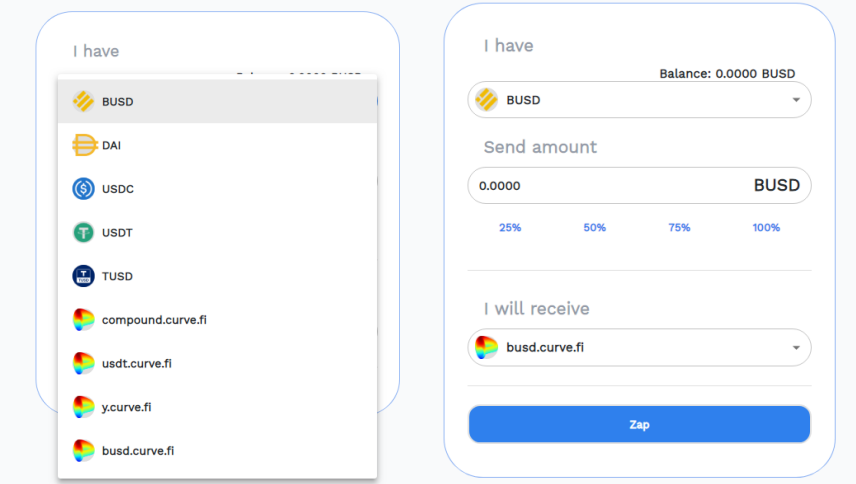
Screenshot from:https://yearn.finance/zap
Among them, Zap is a streamlined one-step solution that can seamlessly exchange tokens between different DeFi projects, but currently this function only supports mutual exchange between a small number of assets on the platform. Cover is a new decentralized insurance service added to the platform in the middle of last month.
Screenshot from:
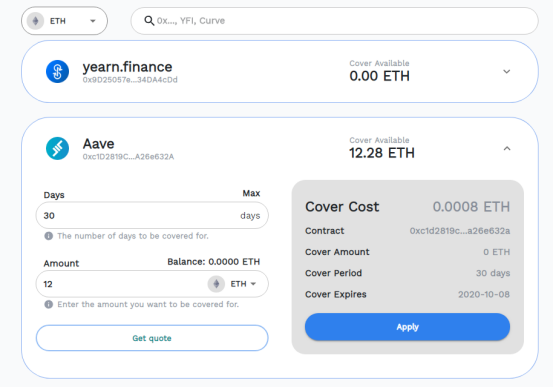
Cover Insurance Services
Against the backdrop of frequent security incidents of decentralized financial projects and market changes, DeFi insurance services have emerged as the times require, and projects such as Nexus Mutual and Opyn have emerged one after another. However, unlike these encryption projects with certain thresholds, YFI’s insurance products do not require KYC, and only require the insurer and the insured to realize the insurance relationship through pledged assets.
image description
Screenshot from: https://yinsure.finance/add
In a sense, YFI's insurance service is a game between the underwriter and the insured. However, the product has just been launched, and the details of claim management have not been fully announced, and the specific practical effect needs to be studied. According to the updated data of yinsure.finance, the insurance supported by the platform at this stage covers Balancer, Compound, Curve Finance, Synthetix and other platforms, but the amount of assets participating in the pledge is only 46,000 ETH.
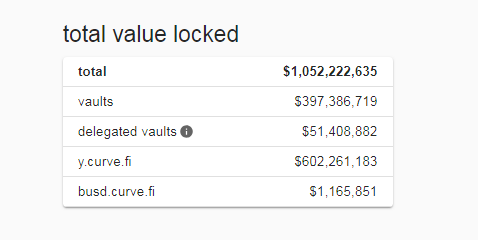
Earn stable income pool
image description
Fund pledge situation of each fund pool of yearn.finance (data source: https://stats.finance/yearn)
image description
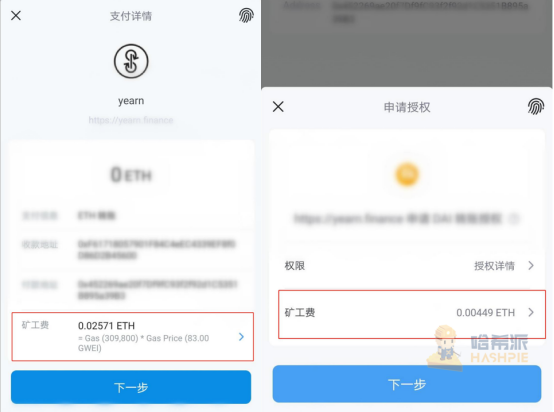
Currently, you only need to pay a transaction fee of about 80 yuan to deposit and withdraw tokens in yearn.financehttps://yearn.finance/earn
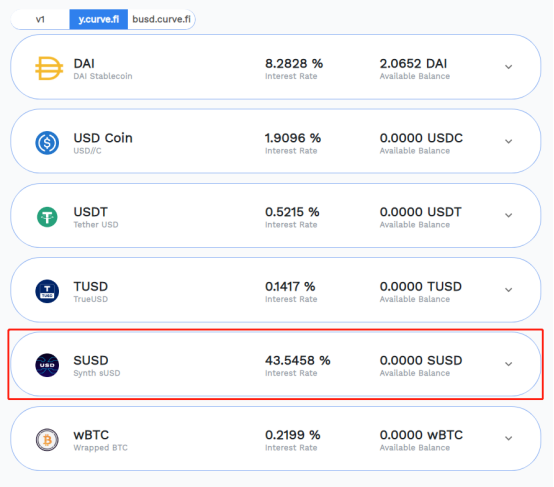
This means depositing cryptocurrencies into y.curve.fi and busd.curve,fi fund pools, and actually trading yToken; the process of finding the best interest rate is seamlessly carried out in the fund pool, thus saving the earlier process of moving positions The transaction fee that needs to be paid multiple times reduces investment costs.
image description
Screenshot from:
According to the description of the project founder Andre, when discussing with the Synthetix platform to start a stablecoin fund pool, he added another layer of agreement on it, allowing liquidity providers to earn deposit income and curve.fi fees on the basis of , but also get the liquidity incentive of SNX. Because of this, yearn.finance later launched Vaults, a smart pool similar to liquidity mining.
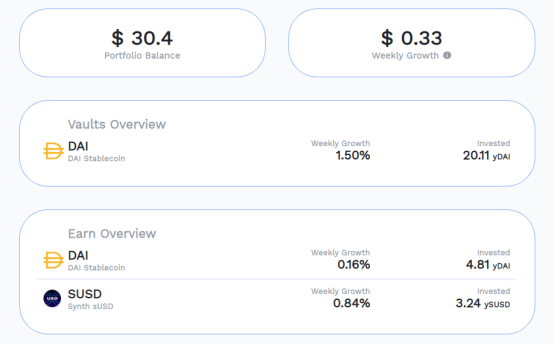
Vaults machine gun pool
image description
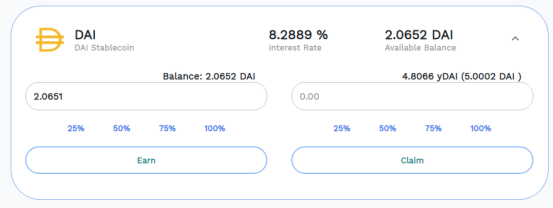
From the operation point of view, there is not much difference between the two. They both directly input the amount of the deposited currency, and authorize the transfer through the WalletConnect function of imToken, so that they can passively obtain income in the future. However, it is free to enter the Earn financial pool, and to participate in the smart pool, you have to pay 0.5% of the principal and 5% of the income to the platform. More importantly, the latter's high returns are based on increased investment risks.
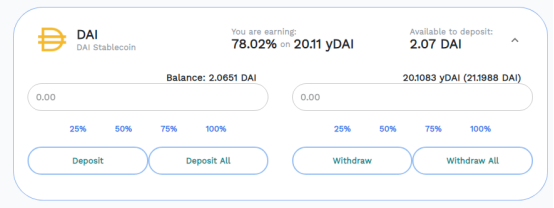
image description
Image source: Earn financial pool of yearn.finance
image description
In essence, yVault is a liquidity pool with a more complex investment portfolio. The encrypted assets stored by users in it will be distributed by the yearn.finance protocol in the most profitable way, thereby continuously expanding the pool of funds scale. Just like Chainlink, the first project to participate in yVault liquidity mining, when the token is deposited into the fund pool, the protocol will mortgage it in Aave. In exchange, Aave returns to yearn.finance in stablecoins such as USDC. Since this stable currency can be rewarded in the liquidity pool, the platform converts the increased USDC back to LINK, and the final amount of the user's hand will increase.
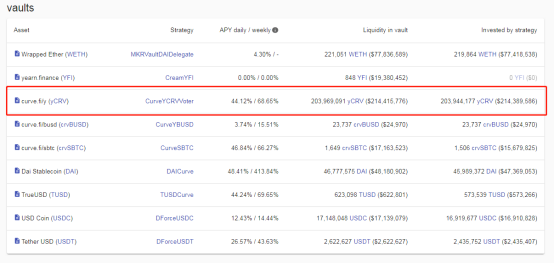
For retail investors, this aggregated investment method helps investors earn greater profits. However, complex smart contracts also mean higher security risks; and in the process of acting as a liquidity provider, you also need to be alert to the risk of impermanent loss of tokens, that is, the large price of two assets in the liquidity pool The loss of funds that will occur during fluctuations.https://stats.finance/yearn
image description
Screenshot from:
secondary title
4. The proposal for additional issuance was rejected, and YFII came into being
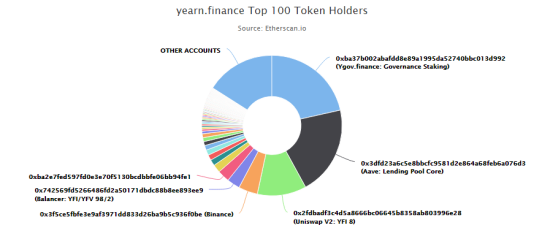
In fact, in addition to the profit-making methods mentioned above, early participation in yearn.finance can also earn YFI’s initial issuance tokens. However, the total amount of YFI is only 30,000, and all of them have been mined on July 26, 2020. Among them, 6,443 are pledged in the governance pool, 1,327 are stored in the Binance Exchange, and the DeFi protocols of Aave, Uniswap, and Balancer respectively hold There are YFI with about 20%, 11% and 3% shares.
image description
In order to retain the funds on the platform, some community members put forward the proposal of additional issuance YIP-8, trying to increase the total number of tokens from 30,000 to 60,000, and follow the Bitcoin halving mechanism to continuously reduce the circulation on a weekly basis. Later, as the proposal fell through, the market set off a wave of DeFi hard forks, and YFI hard forks such as YFII and YFV appeared in the field. Among these projects imitating yearn.finance, the most recognized by the community is DeFi.Money (YFII), which ranks third in currency price at this stage and ranks 81 in total market value.
Stake pledge mining
image description
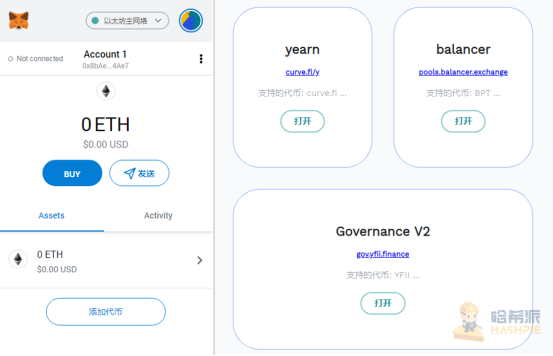
Data source: https://yfii.finance/#/stake
image description
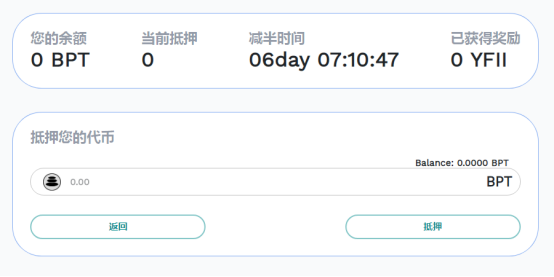
Screenshot from: https://yfii.finance/#/staking
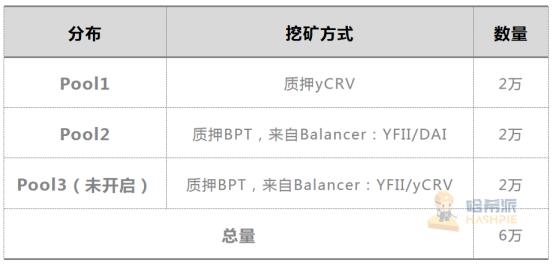
Taking pool2 with relatively high income as an example, before starting mining, the user deposits the purchased DAI into the wallet, and then mortgages DAI through Balancer's YFII pool https://bal.yfii.finance/#/pool/0x16cAC1403377978644e78769Daa49d8f6B6CF565 to generate BPT , you can participate in pledge mining.
image description
According to data from Etherscan, since its launch on July 27, 39,700 YFII have been mined in the network. Calculated according to the rule that the reward is halved every Monday, pool1 and pool2 will only distribute about 78 YFII this week. That is to say, users participating in pool2 pledges this week must pledge at least USD 1,500 in assets, so that the mining proceeds can just offset the gas fees that need to be paid during the operation (calculated from the data provided by the Pool2 computer).

No different from yearn.finance, YFII's Vault smart pool is also a service for passively obtaining income through simple pledge operations. The current platform has added support for YFII, DAI, yCRV, cCRV, wETH, and LINK. Users only need to deposit any of the above coins By depositing it in the machine gun pool, you can get YFII income (the Vault of this platform calculates profits based on YFII, and the tokens come from the repurchase of the secondary market). However, judging from the data released by the project, there are not many people participating in the pledge, and the relevant rate of return is not clearly marked.
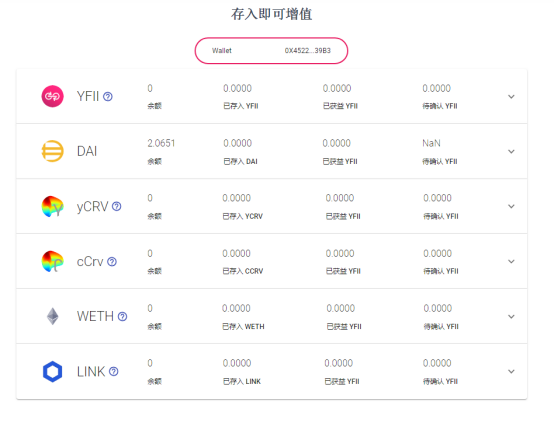
image description
image description
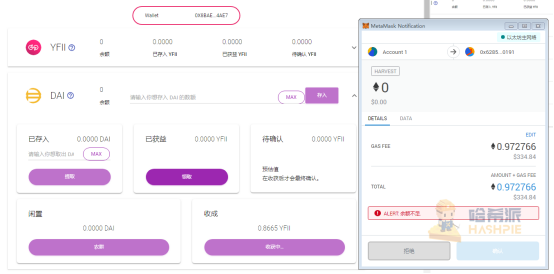
Screenshot from: https://dfi.money/#/vault
On the other hand, in order to prevent large users from diluting the income of miners in the fund pool by instantaneously injecting funds to receive rewards, the interest will be released evenly within 24 hours after each user recharges. Specifically, only after 24 hours of staking, you can withdraw to get all the rewards, and if it is less than 24 hours, you will receive part of the rewards according to the deposit time.
What's more interesting is that DeFI.Money's newly added Harvest harvesting function allows users who have not invested assets to participate in the Vault to also earn 1% of the YFII reward in the income pool by helping others receive the "harvest". According to the project party, frequent calls to Harvest can help reduce slippage during harvesting and further increase the overall benefits of smart pool users.
V. Summary
However, the rewards cannot be claimed in vain, and a certain amount of ETH handling fee needs to be paid when harvesting. Judging from the actual situation of HashPie, the harvest reward is not enough to offset the transaction fee, which is 334 US dollars, which is slightly higher than the YFII harvest reward in hand. Moreover, due to the current congestion of the Ethereum network, related transactions may not be packaged successfully.
secondary title