

After the DeFi thunderstorm, the hidden crisis has not yet been exposed

This article is from:Hashpie (ID: hashpie), Author: LucyCheng, forwarded with authorization.

This article is from:
Hashpie (ID: hashpie)
, Author: LucyCheng, forwarded with authorization.
1. Overview
In the first half of 2020, Bitcoin was halved, which slightly rekindled the market enthusiasm; in the second half of the year, the decentralized financial market unexpectedly exploded, detonating the entire encryption community in one fell swoop. Since June, DeFI projects such as Compound, yearn.finance, Sushiswap, etc. have taken turns, and the related tokens have shown a growth trend of several times or even dozens of times in price.
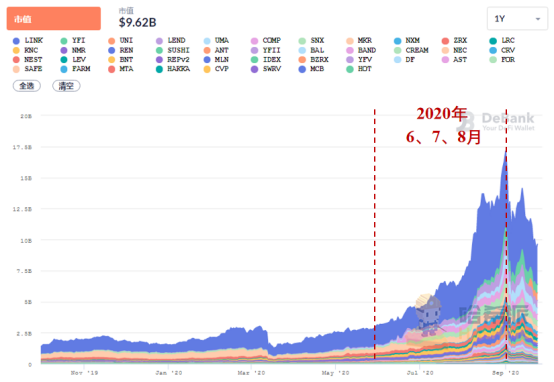
The rise and fall of the total market value of DeFi projects in the past year (data source: DeBank)
The market is growing wildly, aggregated DeFi projects emerge in endlessly, and fund users flock to them; but most of the carnival participants have not realized that these high-yield financial projects with superimposed functions have virtually integrated a variety of risks. With the recent failure of the YAM project and the sudden cash-out of the founder of Sushiswap, the avalanche of DeFi tokens has continued, the popularity of the field has subsided, and the market has ushered in a new turning point. In this article, Hashipai will analyze decentralized financial projects and observe the huge risks behind the wealth creation effect of the DeFi market.
2. From the sharp rise in June to the sharp fall in September, the popularity of DeFi has declined rapidly
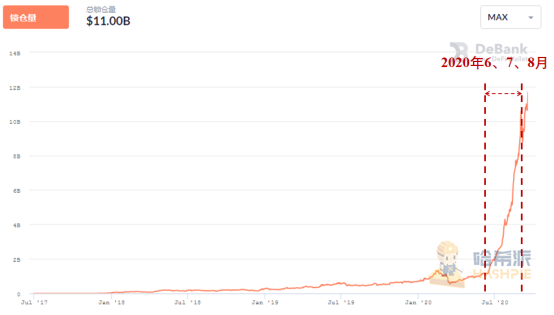
From 2018 to the beginning of 2020, the total market value of DeFi projects only increased by about 92%; as of January 1, 2020, the data reached 1.53 billion US dollars, which is less than one percent of the current market value of Bitcoin. The market trend has not changed in the first half of this year, and the total value of DeFi is still hovering around the level of 1.5 billion US dollars. It was not until the beginning of June that there was an inflection point, and it turned into an exponential growth mode. According to DeBank data, the total value of the DeFi market has jumped from US$3.3 billion to US$17.1 billion in just three months, with a cumulative increase of over 446%. During the same period, the total lock-up volume of DeFi also showed a straight-line soaring trend, soaring tenfold to a level of about 10.5 billion US dollars.
image description
Changes in the total lock-up volume of DeFi projects from July 2017 to the present (data source: DeBank)
image description
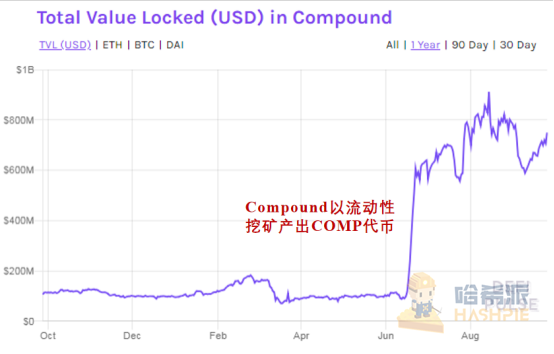
Compound lock-up situation on the chain in the past year (data source: DeBank)
Liquidity mining was launched on July 18 and yearn.finance, a governance token, was launched. The price of the token surpassed Bitcoin within one month of its launch, and reached a peak of $39,894 on September 13. The YFI market is unprecedentedly hot, citing media reports, and the controversy over additional issuance has set off a wave of forks in the market for DeFi projects.
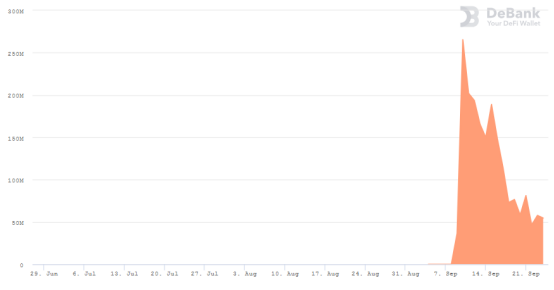
YAM, which adopts the YFI mining distribution model, forked AMPL, and it skyrocketed by 260% within 24 hours of going online. Sushiswap, which also adopts a YFI-like mining mechanism, was forked from Uniswap that did not issue coins. It absorbed more than 75% of Uniswap’s traffic within four days of its launch, and the total value of locked assets exceeded 700 million US dollars; the project token 9 As soon as it was launched on the exchange on January 1, it rose from $6 to $16, an increase of more than 166 percentage points.
Sushiswap lock-up situation (data source: DeBank)
Sushiswap's strong eye-catching and gold-absorbing ability pushed market sentiment to a climax. On September 1, the total value of the decentralized financial market reached a peak of 17 billion US dollars, and DeFi tokens including SUSHI, DF, KIMCHI, etc. hit new highs in the next few days. However, four days later, as the founder of Sushiswap was cashed out, problems such as running away from the project party and thunderstorms emerged one after another. Many once-popular DeFi tokens began to plummet, and SUSHI, which bore the brunt, was directly cut in half.
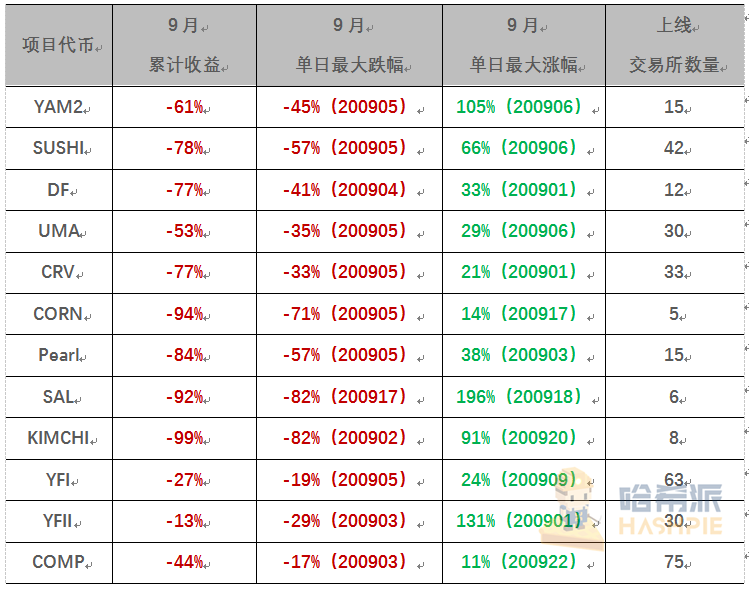
The rise and fall of tokens in DeFI projects that focus on liquidity mining in September (data source: Coinmarketcap; deadline: September 25, 2020)
Although there have been good news about exchanges entering DeFi, new currency mining, and SUSHI buying back tokens for $1,400, the market is not as hot as before. Since the beginning of the month, except for YFI, YFII, and COMP, all DeFi projects that focus on liquidity mining have not escaped the fate of halved prices, and the highest single-day drop of related tokens has reached 82%.
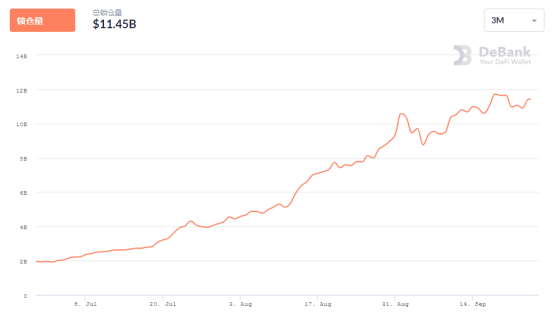
The total lock-up situation of DeFi projects in the past three months (data source: DeBank)
From the perspective of the secondary market, the scale of the DeFi market has shrunk significantly, and the transaction volume has gradually sluggish; but back to the primary market, the entry funds of DeFi projects seem to have no obvious signs of exiting the market. According to DeBank's data, the total lock-up volume of DeFi has experienced a sharp drop in the first few days of the month, and then quickly turned from a decline to an increase; although the growth rate has weakened, the current total assets have returned to the level of tens of billions of dollars. Among them, after Uniswap, the largest decentralized exchange in the field, announced the issuance of coins, the total lock-up volume continued to rise and broke through the $2 billion mark on September 19, setting a record high.
secondary title
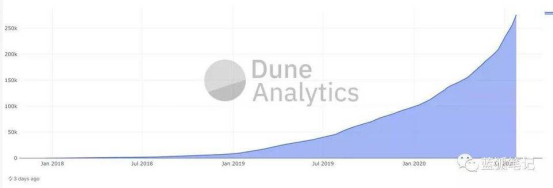
Before Compound launched liquidity mining, the locked-up volume of the project was only $90 million; before Balancer started liquidity mining, there were less than 1,000 users. Up to now, the number of users of these two projects has soared dozens of times, and the amount of locked positions has also increased to hundreds of millions of dollars. According to the statistics of DEFIPLUS, the lock-up volume of the projects that have started liquidity mining currently accounts for more than half of the total lock-up volume of the DeFi protocol.
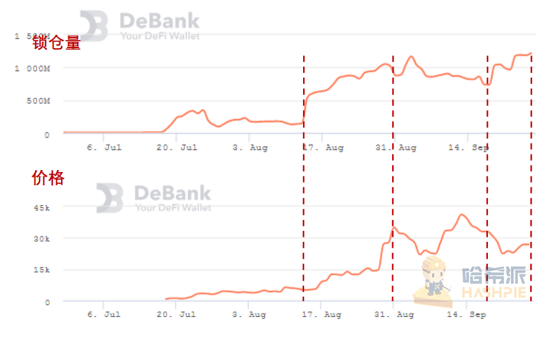
image description
Growth of DeFi users (data source: DUNEANALYTICS)
In liquid mining projects, the price of tokens usually rises with the number of platform participants and the increase of funds injected; in turn, the rise of token prices will continue to stimulate more funds to enter the market. In order to chase the rewards of project tokens, a large number of investors actively provide liquidity to the DeFi protocol, thereby further pushing up the price of tokens and forming a positive cycle.
image description
The lock-up volume and price changes of yearn.finance in the past three months (data source: DeBank)
For liquidity providers of DeFi projects, it is the fastest way to make profits by selling project tokens through the secondary market. Investors who buy governance tokens. As long as someone in the secondary market is willing to take over and the price of tokens remains high, the scale of the DeFi market will continue to expand under the effect of a positive feedback loop, and even give birth to a false sense of prosperity.
secondary title
4. DeFi rolls over at high speed, Lego structure welcomes domino collapse
For example, Compound, according to its original design of liquidity mining, both borrowing and lending can get COMP rewards, which led to the emergence of a large number of pure arbitrageurs in the early stage of the platform. They earn a lot of project tokens through continuous lending and repayment operations. . For this reason, for a period of time, nearly 80% of the output of COMP was taken away by a few big BAT players.
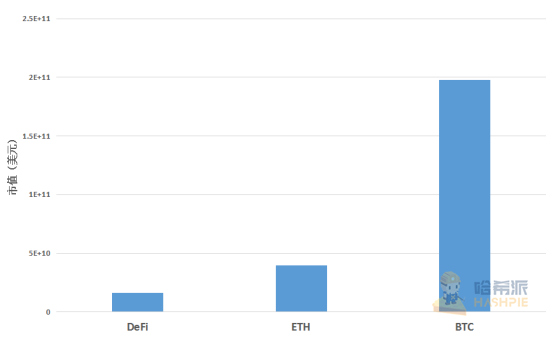
image description
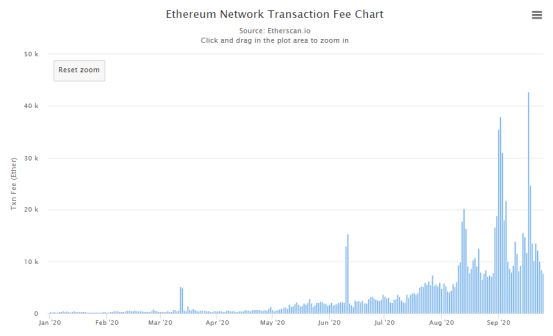
Changes in transaction fees on the Ethereum network (data source: Etherscan)
With the FOMO sentiment in the market, the liquidity of DeFi projects continues to increase, but the maintenance of prosperity in the primary market requires the support of token prices. What should be vigilant is that the secondary market has long been reduced to a silly game of drumming and spreading flowers in the positive feedback cycle. In theory, if you do not participate in community governance and do not plan to participate in the project for a long time, these exponentially growing tokens will have no practical effect and real value in the hands of entrants. Investors are willing to buy at high prices in the secondary market because they presuppose that more blind speculators will pay a higher price to take orders from them. Once the price of tokens falls and speculators in the secondary market exit, this kind of stupid game will collapse instantly, and the income cultivator's "digging-lifting-selling" wealth creation model will gradually become invalid.
image description
Comparison of the total market value of DeFi projects, Bitcoin and Ethereum (data source: DeBank, Coinmarketcap)
When the price of tokens avalanches, investors in the secondary market will face a positive shock, and related assets will directly shrink sharply; while liquidity providers (LP) in the primary market still need to bear the risk of impermanent losses in addition to the reduction in cash-out returns . Unlike Compound, which simply uses subsidized mining to issue coins, a large number of liquidity mining projects now also integrate DEX mining mechanisms. To put it simply, LP deposits two tokens in proportion to provide liquidity for the platform fund pool and earn transaction fees; when the unilateral price of the transaction pair fluctuates sharply, the deposit principal of LP shrinks, resulting in impermanence loss.
Currently, the currencies supported by the liquidity pool are not limited to mainstream currencies such as ETH and USDT. In order to increase the rate of return, most projects have added non-mainstream trading pairs or even DeFi tokens to the liquidity pool. This means that when the DeFi market plummets, LPs that provide liquidity for related currencies will lose a lot of principal.
secondary title
5. Liquidity is gradually drying up, and the market will end in a death spiral
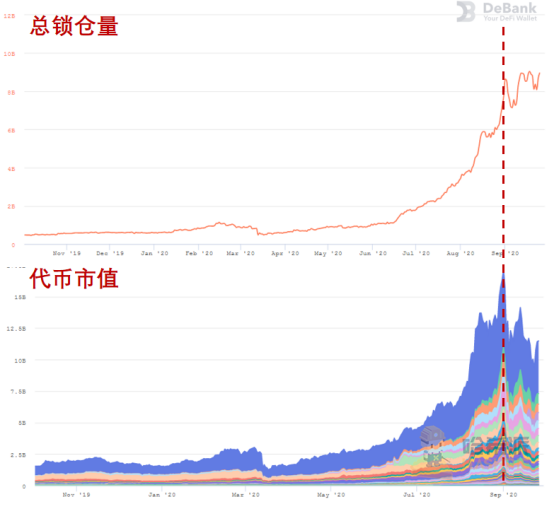
Changes in the total market value and total locked-up volume of DeFi projects in the past year (data source: DeBank)
6. Summary
The stagflation of the lock-up volume means that the market liquidity has decreased, and the negative and sideways decline in the price of DeFi tokens means that the capital hot money entering the market has decreased. If there is no new impetus to stimulate the market for a long time, the secondary market speculators attracted by the positive feedback loop will leave the market one after another; without the existence of buying speculators, these DeFi tokens issued at almost zero cost The currency will continue to fall or even directly hit the market.
The secondary market weakened, LP's "charge-withdraw-sell" high-yield model collapsed, a large number of speculative users withdrew, project liquidity gradually declined, further accelerated the decline in token prices, and the market gradually fell into a death spiral dilemma. When the meager income from liquidity mining cannot support the high handling fees that need to be paid during the operation, the speculators will all disperse, leaving only a small number of DeFi enthusiasts who really want to use it.