

Talking about how to upgrade Cosmos2.0 to achieve inter-chain security and cross-chain MEV?
Original author:@MohamedFFouda
Original author:
Compilation of the original text: Guo Qianwen, Chain CatcherCosmoverseHQNot long ago, @
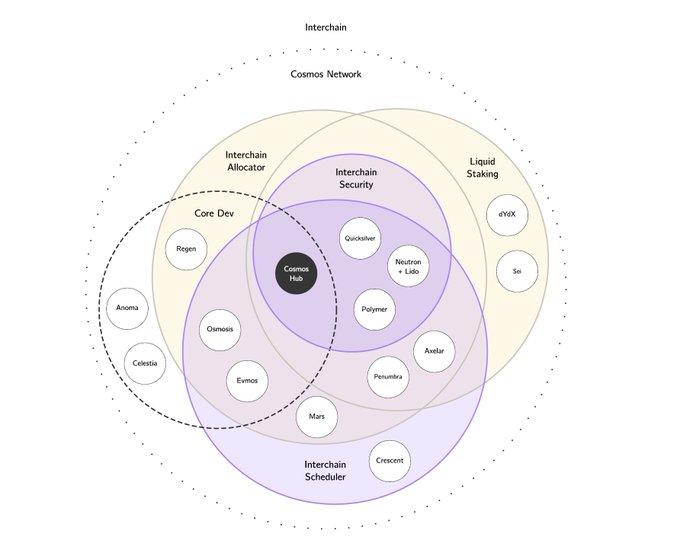
Published the Cosmos V2 version white paper - which both describes the new plan and reviews the past chapters. The white paper looks forward to its new system, expecting to create a treasury for business builders and build a strong value support system for ATOM.The Cosmos ecosystem is developing rapidly, covering 45+ zones (Zone), with more than 700 IBC relays (Relayer). However, it still faces a very core problem:
If regions use their own native tokens for staking and payment, how can ATOM capture value from these activities?
The Cosmos Hub helps projects in its ecosystem to start quickly, and the infrastructure provided includes Tendermint, Cosmos SDK and IBC, but it does not have a (positive) impact on the actual operation of these 45 areas, nor does it capture revenue from them-this is A major design blunder that will be resolved in version 2.0.
First of all, Cosmos has upgraded the previously released "Interchain Security", changing from the original decentralized and isolated security model to a more closely connected model. Currently, Zones/AppChains are able to hold ATOMs, summoning validators from the Cosmos Hub. A new cross-chain scheduler complements interchain security by creating a shared market for block space, allowing coordination between block builders in different regions. The Interchain Scheduler will enable the Cosmos Hub and other regions to capture large amounts of MEV revenue.
The scheduler has two important functions that enable it to capture MEV: First, it uses the Tendermint engine to decouple transaction ordering from validation. Afterwards, the scheduler auctions the transaction ordering rights in a certain area, which is a Cosmos Lightning Robot Auction Product (Flashbots Auction Product), so as to obtain income.
More innovatively, it allows cross-chain MEV. Taking cross-chain arbitrage as an example, if the price of the ATOM-USDC pool on Osmosis is different from that of the same pool on EVMOS, then the MEV Searcher (MEV Searcher) can operate two separate transactions for price arbitrage.
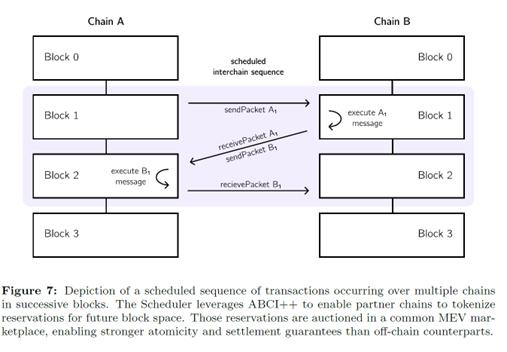
Seems easy? But the main problem is that there is currently no guarantee that both transactions will be executed or both will fail. If only one of them is executed, then the situation is very bad. However, this guarantee can be provided by an interchain scheduler, who can auction transaction ordering rights to future blocks on different regions to attract MEV searchers. If Seekers win these rights, they gain strong guarantees that their bundles of transactions will be executed in the order they prefer on blocks.
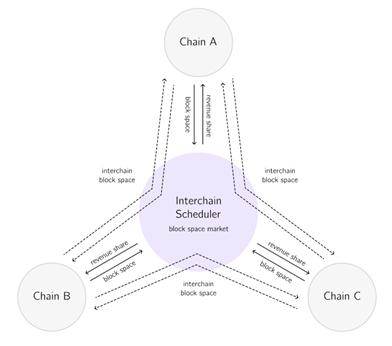
The captured cross-chain MEV revenue can be distributed to searchers, verifiers and application chains. Lisk can ultimately benefit from the wasted MEVs, gaining "real" benefits from the economic activities supported by them.
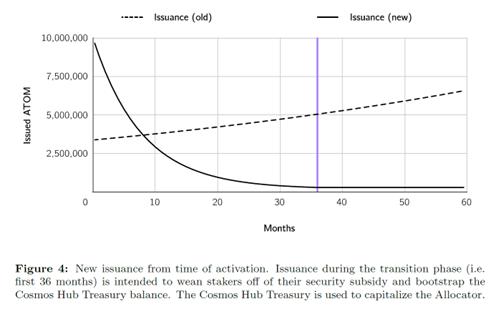
Cosmos Hub validators earn more income, it is possible to reduce ATOM inflation, that is, block subsidies, making ATOM more economical and easier to appreciate. It can be seen that Cosmos has learned a lot from the POS upgrade of Ethereum.
But why is the release of ATOMs higher in the 9 months after activating version 2.0? This is another great move - newly issued tokens will go into a whole new vault that will be used to fund development, public goods, and systemic growth of the Cosmos ecosystem.
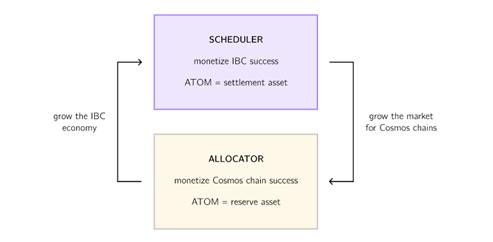
The development of the Cosmos ecosystem will be coordinated by the Interchain Allocator. Allocators will help Lisk acquire customers and liquidity to help the success of the new Cosmos Lisk.
The job of the allocator is to select the application chain and support it. This subjective work requires manual judgment. Therefore, allocators operate through a DAO funded by the Cosmos Hub.
These DAOs will exist in the Cosmos Hub. The voting rights of DAO members are determined by their ATOM bonds and bond duration. The allocator DAO creates more availability for ATOMs, which can help its price appreciate. The economic interaction between dispatchers and allocators creates a flywheel effect that can spur massive growth. Cosmos draws from Solana, Polygon, Near, and other ecosystems that focus on business development to drive overall ecological development.
The V2 white paper also shows other changes, such as built-in liquidity staking, which can make the Cosmos universe more cohesive and incentivize the construction within the Cosmos ecosystem.
Original link