


Bull Run: Four Drivers Behind the Crypto Market's Overnight Surge

Original: Odaily Planet Daily (@OdailyChina)
Author: jk
After days of quiet, the crypto market suddenly turned bullish today, with major coins surging collectively. Bitcoin reclaimed the $69,000 mark, Ethereum jumped nearly 20% in a single day, and Hyperliquid soared over 22%. The sharp price rally was accompanied by massive liquidation of short positions.
Broad-based Rally Across Major Coins
- Bitcoin: According to Coingecko data, currently trading at $69,165, up 7.4% in 24 hours, with a 24-hour trading range of $64,123.86–$69,892.23, a total market cap of $1.393 trillion, and 24-hour trading volume of $41.587 billion. After holding a narrow range in the morning, the price started a rapid ascent during the European trading session.
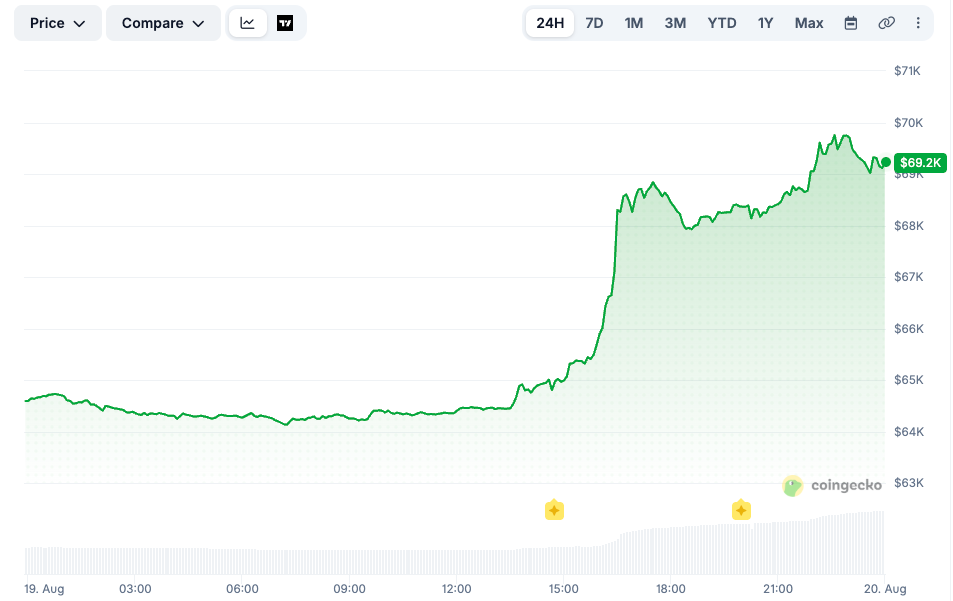
Bitcoin price chart, Source: Coingecko
- Ethereum: Currently trading at $2,269.04, surging 18.6% in 24 hours, with a trading range of $1,905.44–$2,318.66, and a market cap of $274.047 billion. Ethereum's gains significantly outperformed Bitcoin this round, with the ETH/BTC ratio also strengthening, indicating that capital is accelerating its return to the Ethereum ecosystem.
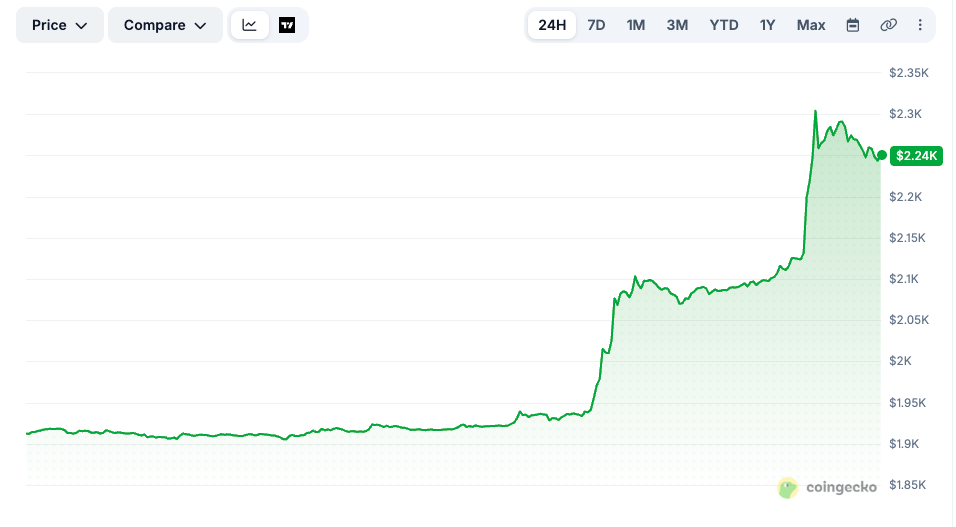
Ethereum price chart, Source: Coingecko
- BNB: Currently trading at $631.92, up 4.9% in 24 hours, a relatively moderate gain among major cryptocurrencies, with a trading range of $600.92–$635.85.
- Solana: Currently trading at $85.65, up 11.2% in 24 hours, with a trading range of $76.59–$86.96, and a market cap of $49.952 billion. The chart shows the price accelerating past its previous high.
- Hyperliquid (HYPE): The most aggressive gainer this round, currently trading at $71.41, up 22.2% in 24 hours, with a trading range of $58.04–$72.28.
Analysis: Macro Tailwinds Ignite, Leverage Structure Amplifies Gains
Looking at recent market dynamics and derivatives data, this rally is not driven by a single factor, but rather by a combination of macro liquidity tailwinds, a warming regulatory environment, and a concentrated unwinding of leveraged short positions.
Reason 1: The US Treasury's surprise "liquidity injection" lowered long-end yields and boosted risk appetite. On August 19, the US Treasury announced it would at least double the size of its long-term Treasury buyback operations, increasing them from $2 billion to over $4 billion per operation, covering the period from September 9 to November 4, primarily targeting 10- to 30-year Treasury bonds. This move was seen as a direct response to the 30-year Treasury yield hitting its highest level since 2007 (reaching 5.34% at one point). Following the announcement, 10-year and 30-year Treasury yields fell, US stock futures ticked higher, and the overall improvement in risk appetite provided a tailwind for the crypto market. The Treasury's operation was interpreted by the market as a form of indirect liquidity injection, and its timing closely coincided with the start of the crypto rally.
Reason 2: The White House crypto summit, coupled with SEC regulatory easing, shifted policy sentiment positive. On the same day, Trump met with executives from crypto companies like Coinbase, Ripple, and Gemini, as well as heads of the SEC and CFTC, at the White House, reiterating his push for the CLARITY Act to pass the Senate quickly and provide a clearer regulatory framework for the industry. Just one day before the summit, the SEC formally proposed a new draft rule titled "Regulation Crypto Assets", which would offer crypto projects an exemption channel for raising up to $75 million per year. The regulators and the White House releasing friendly signals within the same week somewhat alleviated earlier market concerns about policy uncertainty, providing narrative support for capital returning to crypto assets.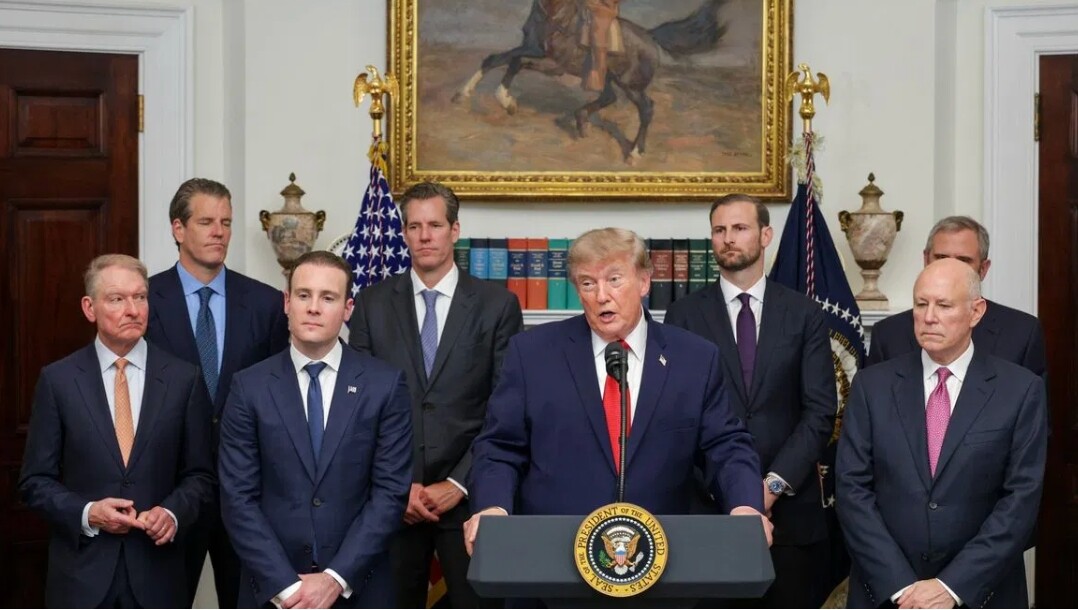
Trump meets with industry leaders, Source: ABCNews
Reason 3: The trend of outflows from Bitcoin spot ETFs reversed, with whales accumulating on dips. Bitcoin spot ETFs had previously experienced net outflows for several consecutive days. This rebound, however, coincides with signs of improving fund flows, with major products like BlackRock's IBIT and Fidelity's FBTC recording net subscriptions again as institutional capital shows signs of returning. Meanwhile, on-chain data reveals that large holder addresses, after roughly 60 days of continuous distribution, have begun accumulating again, offering spot-side support for price stabilization and setting the stage for the subsequent short squeeze.
Reason 4: A concentrated liquidation of leveraged shorts triggered a classic "short squeeze" rally. According to derivatives data, the scale of short liquidations far exceeded that of longs during this rally. Per Coinglass data, at the time of writing, 24-hour liquidations across all exchanges have surged to $2.98 billion, forcing over 170,000 traders to be liquidated, with short liquidations overwhelmingly dominant; within a 4-hour window, short liquidations accounted for as much as 93.3%. The largest single liquidation order globally occurred on a BTC-USD contract on the Hyperliquid platform, amounting to $48.8 million. The liquidation of large short positions often creates a temporary vacuum in buy-side liquidity on the order book, accelerating the price's move away from its previous range and triggering more stop-loss orders, creating a positive feedback loop of "longs crushing shorts."