


The 10-year U.S. Treasury yield briefly broke above 5%, BiyaPay Market Watch: What are U.S. stocks and global markets worried about?

US Treasury yields have once again become a core variable for global markets.
On September 15, the 10-year US Treasury yield briefly rose to 5.04% during intraday trading, hitting its highest level since 2007; the 30-year US Treasury yield also briefly climbed to about 5.4%. BiyaPay market data showed that US stocks continued to come under pressure the same day, with the Dow falling 328 points and the Nasdaq dropping about 0.8%. Rising oil prices and the approaching Federal Reserve policy meeting have prompted the market to reassess how long high interest rates may persist.
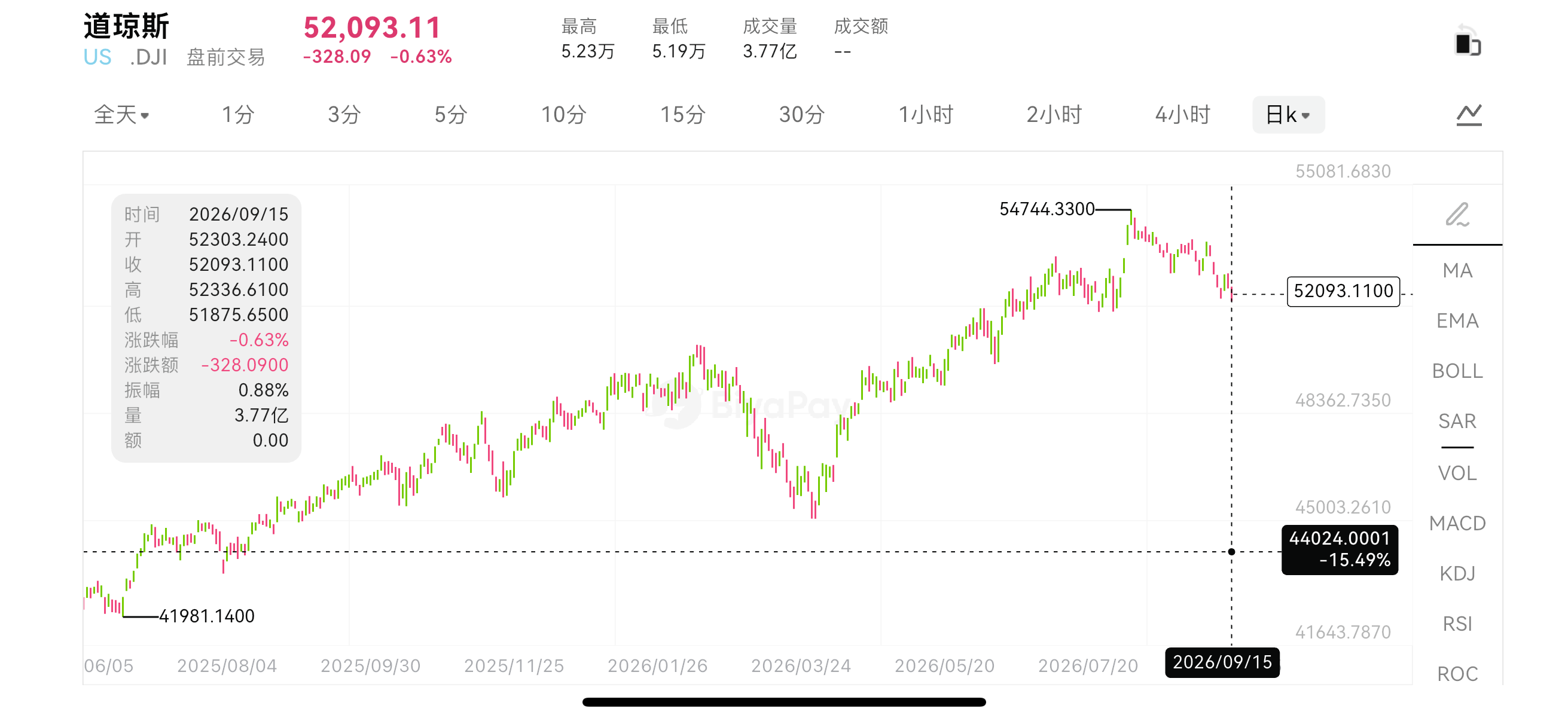
This round of rising US Treasury yields is not solely due to the possibility of a Fed rate hike. Inflationary pressure from higher oil prices, the US fiscal deficit, increased Treasury supply, and changes in long-term investor demand for US Treasuries are all pushing up long-end yields.
When I observe this kind of cross-market activity, I use BiyaPay as an asset management gateway to simultaneously track changes in US stocks, Hong Kong stocks, BTC, ETH, and other assets, and then return to US Treasuries and the dollar to identify the causes of price fluctuations. As a global one-stop asset allocation platform, BiyaPay covers digital assets, US stocks, Hong Kong stocks, and fiat currency exchange scenarios. It supports converting digital currencies to US dollars and Hong Kong dollars, and allows users to participate in stock trading in real time without applying for an offshore account. Centralizing views across different markets can reduce information switching, but ultimately one still has to return to interest rates, valuations, and risk appetite themselves.
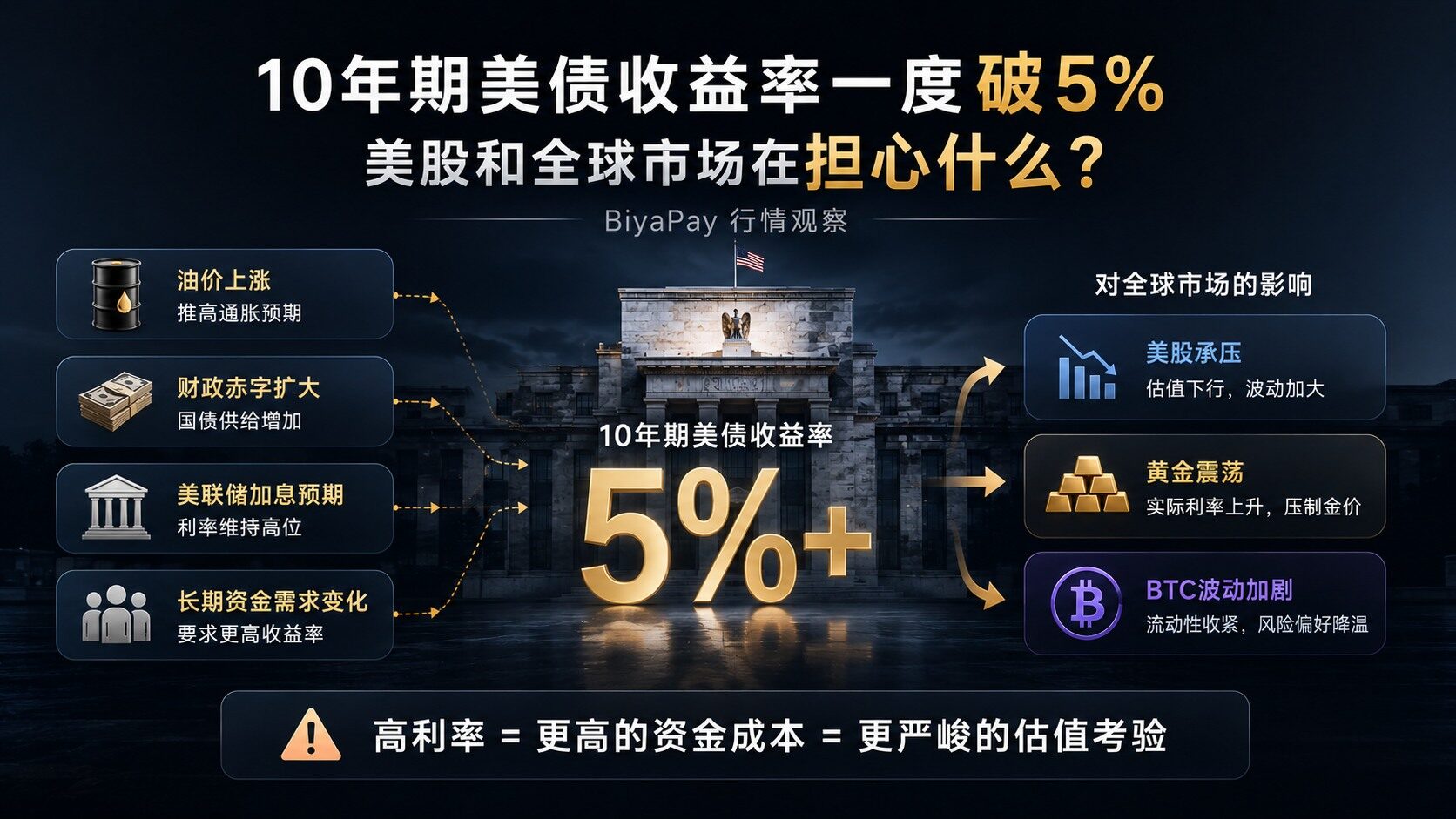
Why Do US Treasury Yields Affect Stock Valuations?
The 10-year US Treasury yield is generally regarded as an important reference for global asset pricing. When it rises, corporate financing costs, mortgage rates, and stock valuations are all affected.
The impact is especially pronounced for tech stocks and high-growth sectors. The value of such companies comes largely from earnings expectations over the coming years. When the risk-free rate rises, the discounted value of future cash flows declines, and the market also becomes less tolerant of highly valued stocks.
Therefore, when US Treasury yields rise, the market first reexamines the valuations of artificial intelligence, cloud computing, chip, and software companies. The industry logic may not have changed, but stock prices must contend with a higher cost of capital.
What the market is currently worried about is that AI capital expenditure is still expanding on the one hand, while also needing to be supported by bond issuance and financing on the other. If interest rates remain high for an extended period, companies must prove that these investments can translate into revenue, profit, and cash flow; otherwise, high valuations will be difficult to sustain.
Long-End Rates Reflect More Than Just a Single Rate-Hike Expectation
Short-term rates are mainly influenced by Federal Reserve policy, while long-end rates are simultaneously affected by inflation, economic growth, fiscal deficits, and bond supply and demand.
The US Treasury recently announced an expansion of liquidity-supporting buyback operations for long-term US Treasuries, with operations related to 10-year to 30-year bonds at least doubling from previous levels, and the measures will continue until November 4. However, such operations mainly improve market liquidity; they do not amount to a Fed rate cut, nor can they directly change the US government's financing needs.
As long as fiscal deficits and Treasury issuance pressure remain, the market may demand higher yields to absorb long-term bonds. If oil prices continue to rise, they will again influence inflation expectations through energy costs, thereby adding upward pressure on long-end rates.
What Does This Mean for US Stocks, Gold, and BTC?
US stocks face valuation pressure most directly, especially tech stocks that depend on long-term growth. If corporate earnings are strong enough, they can partially offset the impact of rates; if financial reports and guidance fail to continue being revised upward, stock price volatility could amplify.
The logic for gold is more complex. When US Treasury yields and the dollar strengthen, gold is usually suppressed by opportunity cost, but fiscal risks, geopolitical conflicts, and inflation concerns also create safe-haven demand. The key to gold's next move lies in real interest rates and the dollar, not merely nominal yields.
BTC and ETH are more susceptible to changes in liquidity. When rates rise, capital often reduces allocations to highly volatile assets; but when the market begins to worry about fiscal deficits and monetary credibility, digital assets may again be placed within a macro hedging framework for observation.
So, US Treasury yields breaking above 5% does not mean all assets will fall in unison, but it will push the market back from "growth stories" to "cost of capital." For US stocks, the question is whether earnings can offset valuation pressure; for gold, it is real rates and safe-haven demand; and for BTC, it is whether liquidity and risk appetite show any change.