US Treasury yields surge: How much longer can the US economy and stock market hold up? AI may be the most fragile link

Original author: Zhang Yaqi
Original source: Wallstreetcn
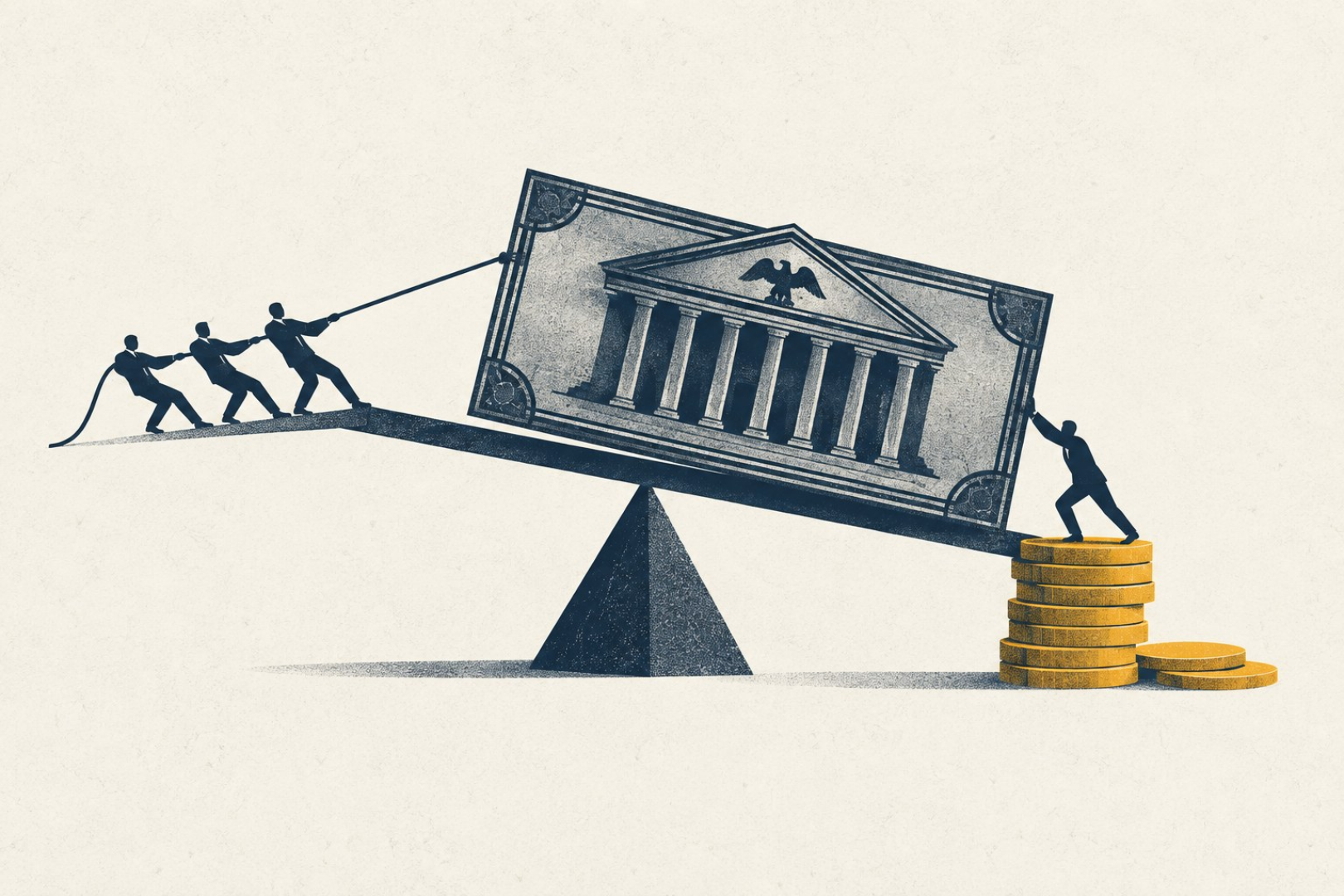
Global bond yields have climbed to multi-decade highs, yet economies and markets have so far displayed unusual resilience. As pressure begins to emerge in areas such as the European sovereign bond market, whether this resilience can persist has become the market's most pressing question.
A recent Goldman Sachs research report brings together assessments from the International Monetary Fund, Moody's Analytics, and Goldman Sachs economists. IMF advisor Tobias Adrian takes a cautiously optimistic stance, arguing that as long as the rise in yields does not accelerate in a disorderly manner, the global economy is likely to remain resilient. Goldman Sachs economists expect the drag from higher rates on U.S. economic growth to be relatively modest—around 0.2 percentage points in 2027—but if yields remain at current levels, that drag would more than double to 0.5 percentage points. Moody's Analytics chief economist Mark Zandi is markedly more pessimistic—he bluntly describes the U.S. economy as "fragile" rather than "resilient," and puts the probability of the economy spiraling completely out of control at around one-third.
At the market level, Goldman Sachs strategists generally believe the banking system and equity markets do not yet pose a systemic threat, but warn that if yields rise further or rate volatility remains elevated, risk assets will face increasingly heavy pressure. The broadest common ground across all perspectives points to the same core question: can the highly interconnected, leverage-upon-leverage AI investment boom withstand a sustained high-interest-rate environment? Zandi issued the most direct warning: if rates stay at current levels or higher for another one to two quarters, "AI could be the first link in the economy to break."
Rising Yields: Primarily Fundamentals-Driven, with Technical Factors Adding Fuel
The most notable feature of this round of global bond yield increases is its breadth. William Marshall, Goldman Sachs' head of U.S. interest rate strategy, notes that yields have risen across all major economies, with no obvious single leading market or trigger source, and both the front end and long end of the curve hitting new highs simultaneously.
In terms of drivers, Marshall attributes the rise primarily to fundamentals: strong economic growth, inflation risks, hawkish central bank policy shifts, a sustained investment cycle, and long-term fiscal risks. Term premiums—the extra compensation investors demand for holding duration assets—have surged to their highest level in over a decade. The sharp increase in yields since late September, meanwhile, has been compounded by technical factors related to hedging risk, pushing yields beyond what fundamentals would imply.
On the outlook, Marshall expects yields to decline as the market's expectations for inflation moderation strengthen, but emphasizes that long-term high yields will have some stickiness. Energy price volatility and fiscal pressures constitute the main upside risks, while the continued expansion of AI capital expenditure and corresponding bond issuance are also suppressing demand for duration assets, tilting the risk for long-end yields to the upside.
Growth Drag: Moderate in the Base Case, but Risks Multiply if Rates Stay Elevated
Goldman Sachs U.S. economist Pierfrancesco Mei characterizes the current U.S. economy as resilient, and expects that under the base case—one more Fed rate hike in December, followed by three rate cuts starting in the second half of 2027, with the 10-year Treasury yield falling to 4.4% by year-end—the drag from higher rates on 2027 GDP growth will be only about 0.2 percentage points.
However, if yields remain at current levels, the drag would exceed 0.5 percentage points. In terms of transmission channels, 30-year mortgage rates breaking above 7% will further suppress residential investment; consumer spending will be dragged down by about 0.2 percentage points due to weakening demand for durable goods; and rising interest expenses for non-AI companies refinancing maturing debt are expected to weigh on capital expenditure growth by about 0.3 percentage points.
Goldman Sachs global economists Joseph Briggs and Johan Allen constructed a quantitative rule framework: every 100 basis points of rate increase would reduce residential investment in major developed economies by about 6%, consumer spending by about 0.2% on average, and corporate capital expenditure by about 1.8%, together producing a drag of about 0.6 percentage points on developed-economy GDP. At the fiscal level, large primary deficits combined with high rates are expected to push the U.S. debt-to-GDP ratio to 124% by 2035 (base case) or even 132% (if current rates persist).
Is the Economy Really "Resilient"? Zandi Dissents
Amid generally optimistic market discussions, Mark Zandi is the most cautious voice. He finds describing the U.S. economy as "resilient" to be "fascinating, almost frustrating," arguing the correct description should be "fragile."
Zandi points out that the labor market is the clearest sign of weakness. Monthly job gains have averaged about 40,000 over the past year, and nearly zero when excluding the healthcare sector. While the unemployment rate remains low, this is partly due to a decline in labor force participation; adjusted for this, the actual unemployment rate would be in the mid-4% range, above full employment. Real wage growth is actually negative for low- and middle-income groups, and household savings are being steadily depleted.
On aggregate data, Zandi is not comforted by roughly 2% real GDP growth. He estimates that about one-third of it—0.6 to 0.7 percentage points—comes from AI-related activity (including the net contribution of AI capital expenditure and AI-related stock wealth effects). This means the non-AI economy is growing at only about 1% to 1.5%, "which is a pretty poor state of the economy."
Zandi also describes the U.S. fiscal situation as "the worst I've ever seen": deficits exceeding 6% of GDP, primary deficits above 3%, debt at about 100% of GDP and projected to rise to 125% in 10 years, and federal interest payments already exceeding $1 trillion and rising rapidly. His probability assessment: about a one-in-four chance of a severe bond market selloff, and about a one-in-three chance of the economy completely derailing.
Banking and Credit Markets: Still Within Controllable Range
While Mark Zandi remains highly alert to potential rupture risks in the financial system, Goldman Sachs analysts take a relatively milder view on banking and credit markets.
Tobias Adrian, former head of the IMF's Monetary and Capital Markets Department, and Richard Ramsden, head of Goldman Sachs' financial equity research team, both believe there is no need for excessive concern about banks. Ramsden notes that given U.S. banks' asset-sensitive balance sheet structure, rising rates should help boost net interest income; absent a broader economic downturn, credit quality should not deteriorate significantly; and after accounting for unrealized losses on rate-driven securities portfolios, most banks should still hold excess capital.
In credit markets, Goldman Sachs chief credit strategist Amanda Lynam believes the impact of higher rates on corporate credit is generally manageable against the backdrop of solid growth, and insufficient to trigger a significant rise in default rates. But she also notes that if rate volatility returns to the highs of 2022-2023, confidence among yield-dependent institutional investors would be shaken, and demand for investment-grade credit would face substantial pressure.
U.S. Equities: Current Rates Not Yet a Threat, but Upside Risks Cannot Be Ignored
Goldman Sachs chief U.S. equity strategist Ben Snider believes current yield levels should not prevent U.S. stocks from continuing to rise. Although the S&P 500's P/E ratio has fallen from 23x to 19x this year, strong earnings growth (over 30% over the past 12 months) has been sufficient to offset valuation compression. Moreover, the relative valuation of stocks versus bonds—measured by the gap between the S&P 500 earnings yield and the 10-year real Treasury yield—is about 230 basis points and has remained relatively stable over the past two years, indicating that valuations have largely completed their recalibration to higher yields.
However, Snider also flags two risks to watch closely: First, if the 10-year Treasury yield rises more than about 50 basis points (i.e., two standard deviations) in a single month, it would trigger the typical pattern of equity market stress historically; second, rate-sensitive sectors such as small-cap stocks, real estate, and homebuilders have already shown clear divergence, with market breadth falling to its lowest level since the dot-com bubble. Goldman Sachs multi-asset strategists Christian Mueller-Glissmann and Andrea Ferrario add that higher bond yields are reinforcing the strategic allocation value of bonds in multi-asset portfolios, with the optimal bond allocation moving toward the long-term average of 35% to 55%, though strong earnings growth still makes equities relatively more attractive than bonds.
AI: The Potentially Most Fragile Link in the High-Growth Narrative
In current economic and market discussions, AI is both the core engine supporting growth and the most closely watched potential vulnerability in a high-rate environment.
From an optimistic perspective, Goldman Sachs analysis suggests AI capital expenditure faces limited risk of strain. Hyperscalers' capital expenditure has so far shown strong resilience to higher rates and rising costs, accounting for more than two-thirds of U.S. AI investment; major AI-related issuers such as MSFT, META, AMZN, GOOGL, and NVDA generally carry credit ratings between AAA and AA, with AAA/AA-rated issuers boasting interest coverage ratios as high as 27.7x and net leverage of only 0.5x, providing ample debt capacity; Lynam also believes the threshold for disruption of AI-related debt issuance is extremely high.
However, Tobias Adrian expresses concern about three risks within the AI complex: the interconnectedness and circularity of investments among multiple AI companies, meaning an earnings shock at one company could spread rapidly; the structure of leverage-upon-leverage created through leveraged ETFs and derivatives between AI companies and investors; and the fundamental uncertainty over whether AI companies' strong revenue growth can be sustained.
Mark Zandi's warning is the most direct: "If rates stay at current levels or higher for another one to two quarters, AI could be the first link in the economy to break." He notes that sustained high rates would suppress AI-related stock prices, and the reversal of the wealth effect would further dampen consumption, while rising financing costs would make it increasingly difficult to raise the capital needed to maintain the current pace of AI buildout. For now, AI is largely running on its own momentum and market optimism, but how long this can last is highly uncertain.