

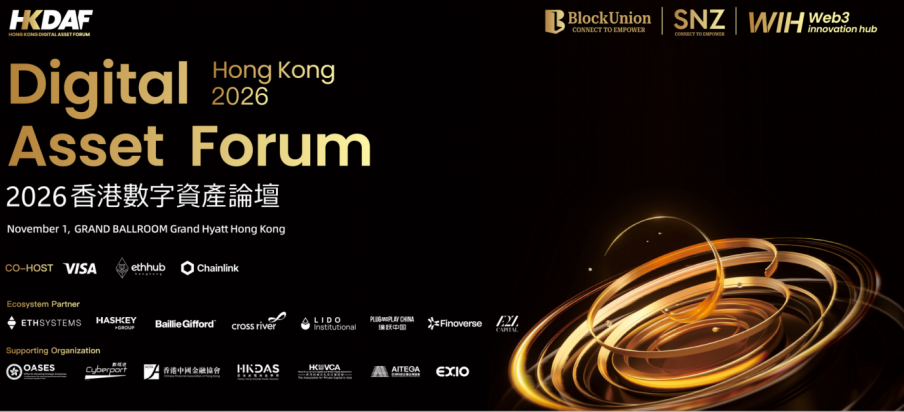
HKDAR 2026 concluded in Hong Kong, focusing on institutional-grade on-chain finance and Web3 infrastructure for the agentic economy

Hong Kong, November 6, 2026 — The second Hong Kong Digital Asset Forum (HKDAR 2026) was held on November 1 at the Grand Hyatt Hong Kong, bringing together representatives from financial services, technology, and policy sectors to discuss institutional-grade on-chain finance and financial infrastructure for the agentic economy.
This year's forum was hosted by BlockUnion, SNZ Capital, and Web3 Innovation Hub, and co-hosted by Visa, ETH HK Hub, and Chainlink, welcoming representatives from over 260 organizations and institutions, an increase of 30 from the previous edition, with an additional 15 ecosystem partners and supporting organizations participating.
Prior to the main forum, two invitation-only side events provided more focused settings for industry discussion: a roundtable workshop on "Agentic Financial Solutions" co-hosted by SNZ, Gaorong Ventures, and Cross River; and an industry luncheon on "Institutional-Grade On-Chain Solutions" co-hosted by BlockUnion, EthSystems, and Chainlink.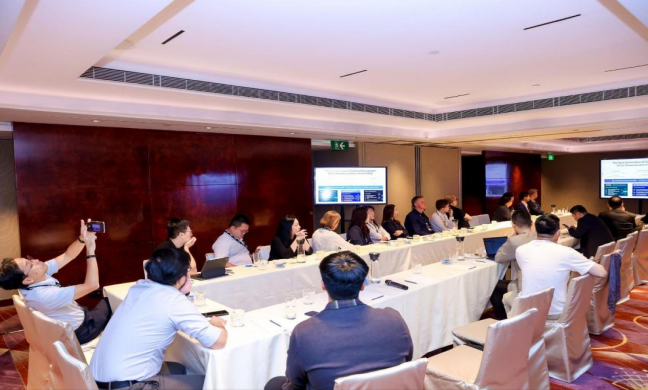
Mr. Joseph Chan, Under Secretary for Financial Services and the Treasury of the Hong Kong Special Administrative Region Government, delivered the opening address, emphasizing the importance of digital assets in consolidating Hong Kong's status as an international financial center. He highlighted Hong Kong's mature financial ecosystem, predictable regulatory framework, and practical initiatives such as tokenized bonds and the Ensemble project, which are driving the integration of traditional finance and digital assets. Bryan Peng, Executive Director of OASES, participated in the opening panel on Hong Kong's strategic positioning. King Leung, Assistant Director-General of Invest Hong Kong, participated in a panel discussion on regulated on-chain payments, particularly stablecoins.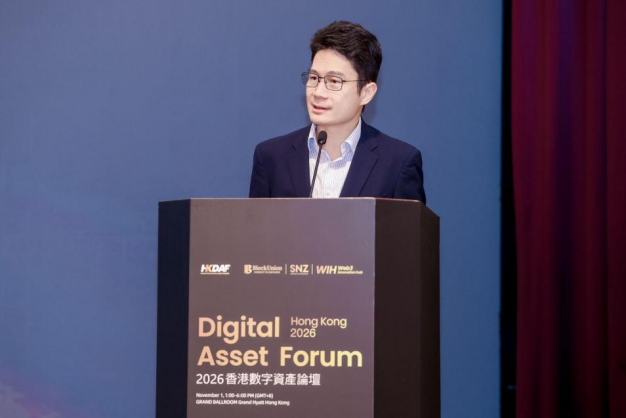
Mr. Joseph Chan, JP, Under Secretary for Financial Services and the Treasury of the Hong Kong Special Administrative Region Government
Representatives from Anchorpaint, Ant International, Baillie Gifford, Chainlink, Circle, Cross River, Ethereum Institutional, EthSystems, Fidelity International, HashKey, HCFA, InfiX.ai, Lido, Morpho, Offchain Labs (Arbitrum), Plug and Play China, The Hong Kong Polytechnic University, Reap, SignalPlus, Standard Chartered Bank, UBS, and other institutions shared their perspectives on digital asset applications, including tokenization, digital payments and settlement, AI-driven trading, and on-chain financial infrastructure.
During the forum, SNZ announced the official launch of BlockUnion and introduced its partnerships with Lido Institutional and EthSystems. The forum also celebrated the one-year anniversary of ETH HK Hub.
Hong Kong as a Global Connector for Finance and Technology Innovation
A panel on Hong Kong's role as an international financial and technology hub was moderated by Alex Yang, Vice Chairman of the Hong Kong Chinese Financial Association (HCFA) and CEO of Volmart.
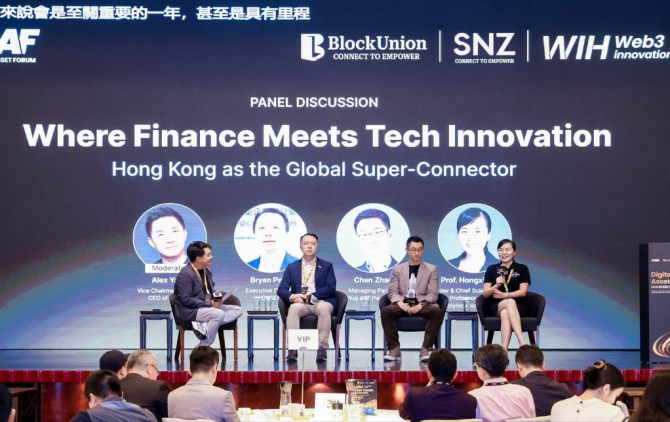
Caption: From left to right: Alex Yang, Vice Chairman of the Hong Kong Chinese Financial Association and CEO of Volmart; Bryan Peng, Executive Director of OASES; Chen Zhao, Managing Partner of Plug and Play China; Professor Yang Hongxia, Founder and Chief Scientist of InfiX.ai and Chair Professor at The Hong Kong Polytechnic University.
The discussion examined Hong Kong's ability to connect international capital, research institutions, and technology enterprises, as well as the practical requirements for business expansion and technology commercialization.
Bryan introduced the policy initiatives and resources Hong Kong offers to strategic technology enterprises. Chen discussed the challenges facing technology commercialization, including financing, market entry, and acquiring early customers. Professor Yang Hongxia shared her views on generative AI, data privacy, computational efficiency, and distributed AI collaboration.
From Pilot to Allocation: How Global Institutions Are Scaling Tokenized Assets
The panel explored how tokenized financial products are moving from pilot projects to institutional adoption, covering fund structures, subscriptions and redemptions, asset transfers, collateral management, and distribution.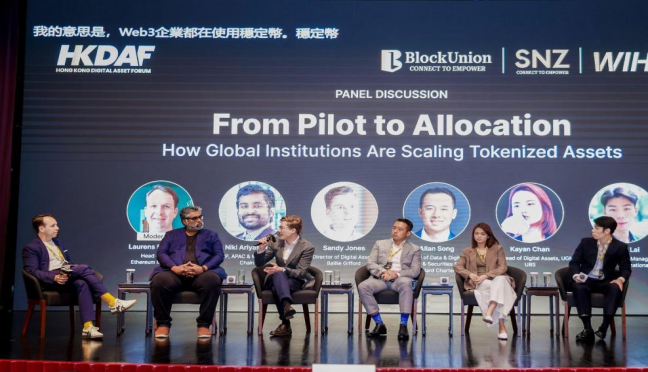
Caption: From left to right: Laurens Schepens, Head of Asia-Pacific at Ethereum Institutional; Niki Aryasinghe, Vice President of Asia-Pacific and Middle East at Chainlink; Sandy Jones, Director of Digital Assets at Baillie Gifford; Allan Song, Head of Data and Digital for Financing and Securities Services at Standard Chartered Bank; Kayan Chan, Head of Digital Assets Asia-Pacific at UBS UGM; Eason Lai, Digital Assets Manager at Fidelity International.
Sandy discussed Baillie Gifford's fully native tokenized fund, including its on-chain ownership structure and potential applications in collateral and liquidity management. Kayan emphasized the importance of delivering tangible benefits to investors, and Eason shared Fidelity's experience in developing digital-native investment products.
Allan examined the operational challenges of bringing securities services on-chain, including transfer agency, order processing, and execution. Niki emphasized that scaling tokenized financial products requires stakeholder coordination, integration with existing processes, and regulatory alignment.
The discussion highlighted that investor demand, operational efficiency, and the integration of on-chain and off-chain infrastructure are key considerations for institutional adoption.
Dr. Xiao Feng and Gilles Shi: The Next Chapter of AI and Blockchain
Dr. Xiao Feng, Chairman and CEO of HashKey Group, and Gilles Shi, Founder of SNZ, held a fireside chat discussing the evolution of blockchain and its convergence with artificial intelligence.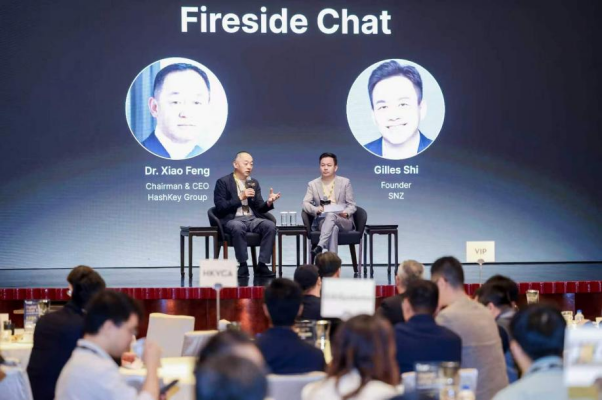
Caption: From left to right: Dr. Xiao Feng, Chairman and CEO of HashKey Group; Gilles Shi, Founder of SNZ.
Dr. Xiao Feng emphasized that broader blockchain adoption requires technological innovation to be supported by legal frameworks, governance structures, and mature business practices. As AI agents increasingly participate in economic activity, digital currencies, digital assets, and programmable financial infrastructure may play an important role in supporting agent-driven transactions.
Gilles reviewed the industry's development over the past decade, emphasizing that security, regulatory compliance, and market confidence are important foundations for sustainable growth.
Money Movement: Building Regulated On-Chain Rails for Global Commerce
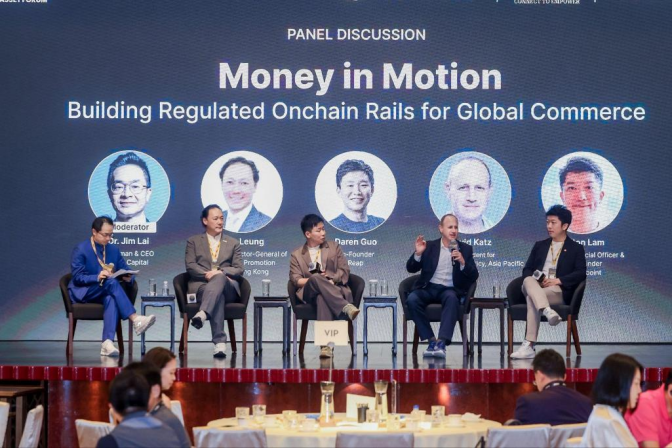
Caption: From left to right: Dr. Jim Lai, Chairman and CEO of Hues Capital; King Leung, Assistant Director-General of Invest Hong Kong; Daren Guo, Co-founder of Reap.
The panel explored the role of stablecoins in cross-border payments and international trade, with a focus on settlement efficiency, regulatory requirements, and practical adoption challenges.
David discussed how stablecoins improve cross-border settlement and payment infrastructure. Milton addressed regulatory considerations and the challenges of scaling stablecoin adoption, while Daren emphasized financial accessibility and the importance of connecting stablecoin solutions with existing payment systems. King discussed Hong Kong's role as a hub for international trade and payment innovation.
The discussion also explored the complementary roles of stablecoins and tokenized deposits, as well as emerging issues of authorization and accountability in AI-driven payments.
Smarter Agents, Open Finance — Key Infrastructure for the Future of Trading
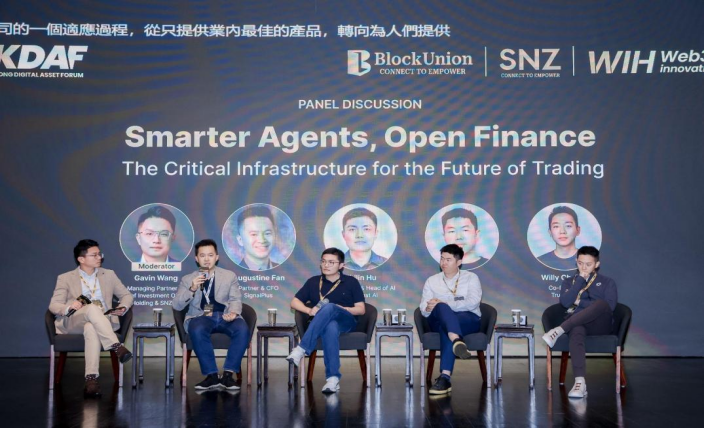
Caption: From left to right: Gavin Wang, Managing Partner and Chief Investment Officer of SNZ Holding and SNZ Capital; Augustine Fan, Partner and CFO of SignalPlus; Zhilin Hu, Co-founder and Head of AI at Torchcast AI; Alex Li, Co-founder of Distilla; Willy Chuang, Co-founder of TrueNorth.
Panelists discussed the application of AI in investment research, market analysis, trading, and personal financial services in the context of their respective businesses.
The discussion covered AI agent operating environments, investment decision-making, automated execution, and AI-driven consumer applications. Speakers also examined the importance of reliable data, risk controls, and appropriate safeguards as AI systems take on greater responsibility in financial decisions and trading.
ETH HK Hub One-Year Anniversary: Ecosystem Growth and Strategic Partnerships
In a keynote commemorating the one-year anniversary of ETH HK Hub, Henry reviewed the Hub's development over the past year. ETH HK Hub organized 25 events, and its membership expanded to 48 organizations. Its ecosystem activities also extended to Shanghai, Shenzhen, Singapore, and Seoul.
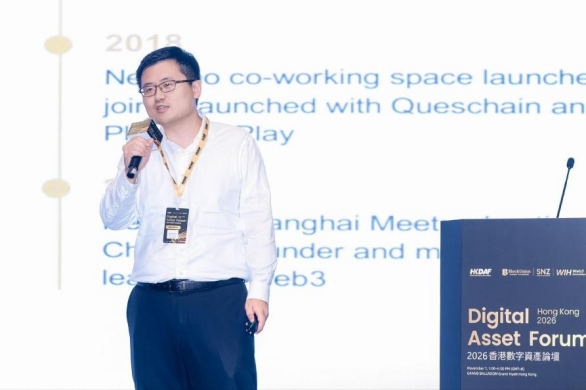
Henry Chen, Chief Business Officer of SNZ Holding and Partner at BlockUnion
Henry also announced the official launch of BlockUnion as a commitment to advancing the Web3 mission of "Connect to Empower" at scale, and outlined its four core missions: community building, research and innovation, connecting East and West, and Web3 acceleration and adoption. SNZ Capital focuses on Web3 and frontier technology investment opportunities, while BlockUnion supports infrastructure development, ecosystem collaboration, strategic partnerships, and developer communities.
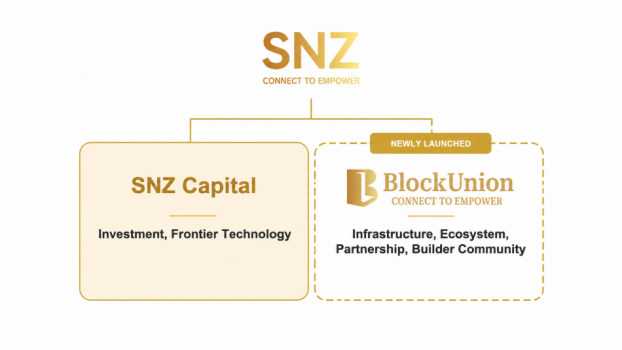 Image: SNZ organizational chart: SNZ Capital (investment, frontier technology); BlockUnion (newly launched: infrastructure, ecosystem, partnerships, builder community)
Guided by the "Connect to Empower" principle, BlockUnion focuses on the Ethereum ecosystem, tokenization and on-chain finance, agentic payments, and privacy. Henry also introduced BlockUnion's partnerships with Lido Institutional and EthSystems.
Building New Financial Infrastructure for the On-Chain and AI-Empowered Economy
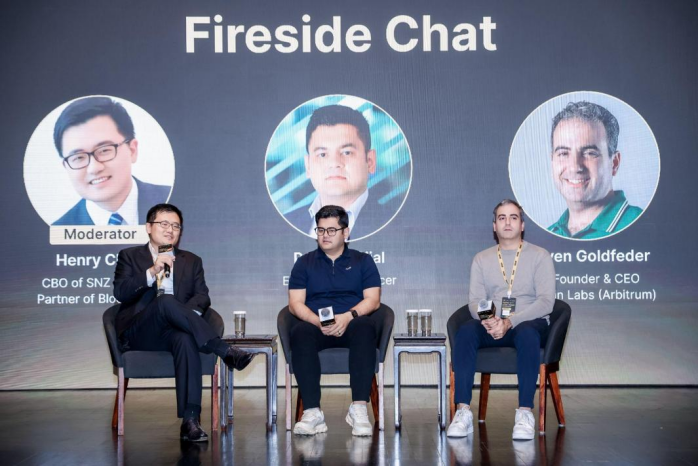
Caption: From left to right: Henry Chen, Chief Business Officer of SNZ Holding and Partner at BlockUnion; Pravesh Rijal, Executive Vice President and Chief AI Officer at Cross River; Steven Goldfeder, Co-founder and CEO of Offchain Labs (Arbitrum).
The discussion examined how financial institutions are adopting blockchain infrastructure, from tokenized credit assets and cross-border payments to enterprise blockchain networks. Steven emphasized the importance of flexible infrastructure, security, and governance, while Pravesh discussed the role of banks in building trust and verifying transaction intent in AI-driven payments.
Both speakers anticipated broader adoption of on-chain payment infrastructure and continued innovation in agentic finance, with Hong Kong offering opportunities for further development.
From Neutral Foundation to Institutional Backbone: The Next Decade of On-Chain Financial Infrastructure
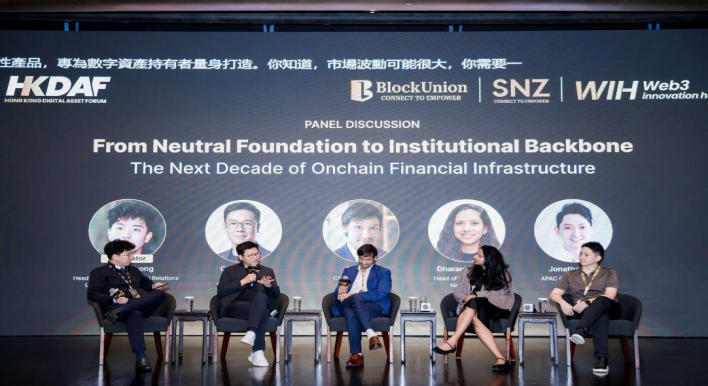
Caption: From left to right: Samuel Chong, Head of Asia-Pacific Institutional Relations at Lido Ecosystem Foundation; Deng Chao, CEO of HashKey Capital; Mo Jalil, CEO and Co-founder of EthSystems.
Mo discussed confidentiality and selective disclosure technologies for institutional applications. Dharani examined blockchain infrastructure design and the operational and compliance requirements for institutional adoption. Jonathan discussed capital demand, liquidity, and product structures in on-chain credit markets. Deng Chao, drawing on HashKey's experience, emphasized the importance of security, trust, and addressing institutional compliance concerns to support broader on-chain adoption.
The discussion also explored emerging security challenges related to AI and quantum computing, as well as Hong Kong's opportunities in institutional-grade on-chain finance.
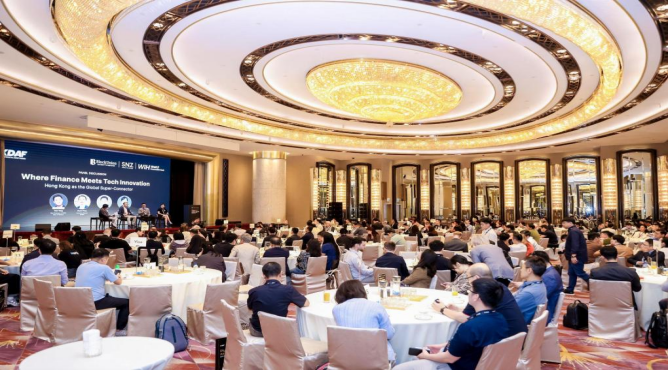
Forum Highlights and Outlook
HKDAF 2026 brought together perspectives from financial institutions, technology providers, policymakers, and blockchain ecosystem participants on the practical adoption of digital assets.
Across the main forum and the two invitation-only side events, the agenda connected discussions on tokenized assets, stablecoin payments, AI agents, and institutional blockchain infrastructure with more focused exchanges on agentic finance and institutional-grade on-chain solutions. Speakers and participants explored the opportunities and implementation requirements associated with integrating blockchain technology into financial services.
The forum was supported by eight ecosystem partners: EthSystems, HashKey Group, Baillie Gifford, Cross River, Lido Institutional, Plug and Play China, Finoverse, and A2Z Capital. Seven supporting organizations also contributed to the event: OASES, Cyberport, the Hong Kong Chinese Financial Association (HCFA), HKDAF, HKVCA, Asia Technology Innovation Companies Going Global Association, and EX.IO.
Building on this year's discussions, the Hong Kong Digital Asset Forum will continue to foster exchanges among policymakers, financial institutions, technology companies, and ecosystem participants, supporting the development and adoption of digital financial infrastructure in Hong Kong and beyond.
About BlockUnion
BlockUnion (HK) Limited ("BlockUnion") is Asia's all-encompassing Web3 ecosystem platform, guided by the principle of "Connect to Empower." With over a decade of investment and project experience in the Ethereum and Web3 ecosystem, and a strong presence in Hong Kong and Pan-Asia, BlockUnion focuses on community building and connection, ecosystem services and acceleration, technology research and consulting, and innovation investment and incubation. BlockUnion serves the global Web3 ecosystem's expansion in Asia, enterprises and financial institutions adopting blockchain and digital assets, and regional builder and venture communities. Its work includes long-term support for Chainlink and Xinghuo BIF, as well as launching and operating the Ethereum Hong Kong community hub in partnership with the Ethereum Foundation. The team combines institutional capital markets experience with crypto-native expertise to connect partners across communities, ecosystems, capital, and policy.