

AI Companies Begin Investing in Each Other: Compute, Orders, and Capital Form a Circular Network

On October 1, 2026, the Bank for International Settlements published an eight-page research brief titled "Circular Relationships Between AI Companies." The report focuses on how money flows through the AI industry: a cloud service provider invests in a model company, which then uses the funds it receives to purchase cloud services; a model company invests in a compute supplier in order to lock in future computing resources; two companies both procure from each other and hold stakes in each other.
Such relationships have long had precedents in traditional industries, and AI has pushed them to a much larger scale. Chips, data centers, cloud computing, and foundation models require continuous massive capital investment, and order cycles are long, making it difficult for suppliers and customers to establish cooperation through a single procurement contract alone. Equity, loans, long-term procurement commitments, and compute reservations have begun to be packaged into the same transaction. Investment decisions bring orders, orders in turn support revenue and valuations, and companies across the industrial chain gradually form a network that connects both capital and commercial dealings.
1. Money in the AI Industry Begins to Circulate Along the Supply Chain
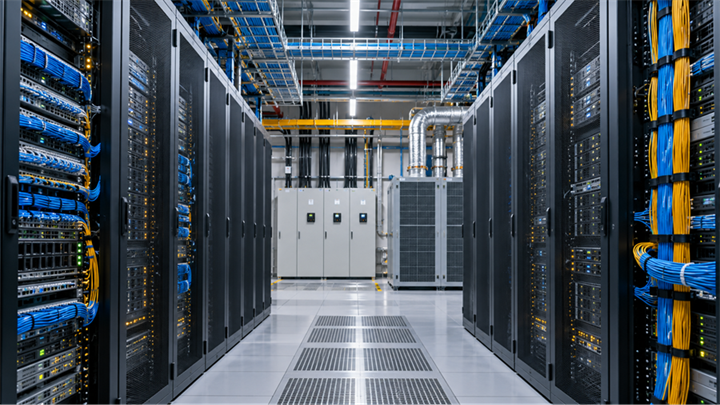
Figure 1 | Servers, networking, and cooling equipment form the infrastructure where AI investment first materializes
BIS compiled 1,246 AI companies, covering five segments—compute, infrastructure, data tools, models, and applications—and merged PitchBook's investment and financing records with FactSet's supply chain relationships, then supplemented them with manual verification on a transaction-by-transaction basis. The study identified 972 investment relationships among AI companies between 2021 and 2025.
Among them, when AI companies acted as investors, 28.7% of the investment amount flowed to other AI companies; from the perspective of funding recipients, 55.2% of the investment amount obtained by AI companies came from other AI companies. Capital is flowing within the industry at high frequency, and upstream giants, model companies, and infrastructure suppliers often appear simultaneously on both investor and customer lists.
The report defines a "circular relationship" as: two AI companies have both an investment relationship and, during the same period, a supplier-customer relationship. This definition focuses on corporate relationships that persist over five years and does not require that a specific investment be explicitly tied to a specific procurement in a contract. It is closer to the real industrial network, because companies may invest first and sign procurement agreements months later, or may cooperate first and then use equity arrangements to consolidate a long-term relationship.
This network also changes companies' dependence on a single customer. The higher the revenue contributed by a customer and the more important the equity relationship and long-term procurement commitments are, the more management needs to explain where future demand will come from and whether contracts can continue to be performed when the industry cools.
This will also affect how the market prices revenue quality and customer concentration.
2. How the Three Types of Circular Relationships Form
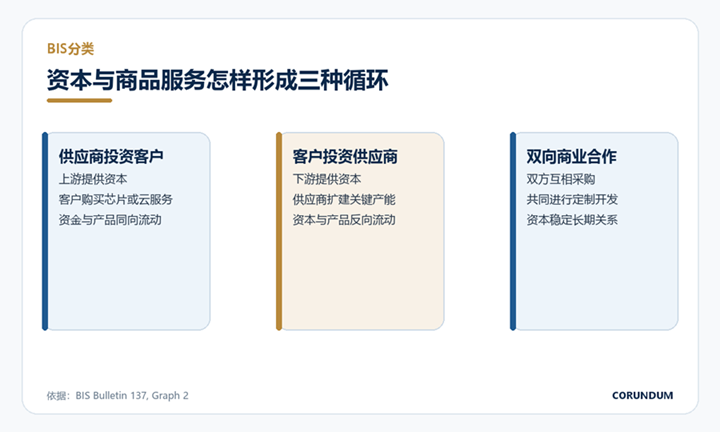
Figure 3 | Three common types of circular investment relationships among AI companies
The first type of relationship is funded by suppliers. Chip companies, cloud service providers, or data center operators invest in their own customers, who then purchase compute, chips, or cloud services. Capital and products flow in the same direction. Suppliers can observe customers' actual usage and pace of expansion, gaining earlier access to operating data than ordinary financial investors; after customers obtain capital, they are also better able to sign long-term orders.
The second type of relationship is funded by customers. Model companies or large technology enterprises invest in key suppliers, capital flows upstream, and chips and compute services then flow back downstream. The core here is resource assurance. High-end chips, data center power, and specialized data centers all have construction cycles, and an investment can secure a more stable capacity arrangement, while also allowing customers to participate earlier in suppliers' expansion plans.
The third type of relationship is more complex, with both parties simultaneously purchasing each other's products or services. A model may be optimized for a certain chip, a cloud platform integrates the model into enterprise products, and the model company in turn purchases the cloud platform's training and inference resources. Capital relationships connect these contracts, making both partners more willing to invest in custom development, specialized equipment, and long-term operations and maintenance.
Economics often uses the term "specific investment" to describe this kind of input. It refers to an asset built for a specific counterparty whose value would decline markedly if transferred to other customers. Data center clusters designed for a particular model and software stacks rewritten for specific chips both fall into this category. Equity relationships can stabilize cooperation expectations and also reduce both parties' impulse to renegotiate prices after facilities are completed.
3. Public Cooperation Already Reveals This Network
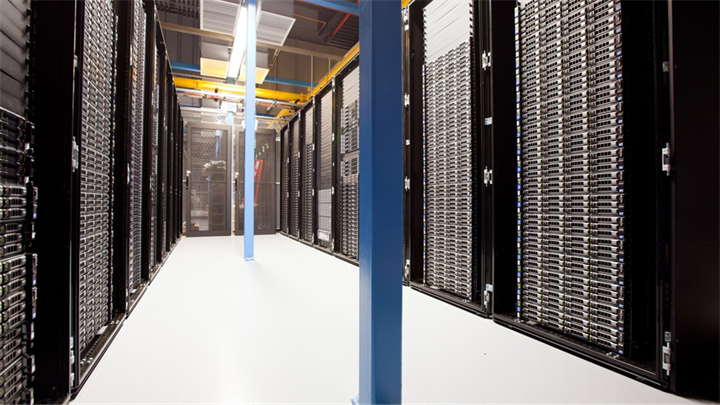
Figure 2 | Wikimedia server room; compute demand ultimately materializes as substantial investment in racks and equipment
Microsoft and OpenAI are among the most closely watched examples. In 2023, Microsoft announced it would continue multi-year, multi-billion-dollar investment while listing Azure as OpenAI's exclusive cloud service provider. The funding helped model research and development and compute expansion, while the cloud service contract brought a substantial portion of the spending back to Azure. Microsoft also distributes model capabilities through its own products, so investment, procurement, infrastructure, and product channels all appear within the same cooperative relationship.
Amazon and Anthropic adopted a similar combination. Amazon announced an investment of up to $4 billion, and Anthropic made AWS its primary cloud service provider and used Trainium and Inferentia chips to train and deploy models. For Amazon, the investment brought model collaboration and cloud usage; for Anthropic, funding, chips, and customer access were placed within the same long-term cooperation framework.
Large-scale cooperation also embeds technology migration costs. Once a model has completed training optimization on a certain type of chip, inference tools, data pipelines, and monitoring systems will all revolve around that environment. Switching cloud platforms would affect engineering teams and product stability. Investment relationships lengthen the cooperation cycle and also make both parties more willing to share the upfront adaptation costs.
Compute leasing company CoreWeave, meanwhile, illustrates the link between chip suppliers and new cloud infrastructure. Nvidia both provides CoreWeave with the GPU ecosystem and participates in its financing and expansion arrangements. CoreWeave continues to build data centers, and Nvidia obtains a stable large-scale deployment scenario. Their cooperation directly affects equipment procurement, capacity utilization, and the next round of capital expenditure.
These transactions each have their own contract structures and are at different stages of development. The commonality is clear: the scarcest resources in the AI industry are concentrated in the hands of a few companies, and spot procurement alone is hard-pressed to cover multi-year construction and product cycles, so capital relationships become an extension of supply contracts.
4. 46.4% of Investment Amount Is Simultaneously Tied to Commercial Relationships
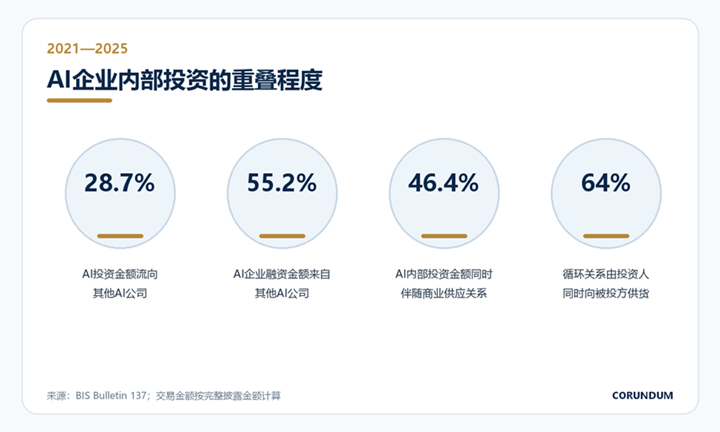
Figure 4 | Key data on AI company investment relationships, 2021–2025
BIS statistics show that, by number, 16.1% of investment transactions among AI companies also involve commercial supply relationships; by disclosed transaction amount, that proportion reaches 46.4%. Large transactions overlap even more clearly with supply chain cooperation. Among circular relationships, 64% involve investors simultaneously supplying products or services to the investee companies.
The upstream segment is the most concentrated. 73% of circular investment relationships come from compute or infrastructure companies. Chips, cloud platforms, and data centers control expensive resources with relatively long construction cycles, model companies need to secure supply in advance, and upstream companies also want to see long-term demand. Each side bears part of the risk, so cooperation naturally extends into the financing domain.
BIS also cited comparative data from traditional industries. Among more than 10,000 U.S. customer-supplier relationships, the proportion of directly holding equity in a trading partner was about 3.3%; in the AI compute, cloud, and related infrastructure submarkets, that proportion reached 15.2%. The AI industry's capital needs, supply concentration, and degree of customization together raise the frequency with which capital ties appear.
The statistical scope is also worth noting. BIS calculates based on the full disclosed transaction amount, and the data cannot break out each investor's actual contribution in a financing round. The 46.4% figure reflects a high degree of overlap between large financings and commercial relationships, and does not equate to the same proportion of funds being designated for purchasing investors' products. Commercial cooperation has already become an important background condition for AI financing.
5. Capital-Driven Demand Will Be Mixed Into Order Growth
The most direct financial impact of circular relationships is that the source of demand becomes harder to distinguish. After a supplier invests in a customer, the customer uses the new funds to purchase the supplier's products, and the supplier recognizes revenue in the current period while holding equity or debt claims on the customer on its balance sheet. Revenue, expectations for investment gains, and customer valuation are connected by the same relationship.
As long as end users continue to pay, this structure can help the industry expand faster. Model companies obtain compute in advance, data centers have long-term orders, and chipmakers can arrange capacity accordingly. Problems will emerge concentratedly when final demand falls short of expectations: customers cut procurement, suppliers first lose orders, and then also face equity impairment, loan losses, or guarantee obligations.
The telecom equipment industry in the late 1990s provided a similar experience. Equipment makers such as Lucent and Nortel once provided financing to network operators, who then purchased their equipment. During the peak of network construction, sales and loan assets grew simultaneously; after end-user revenue slowed, operators' debt repayment and procurement capacity declined together, and equipment makers bore the dual pressure of falling sales and financial losses.
The AI industry's connections are broader. Some infrastructure is financed through private credit, special purpose vehicles, and long-term asset residual value guarantees, and risk may be dispersed among listed companies, private enterprises, credit funds, and project companies. Looking only at a single company's disclosed investment amount or procurement contract makes it difficult to fully reconstruct actual funding, future commitments, and guarantee obligations.
Contract pricing will also affect outside judgment. Long-term compute agreements may include prepayments, minimum usage, price discounts, and expansion options, while equity investments may change both parties' expectations for future orders. When analyzing the customer quality of an AI company, it is necessary to place cash revenue, contract liabilities, remaining performance obligations, and procurement from related counterparties in the same table in order to see the duration of orders and the real ability to pay.
6. Regulators and Investors Need to See the Complete Contract Chain
Circular investment itself serves real industrial needs. The regulatory focus will fall on whether information can be fully presented. When a company discloses an equity investment, investors also need to know whether during the same period there were minimum purchase volumes, cloud service credits, reserved compute, asset residual value guarantees, and exclusivity arrangements. Revenue recognition, customer concentration, contingent liabilities, and investment impairment may all be affected by these terms.
Competition issues will also enter the discussion. Companies that control chips, cloud platforms, or model gateways can accelerate product coordination by using investment to bind key customers and suppliers, and can also affect other companies' conditions for obtaining compute, accessing models, or winning customers. Competition authorities, securities regulators, and banking supervisors in different jurisdictions see different parts of the same network, and cross-agency information exchange will become increasingly important.
For the market, a more practical approach is to look at financing and orders together. How many external customers did new investment bring, how much revenue came from investee companies, how long do procurement commitments last, and who is financing the related assets—these questions explain the quality of industry heat better than tracking financing valuations alone.
This BIS brief breaks the AI investment boom into a set of verifiable relationships. Compute suppliers, model companies, and application platforms are using capital to exchange for demand, resources, and cooperation stability. In the next few years, growth in the AI industry will still be driven by this network, and the market will also more frequently ask: behind a given revenue figure, how much actually comes from end customers, and how much comes from capital invested in advance within the industrial chain.
This article is intended solely for legal, policy, and industry research exchange, aiming to provide objective analysis of digital finance, stablecoins, digital assets, and related regulatory developments. It does not constitute investment advice, legal advice, tax advice, or any other form of professional advice, nor does it constitute any recommendation, promotion, or solicitation for any financial product, digital asset, or commercial project. The regulatory rules, market data, and institutional information mentioned in the article are mainly sourced from public materials and may be adjusted due to changes in laws and regulations, regulatory policies, market conditions, and project progress. Readers should make independent judgments based on the latest public information and comply with the laws and regulations applicable in their country or region. The author and the publishing platform assume no responsibility for any investment, transaction, or other business decisions made in reliance on the content of this article.