

Fed's Hawkish Stance: Crypto ETFs See $2.6 Billion in Net Inflows in September Against the Tide — Who's Buying?

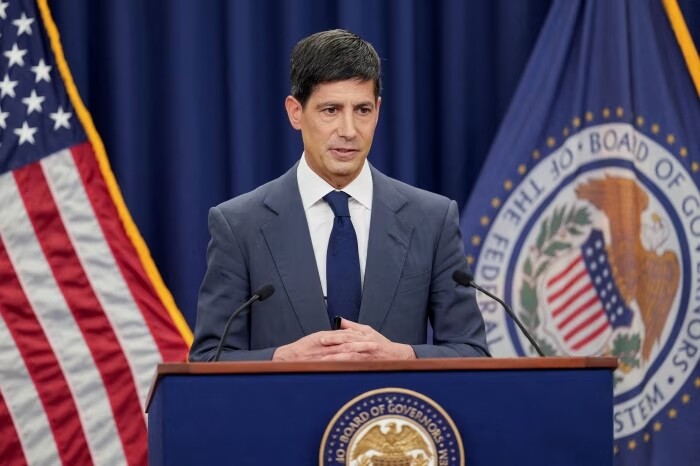
On October 8 (Beijing time), the Federal Reserve released the minutes of the Federal Open Market Committee (FOMC) monetary policy meeting held from September 15 to 16.
The minutes released this time pull the Fed back into the framework of "bringing inflation down first": the rate hike has already landed, and one more hike before year-end remains the baseline for the majority — the minutes show that all participants supported the decision to raise rates by 25 basis points in September, with most participants believing that further rate hikes before year-end may be appropriate, though action in October is not necessarily required.
As soon as the minutes were released, risk assets were the first to fall. BTC dropped to as low as $82,300 this morning and has since recovered to $83,000, while altcoins generally fell by more than 3%.
Looking at the data, however, spot ETFs continued to see sustained net subscriptions after the rate hike landed. In September, spot BTC ETFs recorded net inflows of $2.6 billion, the second-highest monthly net inflow this year, second only to roughly $3.52 billion in August, indicating that institutional demand has not retreated and the outlook remains worth watching.
What did the minutes say?
At the September 15–16 meeting, the FOMC voted 12–0 unanimously to raise the target range for the federal funds rate by 25 basis points to 3.75%–4.00%, the first rate hike since July 2023. The minutes further stated that all 19 participating officials supported the decision. Most assessed that another increase in the target range before year-end might be appropriate; at the same time, they emphasized keeping every meeting open, with subsequent moves depending on data and its implications for the outlook and the balance of risks.
Inflation is at the core of this pivot. Staff estimated August headline PCE at about 3.8% and core at about 3.4%, with insufficient progress on disinflation in recent months and risks almost uniformly tilted to the upside. Driving factors include energy prices from geopolitics, tariffs, and investment, input costs, and tech-related goods prices stemming from AI infrastructure buildout. Economic activity continues to expand at a solid pace, consumption remains resilient, the unemployment rate is about 4.1%, and the labor market is near full employment. Several participants even judged that the policy rate before the hike was "not restrictive or only mildly restrictive." A higher rate path was seen by some as insurance against sticky inflation and by others as a necessary move under the baseline outlook.
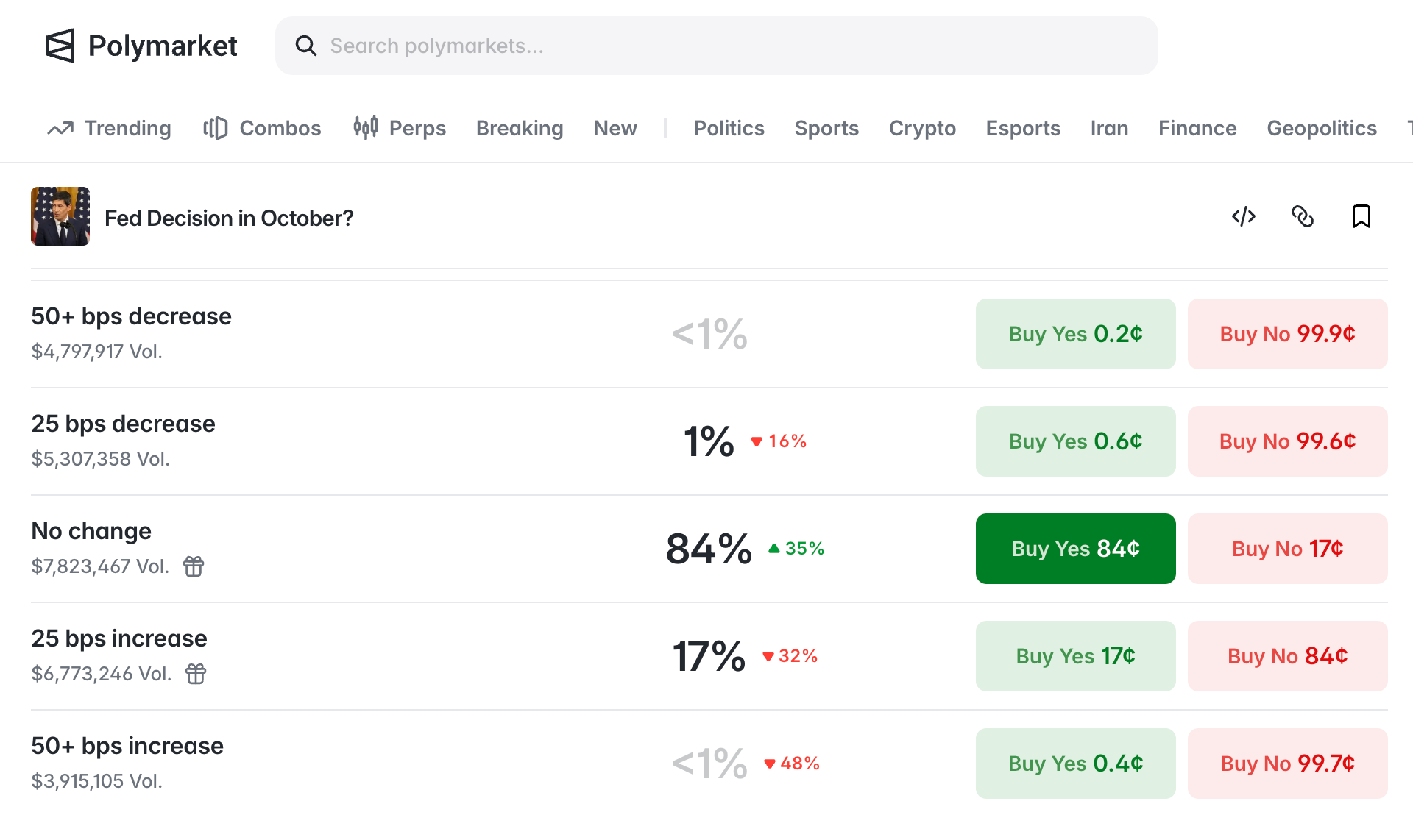
Polymarket data shows that after the minutes were released, the probability of keeping rates unchanged in October reached 84%, up 35% over the past week; the probability of one more rate hike before year-end remains above 70%. In other words, what these minutes confirm is a "tightening bias within the year," not that "October must bring another consecutive hike."
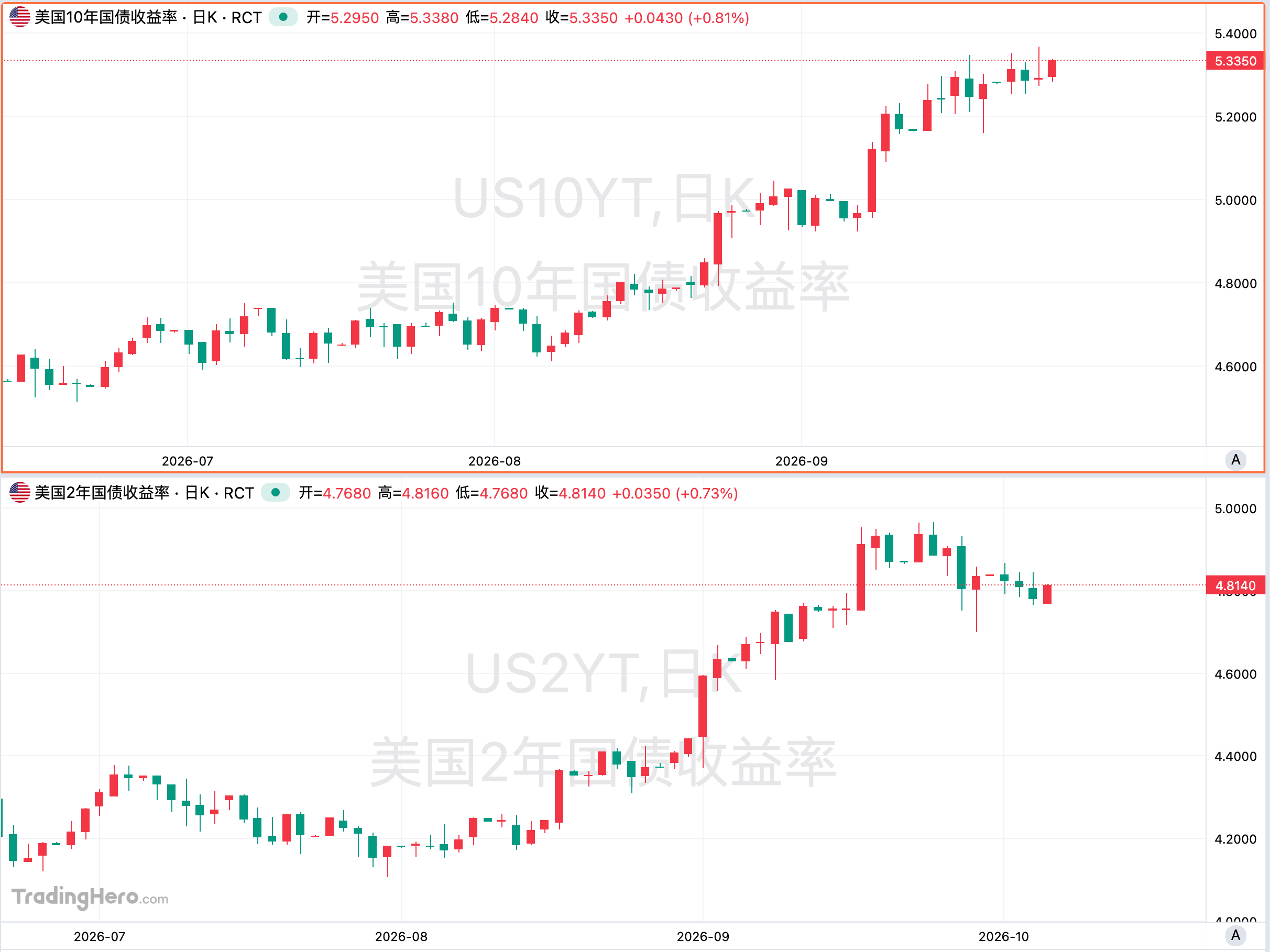
For risk assets, the pressure does not come only from the rate hike itself, but from rates staying higher for longer. If nominal and real rates remain elevated due to expectations of further hikes, the theoretical valuations of long-duration assets, high-valuation growth stocks, and crypto assets will all come under pressure. Between meetings, 2-year to 10-year U.S. Treasury yields have risen by a cumulative roughly 35 basis points. Financial conditions have not tightened across the board — stocks remain high and credit spreads remain narrow — but the minutes explicitly treat "financial conditions still supporting growth" as part of the inflation risk rather than as a background factor that can be ignored.
The minutes do not describe a recession, but rather strong investment, stable employment, and elevated inflation. Under this combination, risk assets will not be bought on a "recession trade," nor on "unlimited easing." What the market is pricing is this: the economy can still withstand higher rates, and policy will go one step further for the 2% target. For high-beta assets, volatility comes from data, not from an unexpected policy pivot.
After the rate hike landed, crypto ETFs are buying instead
Interestingly, institutional demand in the crypto market does not seem to have diminished because of the rate hike.
According to SoSoValue data, U.S. spot Bitcoin ETFs saw net inflows of about $2.65 billion in September, and almost all of that occurred after the September 16 rate hike: the two days before the hike saw a combined outflow of about $750 million, while from September 17 to the end of the month there were net inflows of about $2.9 billion. In the week ending September 25, inflows reached about $2.4 billion, the largest single week since October 2025, with September 21 alone approaching $1 billion. BlackRock's IBIT was the main driver. Over the same period, spot Ethereum ETFs also recorded about $690 million in net inflows. Bitcoin's price rose from about $78,500 to around $83,000 during the month, and has since fluctuated around the $84,000 level.
A longer cycle also shows that allocation was not interrupted by the rate hike. In mid-July, spot Bitcoin ETFs' cumulative net outflow for 2026 had at one point reached about $5.8 billion; in the week after the September rate hike, full-year net flows turned positive again. As of early October, cumulative net inflows since the products launched stood at about $57.8 billion, with net assets of about $110 billion. After entering October, daily flows turned volatile — October 6 still saw net inflows of about $120 million, and some tracking shows the 30-day window still had about $3.5 billion in net inflows — but September's direction is already enough to make the point: a fully priced 25 basis points is not itself a trigger for institutions to exit.
This runs counter to the traditional intuition that "rate hikes mean selling risk," for this reason: before the decision, the probability of a hike was already above 90%, outflows were concentrated before the decision date, and after the decision landed, uncertainty declined, with short covering and allocation funds returning at the same time. The buying occurred in regulated spot ETFs, corresponding to real Bitcoin subscriptions rather than leveraged futures; this type of capital is less sensitive to a single 25 basis point move than to whether the regulatory channel is stable and whether the portfolio needs uncorrelated assets.
Not a easing trade, but a "rate hike is bearable" trade
The minutes show that most officials still believe one more hike is appropriate, and some believe the current rate is not restrictive enough. If the October 14 CPI or subsequent employment data re-strengthen inflation stickiness, December rate hike pricing will quickly rebound, and real rates and the dollar will squeeze high-beta assets. In such a scenario, crypto usually trades liquidity expectations first, then its own supply and demand; ETFs can buffer, but they cannot hedge a jump in the risk-free rate.
Currently, the probability of keeping rates unchanged in October is clearly higher than in the first few days after the meeting, giving risk assets a data vacuum period. More importantly, September's ETF flows prove that when growth has not stalled, the rate hike has been priced, and the spot channel remains open, institutions can treat Bitcoin as an allocatable asset rather than merely an easing hedge. Spot products such as Ethereum and Solana recorded net inflows in the same week, showing that this is not a short-term rebound in a single asset.
Next, watch whether three sets of data move in the same direction: whether PCE/CPI continues to stay above 3%, thereby locking in a December rate hike; whether financial conditions truly tighten due to rising U.S. Treasury yields; and whether spot ETFs can still maintain net subscriptions when Bitcoin approaches holders' cost zone.
If, among the three, only rates move higher and flows turn negative, the "rate hike is bearable" narrative for risk assets will recede. If inflation moderates at the margin, an October pause is confirmed, and monthly ETF flows remain positive, then crypto is more likely to trade allocation demand after a decline in volatility, rather than a new round of major easing.