


福布斯专访Galaxy创始人:比特币ETF和下一轮牛市

Original article by Maneet Ahuja, Forbes Staff
Original compilation: Luffy, Foresight News
Long before cryptocurrencies became popular, Galaxy Digital founder and CEO Mike Novogratz was already a proven Wall Street veteran. Novogratz began his ten-year investing career at Goldman Sachs in 1989, becoming a partner while the firm was still privately held. Novogratz then led Fortress Investment Group, a macro-focused hedge fund private equity firm, before returning to Goldman Sachs as president.
Novogratz, now at the helm of crypto investment firm and merchant bank Galaxy Digital, is one of the most active early adopters and staunch supporters of cryptocurrencies. As of the end of January 2024, Galaxy had assets under management of US$6 billion, and as the companys largest shareholder, Novogratzs current holdings are worth approximately US$2 billion. Not always a winner, Novogratz was a major backer of Luna, the token associated with the algorithmic stablecoin Terra USD, which flopped miserably in 2022, losing around $50 billion in market cap in less than a week . Novogratz is so fascinated by Luna that he has its logo tattooed on his arm.
In response to the turmoil caused by the FTX collapse in 2022, Galaxy and other companies are looking to expand the use of crypto assets. Last month, the U.S. Securities and Exchange Commission approved applications for 10 U.S.-listed spot Bitcoin exchange-traded funds, which many viewed as a watershed moment for the broader crypto industry.
The following interview was conducted at the recent iConnections Global Alts Summit in Miami. ——Maneet Ahuja
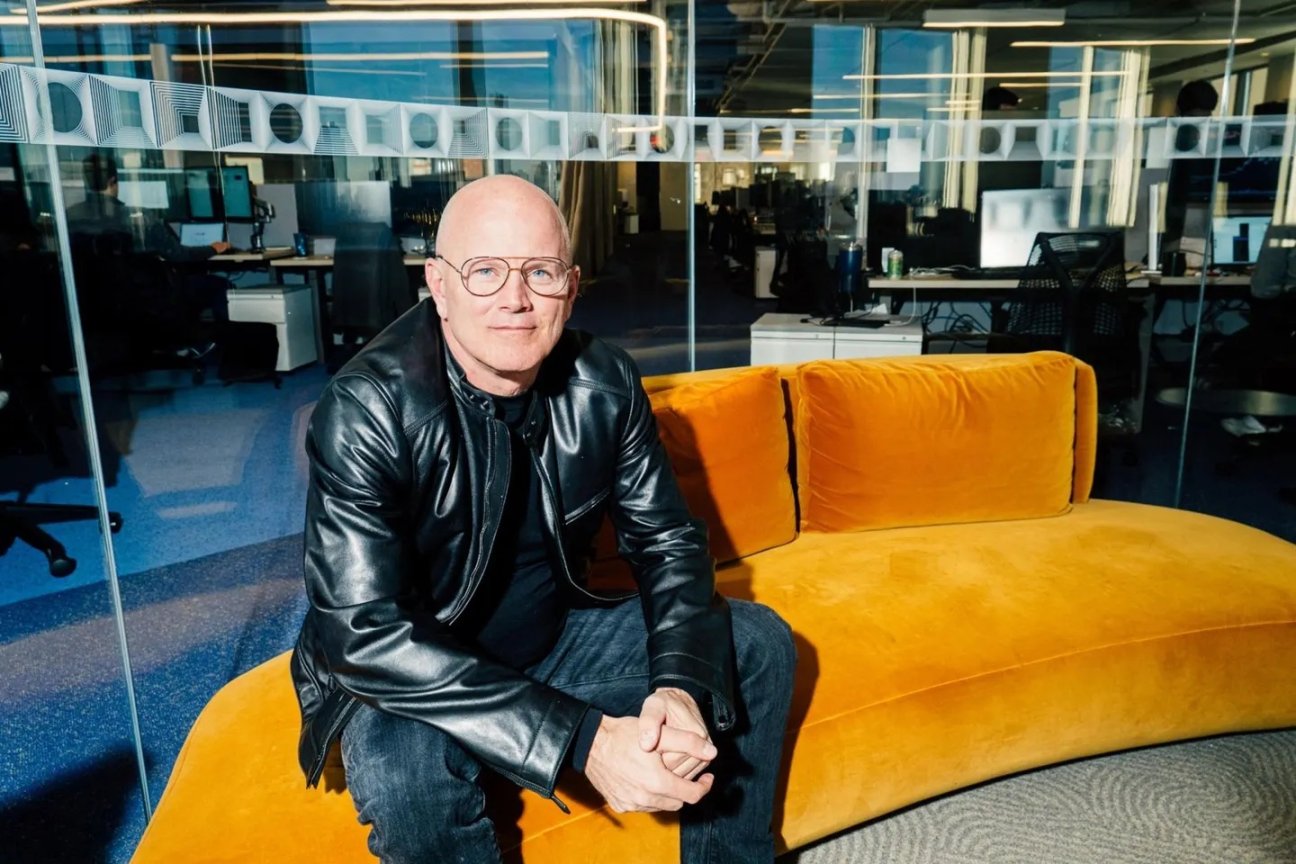
Mike Novogratz, CEO of Galaxy Digital Source: Bloomberg
Forbes: Mike, a lot has changed from a year ago. Can you give us a comprehensive perspective on where we are now from a macroeconomic and crypto industry perspective?
Mike Novogratz:In the cryptocurrency space, we witnessed a major shift in 2021, with the Federal Reserve adjusting policy and beginning to significantly raise interest rates. Generally speaking, one might expect cryptocurrencies and hard assets like gold to fall in this scenario. This decline has been compounded by widespread fraud and misconduct within the industry, especially by entities like Celsius, which has created pessimism about the future of cryptocurrencies. Due to these factors, the cryptocurrency market lost the confidence it was fundamentally built on, leading to a classic market capitulation where sentiment became extremely negative. Despite the prevalence of pessimism, moments of extreme downturn often lurk lucrative buying opportunities. For example, in hindsight, Bitcoins price drop to $7,000 in 2018 was an excellent buying point for savvy investors. The tide is turning again as the Federal Reserve signals a shift toward a rate-cutting cycle. In addition, major events such as Grayscale’s legal proceedings with the SEC and endorsements from figures such as Larry Fink, one of the world’s most influential asset managers, have also helped the cryptocurrency industry regain confidence.
Subsequently, concerns surrounding major exchanges such as Binance were resolved, helping to mitigate systemic risks and pave the way for a more stable environment. Looking ahead, however, while regulatory uncertainty remains, bipartisan consensus on legislative initiatives (with the exception of a few such as Elizabeth Warren) suggests that a regulatory framework is on the horizon. Combined with the recent launch of crypto ETFs and impending interest rate cuts from the Federal Reserve, this sets the stage for increased institutional adoption. This is very exciting.
Forbes: Last year we saw Bitcoin rise 150%. Part of this rise is due to the limited supply of Bitcoin in circulation, with more than 70% of the supply on the market not changing hands. Why is this happening?
Mike Novogratz:I think you have to think back to Satoshi Nakamoto, the creator of Bitcoin, and the original white paper and code. Bitcoin’s anonymous creator originally wrote the cryptocurrency’s white paper as a response to growing concerns about centralized financial systems.
The essence of Satoshi Nakamoto’s white paper is its vision of decentralization, which stands in stark contrast to the monetary policies of previous U.S. presidents. Government spending has soared under the terms of Donald Trump and Joe Biden, especially during Trumps pre-COVID spending spree. The federal government consumes about 25% of GDP, and this normalization of excessive spending marks a significant departure from historical norms. Looking back on my time in the Office of Management and Budget during the Reagan administration, I remember adhering to a set of fiscal rules, including a 20 percent government spending and tax revenue target. However, the current status quo is that government spending exceeds 25% of GDP, while tax revenue lags, resulting in a ballooning budget deficit.
Although the United States faces an urgent fiscal crisis, there appears to be a lack of political will to address the problem. Calls for a Simpson-Bowles bill to address the budget deficit and restore fiscal responsibility appear to have been shelved. This neglect of fiscal discipline poses an urgent challenge that requires attention and action from policymakers. I believe that addressing the ballooning budget deficit and restoring fiscal balance must be high on the political agenda. Failure to do so risks exacerbating the fiscal crisis, destabilizing the economy and harming the well-being of future generations.
Forbes: Why arent these on the agenda?
Mike Novogratz:We have experienced a long period of low interest rates and a superficial abundance of money that is reminiscent of the principles espoused by Modern Monetary Theory. This era of seemingly endless liquidity seems to be working well, with low inflation and continued economic growth. What is often overlooked, however, is the devastating impact that inflation has on ordinary Americans. While attendees of meetings like this one may be equipped to handle inflationary pressures, the reality for many Americans is very different. Over the past decade, we have witnessed a significant increase in the cost of living, particularly in housing prices. For example, the average home price in 2010 was $289,000, and by 2024 it had soared to $400,000, effectively doubling in just ten years. So, imagine that today you are a young man fresh out of college and realize that you are not making double the salary or salary in your Goldman Sachs analyst job, let alone blue collar jobs and other regular white collar jobs.
The rapid expansion of assets and goods has left many Americans feeling economically disenfranchised, fueling the rise of populism in recent years. They feel strongly that everything is stacked against them and have a complete disdain for Washington, D.C., and elite institutions. As we navigate this cycle of economic challenges, the prospect of finding solutions can seem daunting. While some may hope for revolutionary breakthroughs in technology, such as widespread adoption of artificial intelligence leading to unprecedented increases in productivity, the likelihood of this happening remains uncertain.
Forbes: Let’s talk about Bitcoin and its role as a store of value. We have spot Bitcoin ETFs that just came on the market, one of which is from your company. What kind of demand do you think there is for these products?
Mike Novogratz:The reality is that there has been a generational shift in Bitcoin adoption, with younger generations seeing it as a means of rebalancing the economic scale inherited by the baby boomers. As registered investment advisers cater to this demographic shift, the emergence of ETFs tailored to their preferences marks a major milestone in Bitcoins journey toward mainstream adoption.
While some may believe that Bitcoin’s value is simply a social construct, it’s important to recognize its importance as a store of value similar to gold. Despite skepticism from traditional investors like Ray Dalio, rising acceptance of Bitcoin by RIAs and retail investors demonstrates Bitcoin’s enduring relevance in the financial sector.
Going forward, I expect portfolio allocations to Bitcoin to gradually and steadily increase as RIAs recognize its potential for diversification and wealth preservation. The influx of capital from the traditional financial sector represents the next stage in Bitcoin’s development and is expected to be an important catalyst for its continued growth.
Forbes: Lets talk about outflows. What did you see, including what happened to Grayscale?
Mike Novogratz:Grayscales Bitcoin product has faced scrutiny and criticism from the SEC for its high fees and structural flaws that resulted in investors losing money when the fund traded at a premium. As arbitrage opportunities diminish, investors are turning to ETFs offered by industry giants such as Invesco, BlackRock and Fidelity for lower fees and greater transparency. This shift highlights the importance of trust and cost-effectiveness in investment choices, and Grayscale’s products lose their appeal.
Forbes: This is a competitive market, and you say there will be two or three winners. You mentioned BlackRock, who are the other winners?
Mike Novogratz:We launched our own program with Invesco, but adoption has been slower than expected. We are optimistic that within the next six months we will see significant progress as it enters platforms like Salesforce and gets approval from institutions like Morgan Stanley. BlackRock and Fidelity are also poised to join the ranks.
As for why to invest now, its worth noting that while these businesses are critical for asset collection, they are not very profitable due to their low fees. Nonetheless, they represent excellent products with huge potential for scalability and brand recognition.
Forbes: Do you think the new ETFs will drive more retail demand? Which regions do you think will see the strongest growth over the next 12 months?
Mike Novogratz:Yes. The introduction of ETFs as stock-like products not only provides more capital efficient trading options but also opens the door to increased leverage. We expect institutions to gradually enter the market, starting with IRAs and expanding to pension funds and endowments. The integration of cryptocurrencies into the financial sector is inevitable and, coupled with legislation expected within the next 18 months, will further boost investment.
Politically speaking, bipartisan support for crypto legislation (as evidenced by conversations with figures such as Hakeem Jeffries and Tom Emmer) will lead to wider acceptance of digital assets. This legislative clarity will encourage more investors to enter the market.
While growth may not be as frenetic as it has been in the past, we are observing steady growth in capital and clients in the asset management space. Over the next 12 months, we expect significant growth in retail demand as awareness of the long-term potential of cryptoassets grows.
Forbes: Do you think the SEC will approve an Ethereum ETF next? What will be the outcome of the Coinbase lawsuit?
Mike Novogratz:The recent legal dispute over a Bitcoin ETF has highlighted the divisions in the SEC’s approach to regulating crypto assets. The court criticized the SEC for denying spot trading of Bitcoin ETFs while allowing trading of futures ETFs, noting the illogical reasoning behind the decision.
Furthermore, the current political landscape, characterized by a conservative leaning Supreme Court, is resisting government overreach. That sentiment also extends to regulatory actions by the U.S. Securities and Exchange Commission, which have faced scrutiny for being seen as overstepping their authority.
Going forward, many of the lawsuits initiated during Genslers tenure are likely to be dismissed regardless of the political affiliation of the next SEC chairman. This reflects the growing recognition of the inevitability of cryptocurrencies’ integration into the financial system.
However, regulatory uncertainty surrounding the classification of digital assets as securities or commodities remains a significant challenge. The outdated Howey test designed for traditional securities does not adequately address the complexities of blockchain-based technology. This ambiguity not only hinders industry growth but also creates a financial burden for companies to navigate the regulatory environment. Clear guidance from Congress and the White House is urgently needed to provide certainty and promote innovation within the industry.
Forbes: On that note, youve said that youll be moving a lot of your business overseas because of regulatory challenges in the United States. Can you discuss what youll be doing while you wait for the regulatory environment to stabilize?
Mike Novogratz:The regulatory uncertainty plaguing the cryptocurrency industry is deeply frustrating, especially for a conservative company like ours that prioritizes compliance. While some companies may take a more rebellious stance, we understand the importance of adhering to regulatory standards to protect customers and maintain integrity.
However, this commitment to compliance comes at a considerable cost, exacerbated by unclear regulatory guidance. This uncertainty forces us to allocate significant resources to legal and accounting fees, thereby impairing our ability to innovate and compete effectively.
Of particular concern is New York’s regulatory environment, with stringent requirements adding additional complexity and cost to crypto businesses. This additional burden further impedes our ability to thrive and holds back the industry as a whole.
Ultimately, we urgently need a clear, comprehensive regulatory framework at the federal and state levels to level the playing field and enable sustainable growth within the industry. Only then can we realize the full potential of U.S. cryptocurrency innovation and ensure its continued success on the global stage.
Forbes: Finally, back to the macroeconomic outlook. What are your thoughts on soft landings? What do you think about 2024?
Mike Novogratz:Discussions surrounding the Federal Reserves potential rate cuts amid easing inflation warrant a closer look at the broader economic landscape. Despite speculation about a rate cut in March, current data do not ultimately support a rate cut, suggesting a degree of uncertainty about the timing and necessity of monetary policy adjustments.
The underlying resilience of the economy can be attributed to several factors. First, unprecedented levels of government spending, particularly on infrastructure, provide a huge stimulus that is not directly affected by interest rate fluctuations. Continued injections of money into the economy can help boost growth and offset potential headwinds from monetary tightening.
Additionally, certain sectors such as housing and autos continue to perform strongly despite broader economic challenges. The ongoing shortage of housing units combined with strong demand has kept the construction industry active, contributing to overall economic activity. Likewise, the auto industrys ability to withstand worker strikes and maintain production levels underscores its importance as a major job creator and economic driver.
Notably, while these sectors remain resilient, concerns remain about the overall pace of economic growth and the likelihood of persistent inflationary pressures. The Feds decision-making process will likely depend on a careful assessment of these various factors, with a focus on maintaining price stability and supporting sustainable economic expansion.
Forbes: Can you talk about the current political landscape and your thoughts on the 2024 election?
Mike Novogratz:Over the past 35 years, the U.S. debt-to-GDP ratio has soared from 50% to 125% and is expected to reach a staggering 250%. In addition, major social changes have occurred in the United States, where the average American is now 35 pounds heavier and life expectancy is set to decline for the first time in history.
Clearly, the baby boomers who have dominated politics for decades have failed to address key issues, leaving a legacy of economic disparity and social challenges. When they took power, 16% of older Americans lived below the poverty line, and today the figure is a staggering 70% of American children. This disparity highlights the intergenerational injustice of prioritizing short-term gains over long-term sustainability.
Its time to change leadership and get rid of entrenched politicians like Nancy Pelosi, Mitch McConnell and Chuck Schumer. We need new faces with fresh perspectives, people like Dean Phillips who prioritize the greater good over personal gain. The current political gridlock and embarrassment on the global stage requires a new approach, one that goes beyond the divisive rhetoric of Trump and Biden.
While the outcome of the upcoming election remains uncertain, it is clear that our political landscape needs a dramatic shift. Whether through new leadership or a renewed commitment to change, we must move beyond the status quo and forge a path to a brighter future for all Americans.
Forbes:Thanks.