

What is Katana (KAT)? An Analysis of the DeFi Liquidity Chain and vKAT Governance Mechanism

Quick Takeaways
- Project Positioning: KAT is the native token of the Katana network, used to coordinate incentive mechanisms within a DeFi-first blockchain.
- Core Utility: KAT can be locked to convert into vKAT, used for participating in incentive distribution voting and receiving a share of protocol fees.
- Key Differentiator: Katana concentrates liquidity through core applications, combining Chain-owned Liquidity (CoL) with the VaultBridge yield mechanism.
- User Participation Path: Users can bridge assets into Katana, participate in applications like Sushi, Morpho, and Kensei to earn KAT incentives, and subsequently lock them as vKAT.
- Primary Risks: The incentive flywheel structure is relatively complex; its long-term sustainability depends on continued usage, strategy security, and token unlock schedules.
What is KAT?
KAT is the governance and incentive token of the Katana network, built upon the Katana DeFi ecosystem. The token is converted into vKAT through a vote-escrow mechanism, enabling holders to participate in incentive distribution voting, direct liquidity incentives among core protocol markets, and share in a portion of protocol fee revenue. This coordinates and manages DeFi liquidity and reward mechanisms.
Why Do DeFi Public Chains Keep Emerging, But Liquidity Struggles to Remain Stable Long-Term?
In the current DeFi market, liquidity is often fragmented across numerous protocols and pools. This fragmented structure leads to multiple issues: increased transaction slippage, declining yields, and incentive mechanisms devolving into short-term "liquidity mining cycles." When market conditions change, such incentive-driven capital tends to exit rapidly, causing yields to compress quickly.
Against this backdrop, the design philosophy of Katana and KAT is gaining attention. Katana positions itself as a blockchain network with DeFi as its core use case. By concentrating activity on a few core applications and reinjecting chain-level revenue into the liquidity system, it attempts to mitigate the problem of liquidity fragmentation.
Within this structure, KAT plays a crucial coordination role. Through the vKAT governance mechanism, holders can decide the direction of incentive distribution and share in protocol fees. This design aims to align incentive distribution more closely with real usage scenarios rather than relying solely on short-term subsidies. This article will further analyze KAT's operational mechanisms, demand drivers, and potential risks.
What is KAT? How Does It Work?
KAT is the native token of the Katana network. Katana positions itself as a blockchain network with DeFi as its core use case, focusing on deep liquidity and sustainable yield structures. It's important to note that KAT's primary function is not to pay for Gas fees—in the Katana network, Gas fees are still paid in ETH.
The core demand for KAT primarily stems from the vKAT governance mechanism. Once KAT becomes transferable, holders can lock their KAT to obtain vKAT (vote-escrow KAT). vKAT represents governance voting power, allowing holders to vote each epoch on the direction of incentive distribution, such as which liquidity pools or markets receive more rewards. This directs incentives more precisely towards truly active markets and pools.
From a user perspective, interaction with KAT typically arises from ecosystem participation. A common path includes: bridging assets into the Katana network, engaging in trading, lending, or liquidity provision within core DeFi applications, and earning KAT incentives in the process.
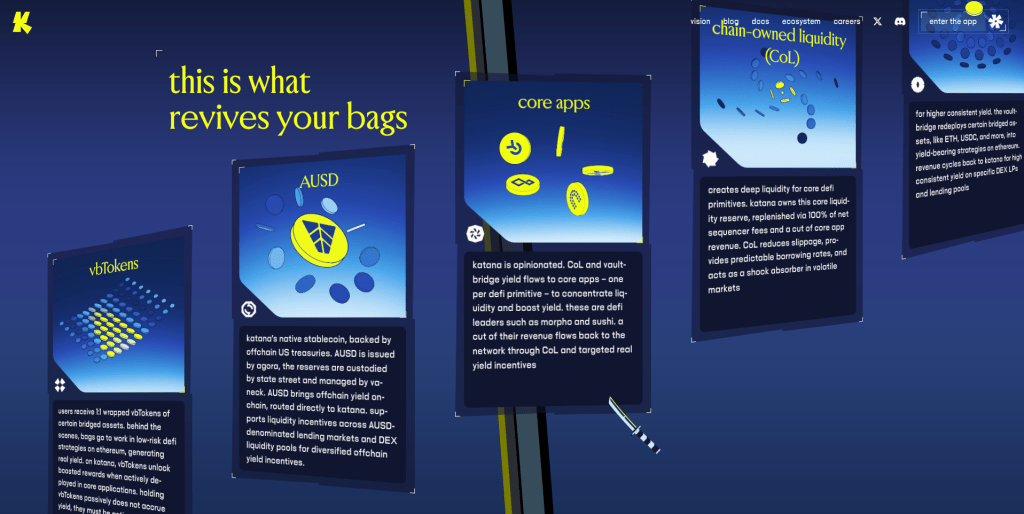 Source: Katana.network
As exchange liquidity develops, some users may also view KAT as a tradable market asset. Meanwhile, Katana's overall design attempts to build an "incentive flywheel": revenue generated by VaultBridge, Chain-owned Liquidity (CoL) supported by sequencer fees, and real usage demand from core applications collectively drive the liquidity and incentive cycle.
Within this system, KAT acts as a governance and incentive coordination layer. However, the long-term viability of this model still depends on whether the ecosystem can consistently generate real fee revenue and maintain stable user retention.
KAT Tokenomics
KAT employs a fixed total supply model, with the overall supply allocated towards community participation, ecosystem incentives, and long-term development. According to official Katana disclosures, the total supply of KAT is 10 billion tokens. This allocation structure aims to support early network liquidity, reward ecosystem participants, and provide funding for the protocol's long-term construction and expansion.
In its token distribution design, Katana clearly emphasizes user-side incentives. Major allocation directions include: liquidity mining incentives in core applications, airdrop programs for community participants, and an ecosystem & community treasury managed by the Katana Foundation. The latter is primarily used to drive ecosystem expansion, establish partnerships, and support developers building applications and infrastructure.
Within the economic model, the mechanism of locking to convert into vKAT is one of the most critical designs. Once KAT becomes transferable, holders can lock their KAT to obtain vKAT (vote-escrow KAT). vKAT represents governance voting power, allowing holders to vote each epoch on which liquidity pools or markets receive incentives.
Beyond governance rights, vKAT holders also receive a share of the protocol fees generated by the pools they support. The goal of this mechanism is to create a tighter link between token value and real ecosystem usage, enabling holders to participate in network incentives and revenue distribution rather than relying solely on price volatility.
Tokenomics Overview
Allocation CategoryToken Amount% of Total SupplyUser Liquidity Mining & Ecosystem Incentives2,000,000,000 KAT20%Community Airdrop (including POL staker allocation)1,500,000,000 KAT15%Ecosystem & Community Treasury4,935,000,000 KAT49.35%Other Ecosystem Incentives & Growth Initiatives*1,565,000,000 KAT15.65%Total Supply10,000,000,000 KAT100%
*Other allocations include ecosystem growth initiatives, developer incentives, and related categories mentioned in Katana's broader tokenomics design.
Ecosystem Growth Fund BreakdownSub-categoryPrimary Purpose% of Total SupplyEcosystem Development InitiativesPromoting ecosystem integrations, partnerships, and DeFi ecosystem expansion~7%Developer Incentives & GrantsSupporting developers, tooling, and application development on Katana~5%Strategic Ecosystem InitiativesLiquidity programs, research support, and infrastructure development~3.65%Total15.65%
KAT Token Functions & Demand Drivers
FunctionHow It WorksDemand SourceGovernance (vKAT)Users can lock KAT to generate vKAT and participate in incentive distribution voting.Users who wish to participate in governance and influence liquidity incentive direction.Fee SharingvKAT voters receive a share of protocol fees from supported pools.DeFi participants seeking real protocol revenue yield.Liquidity Incentive CoordinationvKAT voting determines which liquidity pools receive incentives each epoch.Liquidity providers seeking higher incentive yields.Ecosystem ParticipationUsers can earn KAT through ecosystem activities, liquidity programs, etc.Users actively participating in the Katana DeFi ecosystem.Market LiquidityAs exchange liquidity grows, KAT can also be traded as a market asset.Traders seeking exposure to Katana's ecosystem growth.
Katana Ecosystem & Core Applications
How Users Interact with KAT
Within the Katana ecosystem, a typical user participation path often begins with bridging assets into the network. Users first bridge yield-bearing assets to Katana, then deploy funds to core DeFi applications. For example, users can trade or provide liquidity (LP) on Sushi, engage in lending on Morpho, or participate in new project token launches via Kensei.
Through incentive distributions generated by these applications, users gradually earn KAT token rewards. Once KAT becomes transferable, users who wish to participate in governance or share protocol revenue can choose to lock their KAT as vKAT. vKAT holders can participate in incentive distribution voting and receive corresponding protocol fee shares based on the liquidity pools they support.
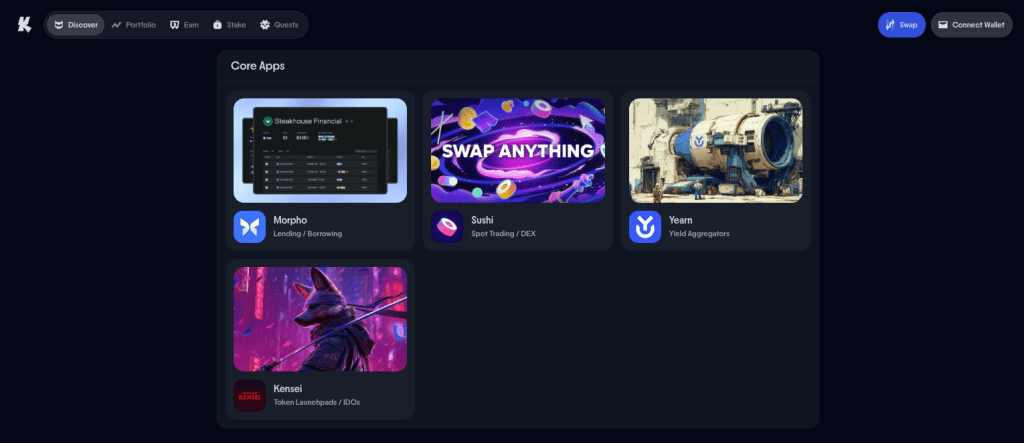 Source: App.katana.network
Key dApps & Primary Use Cases
Used to guide liquidity incentive distribution.
Through the