

Vitalik's Singapore Speech: AI Becomes the New UI, Blockchain Enters the Era of Programmable Data and "Silicon-Based Security"
Original author: Vitalik
Original compilation: Wu Blockchain
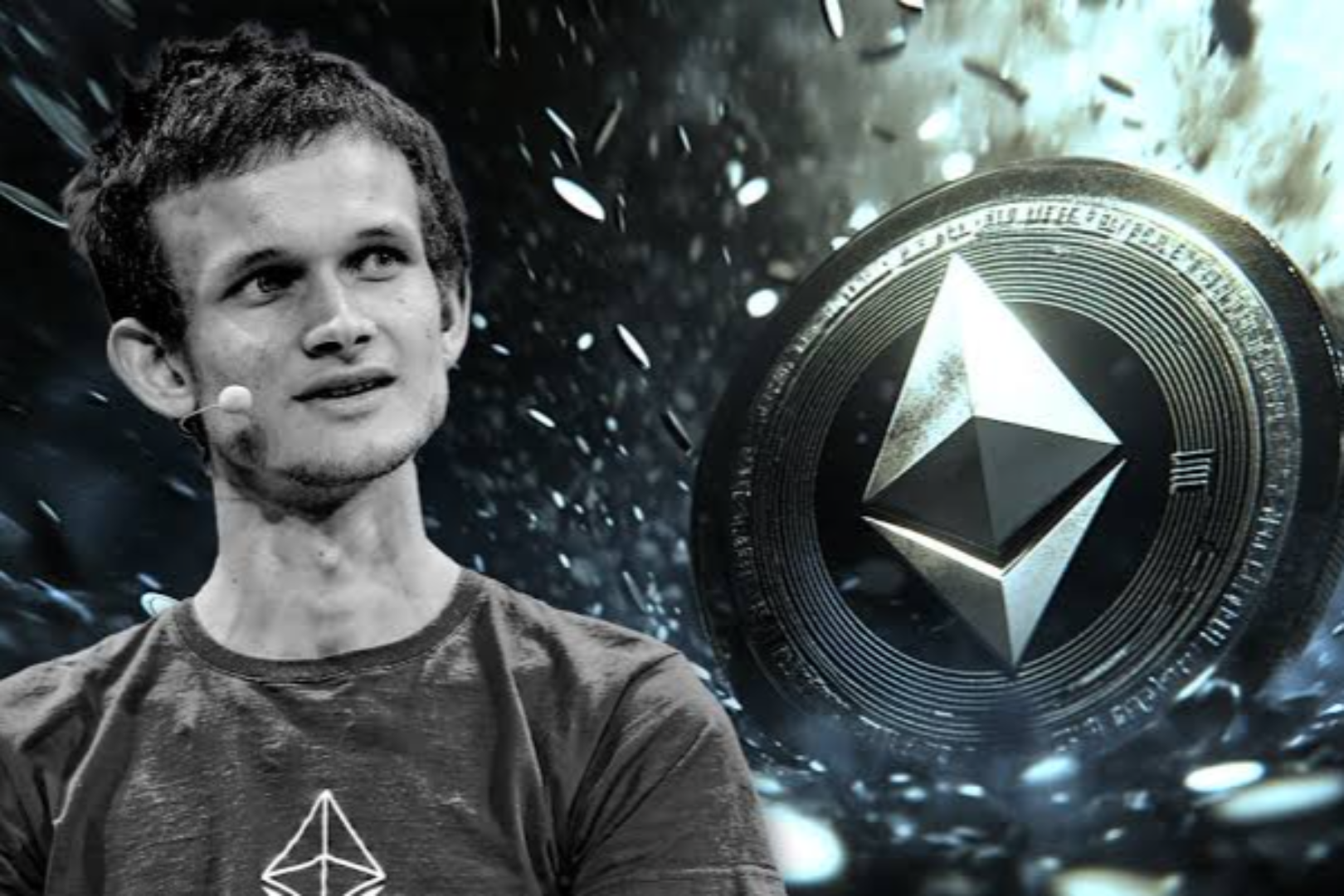
This content comes from a public speech by Ethereum co-founder Vitalik Buterin. The speech took place on October 6, 2026, at the OKX NOW Global Product and Ecosystem Conference in Singapore. Vitalik believes that blockchain technology is far from mature, and that AI is simultaneously becoming the greatest opportunity and the greatest risk. As modern cryptography such as zero-knowledge proofs gradually matures, blockchain can enable not only "programmable assets" but also "programmable data," allowing users to prove certain facts without disclosing complete information. In an era where AI acquires and processes personal data at scale, this capability will become increasingly important.
Vitalik believes that AI is likely to become the new user interface. In the future, users may not need to interact with the blockchain through traditional apps or web pages, but can instead directly have AI Agents write scripts, execute on-chain operations, or even understand trading opportunities. This could eliminate some of the security risks introduced by traditional frontends, but it will also create new problems, such as prompt injection, AI misunderstanding transaction intent, and whether AI itself can be trusted. He emphasized that as AI becomes increasingly adept at discovering software vulnerabilities, higher security standards will not only become possible but also necessary.
Looking ahead to the next two years, Vitalik predicts that Ethereum transactions will become cheaper and more private, and that AI and on-chain applications will further converge. Counterparties may be bots, applications may be written by bots, and even the traditional concept of an "application" itself may disappear, transforming into different Agents interacting directly on-chain. He further proposed that security issues will ultimately extend to the hardware layer: "Not your keys, not your coins" may evolve into "Not your silicon, not your keys," and the blockchain industry will continue to be at the forefront of the entire digital world's exploration of security, privacy, and trusted computing.
This content comes from a public speech and does not represent the views of Wu Blockchain. It does not constitute any investment advice. Please strictly comply with local laws and regulations.
Below is the full transcript of the speech:
AI Is Simultaneously Becoming the Greatest Opportunity and Risk
Today I want to remind everyone of one thing: technology has not stopped developing, and it is far from mature.
Especially over the past five years, we have seen some very important trends, many of which are being accelerated by AI. AI is simultaneously becoming the greatest opportunity and the greatest risk. I think we need to understand this, and we also need to understand what new possibilities will emerge when we no longer only discuss blockchain, no longer only discuss how to put programmable value onto the blockchain, but begin to consider technologies such as zero-knowledge proofs.
For example, what happens if we have not only "programmable assets" but also "programmable data"?
From "Programmable Assets" to "Programmable Data"
This probably began with the development of zero-knowledge proofs about ten years ago. How many people here have used Zcash? How many have used privacy protocols on Ethereum? And how many have used ZK Rollups? Right now it may still only be a minority.
But I expect these technologies to mature rapidly. It is very likely that within two years, most people will have used one of these technologies, perhaps even without realizing it.
These are all very modern cryptographic technologies. They can allow you to prove certain information you possess without revealing the complete information. For example, you can prove that certain facts about yourself, an asset, or an object are credible, and prove that it satisfies some condition you care about, without needing to make all the information public.
Information disclosure should not be something that happens automatically. You should not have to make all information public to everyone just to participate in a system. Every piece of information you disclose should be a conscious choice.
I believe that in the AI era, this issue will become increasingly important.
Why Privacy Becomes More Important in the AI Era
Rapid technological progress has brought us many things, but one thing we often lose is privacy.
Now we have very powerful AI Agents that can help us think. But if you use Claude to help you think, then Claude also has access to your thoughts. For some information, this is something you do not want to happen; for other information, it may even be legally impermissible for you to disclose.
For example, information involving attorney-client privilege or confidentiality agreements. In such cases, whether it is even legal to use many mainstream AI products is not entirely clear.
And this is just one example. Similar technologies are entering every corner of our lives at a very rapid pace.
Everyone can look at how many cameras there are in this room. Ten years ago, the number would probably have been much smaller. Now everyone's phone has gone from one camera to three, plus other computers and on-site devices, there may be thousands of cameras in this room. At the same time, there is also voice recording and collection of various information from the physical environment.
This is just one side of data collection.
AI Is Enhancing Cyberattack and Vulnerability Discovery Capabilities
From a cybersecurity perspective, we also need to consider how to protect our information and assets.
This year we have already seen AI begin to truly possess the ability to attack various systems. We have seen AI escape sandboxes, attack websites, and discover vulnerabilities and exploitable flaws in various software.
At the same time, the Ethereum blockchain has not gone down, and Bitcoin has not gone down either.
In the future, higher levels of security will become possible, and a large part of the reason is precisely AI. AI is already helping the Ethereum protocol discover vulnerabilities, helping us implement very complex cryptography, and proving through mathematical methods that these systems indeed have the expected properties.
AI is also beginning to help us with formal verification. Not only at the protocol layer, but also at the application layer, such as checking whether your assets are safe, whether your data has privacy protection, and various other security issues.
So higher security standards that were previously unattainable will gradually become possible. But at the same time, these standards will also become mandatory, because as long as a system has vulnerabilities, AI will find them. GPT-7 will find them, Claude 7 will find them, and DeepSeek 7 will find them too. They will all find them.
This means we are going through a very interesting yet very challenging transition period. The way we interact with blockchain, internet services, and AI has already begun to change rapidly.
AI Will Become the New User Interface
About a month ago, I updated my ENS for the first time without using a traditional interface at all.
I simply asked a locally running AI Agent to help me write a script to update my ENS Hash. The whole process took the AI about five minutes.
I think this will become the norm. In the future, people will be able to complete complex blockchain operations without using a traditional UI at all.
More and more, AI will become the new UI.
When AI becomes the new UI, it will bring both benefits and risks.
For example, everyone remembers the Safe attack, one of the largest crypto wallets, which ultimately lost about $1.4 billion. That attack was not aimed at the smart contract, nor at the on-chain code, but at the layer between the blockchain and the user.
If more and more transactions are completed directly by AI in the future, then this layer may disappear. Many problems caused by traditional user interfaces may also decrease accordingly.
For example, is the user interface itself secure enough? Is the frontend you re-download every time you open a webpage secure? If North Korean hackers happen to attack the website at the moment you visit it, can they take your money as a result? These types of risks will decrease.
What New Risks Will AI Operating the Blockchain Bring?
But at the same time, AI will bring its own problems.
We must confirm whether AI itself is safe. Will AI be subject to prompt injection? Does it truly understand what operations it is executing on the blockchain?
So some problems will be solved, but at the same time a new set of challenges will emerge.
For those developing these technologies, building applications, and everyone participating in this ecosystem, this means both enormous opportunities and the need to rethink every layer of interaction with these systems.
And the problems we see now and will see in the future in the blockchain world are not problems unique to blockchain. The entire internet will eventually encounter these problems, except that the blockchain world will encounter them first.
Why will the blockchain world encounter them first? The reason is simple: there is a lot of money in the blockchain world.
Attacks that are still difficult today may become very easy tomorrow. So the entire internet will eventually have to go through this process, and everything happening in the blockchain world right now is the front line.
We are going through a very rapid and very difficult transformation. What digital technology can accomplish may be advancing at ten times the speed of most historical periods in the past.
What Will Ethereum Look Like in Two Years?
At present, these changes are mainly still happening in the digital world, while changes in the physical world are relatively slower. But the physical world itself is also becoming digitized.
Twenty years ago, there might have been only ten cameras in this room; today there may be thousands. Ten years from now, perhaps five to ten drones will be flying around here.
So the physical world is also becoming digitized. In the future, other parts of the world will also begin to change.
In this process, we need to ensure protocol security and infrastructure stability, while also not standing still. We must remain continuously vigilant and take into account all the new changes that are emerging: how they affect network security, how they affect the security of each user account, and how they affect other aspects as well.
The problems we face are becoming larger and larger, but the tools for solving these problems are also rapidly becoming stronger, perhaps changing once every three months, sometimes even faster.
So what might Ethereum offer you in two years?
You will be able to conduct a large number of transactions, and transaction costs will be much lower than today, while privacy will also be better than today. Applications will no longer exist only for the sake of payment; there will also be more and more applications that interact with AI.
In fact, there are already some applications that can help users pay for AI inference and also improve privacy when paying for AI inference. In the future, there will also be applications in which AI itself directly participates.
When Transactions, Applications, and Even Counterparties All Become Bots
When you make a transaction today, the counterparty is very likely already a bot, and this will only become more common.
Today your counterparty may be a bot, but the application is still written by humans. Two years from now, perhaps even the application itself will be written by bots.
Even two years from now, perhaps there will no longer be any "application" in the sense we understand today. At that point, it may simply be different bots continuously posting various quotes on-chain, and then your bot understands all these quotes, tells you what each of them means, and judges for you which quotes are worth accepting.
So a lot of changes will happen here, and these changes will go far beyond the financial level.
For example, what exactly keeps your personal data safe? This is an operating system issue, an issue with the AI processing this data, and also a hardware issue.
As the physical world becomes increasingly digitized, we must also ensure that the physical world itself is secure.
"Not your silicon, not your keys"
Some people say SI stands for Superintelligence. But I think there is another equally important SI — element number 14 on the periodic table: Silicon.
That is, the silicon that makes up all our hardware.
We used to say:
"Not your keys, not your coins."
In the future we may say:
"Not your silicon, not your keys."
If a system wants to be truly secure, then the hardware that carries this system, as well as the hardware that connects the results of this system to the real world, must also be secure.
Why Blockchain Will Become the Frontier of Security and Privacy Technology
We must view everything we build as a complete technology stack and consider it from every layer: all the way up to the user, to the left to the blockchain, to the right to the internet, and all the way down to the hardware.
This is also an area where the blockchain world has always been at the forefront. Today's hardware wallets are very likely to become the general-purpose security devices of the future.
So for all of us, this will still be a very challenging, yet also very meaningful and very interesting journey.
We need to remember that the blockchain industry will continue to be at the forefront of these issues. These are big problems that the whole world will eventually have to face, and many of them may have to be solved first by the blockchain world.
I hope everyone will continue to think about the challenges brought by these new technologies, and also about the opportunities they bring: how we can use them to defend against new threats, and how we can make the process of using blockchain more efficient for everyone.
I hope that we can not only continue to improve the blockchain world itself, but also show the world what security, privacy, efficiency, and fairness can look like not only in financial systems, but in the entire computing stack.